Seven stops in Japan: a journey through a flawless country

“We want to go to Japan,” my children announced. “We want to get pushed into subway cars by station staff during rush hour in Tokyo with the special boards!” And so we set off to Japan, not in spring or autumn, as all the guidebooks advise, but during the Christmas holidays
First stop. arriving in the country where rules work like the laws of physics
Everything in Japan lives according to a precise, well-established order—an instruction manual invisible to foreigners. Huge crowds move almost silently along wide streets. All around there is quiet, cars don’t honk, and subway stations shine with cleanness. No one pushes in crowds, people barely talk on trains, and everyone is calm, pleasant, and pointedly polite.
Assistance to foreigners appears exactly when it is needed. Airports, stations, passages, vending machines, ticket counters, signs—they are accustomed to disoriented travellers here, so specially trained, English-speaking staff are present in any place where a visitor could potentially get lost.
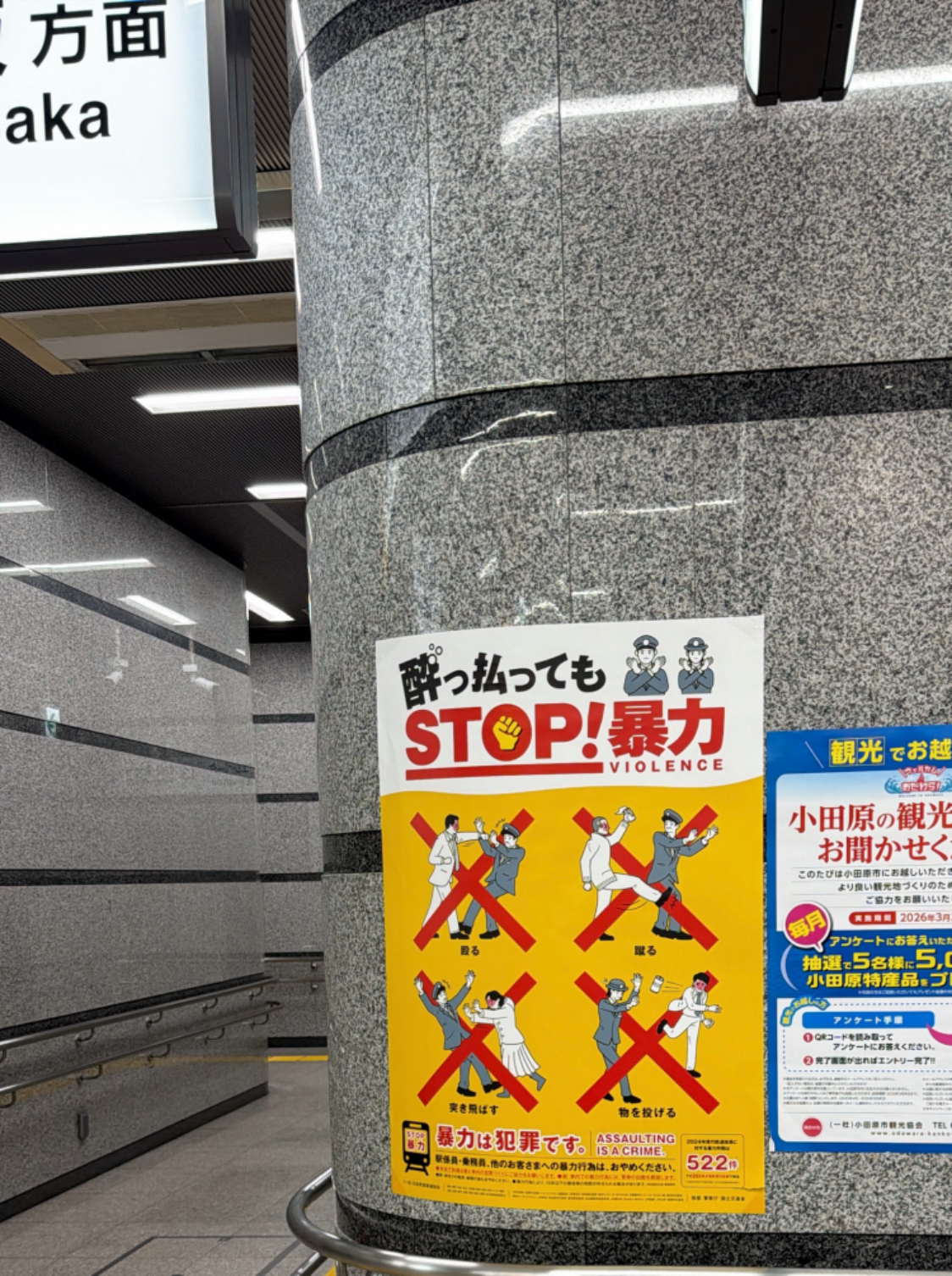
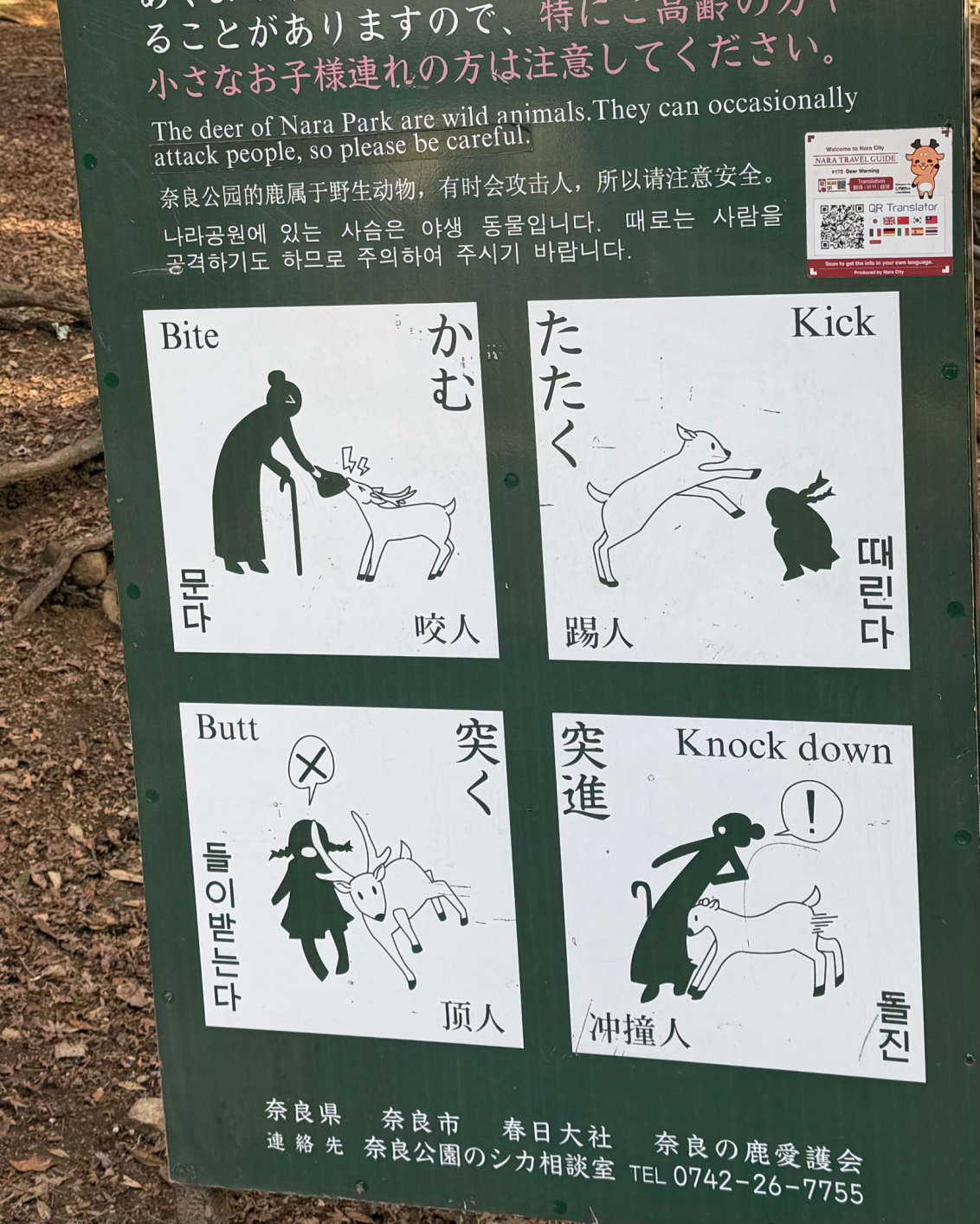
Walls in public spaces are covered with explanatory posters. They warn of the utter chaos that would break out if you were to photograph a geisha or threaten a police officer after partying. The Japanese state communicates with you in the language of comics and does so strictly, clearly, and visually.
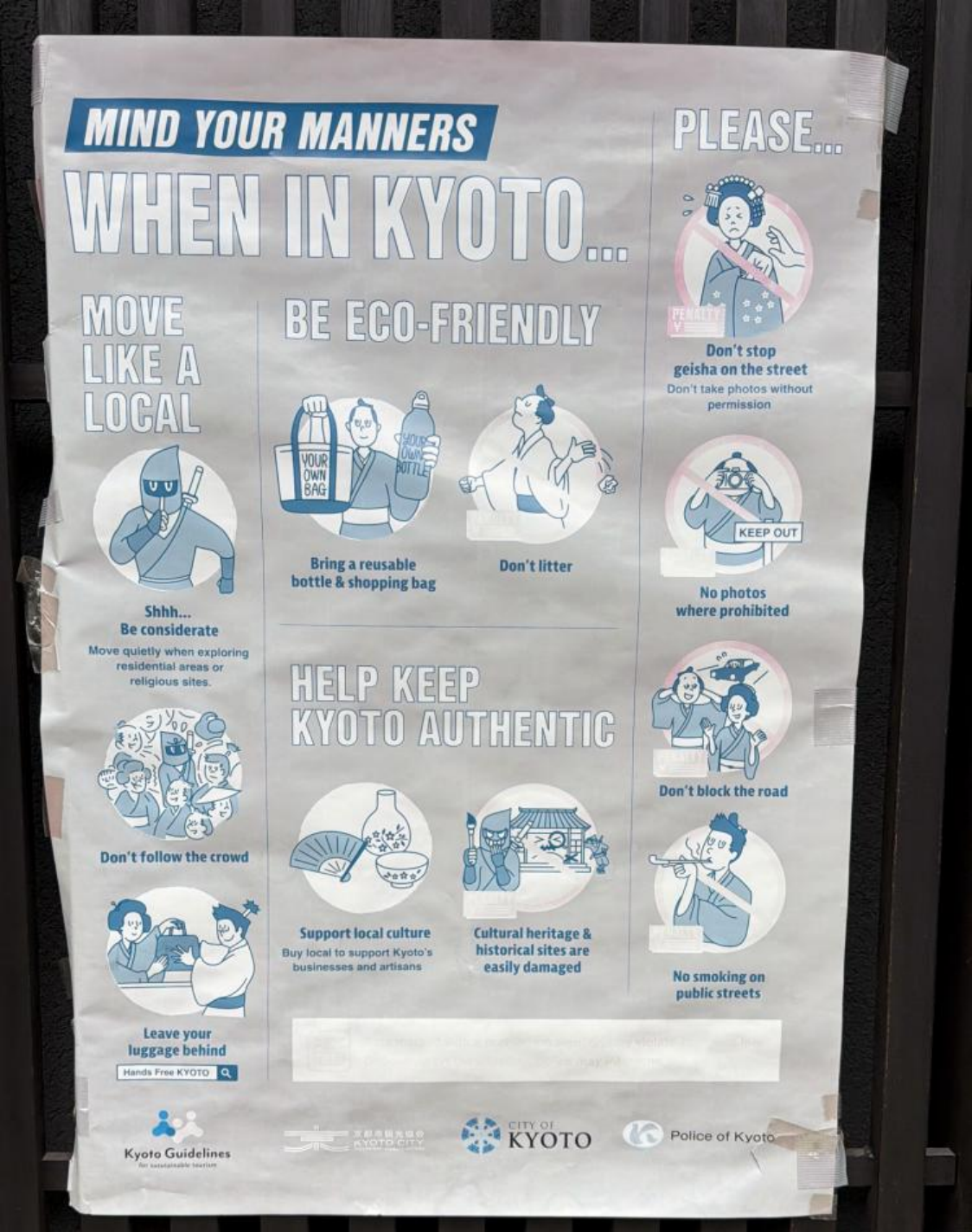
One poster in the subway warns: do not fight staff when you are drunk.
Another poster in Kyoto specifies, among other things: do not touch the geishas.
A sign in Nara reminds you: do not assume you are stronger than a deer.
It is immediately clear that the country protects both itself and tourists from complications it has faced more than once in the past.
Second stop. Neon Tokyo
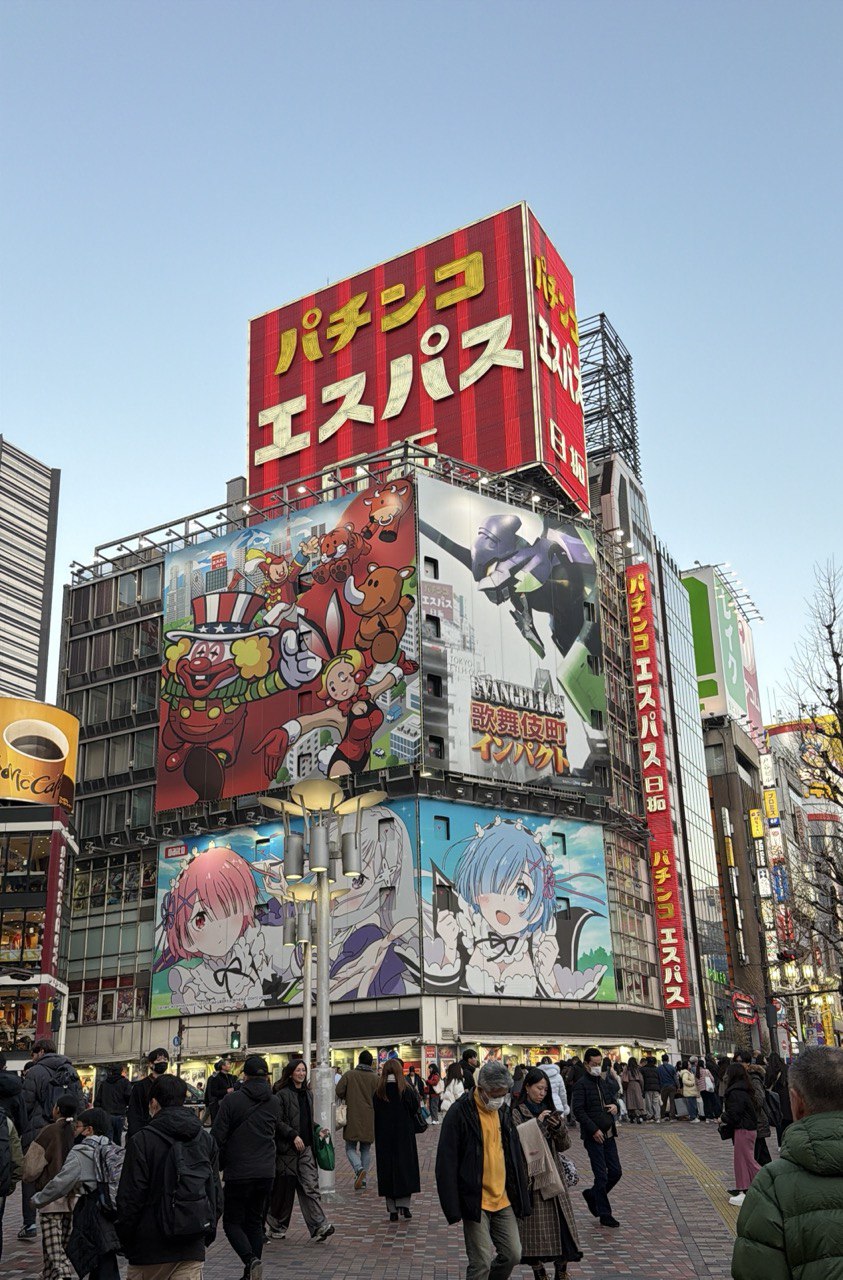
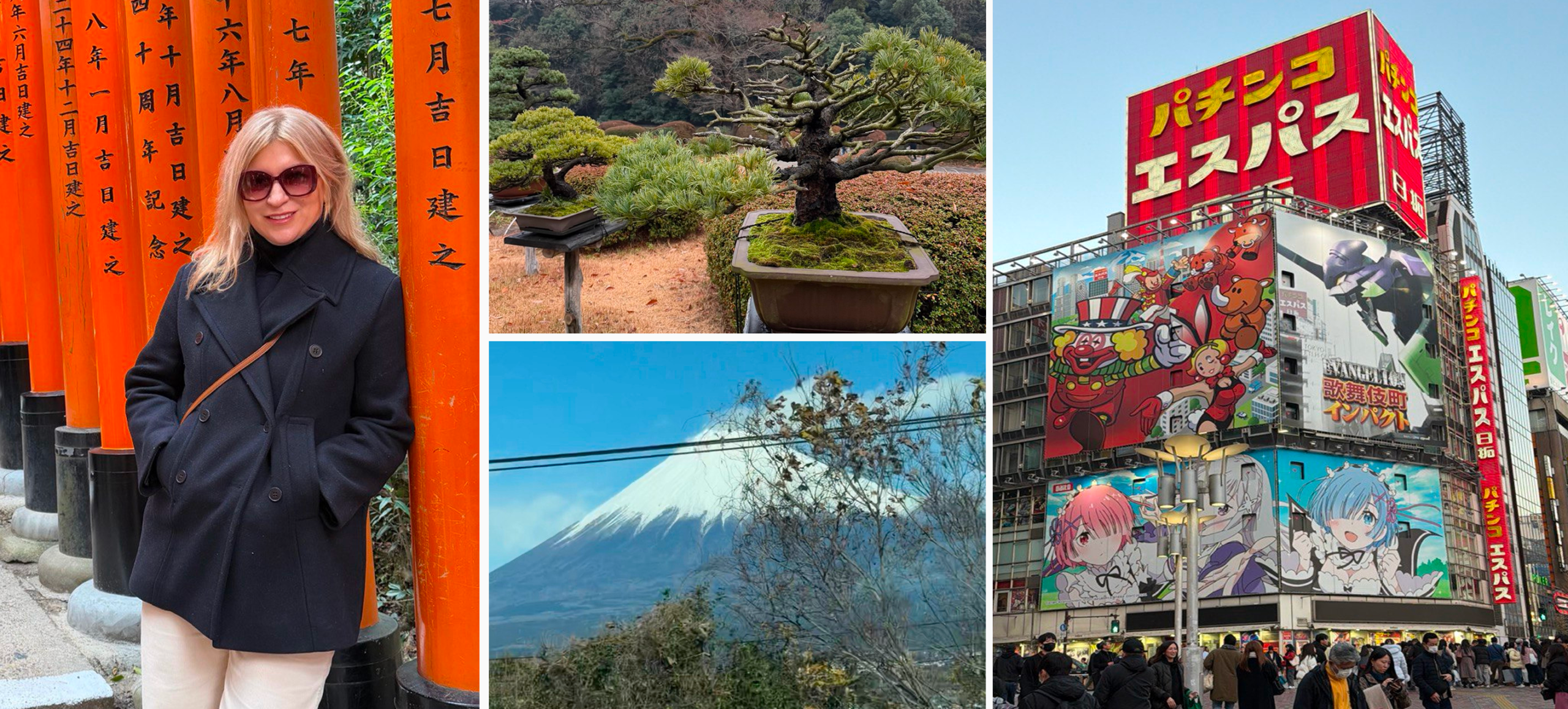
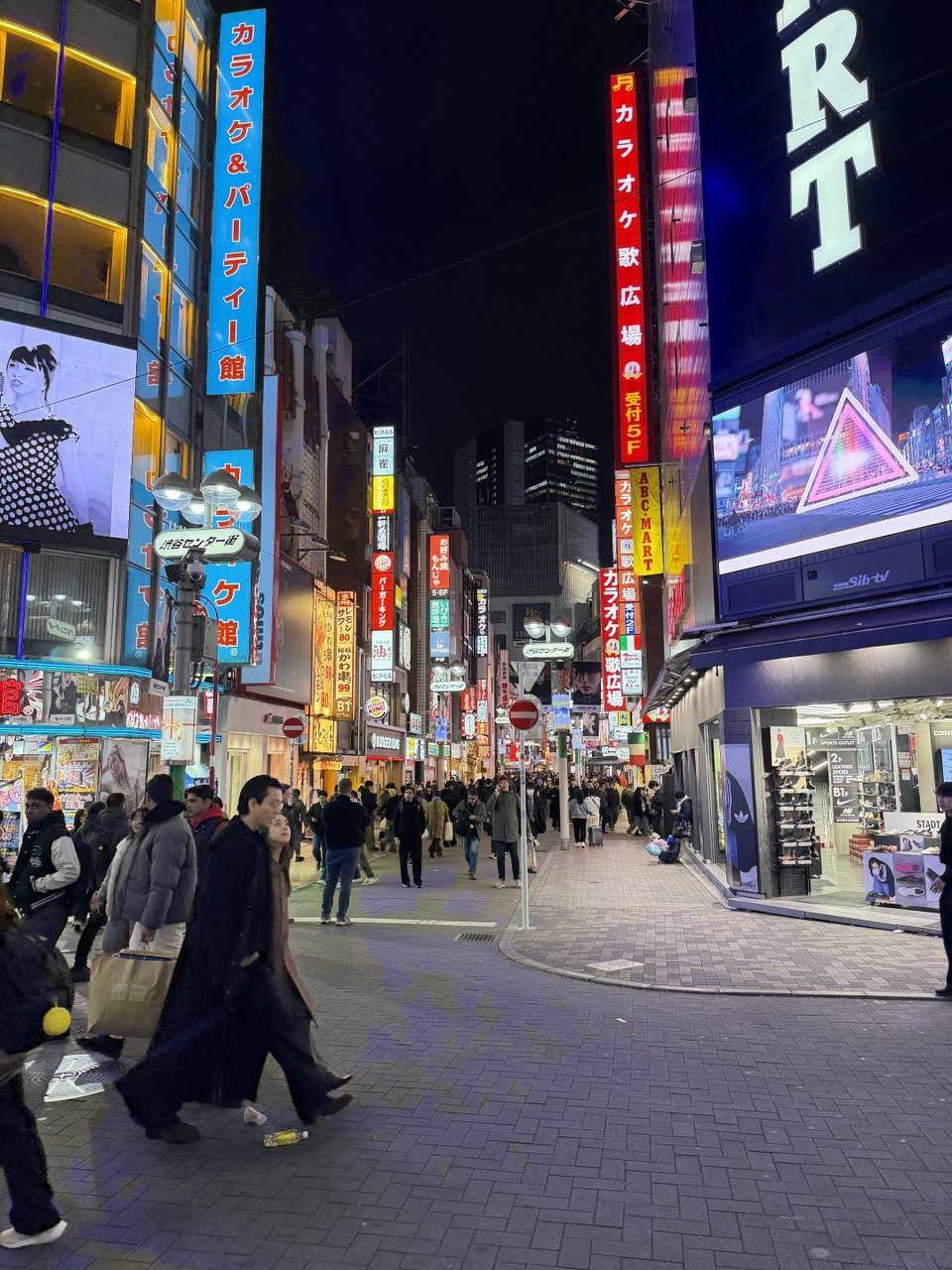
There is a daytime version of Tokyo—strict, fast, rational. But the city truly unravels only after dark, when light stops being a mere decoration and becomes an environment, in which loneliness hides and excitement intensifies. The most recognisable and iconic districts– Shinjuku and Shibuya – become spaces where neon signs shape the architecture, projecting onto buildings like oversized backlights, while endless streams of people flow below.
Within these crowds, young people in costumes, colored contact lenses, wigs, and elaborate hairstyles appear. The streets are filled with manga characters living ordinary lives: going to work, buying coffee, meeting friends. But this is not cosplay. For some, this style is a profession; for others, simply a comfortable way of being. Office workers in strict suits walk along next to them, two parallel Tokyos coexisting.
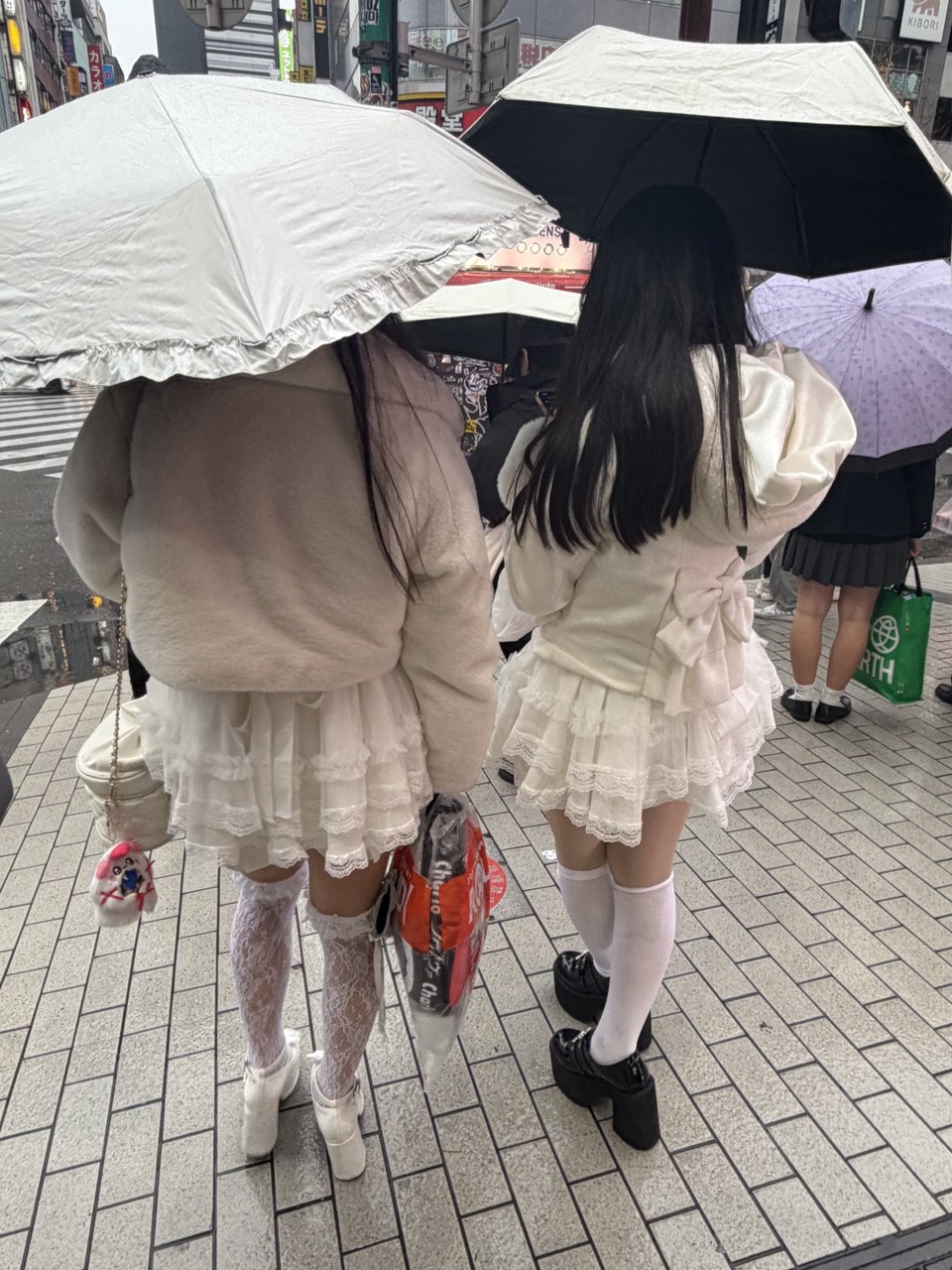
Another noticeable detail is the strange, slightly pigeon-toed gait of many passersby. It is considered cute here. Perhaps this peculiarity is connected to their footwear: many wear flip-flops outdoors, slippers at home, and socks in the ryokan.
Third stop. When live theater beats other amusements
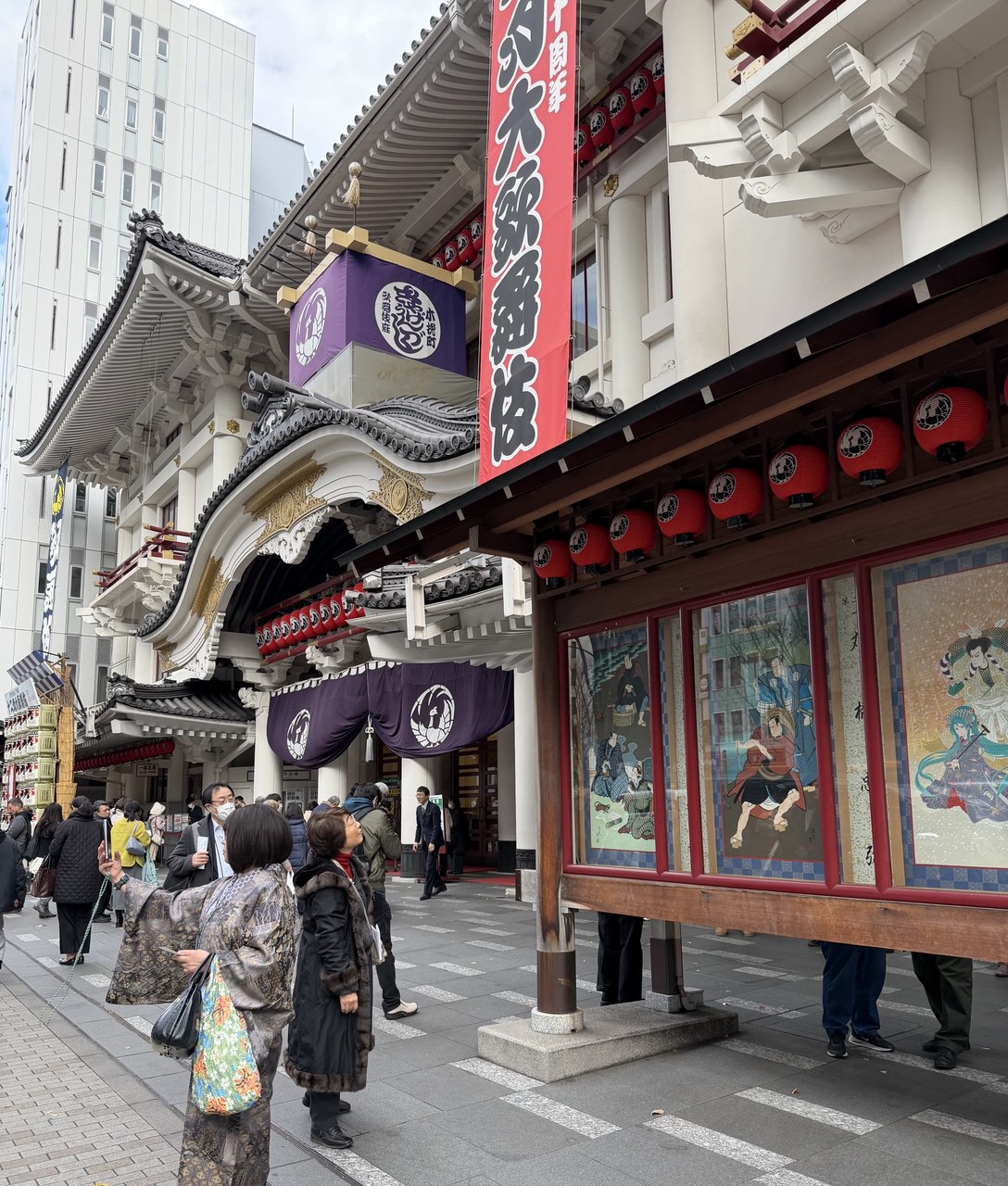
The Japanese truly respect their theater. There are few tourists at Tokyo’s main Kabuki theater, Kabukiza. Instead, locals fill the halls. Tickets are obtained with difficulty, and precisely this creates an animated cultural atmosphere, as opposed to a tourist attraction. Prices range from 1,000 to 24,000 yen and you can buy a ticket for the whole performance or just one act, which is especially convenient for foreigners. Since the performance is in Japanese, foreign guests receive tablets with translations, although we read the libretto in advance.
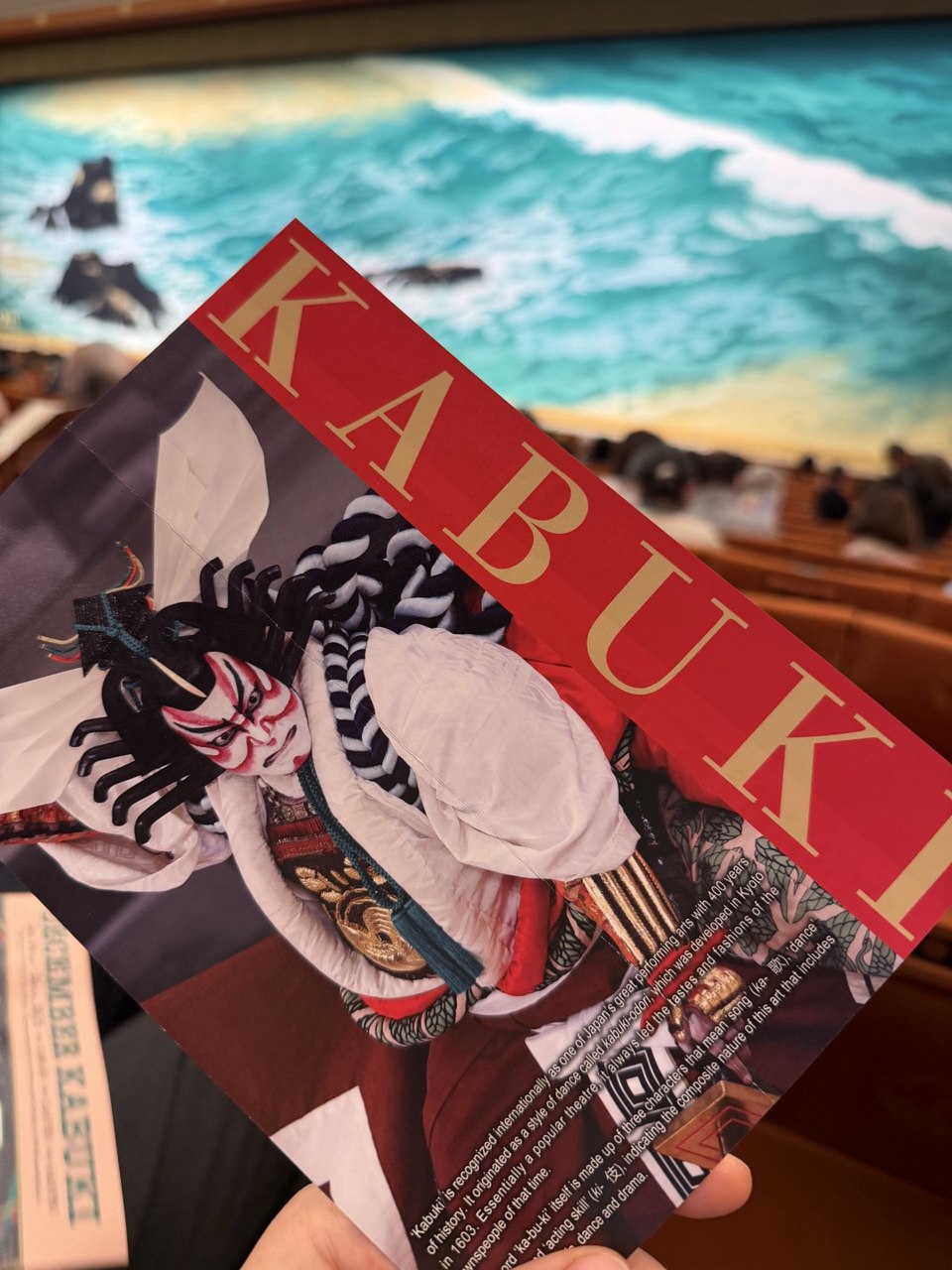
The first play, Marubashi Chūya, takes place in the 17th century. The protagonist fights against enemies and himself, and battle scenes don’t create an impression of theatrical make believe but of realistic fighting. Actors jump, fall and clash in combat so convincingly that no doubt remains that the defeated villains truly have been killed. It is a masculine, solemn story about honor and revenge.
The second play, Shibahama no Kawazaifu, tells the story of a poor merchant, who returns home with news of having found a bag of money.
He and his wife begin making plans, imagining how they will transform their life, but in the morning the bag “disappears”. We later discover that the wife had hidden it intentionally, hoping to revive her husband’s habit of working instead of allowing him to rely on the accidental fortune. A kind lesson that one shouldn’t rely on easy money.
A special feature of the Kabuki theatre: a man with wooden clappers sits on the right side of the stage. At key moments, he strikes them, creating a “freeze-frame” effect. The sound highlights the scene almost like a marker, turning it into a picture. It is easy to imagine that exactly this mechanism was one of the sources from which Japanese comics culture – manga – drew inspiration.
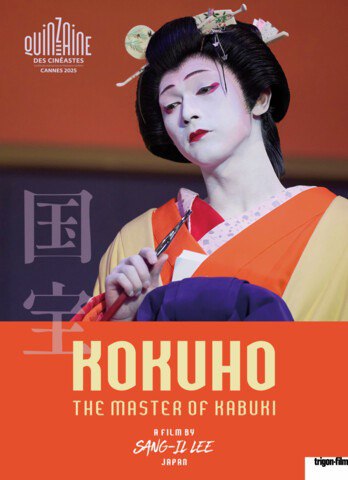
Incidentally, a new film about Kabuki, Kokuho, has just been released. It is an epic drama portraying the actors’ lives, friendships and rivalries, as well as the long journeys of actors who play female roles, so called onnagata performers. The picture became a major hit in Japan and is even considered an Oscar contender.
Fourth stop. Hakone hot springs: a night in old Japan
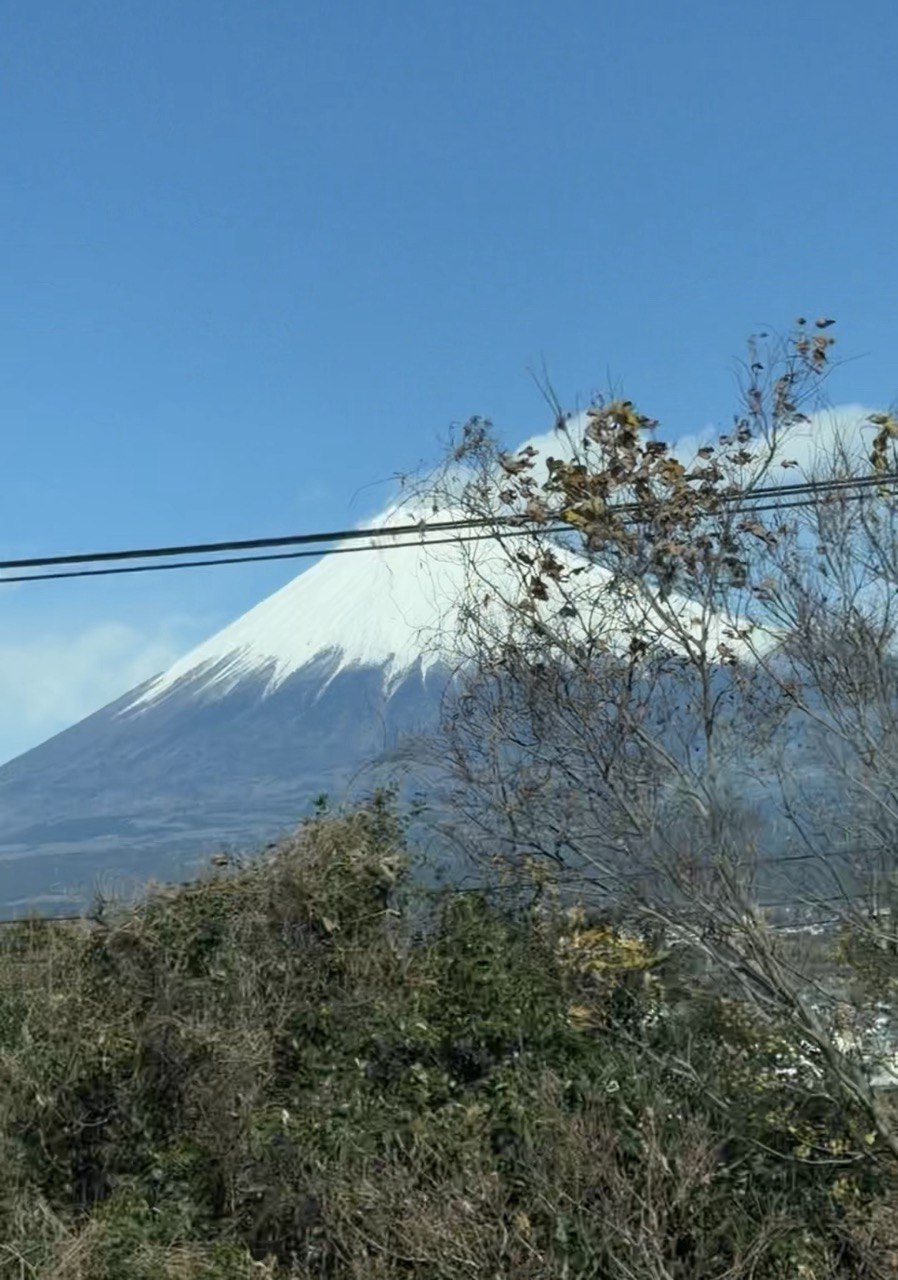
If you were inspired by the movie Bullet Train with Brad Pitt, know that such trains do not exist in Japan. Instead the shinkansen, which follow their schedules with almost inhuman punctuality, offer a quiet atmosphere, comfy seats, and speedy transportation across the country. Tickets are usually bought on the day of travel, and the windows of the train from Tokyo to Hakone, frame Mount Fuji like a postcard, in that moment of recognition when you think — “there it is”.
Hakone is a hot-spring resort where the Japanese like to drive to and spend weekends and holidays in the onsen and the ryokan. Ryokan refers to a traditional inn with tatami rooms, futons instead of beds, and communal or private baths, in addition to multi-course dinners that feel more like performances, rather than normal meals. We decided to try out everything and stayed in exactly such a place, with wooden walls and rice paper, like in the series Shōgun.
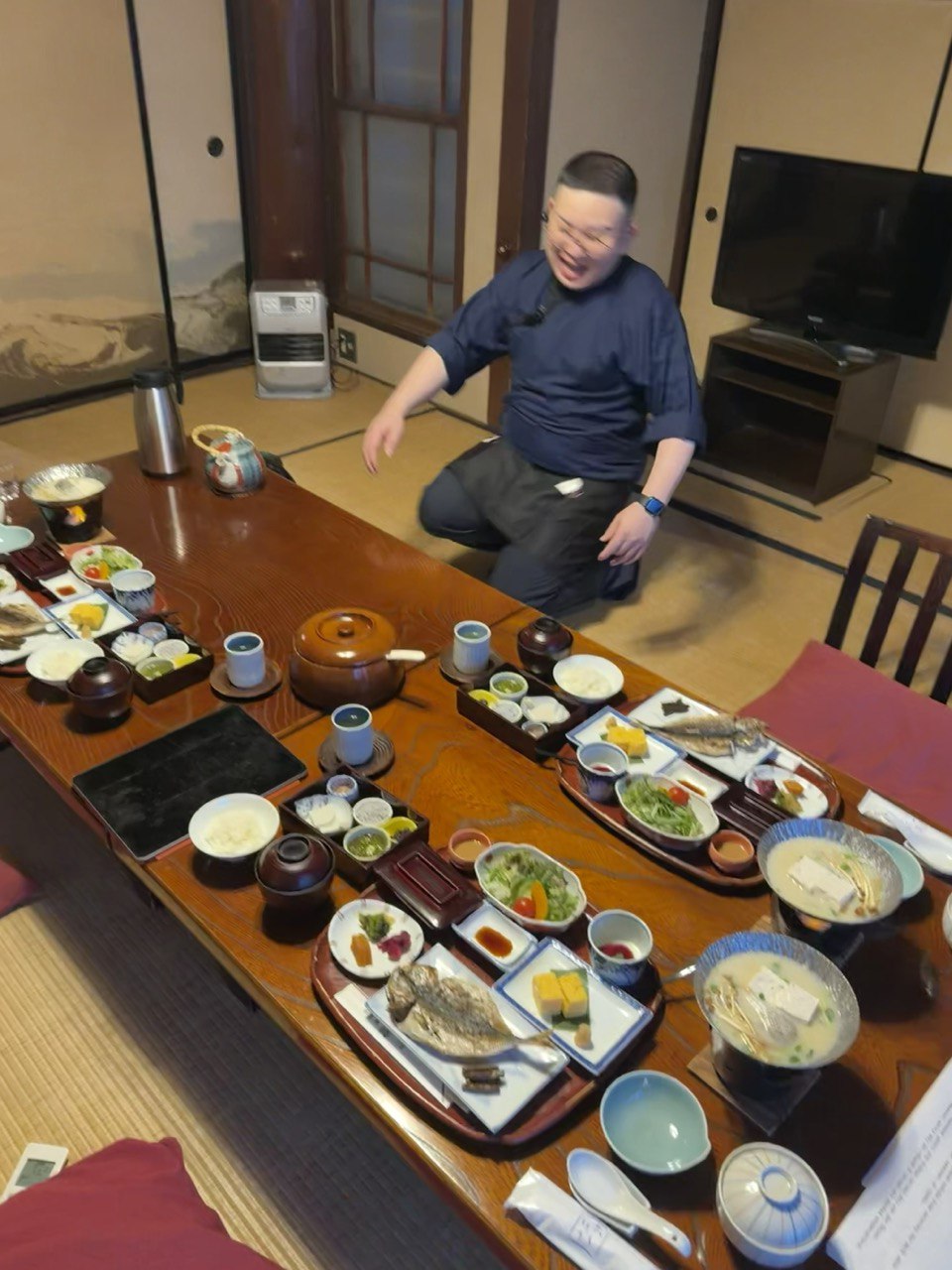
If you’re going to immerse yourself in the historical Japanese experience, you might as well go all the way. So the food we ordered was fully traditional, with no reservations for European tastebuds. Brought to our table, we found smoked herring, pickled roots, soups with strange textures and oysters that were laid out onto hot stones in front of our eyes. The oyster twitched once for the last time and turned into a dish. For locals it is perhaps a familiar classic, but for European tastes it is beautiful, fun, interesting, and practically inedible.
The onsen was flawless. Spacious baths, hot water, night air, and a complete absence of people. It was Christmas and we visited in the rare moment when we were the only guests, so we received the full attention of the personnel. The baths were separated by gender, as is customary in many traditional spots. Japan still retains a particular attitude towards tattoos and in some onsen, tattooed guests may be asked not to use the public baths, only the private ones. But we didn’t need to research the issue extensively, since my children and I never got around to getting tattoos.
At night, rain thundered over the ryokan and you could hear the water flow along the wooden constructions that lead into the garden. In the morning, we came out into the courtyard and a haiku came to mind:
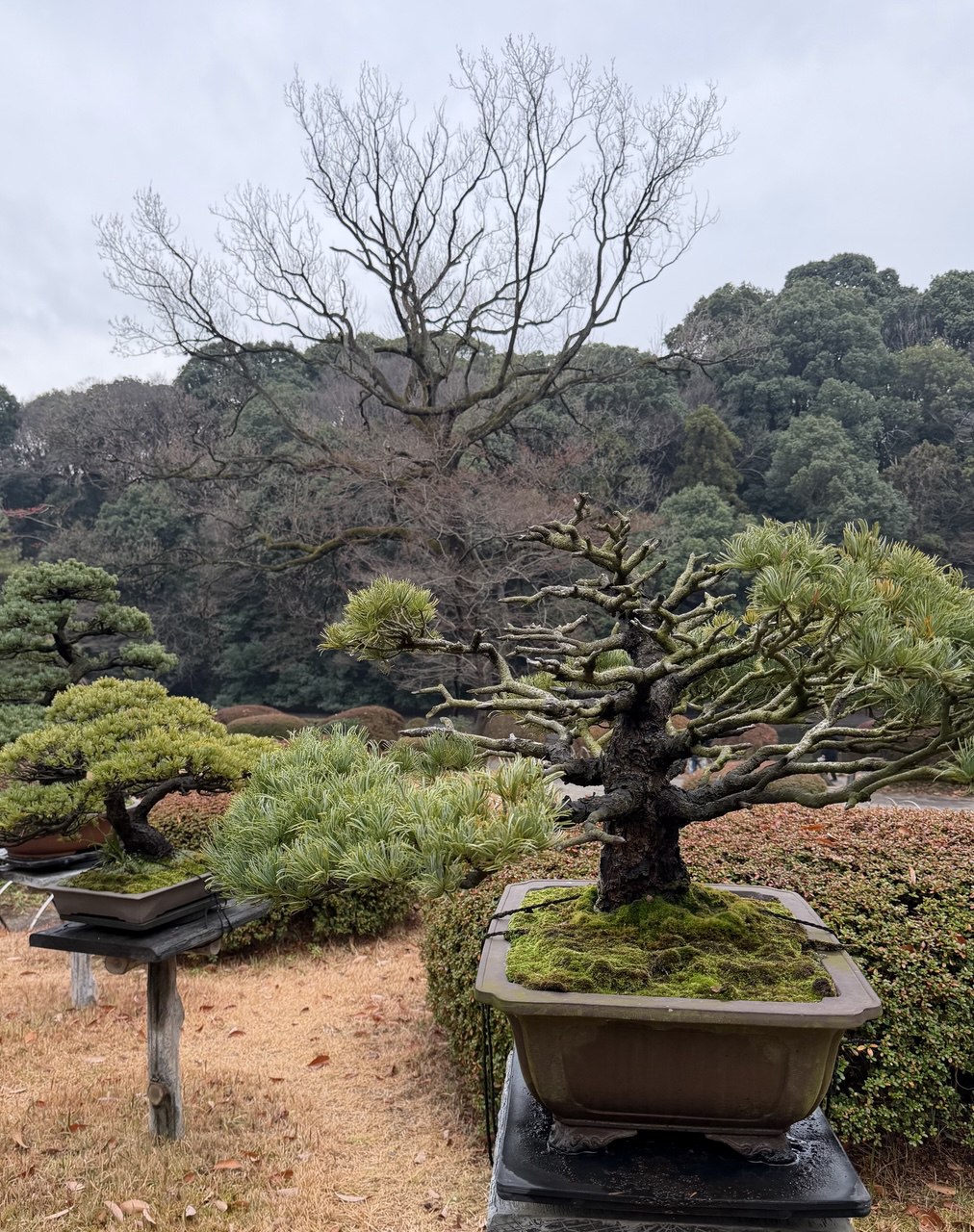
Ryokan. Silence.
Beautiful, calm…
And we want coffee.
Fifth stop. Kyoto: a city that stays full of life under a layer of postcards
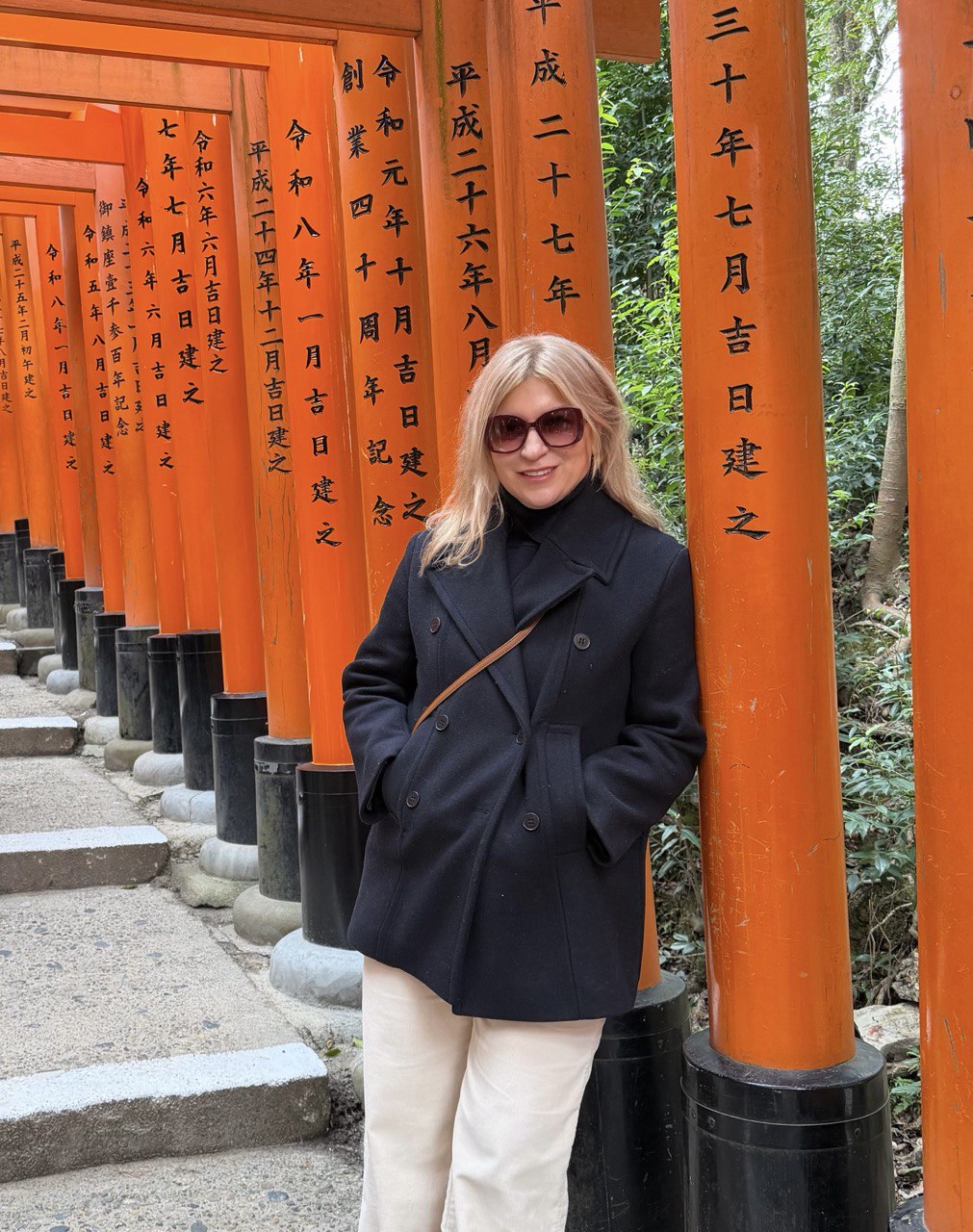
Kyoto really is a bit of a postcard, which is especially noticeable if you look at the temples. The Thousand Gates shrine, with its orange torii climbing the hillside, looks like decorations on a movie set. In reality, it is an active Shinto site, where people pray for luck and protection, and tourists try to catch a moment on camera with no one else in the frame.
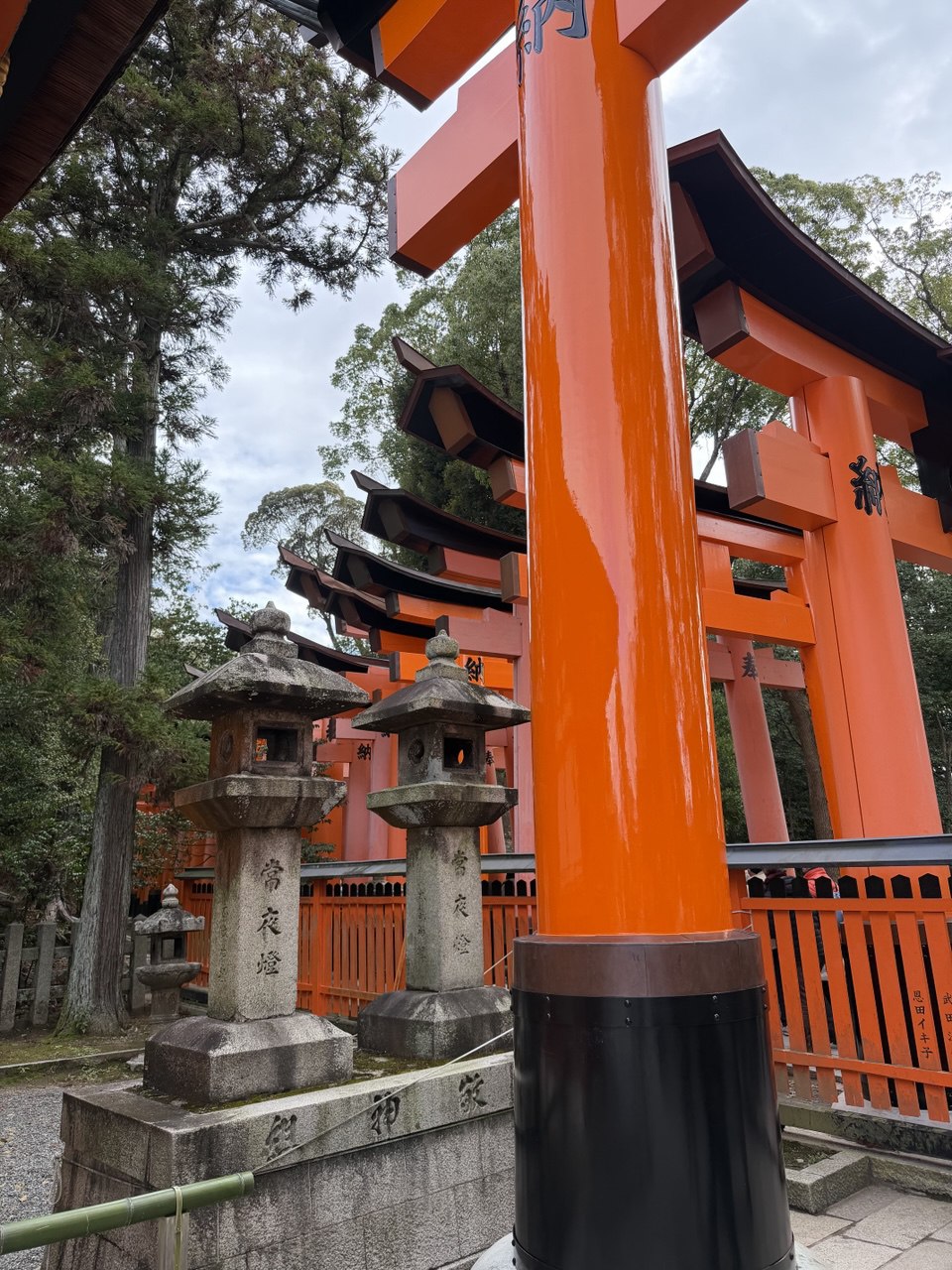
The transition between the Shinto and Buddhist temples occurs seamlessly. In one space the deity Kannon is venerated, in another the Buddha, but all this blends into a common religious landscape.
The Shintoist temples stand enveloped in greenery reminiscent of Miyazaki’s worlds—damp air, moss, roots, stone steps, a bit of fog. Here nature is part of the shrine; nothing was planted or curated intentionally.
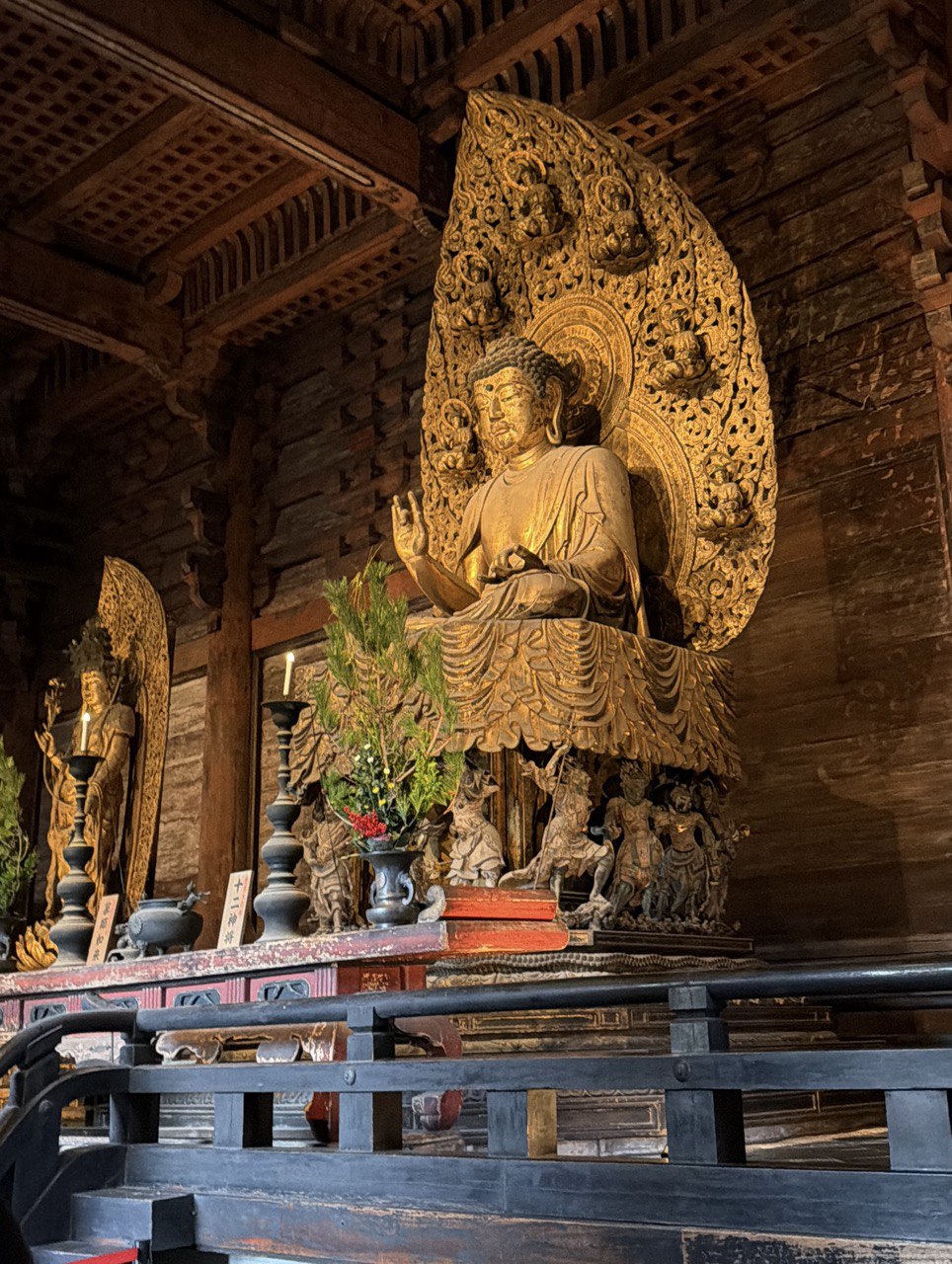
Taking pictures feels awkward; all around people pray seriously and earnestly. The ritual is overwhelmingly simple: toss a coin, clap twice, bow, and say what you wish for, in your own words. No long, learned prayers required. Some ask for health, others for luck in exams, and some simply thank the spirits for their help. The simplicity of the ritual makes all that goes on there very clear, even if you don’t belong to the tradition.
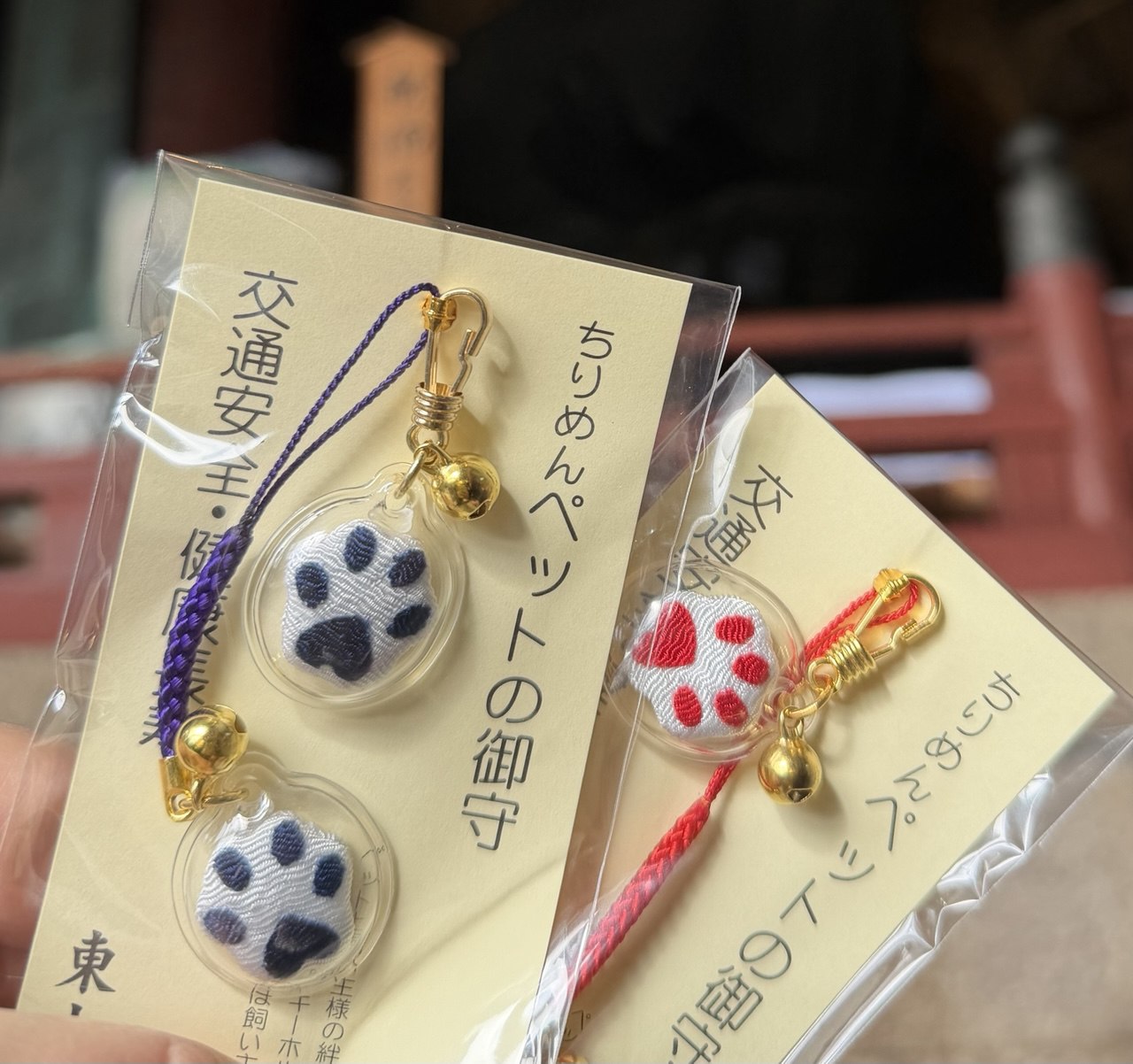
A separate aspect is related to the omamori charms. In the kiosks near the shrines, omamori are sold for any and all occasions: success in studies, career, marriage, childbirth, safety in travels and even pets. Naturally, I bought amulets for my dogs. In the Japanese way of thinking this is logical, as animals belong to the spiritual world as a part of life that also needs protection.
The Gion district preserves another layer of Kyoto’s culture. Here you can see women in beautiful kimonos, but these are not geishas — they are locals or tourists who have rented kimonos. The real culture of geishas remains closed from open observation. It exists within small houses, teahouses, and halls that ordinary tourists never enter.
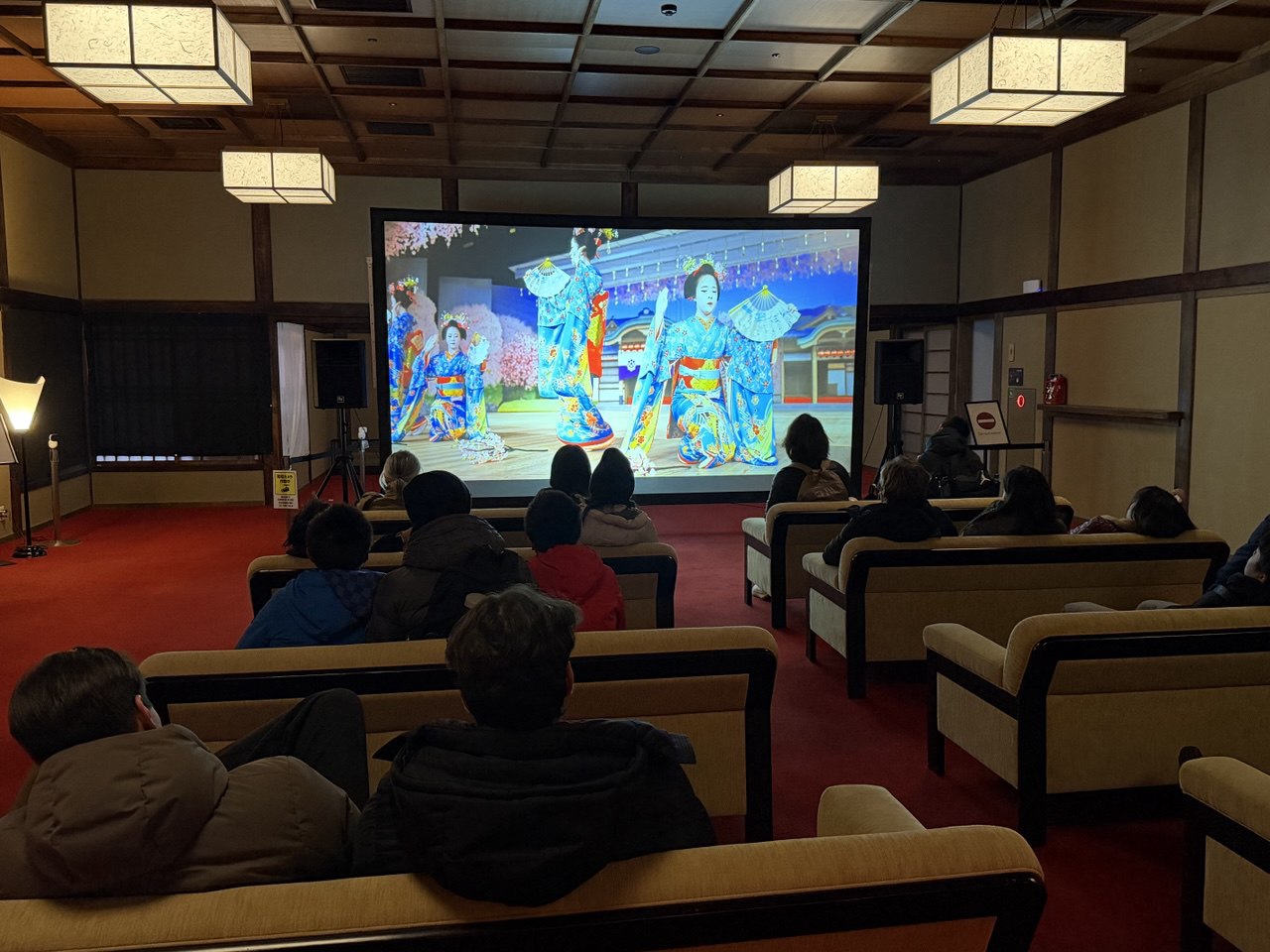
At the Kagai Art Museum, we watched geisha apprentices perform dances. The presentation takes place in a small room with only a few spectators. Filming is strictly prohibited, and the space is arranged in such a way that nothing distracts from the performance. The dance creates mood and atmosphere within just a few square meters. The dancer does not “dance” in the usual sense of the word; through her movements, the geisha apprentice tells a story. The European eye sees beauty but does not grasp all the layers of meaning beneath it. Without understanding the language and prolonged immersion, the geisha dance remains a mystery — an aesthetic surface below which another, inaccessible layer can be sensed.
The museum also has a small cinema where you can watch a recording of the annual dance performance. This is one of the main rituals of the Kyoto school: the same movements, the same costumes, and the same music are repeated every year to preserve the tradition of the old school.
Sixth stop. Osaka: a city that loves to live
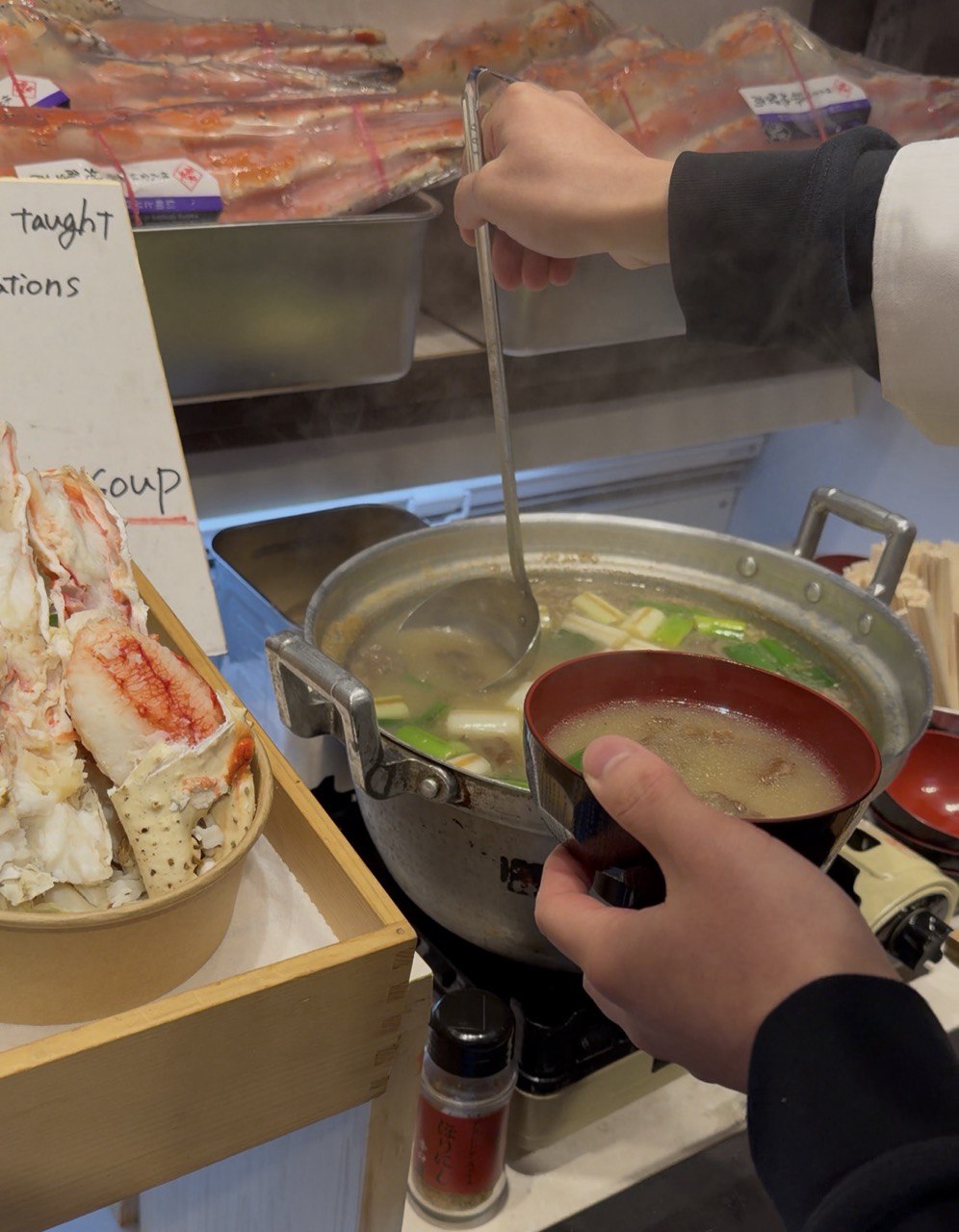
In Osaka, you can eat all the time. Street food is fresh and honest, and hot sake in winter seems like the best drink in existence. This pleasure has a history. Osaka is called “Japan’s kitchen” and the “city of merchants”. During the Edo period (when the Samurai were in charge of things), rice and goods from all over the country flowed into the city, and along with them, the habit of eating well. Hence the phrase kuidaore —“eat until you go broke”.
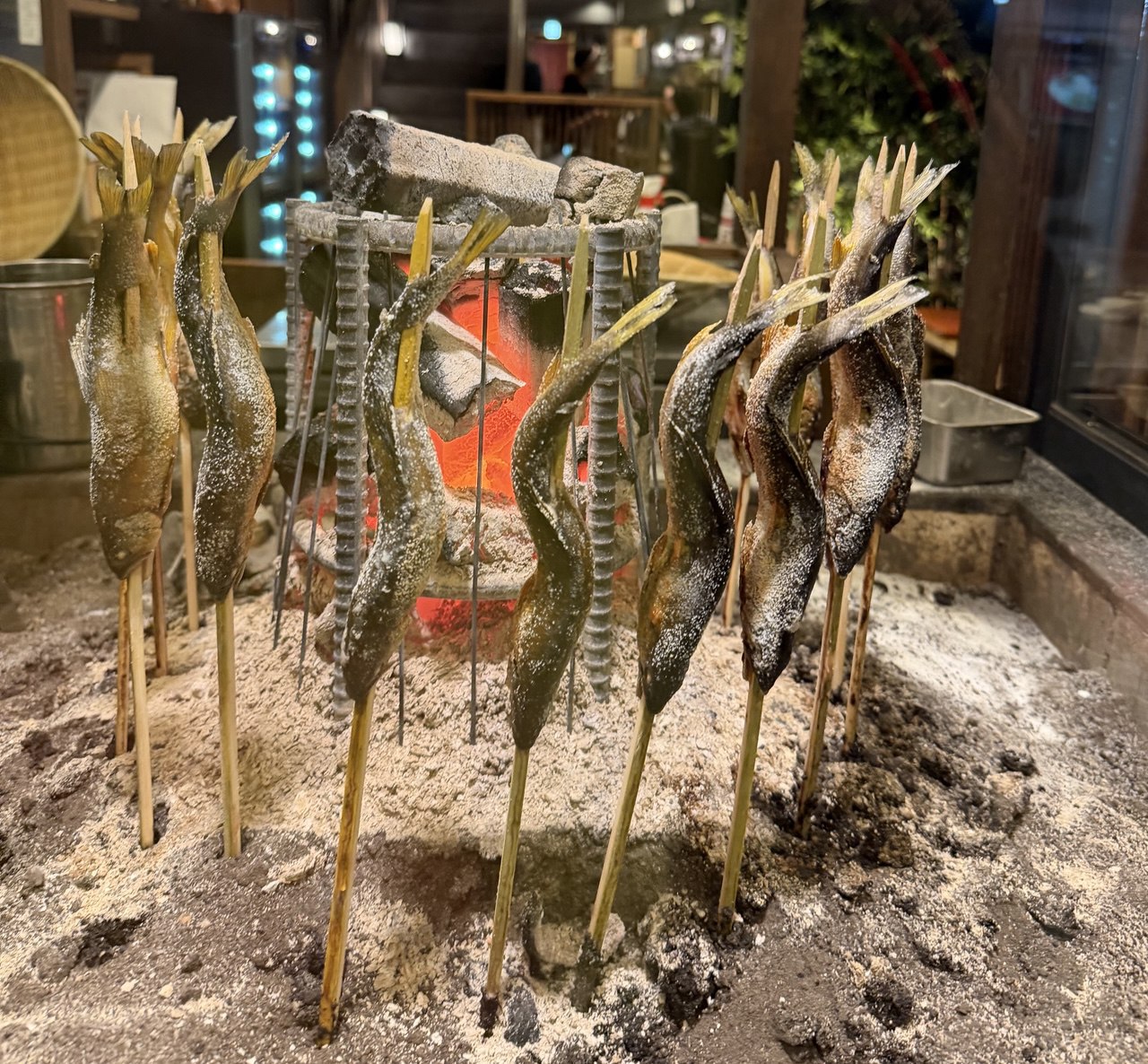
In Dotonbori, you get the impression that life in the evenings revolves around food, neon and reflections in the canals. Giant moving signs, crabs, octopus, queues for akoyaki (fried dough balls with pieces of octopus inside). On the opposite end, stands Osaka Castle, which reminds of issues of power and war that were once decided here, but is now surrounded by a peaceful urban park.
All in all, Osaka is easy to understand: here people love living, eating, and glowing at night.
Seventh stop. Nara: a world where deities appear as animals
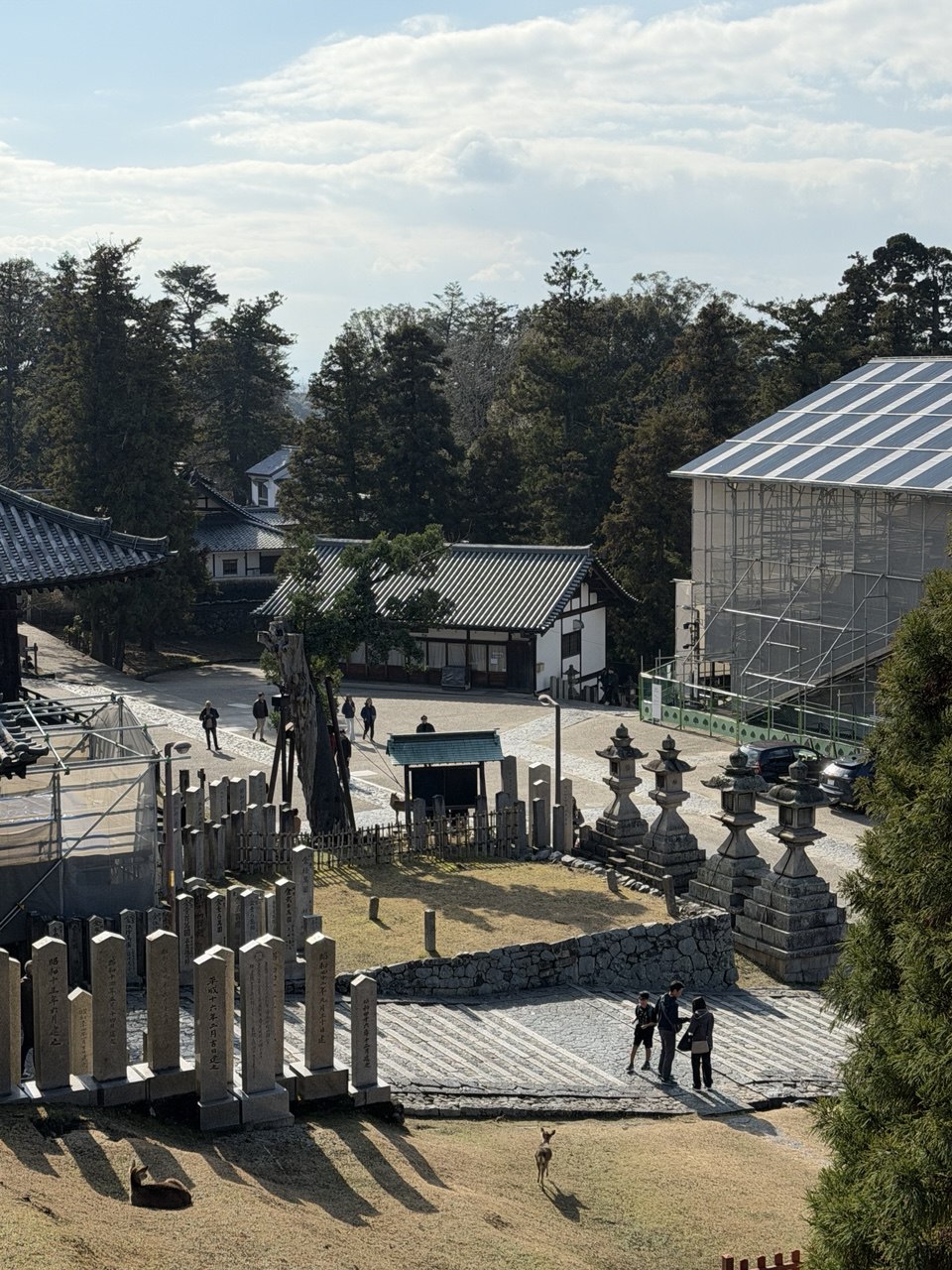
Before the trip, I had a slight prejudice against Nara. Based on the photos, it gave the impression of a sort of petting zoo, a tourist attraction. The reality was quite different; no one brought the deer here or locked them up. They roam the massive park and the streets, approaching people themselves when they want, and leaving just as freely. An almost fantastical feeling arises– like having your own “Avatar” moment with the deer. It is a very gentle, meditative sensation, when animals, nature, and the architecture of the majestic temples, all exist within a single system.
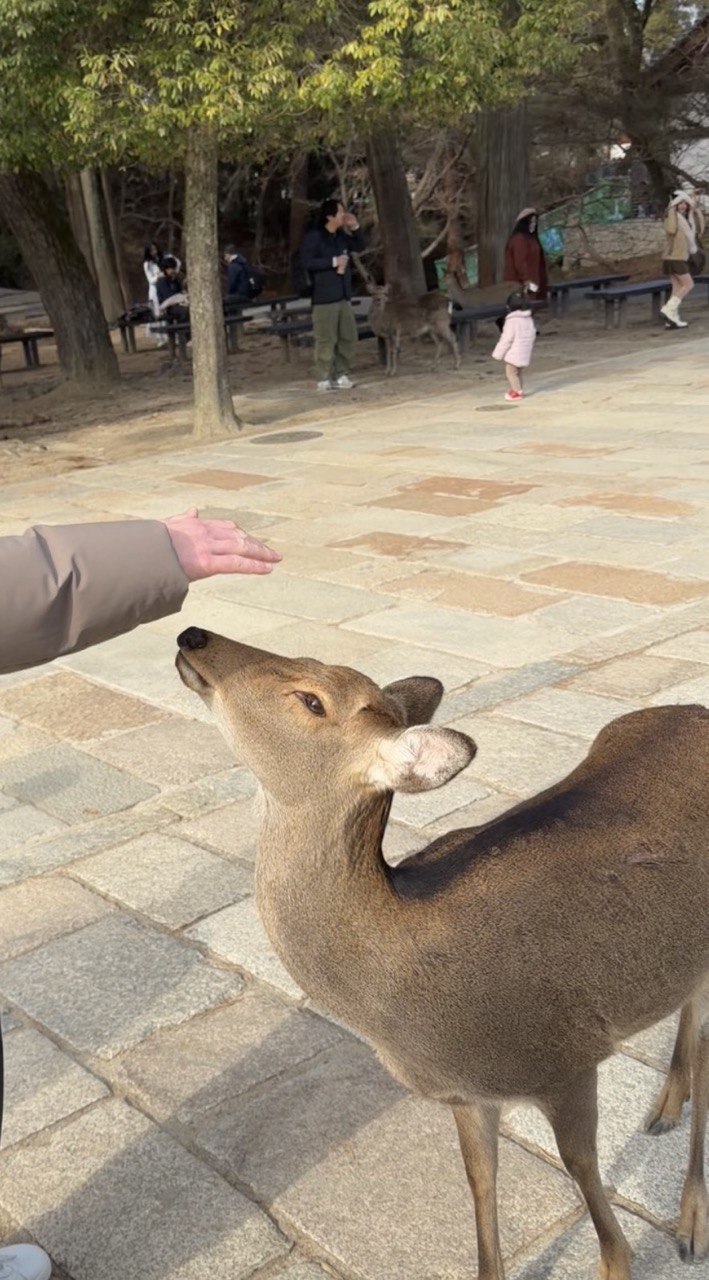
At some point during the walks through the parks you realise that you’re occupying a place, where humans are allowed to be present in cohesion with everything else: the wind, the trees, and the deer.
Final stop. A country where simplicity becomes a miracle
Traveling in Japan requires no guides. It may be the most convenient country in the world for travelers. You can almost avoid talking to anyone altogether: all services are available online— tickets, bookings, reservations, directions, routes. Respect for privacy coexists with the inevitable physical closeness in a megapolis, such as in public transport, where people stand side by side but don’t invade each other’s personal space. This is a remarkable balance.
The level of safety feels unusual for Europeans. After a few days, you stop checking your bag and looking around suspiciously. There are no pickpockets or scammers on the streets, trying to deceive or trick you, and no one seeks to extract the maximum from you.
Japanese food deserves a separate, extensive book. Its main uniqueness lies in its extraordinary freshness and in the impeccable service which accompanies it. Any place you might happen to wander into, even the most humble café, offers equally attentive and friendly service to visitors. We left tips – quietly – and no one ran after us to reprimand or return the money.
It is better to book gourmet restaurants in bigger cities in advance. The population is large, you can feel the pressure on popular spots and spontaneity doesn’t always yield success. But wherever you do manage to get a table, the service gap between high-end and everyday places is small and enjoyment is always guaranteed.
Our first trip lasted ten days. It was more a touch, rather than an immersion into the culture. A tourist’s fast run through famous places, during which the routes hadn’t become familiar yet and impressions stacked on each other. But everything in this country is organised in such a way, that even without particular curiosity for culture, the trip is rewarding. Logistics, safety, food, and respect for privacy create a high baseline experience. And if you do pay attention to temples, theaters, films, and rituals after all, a trip like this will definitely upend your way of thinking.