Judgement, Mercy and the Invisible Child in Natalia Rubtsova’s Happy Families

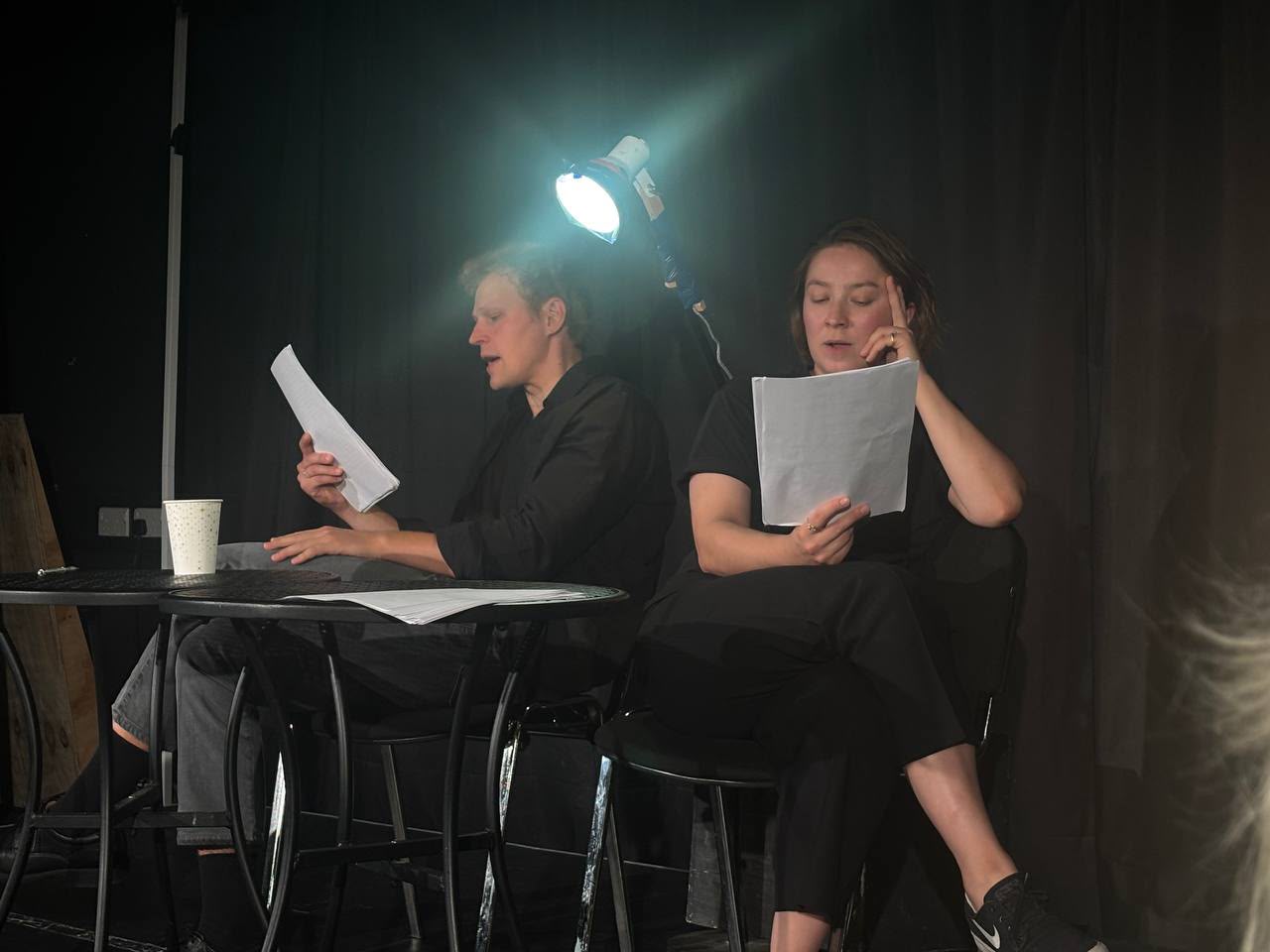
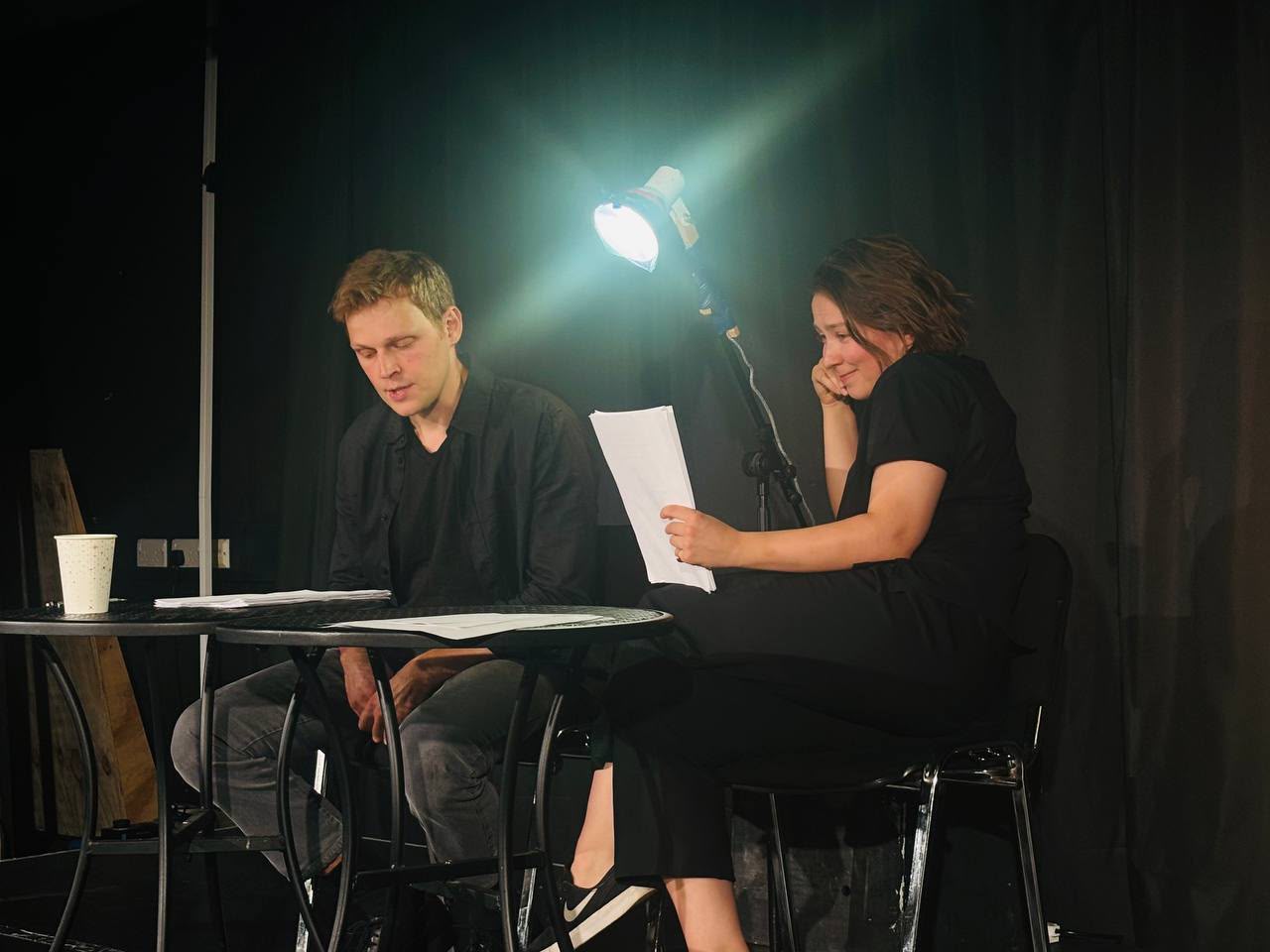
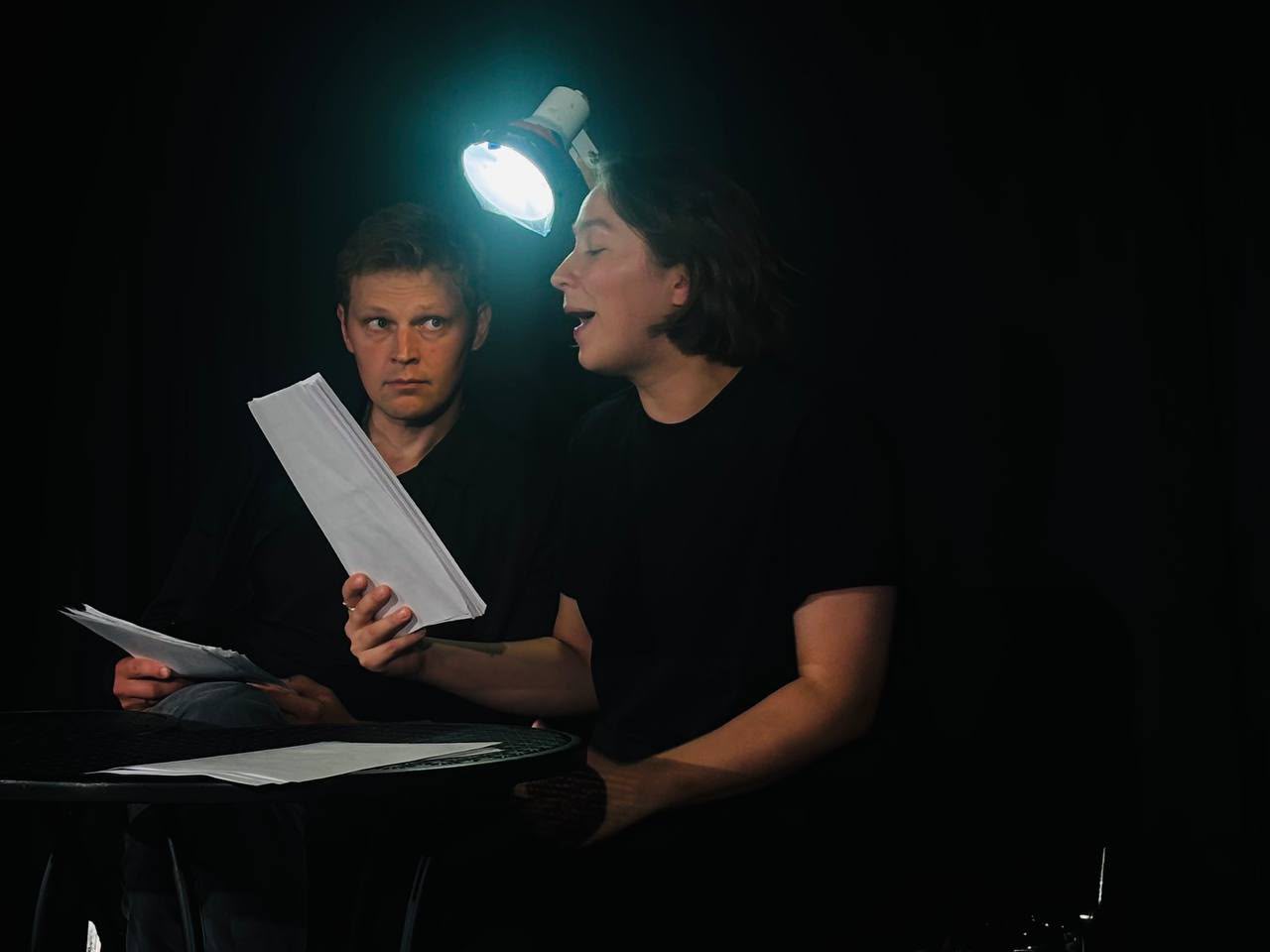
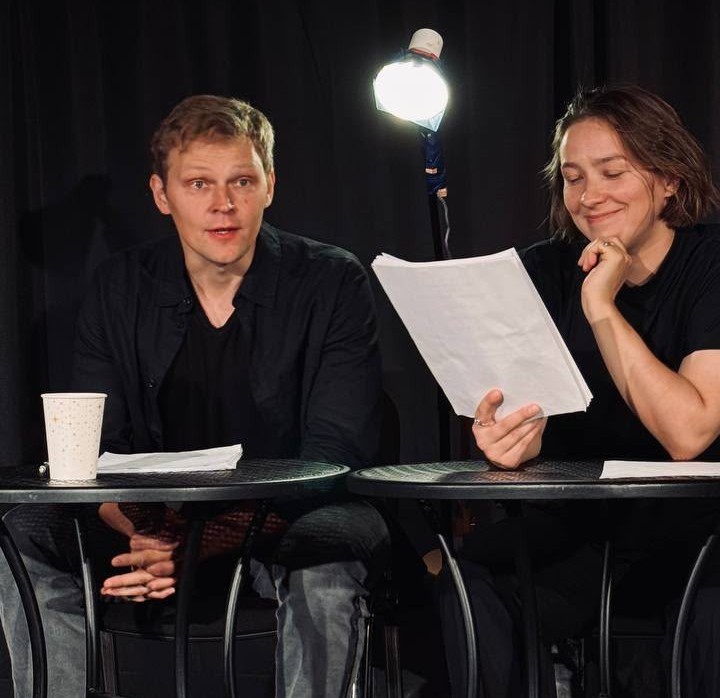
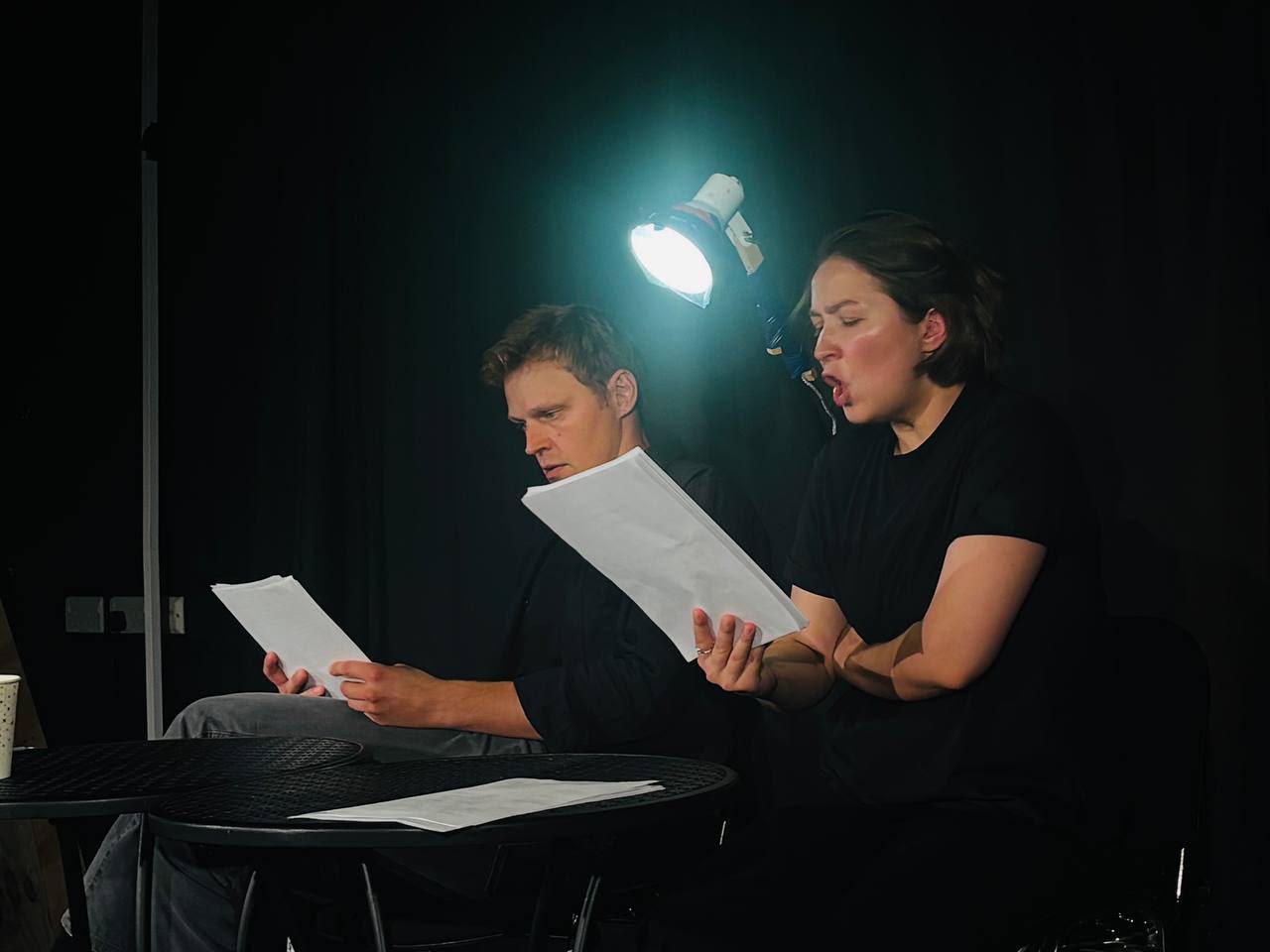
Two actors at a table. A black backdrop. A lamp between them. In the London rehearsed reading of Natalia Rubtsova’s Happy Families (originally titled MGUshniki in Russian), the lamp appeared almost by accident. According to the playwright, the actors simply needed more light. Yet the accident proved remarkably apt. The light, directed towards the audience, evokes at once an interrogation room and a dissection theatre. What lies before us seems less a family story calling for human sympathy than a specimen to be examined, studied, dissected and perhaps even cured. Or perhaps the specimen will escape its incubator and destroy the world.
The English translation of Happy Families is by Sara Jolly, a London-based translator of Russian literature and documentary filmmaker. Her credits include translations of Teffi’s stories for Other Worlds: Peasants, Pilgrims, Spirits, Saints (2021), as well as a collaboration with Boris Dralyuk on A Ransomed Dissident: A Life in Art Under the Soviets, the memoirs of art historian and Soviet dissident Igor Golomstock. Jolly has also worked in documentary television, notably on the BBC series The Second Russian Revolution, about perestroika.
According to Rubtsova, Jolly’s deep understanding of the Soviet and post-Soviet context proved particularly valuable for a play whose story begins in the 1990s. The principal achievement of their collaboration is an English text that feels alive and entirely natural to a British audience. The reading’s producer, Anya Viller, explains that what drew her to the play was precisely its lack of an established theatrical reputation. Having previously worked mainly with classics and recognised playwrights, she found herself encountering a new text — what the British theatre world calls new writing.
As Viller observes, the characters tend to recount events rather than live them out before us. This form calls not so much for acting alone as for a precise theatrical solution: how does one stage a verbatim story, a work grounded, by its very nature, in documentary testimony? From the opening scene, Rubtsova establishes a rigid framework: the action takes place in a courtroom. A court is supposed to examine circumstances, weigh evidence and determine arrangements for a child’s contact with their parents. Yet in Happy Families, legal procedure also becomes the framework for an endless retrospective: who loved whom, who betrayed whom, who first stopped answering the phone, and who ruined whose life.
Three generations and decades of family history inhabit these proceedings. It seems that once a judgement has been delivered, the past might finally be laid to rest. But the narrative is constructed so that every new voice merely adds another layer to the conflict. Though perhaps we should correct ourselves. This is not so much a dissection theatre as a laboratory.
The courtroom is an incubator, maintaining a constant temperature in which cultures are grown — cultures that are not necessarily safe for human beings. And the rich medium in which they flourish is the very technique of verbatim theatre: the assembling of separate texts, first-hand testimonies and statements. In our conversation, Rubtsova offers an important qualification: “I really like it when the author hides not behind one character, but behind many.”
The form’s professed objectivity, then, does not eliminate authorial choice: who gets to speak, for how long, in what language, and in what order. As Viller describes it, the directorial challenge was to have two performers conjure an entire world before the audience, moving from one character to another while simultaneously remaining detached narrators — a kind of Brechtian alienation.
The actors, Sasha Orav and Nastya Velikorodnaya, weave this principle into the fabric of the performance: a multitude of characters is deliberately contained within just two performing bodies. Hence the sense of a laboratory experiment. One voice gives way to another, while the physical substance of the person carrying it remains unchanged.
At first, the characters really do resemble isolated specimens. “At first, I thought it was love,” Anna recalls. Their small flat gradually filled with books, furniture and children’s belongings, “yet somehow it was becoming emptier and emptier”. Her husband sees the same disintegration differently: “Where did that admiration in her eyes go?”
Both speak of a lack of love. But. And it is this perpetual but that holds the audience back, just as we are about to surrender our sympathy to one character or another. A third voice, that of a female friend, marks the infidelity with a sardonic quip: “You usually see the results of that kind of overtime nine months later.”
The mistress, meanwhile, is scarcely allowed to escape her type: a provincial girl, a curl of hair, an ample bust, unread copies of Remarque and Hemingway, a catatonically erotic adoration of her boss. A conveniently comic mushroom in our incubator. Social stereotypes, stereotypical violence — so terribly ordinary! — both psychological and physical, and the absence of genuine dialogue: everything seems to have taken shelter behind a parapet of anger and resentment. Try stepping out, and someone will immediately have you in their sights.
See Paris and… learn to hate it. Even in the City of Love, there will be no love, only its negative image, where black passes for white. Paris appears twice in the play: first as the city of marital loneliness, then as the promise of another, supposedly genuine love. The characters stroll through the city, quote literature, recall the Russian émigrés and Chekhov, and address each other by the names of Chekhov’s characters: Gurov and Anna Sergeyevna. “Are we hiding behind other people’s names?” she asks. “Who needs the truth…” he replies.
Substitution, deception, a counterfeit white. The Lady with the Dog, except that the lady has never had a dog in her life. Significantly, the characters are lawyers, people who know the law. “It was very important to me to show the particular points where the characters’ lives intersect, and how differently they see those moments,” Rubtsova says.
Yet the monstrous perversion here seems far more disturbing: these people sit in judgement, but morally and ethically, not one of them is fit to be a judge. The older generation — the parents — is no better. Poor, unhappy people, trailing entire histories of pain and trauma behind them, pass these on to their children without a second thought. The mycelium produces ever more monstrous fruit.
Yes, each new strand of this family DNA changes our understanding of the characters’ past. But it cannot change our judgement of their present. Here lies the boundary between explanation and justification, between forgiveness and the abdication of responsibility. Questions whose answers are so tightly entangled that only a scalpel could separate them.
Let us remember that the play takes place in a courtroom, and even the judge, a small cog in the machinery of justice, is granted a little personal history of her own. “I’ve never been to Paris. Nearly twenty years on the job, and I still haven’t earned enough,” she complains, mentioning her elderly mother and offers of assistance, including one from a party to the proceedings.
The remark introduces an unsettling ambiguity: does this servant of the law accept bribes? We cannot be sure. But the heroine suspects her former husband of buying the court’s decision, while he observes: “A conscience doesn’t come cheap these days.” Today, it is almost impossible to read this play, written shortly before February 2022, as merely a family drama. “Back in 2021, we didn’t yet know what was coming,” Rubtsova reminds us in conversation.
The audience, however, now knows something of the realities of judicial practice extending far beyond private disputes. The play does not predict subsequent events, but the passage of time changes the angle from which we view it. The laboratory metaphor is not intended as an insult to society, a way of putting it in its place, but as a description of the play’s artistic organisation. The regulated temperature allows the voices to reproduce the same familiar patterns again and again: the lust for power, calculation, greed, self-justification, hatred.
Family pain, a small private conflict, exposes ideas about law and power that easily survive a change of scenery. The characters, who came of age against the backdrop of the Soviet Union’s collapse, are not merely products of their time. Their decisions today also help create the environment in which they live. But why should this story matter to a British audience? Well, infidelity, divorce and years of disputes over children are hardly unfamiliar here. Yet the recognisability of family drama does not mean that the legal circumstances are the same.
In England and Wales, the Children Act 1989 establishes the child’s welfare as the paramount consideration in decisions concerning their upbringing. Courts must take into account, among other things, the child’s wishes and feelings, considered in light of their age. The law does not, of course, guarantee flawless practice. But the differences between these principles and the way the legal process operates in the world of the play demand further reflection. In Happy Families, the custody dispute becomes a contest of financial resources, professional connections and willingness to abuse legal procedure.
The heroine, herself a lawyer, declares: “I don’t believe in our justice system. But I believe there is a higher court.” This matters not as the universal cry of a wronged mother, but as a description of a particular institutional environment: a person seeks protection from a court in which she herself has no faith. Who, then, are Rubtsova’s characters? Victims of circumstance? Accomplices? Or perhaps its very architects? But will the audience see, mercilessly illuminated by the microscope’s lamp, the workings of an entire system? Or will they see, above all, a story of unhappy love? And the more we read Happy Families as a universal human story, the greater the risk of failing to hear its historical specificity. And finally, the most terrifying thing of all is the silence of the one character who is never given a voice. The child. The son of the play’s protagonists.
By the time the court proceedings draw to a close, he is almost nine years old. And while his parents fight viciously over visits, overnight stays and trips away, while his mother, father, the judge, friends and relatives all speak about him, the boy himself remains silent. What would be the point of talking to a quarrel? Mushrooms don’t concern themselves with such foolishness. “You’ll send the boy down to me for our walk. You’ll pick him up wherever I tell you.” The son becomes an object, something to be handed over along an agreed route.
The absence of a child’s monologue seems a devilishly effective artistic device: a text that allows the adults to speak at length leaves no space for the voice of the person whose future they are deciding. Not an individual, but the subject of a court order, a bargaining chip in his parents’ conflict, the inheritor of traumas that the adults will pass on to him along with their surname, property and visitation arrangements.
It is the child who becomes both the catalyst and the litmus test for everything that happens. In the final scene, Anna performs a remarkable act: she chooses not to submit medical evidence indicating that Boris’s condition is deteriorating. But this powerful theatrical gesture concerns not only Boris’s fate — oh, how magnanimous of Anna! — but also that of the child, who, under the court’s ruling, will be left in the care of an increasingly unsafe adult. How extraordinarily convenient it is to bestow one’s own forgiveness at the expense of one’s own son.
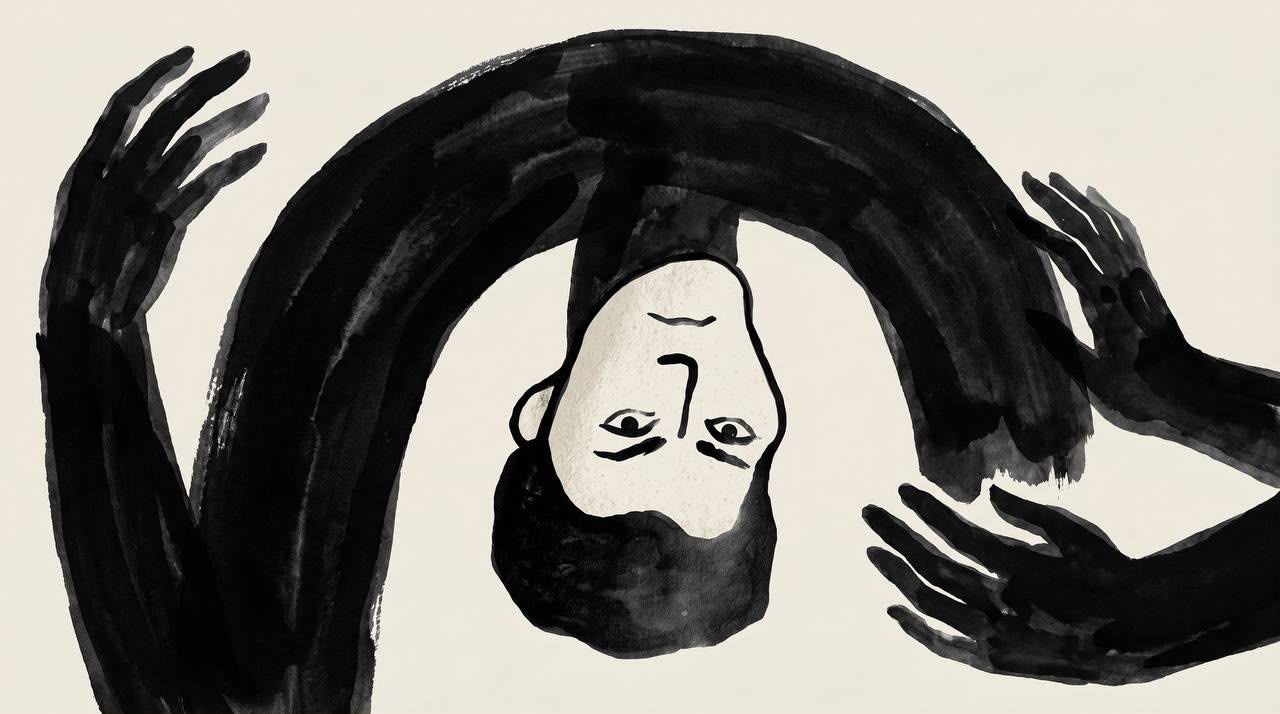
There is, perhaps, something biblical in this domestic scene. What will become of these characters? In her conversation with LC, Rubtsova speaks of a planned sequel: her characters are to embark on a journey together, against the backdrop of which war breaks out.
The lamp between the two actors illuminates a human being who can be examined almost under a microscope. But even the most meticulous examination of the adult voices fails to answer the central question. When the lawyers, the former spouses and the judge fall silent in the courtroom, when the strike of the gavel declares the case closed, who will hear the child? For him, the court’s ruling is not the end of the play. For him, it is where life begins.
Photo courtesy of Natalia Rubtsova