Where Does the Balinese Discovery Actually End?

Most travel destinations exist in our imagination before we ever set foot in them. You see a photo or hear a vivid description of an exotic trip, and your mind builds a version of that place. Once you finally arrive, the reality adjusts those previous images. In the age of social media, we see more detail than ever, yet places still find ways to surprise us.
Famous destinations often reinvent themselves. A place that was once a sleepy fishing village becomes a surf mecca, then a luxury hub. People keep returning because they find new layers to peel back. Bali is the perfect example of this. In most minds, the “Bali stereotype” is a mix of white sand beaches, scuba diving, and the dense jungles of Ubud. Some might include the famous trek up Mount Batur. But the island has another side that most travellers, and even many local residents, rarely explore.
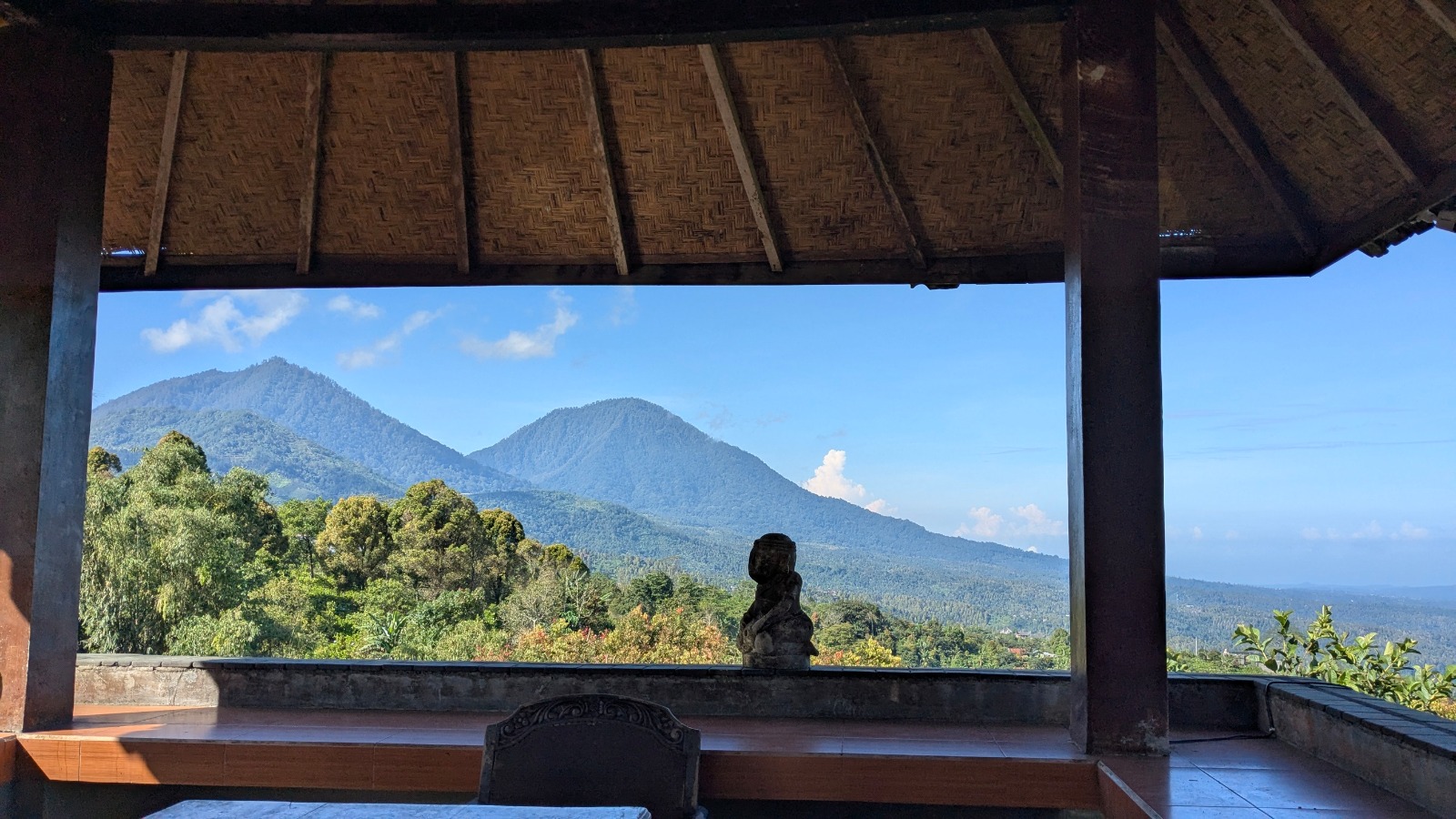
In the centre of the island, the land rises over 1,000 meters. Here, the peaks of Mount Catur and Mount Batukaru reach over 2,000 meters into the clouds. The air is cold. You’ll find yourself digging through your luggage for that light jacket or thick shirt you packed at the very bottom. As you climb the serpentine roads, you enter a high valley containing three lakes. The first is Lake Beratan, home to the iconic water temple you see on the currency notes.
If you keep driving along the main road, the path winds upward through another series of tight turns. Eventually, you reach a high ridge known as the “Twin Lake” viewpoint, though on a clear day, you can see all three. Geologically, Lakes Beratan, Buyan, and Tamblingan are fragments of a much larger story. They were once a single, massive body of water filling an enormous volcanic crater until a catastrophic landslide in the 1800s carved the land into three separate basins. From this height, the differences between them are clear. While Lake Beratan is the centre of local tourism, Tamblingan remains the most isolated and sacred.
Just west of Mount Beratan, the terrain drops away into the vertical world of Munduk. This is a landscape defined by depth, steep jungle valleys that fall away from the road and hidden waterfalls that thunder into the canyons below. According to local oral history, the village wasn’t built for trade or agriculture, but for survival.
The legend says the original settlers were mountain people who fled their lowland homes to escape a relentless, unstoppable plague of ants. They climbed higher into the central ridges, seeking a place where the air was too thin and the nights too cold for the insects to follow. They finally stopped here, amongst the clouds and the ferns, establishing Munduk as a literal place of refuge. Even today, it feels like a sanctuary specifically designed to be difficult to reach, a highland fortress where the struggles of the crowded plains can’t quite catch up to you.
In the 1890s, the Dutch colonial government looked at these cold, “ant-free” ridges and saw a way to survive the tropics. Based in the coastal capital of Singaraja, the Dutch elite struggled with the sweltering heat and disease. They established Munduk as a “hill station,” a high-altitude sanatorium where officials could retreat to recover their health in the “European” air.
To make themselves at home, they built the Pesanggrahan, a government rest house that still stands today. It was a jarring architectural transplant. Unlike the open-air pavilions of traditional Balinese homes, these buildings featured thick stone walls, high ceilings, and even fireplaces with chimneys to ward off the mountain chill. You can still see this “General’s Architecture” in the guesthouses around the village today, where tall, narrow windows are designed to catch the mountain breeze rather than let in the tropical sun.
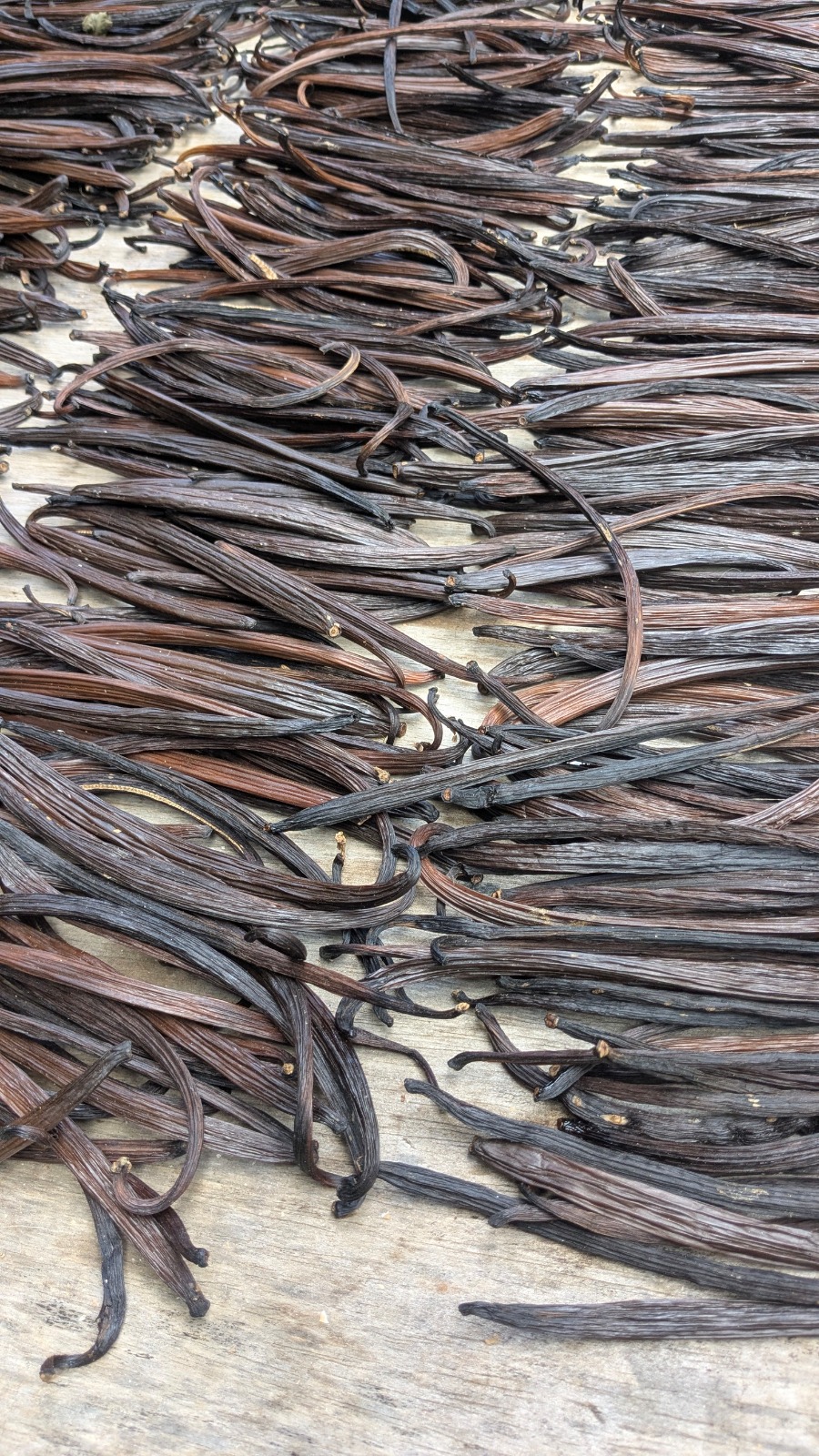
This colonial presence changed the economy of the mountains forever. The Dutch introduced coffee, cocoa, and cloves, turning the rugged terrain into a massive plantation. The clove trees thrived in the damp soil, and by the early 20th century, Munduk had become one of the wealthiest villages in Bali. This era gave birth to a local “clove aristocracy”, families who built grand homes and gained immense influence through the spice trade. Even now, when you walk the paths of Munduk, the smell of drying cloves is everywhere, a permanent reminder of the village’s transformation into a global spice hub.
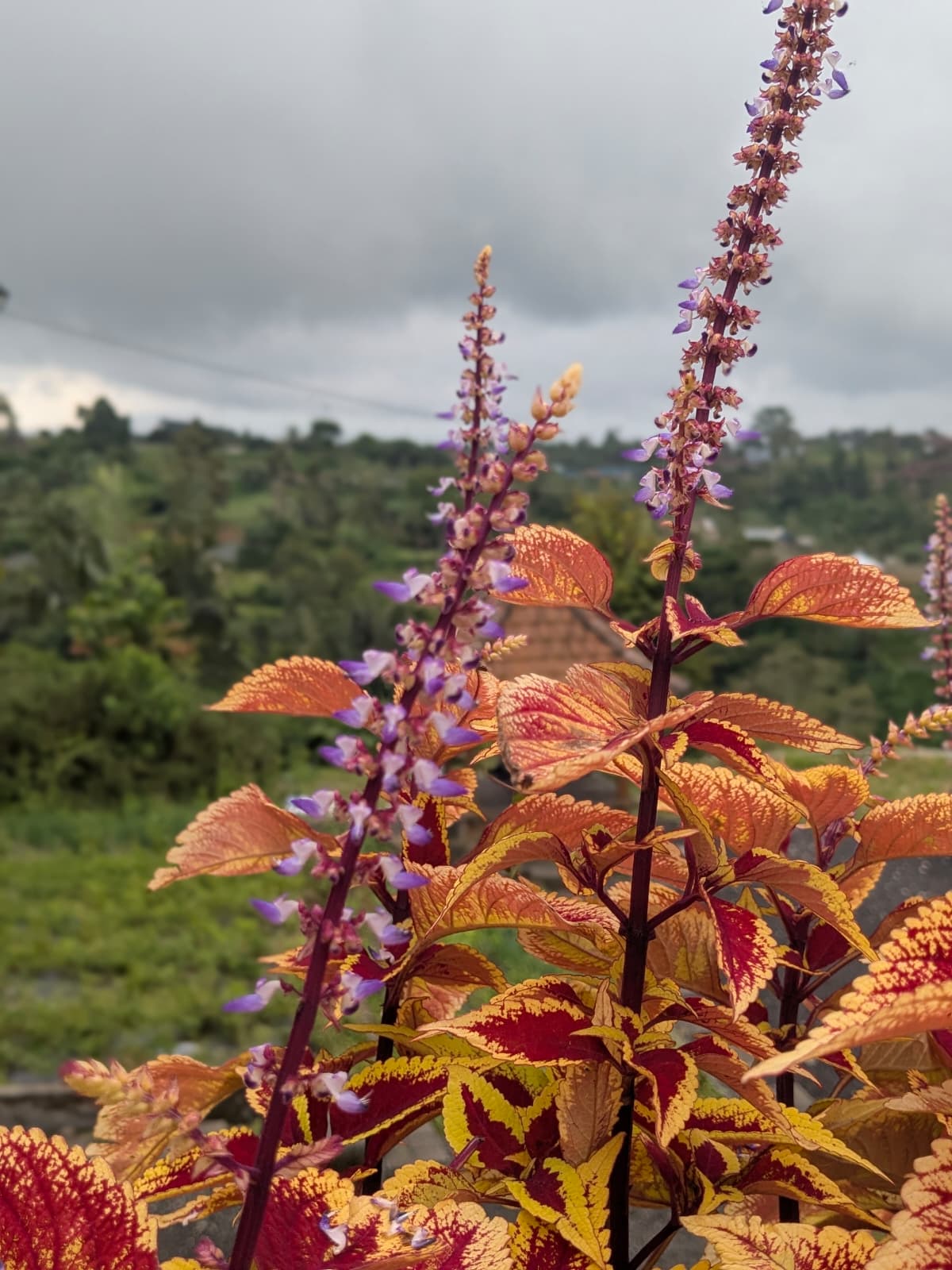
The environment here doesn’t follow the typical rules of the tropics. It is a strange, hybrid world where the vegetation of the equator meets the flora of the alpine highlands. You will see banana trees and coconut palms, the universal symbols of the tropics, growing right next to mountain heathers, azaleas, and giant tree ferns. In the 1930s, Western botanists became so obsessed with this unusual overlap that they eventually established the Eka Karya Botanical Garden in Bedugul to study how these species coexist.
The plants have adapted in visible, physical ways. In the hot lowlands, plants typically grow massive, thick, waxy leaves to catch light while preventing water loss. But as you climb into the cold, damp mist of the mountains, the strategy changes. Leaves become smaller, thinner, and hardier to shed constant moisture and prevent rot.
Beyond the palms, the landscape is crowded with “money-crops” and wildflowers. You’ll find coffee shrubs with waxy dark leaves and cocoa pods hanging directly from trunks. Splashes of colour come from bright hibiscuses, orange bird-of-paradise flowers, and massive bromeliads that cling to branches or grow straight out of the ground. Underneath it all is a thick carpet of emerald moss and wild hydrangeas, which thrive in the acidic volcanic soil. It’s a dense, multilayered garden where every inch of space is claimed by something green.
This history is rooted in the landscape. In the nearby village of Gesing, there is a banyan tree over 700 years old. Its root system is so massive and tangled that local resistance fighters used it as a hiding place during the Dutch military interventions. It wasn’t just a tree; it was a living fortress that protected the community for generations.
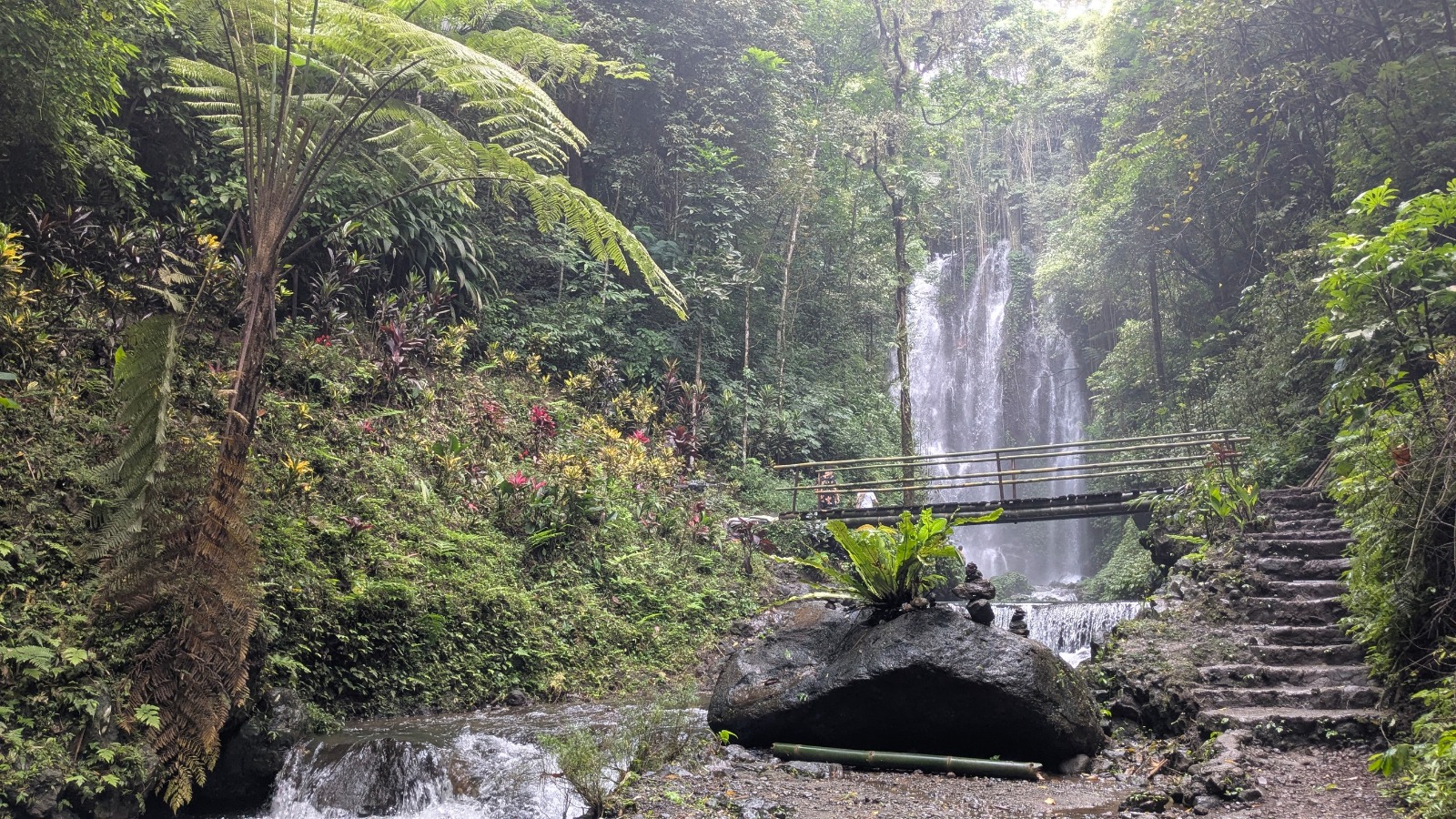
Beyond the spice plantations, the real drama of Munduk lies in its verticality. The village is the gateway to a network of steep, winding paths that drop hundreds of meters into the valley floor, leading to some of the most powerful waterfalls on the island. These aren’t manicured tourist trails leading to a tourist frenzy of waterfalls around Ubud; they are narrow dirt tracks carved into the red earth, often slippery with mountain mist and lined with wild ginger and massive ferns. Waterfalls like Melanting and Munduk Waterfall don’t just trickle, they are thundering out of the jungle canopy, dropping sixty meters straight down into rocky basins. The spray is so constant that the surrounding cliffs are entirely swallowed by thick, neon-green moss. It is a gruelling hike back up, but standing at the base of these falls makes you realize how the “ant-refugees” were able to stay hidden for so long, the landscape itself is a wall of water and stone.
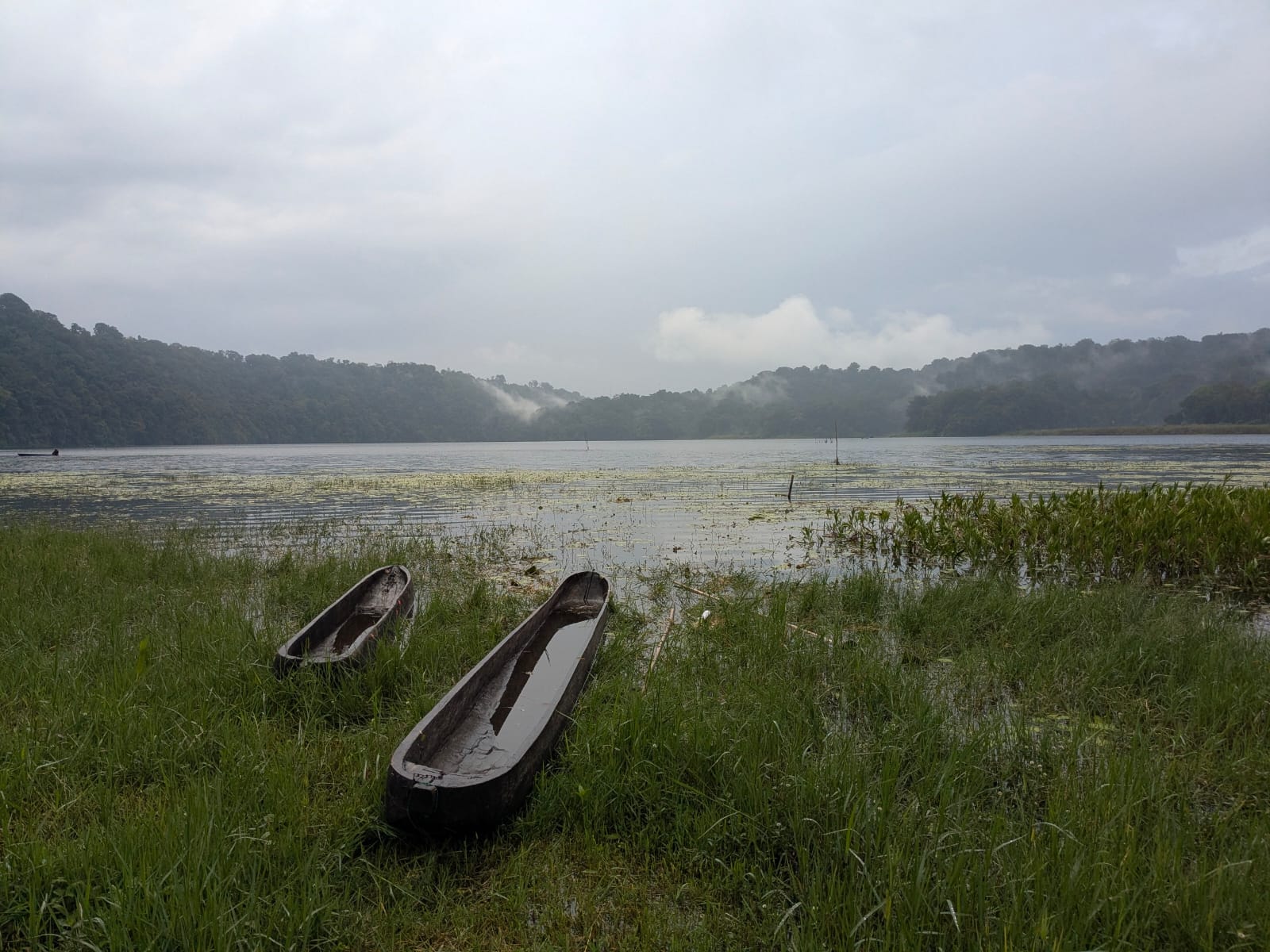
Today, Lake Tamblingan remains the heart of this “other” Bali. The name comes from the words Tamba (medicine) and Elingan (spiritual memory), named after a priest who supposedly cured a plague with the lake’s water. The lake feels less like a body of water and more like a grand, roofless room. Because it is nestled deep within a volcanic caldera, the steep, green mountains act as walls that block out the rest of the island. The scale feels personal; it isn’t an endless horizon that makes you feel small, but a contained space that offers a sense of privacy, a “personal valley.”
To keep the water pure, the local community bans all motorized engines. The only way to move across the lake is by “pedahu”, traditional dugout canoes made from hollowed-out tree trunks. Often lashed together in pairs to create a stable platform, moving in one of these feels like stepping back centuries. There is no roar of a motor, just the rhythmic splash of a wooden paddle.
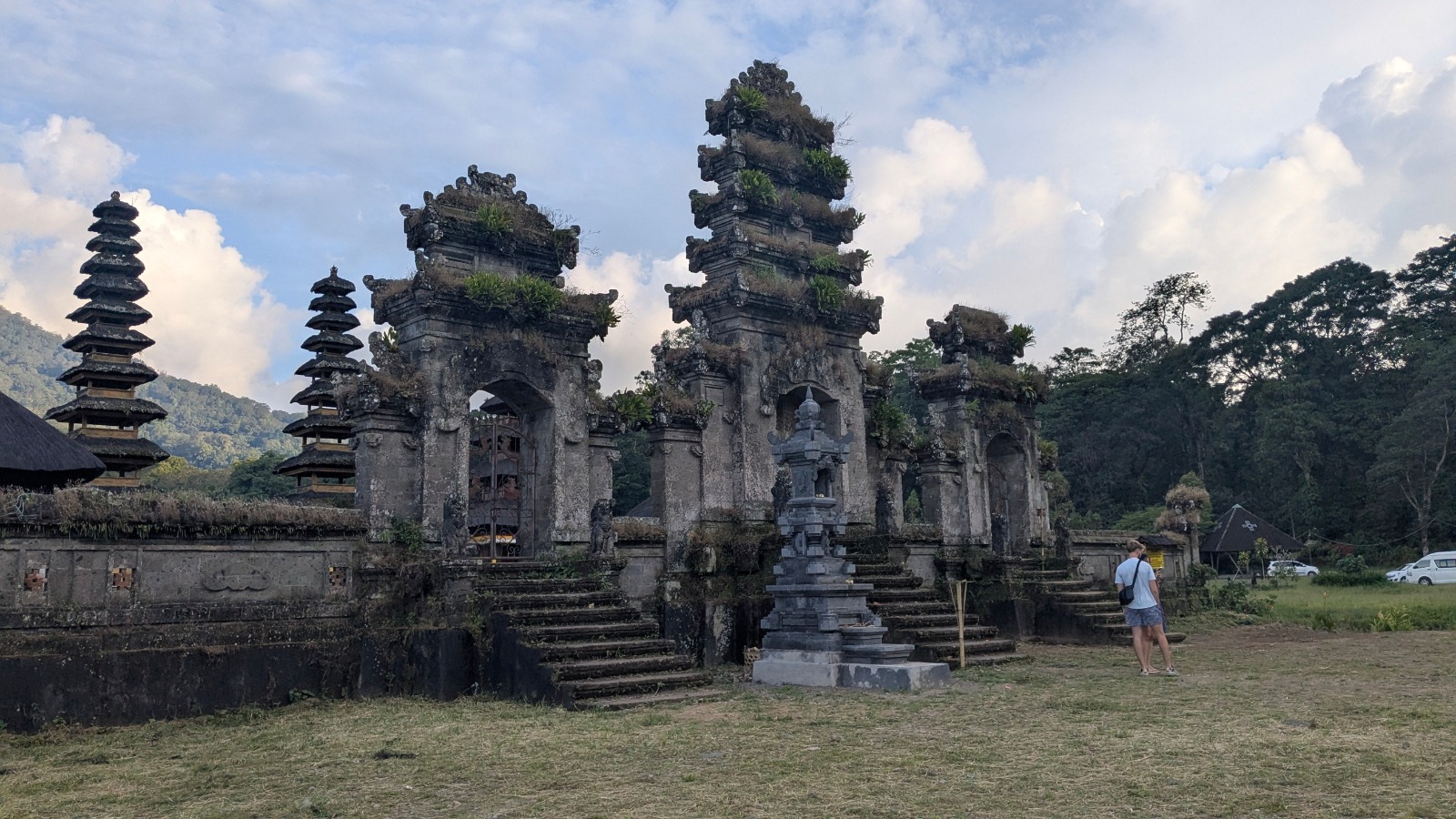
The focal point of this silent space is the moss-covered stone of Pura Ulun Danu Tamblingan. The temple sits low on the shore, and because there are no concrete barriers, the lake dictates the view. In the dry season, you can walk through the temple gates on the grass. In the rainy season, the water rises to claim the land, and the shrines appear to float. This lack of modern development means the only sounds you hear are the wind in the trees and the quiet glide of the canoes.
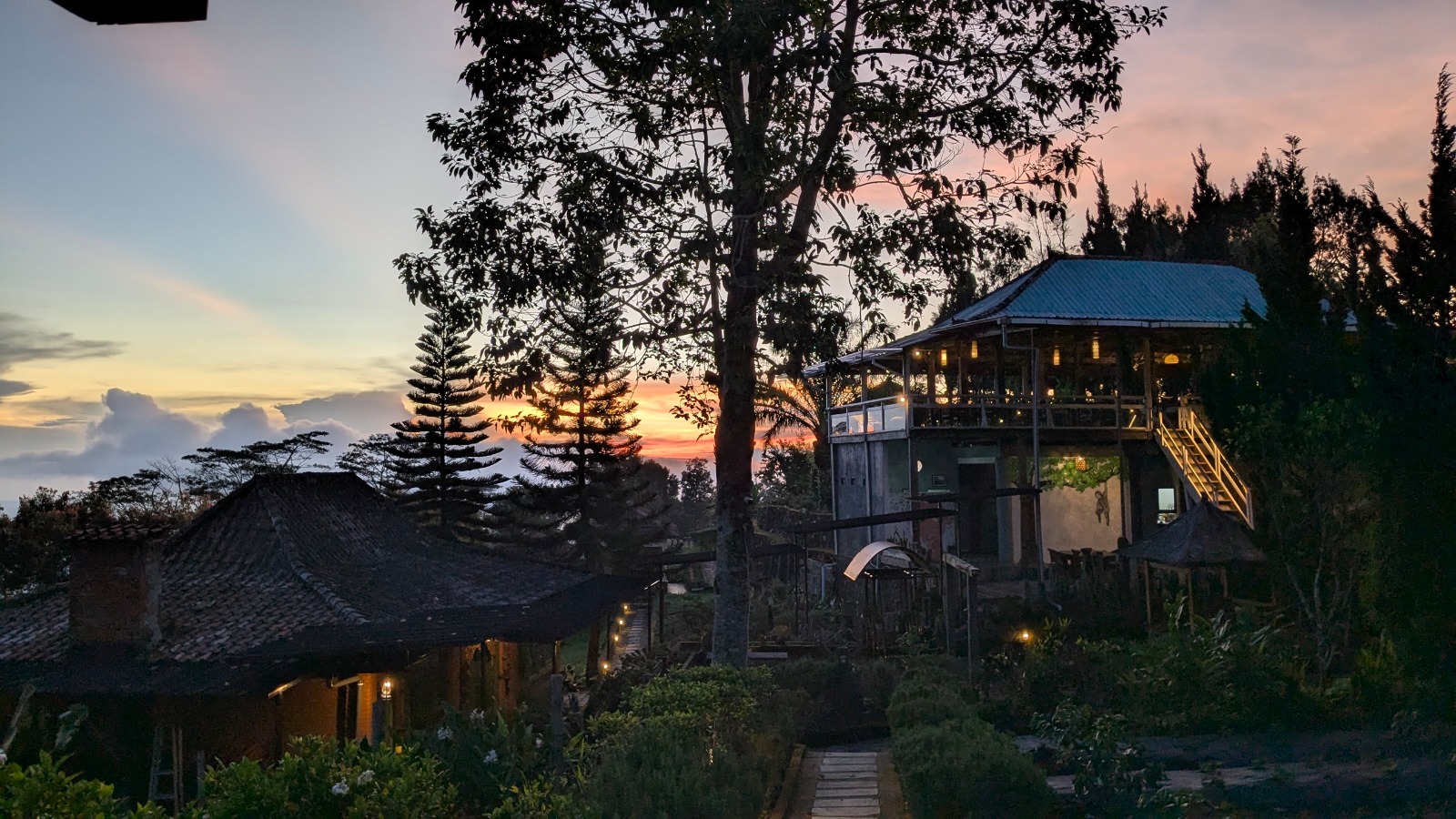
After a day spent in the mist and the mud of the ridges, finding a place like Ulekan restaurant feels like a hallucination. It is a refined, classy establishment sitting in a location that feels almost impossibly remote. The design is clean and intentional, providing a sharp contrast to the wild jungle just outside the windows. It is a reminder that this part of Bali isn’t just about rugged history or survival; it is developing its own version of quiet, elevated comfort. The menu focuses on sophisticated Indonesian flavours, but the clear standout is the Sate Bebek, or duck satay. While duck can often be tough, here it is tender and rich, grilled over hot coals until it’s perfectly charred and smoky.
To really understand the spirit of these highlands, a quick day trip isn’t enough. You have to stay for more than a few nights to let the mountain chill and the slow pace sink in, and you need to choose your base wisely. The options are as varied as can be. You could find yourself in a traditional wooden joglo or a modern A-frame house that looks out toward the Bali Sea to the north. On some mornings, if the mist isn’t too thick, you can wake up overlooking the lakes as the first light hits the water.
Others might decide to stay right on the edge of the waterfall paths to hear the roar of the water through the trees. You’ll find famous spots like Munduk Moding Plantation, known for its iconic views, or the colonial charm of Puri Lumbung. But my favourite was Kayu Kopi Villa. It features a “glass box” style bedroom that feels like it’s virtually hanging off the edge of the lush mountain, facing the north coast. Waking up there is the ultimate reminder that while the rest of the island is busy elsewhere, the best way to see Bali is to simply stay still and watch the mist roll by.