Alessandro Bettarini: The Quiet Architect Behind Panerai’s Engineering

The history of a legendary watchmaker is usually told through its most prominent names: the founders, the iconic models, and the technical breakthroughs. But behind every engineering achievement lies a quieter cast of characters — the people who calculate, prototype, fail, and refine, often far from the spotlight. Decades later, their solutions become part of the canon of watchmaking. Alessandro Bettarini is one of those figures. An engineer and designer who worked directly on Officine Panerai’s experimental developments, he belongs to a generation for whom watchmaking was less a commercial pursuit than a discipline devoted to solving the most demanding technical problems. London Cult. spoke to Bettarini about his years at Panerai, the secrets of experimental design, his own ventures, and the story behind the design of the Luminor — one of the brand’s most recognisable watch cases, and a lasting part of its identity.
How did your interest in engineering and watchmaking begin? Was there a particular person or experience that inspired you to pursue this path?
I believe my interest in mechanics was innate. When I think back to my childhood, I remember myself constantly tinkering with screwdrivers and pins. My toys never lasted very long because, sooner or later, I would take them apart to discover what was inside and how they worked.
At Officine Panerai, I was responsible for mechanical design, clockwork mechanisms and micromechanics. These were central aspects of my work. I cannot say that I was inspired by any particular person. Rather, circumstances led me to study these technologies and deepen my understanding of them.
What were the defining moments in your professional journey before joining Panerai? Did you ever imagine following a different career?
Not at all. My original ambition was to graduate in Physics and pursue a career in a research laboratory. However, because of my father’s health problems, I had to put those plans aside and take responsibility for the family business together with my sister. Life took me in a different direction from the one I had originally imagined.
What was Panerai like when you joined in the 1980s? What do you remember most vividly about the people, the workshop and its engineering culture?
After my father’s death, following a long illness, my sister and I continued running the family business, Armando Bettarini & Figli snc, a small metalworking company employing around twenty people.
When we decided to close the company at the end of 1978, we made a commitment to our employees: we would not shut down until every one of them had found alternative employment. With this in mind, we contacted all our customers, including Officine Panerai. Engineer Zei, who was the company’s administrator, suggested that I join Panerai.
On January 1 1980, I began managing Panerai Meccanica as its CEO, bringing with me the last two employees of our family business. After a couple of years, I moved to Officine Panerai, where I joined the Research and Development department.
I had already known the people there for some time, but working alongside the more experienced employees gave me the opportunity to learn much more about the company. Their stories, personal experiences and recollections helped me understand just how unusual and distinctive that working environment was.
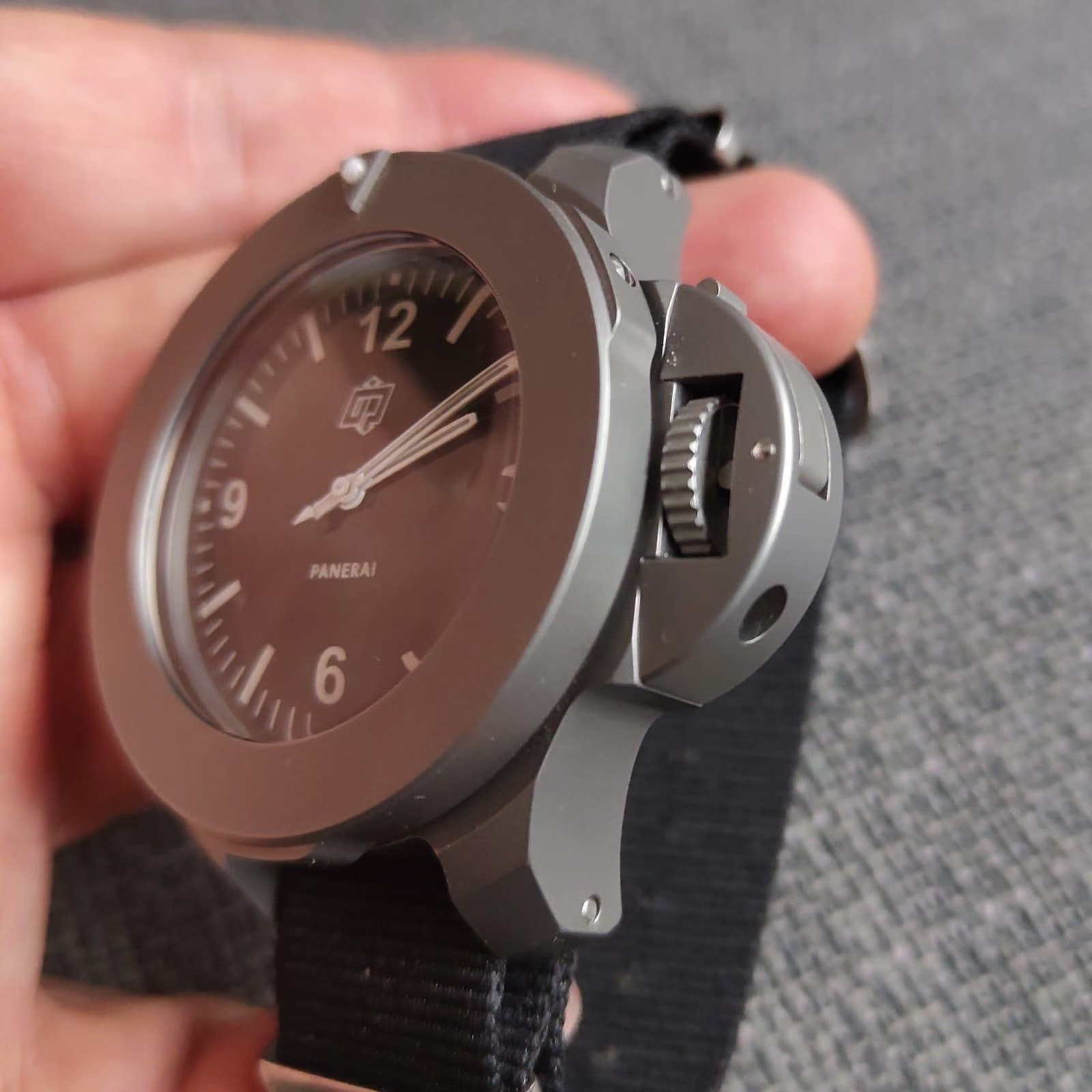
What inspired the development of the Prototipo 1000 Metri O.P. for the Italian Navy’s COMSUBIN unit, and what were its greatest engineering challenges?
No, the initiative came from Officine Panerai itself. The company proposed the 1,000-metre watch project to COMSUBIN; it was not a request from COMSUBIN. The intention was to increase the company’s turnover, and we believed that proposing a modern diving watch would be a suitable way to achieve this.
Initially, the project focused on two main technical features: the use of a case material with a low magnetic signature and the adoption of an automatic movement. Following the laboratory tests, a third feature was incorporated into the final prototype: the use of tritium tubes, or trasers, to illuminate the dial.
Eight experimental prototypes were developed in titanium and bronze. Which achievement from this project are you most proud of, and how important was intuition in the engineering process?
There were several important differences that made the new model technically superior to its predecessors. The use of titanium was particularly significant. It is a material highly suitable for use in seawater and also offers a low magnetic signature. The latter characteristic was especially important for mine-clearance divers, although it was appreciated by raiders as well.
Another important innovation was the rotating bezel, which allowed the wearer to keep track of elapsed time during a raiding mission. These features represented a substantial technological development compared with the watches Panerai had produced during the war and in the years immediately afterwards.
You retained the final titanium prototype. What does this watch mean to you today, and what memories does it bring back?
The prototype in my possession is one of the examples produced in the Officine Panerai laboratory for various functional tests. The final prototype, which I would describe as the definitive example of the project, was sold, together with other objects, to VLG, the company that took over the watch division.
What inspired you to write Prototipo 1000 metri O.P.? How important was it for you to preserve the story and technical knowledge behind this remarkable project?
Having personally witnessed the birth and development of the 1,000-metre watch, I eventually felt the need to put the events surrounding its creation down in writing. Over the years, I had come across numerous articles and stories about Officine Panerai that, as someone directly involved in its history, I knew were inaccurate.
Some accounts were plausible, while others were occasionally invented, sometimes for speculative purposes. I felt that it was important to leave a reliable account based on direct experience and personal knowledge, rather than allow the history of the project to be shaped by speculation or inaccurate recollections.
How did your experience at Panerai shape your decision to pursue independent watchmaking and establish your own business? What has entrepreneurship taught you? Could you tell us a little about your own brand?
Around 2002, I began considering the possibility of establishing a business in Florence specialising in design and prototype development, drawing on the experience I had gained at Officine Panerai. The proposed company would focus on designing products and, where necessary, manufacturing prototypes. Engineer Zei was informed of the idea and welcomed it with considerable interest. He even organised several meetings at his home to discuss the possibilities.
We established contacts with various Italian watch manufacturers, and we went as far as developing a business plan for a small production facility dedicated to wristwatch movements. There were many projects under consideration, and the potential seemed considerable.
However, as the project developed, substantial differences of opinion emerged. These led me to reconsider my participation in the proposed company. My withdrawal ultimately brought the initiative to an end. A few months later, my friend Luciano Nicheri and I decided to continue independently, with a more modest and focused project.
In February 2004, we founded ENNEBI in Prato. Our aim was to design and manufacture wristwatches and table instruments for collectors and enthusiasts, using the most advanced technologies while preserving the attention to detail and individuality of traditional craftsmanship. In this way, we wanted to continue the manufacturing tradition of our region.
Our production programme focused primarily on diving wristwatches and dashboard instruments, watches designed to operate under extreme climatic conditions, including very high and low temperatures, high pressures and atmospheric vacuum, as well as clockwork mechanisms and underwater magnetic compasses for both wrist and dashboard applications.
Who is Alessandro Bettarini outside the world of engineering? What are your personal interests, passions and sources of inspiration?
I have always preferred to keep a low profile and avoid attracting attention. This natural attitude was particularly well suited to the work I did at Officine Panerai, where, although the company is now known worldwide for its watches, much of our work concerned things that were not meant to be made public.
In my private life, I have maintained the same approach. I prefer to keep away from crowds and the limelight. I look after a small garden and enjoy all kinds of plants, especially succulents. I also love books and read a great deal. I am not particularly fond of fantasy novels; I much prefer historical essays, especially those concerning the Second World War. I am also something of a bricoleur, partly out of necessity, but above all because I genuinely enjoy making and repairing things myself.
How would you like to be remembered? What do you hope to leave behind for future generations of engineers and watchmakers?
I have done many things over the course of my career, but I do not consider them significant enough to expect them to be remembered. Watchmaking enthusiasts will probably continue to refer to a particular Panerai watch case by my surname, as a result of a series of circumstances that led to this association. Perhaps someone will become curious and look for information about me. But that was never my intention.
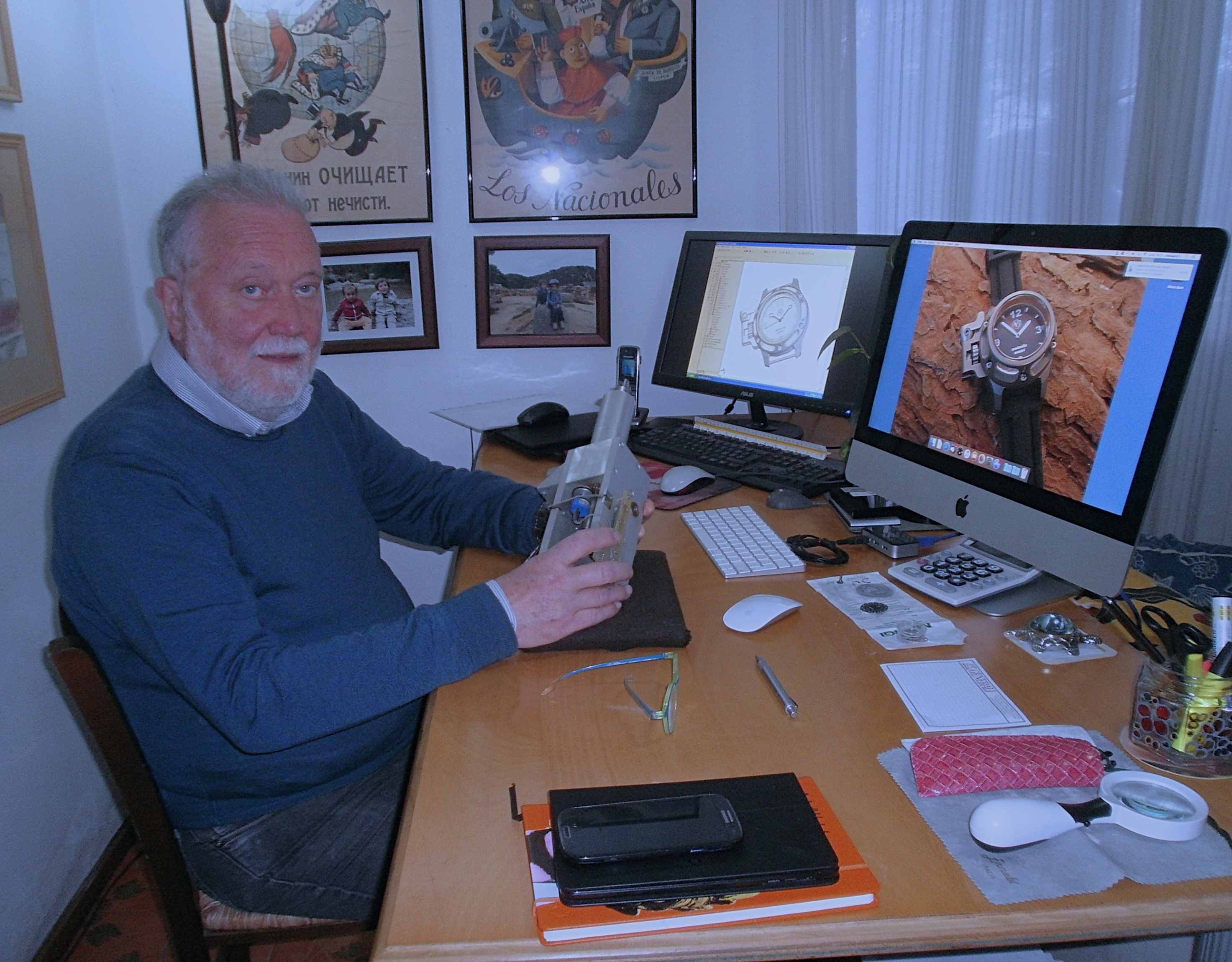
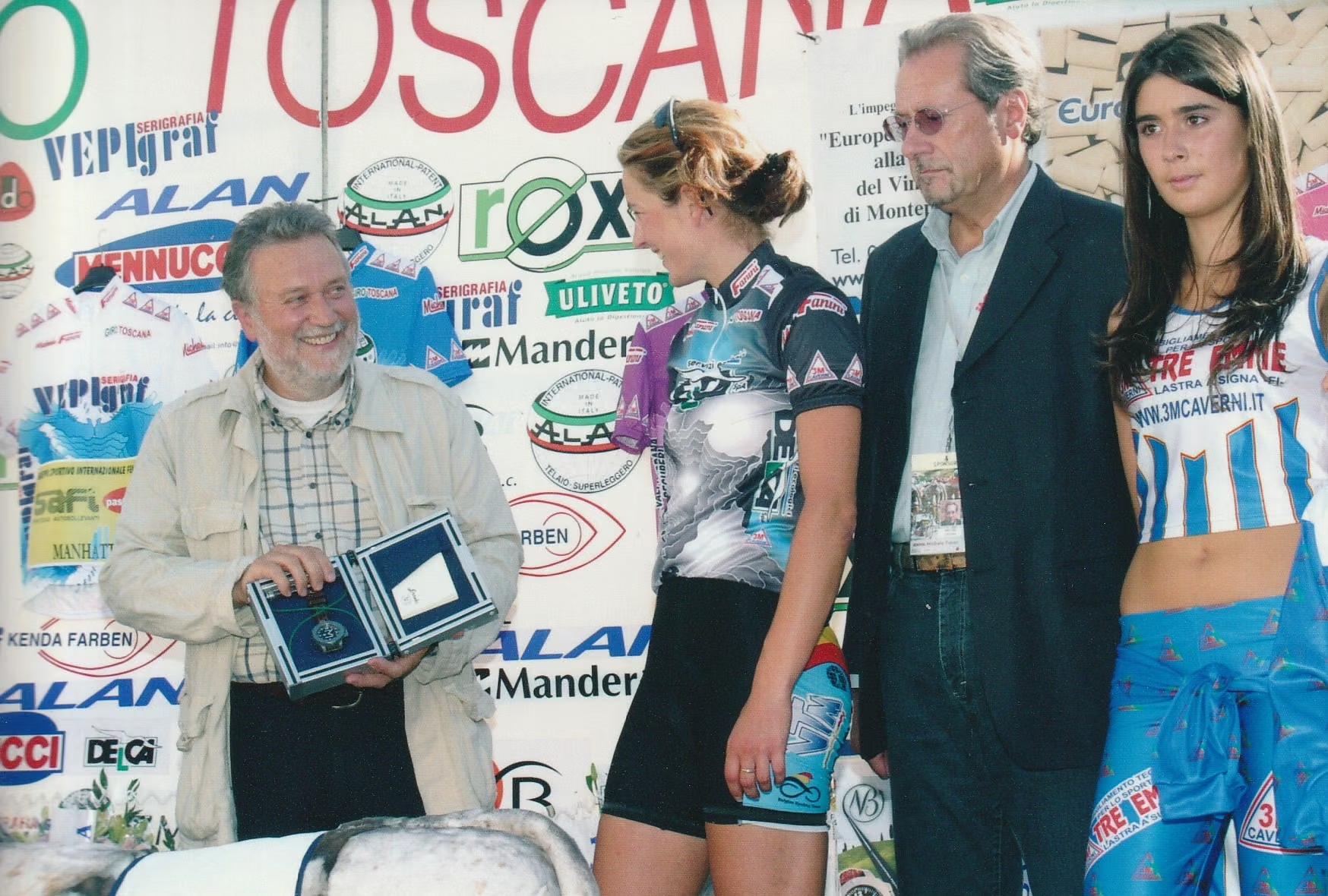
Photo from the Bettarini family archive