Highlights of collectible design from PAD Paris 2026

LC went to PAD Paris to discover some of the most compelling works in collectible design. The fair closed on Sunday, April 12th, marking its 28th edition – and, as always, it did not disappoint.
Set in the Jardin des Tuileries, it celebrates not only collectible design but also the very idea of the French art de vivre. A regular event since 1998, it has become a cornerstone of the design world and a magnet for collectors and connoisseurs.
The fair continues to expand. A new location in Saint-Tropez has been announced, with a summer launch planned for this year – further expanding its reach and influence.
The line-up of galleries was particularly strong, with established names such as Carpenters Workshop Gallery, Galerie Dutko, Galerie Jacques Lacoste, Achille Salvagni Atelier, 88 Gallery, and Galerie Kreo returning with a carefully curated mix of new works and signature pieces. Alongside them, a new generation of galleries injected fresh energy into the fair – PALATY Gallery, Jérémy Pradier-Jeauneau, Booroom Gallery, Yoomoota, Objects with Narratives, Pulp Galerie, and Mia Karlova Galerie – each rethinking heritage, narrative, and the evolving language of design.
LC has prepared a selection of design pieces that caught our attention at the fair – works worth discovering and, perhaps, even acquiring.
Best Stand Award 2026 – Galerie Romain Morandi
Galerie Romain Morandi received the highest honour at PAD – the Stand Award 2026. Known for his scholarly and meticulous approach to object selection, the presentation impressed viewers with museum-quality pieces. Among them were a stained beech cabinet and desk by Koloman Moser (both dated 1902), displayed alongside the striking eight-legged table by Adolf Loos “Haberfeld” (1870-1933).
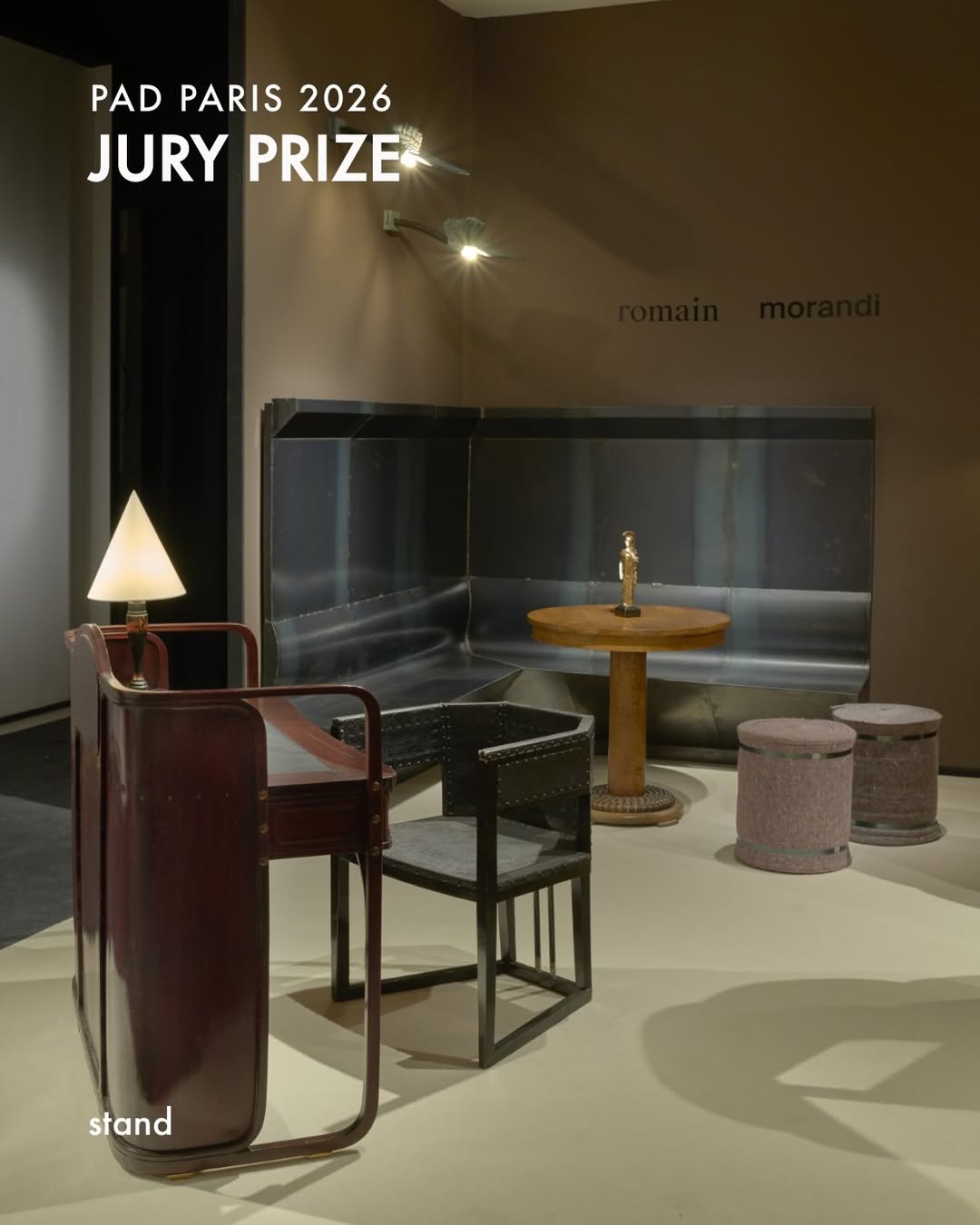
This was juxtaposed with the rebellious steel Corner Seat “Café Casino” by GRUPPE PENTAGON – originally destroyed during a happening in 1987 and later reconstructed in 2017. The dialogue between destruction and restoration added a compelling historical tension to the stand.
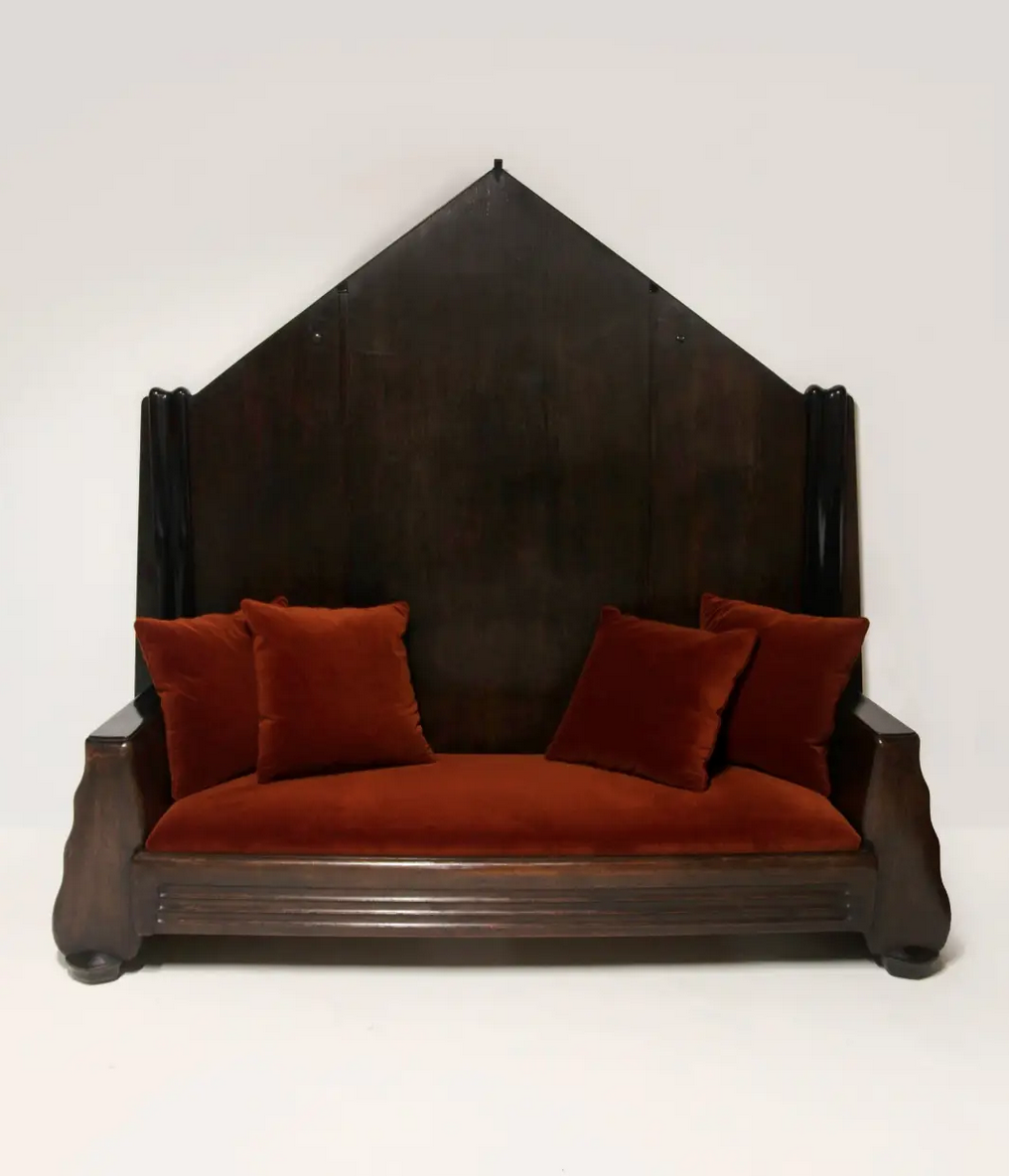
Sofa by Pieter Kramer (1881–1961), 1921
The founder of the gallery, Romain Morandi, named the wall sofa by Pieter Kramer (1921) as the most important piece on the stand. Kramer, a prominent Dutch architect and leading figure of the Amsterdam School, created the piece with a strong architectural identity.
Dark and atmospheric, the sofa’s high back recalls a façade or even a chapel structure. This form gives it a monolithic presence, transforming the object into a micro-building. It carries authority – almost ceremonial in nature – blurring the line between furniture and architecture.
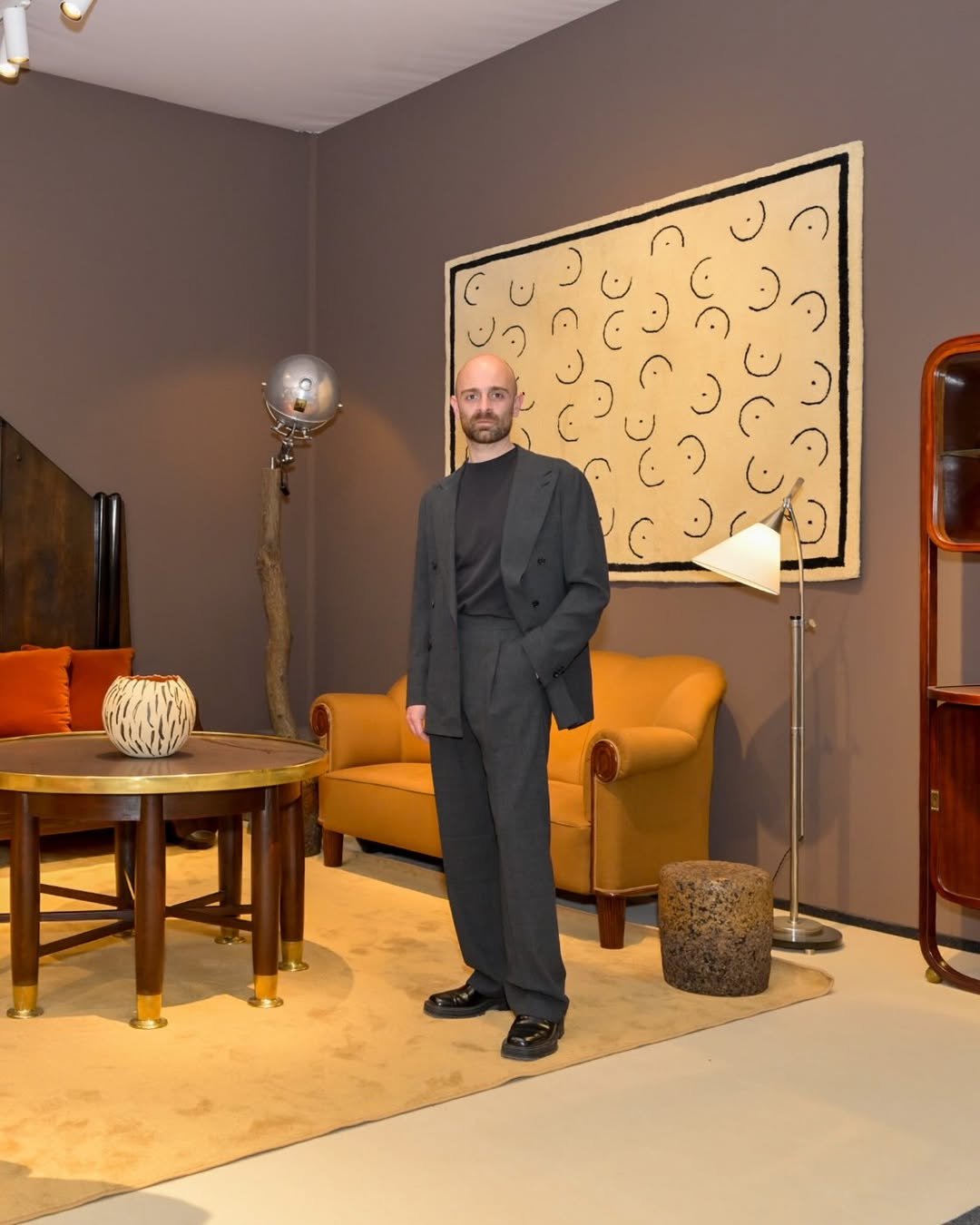
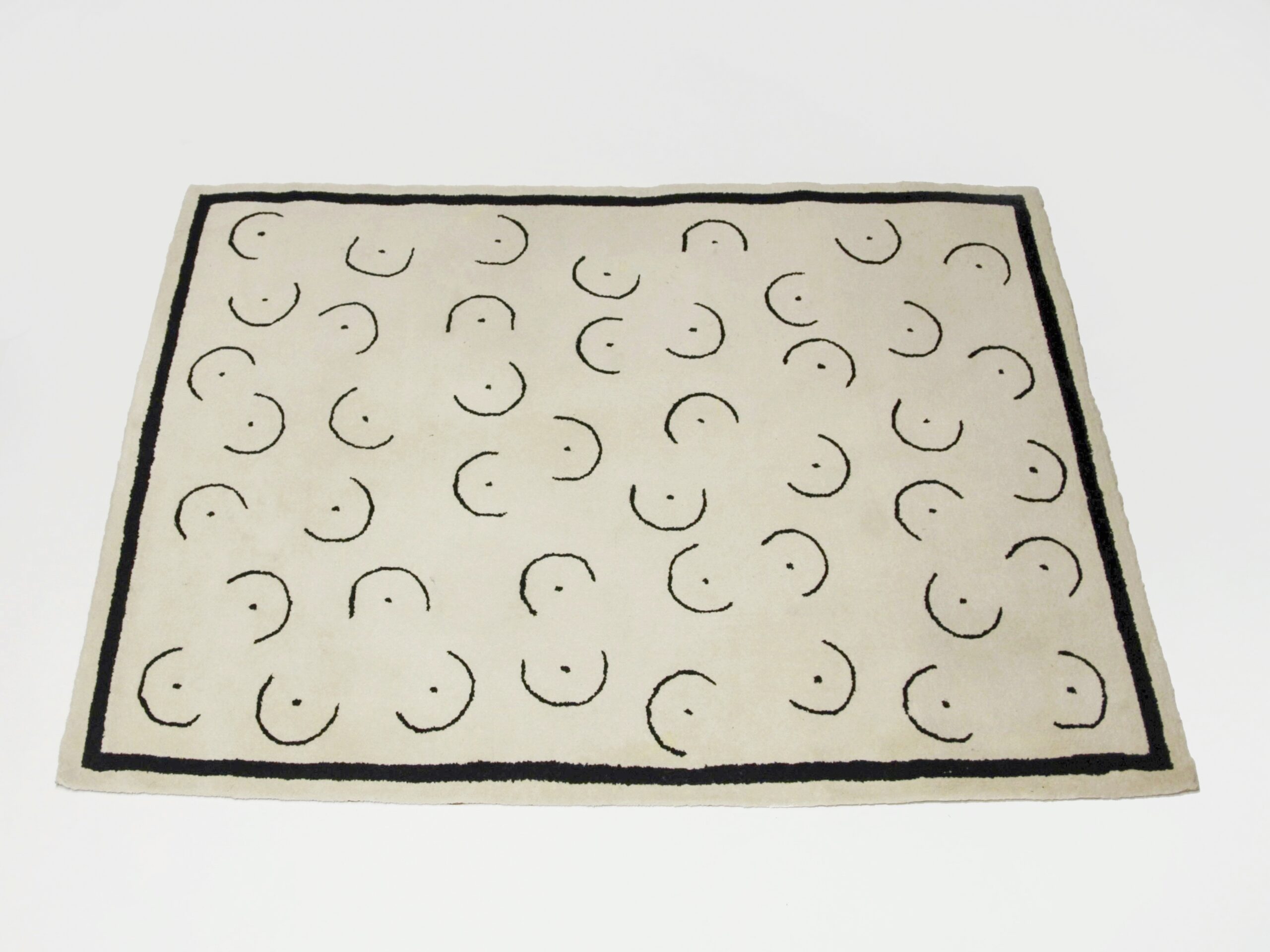
A Rug of Many Bosoms by Jasper Morrison, 1984
Our attention was drawn to “A Rug of Many Bosoms” by Jasper Morrison, created in 1984 during his final year at the Royal College of Art. Morrison described it as a “conceptual ornament… the only form of decoration I find acceptable.”
The rug was inspired by a statue’s breast in a Hindu temple and by prefabricated industrial houses in the United States. It balances humour, critique, and abstraction – turning ornament into a statement.
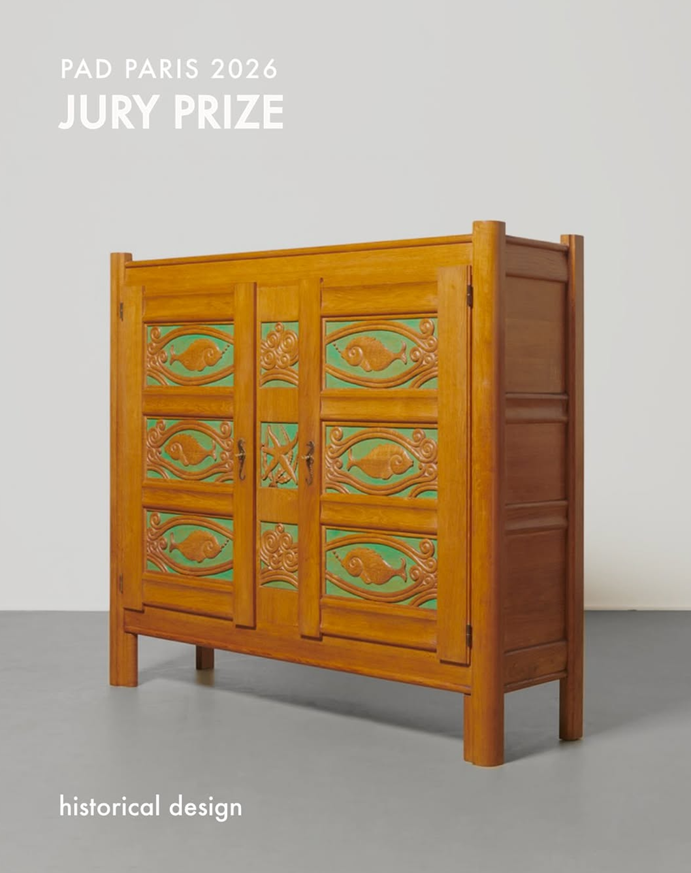
Best Historical Design Prize 2026 – Cabinet by Joseph Savina, 1961
Laffanour |Galerie Downtown received the Historical Design Prize for presenting “L’Armoire aux Poissons” (1961), a remarkable cabinet born from the collaboration between Le Corbusier and sculptor-cabinetmaker Joseph Savina.
Pale wood provides a quiet, restrained ground, while vividly carved aquatic motifs animate the green drawers. The composition creates rhythm and depth, allowing craftsmanship and narrative to coexist in perfect balance.
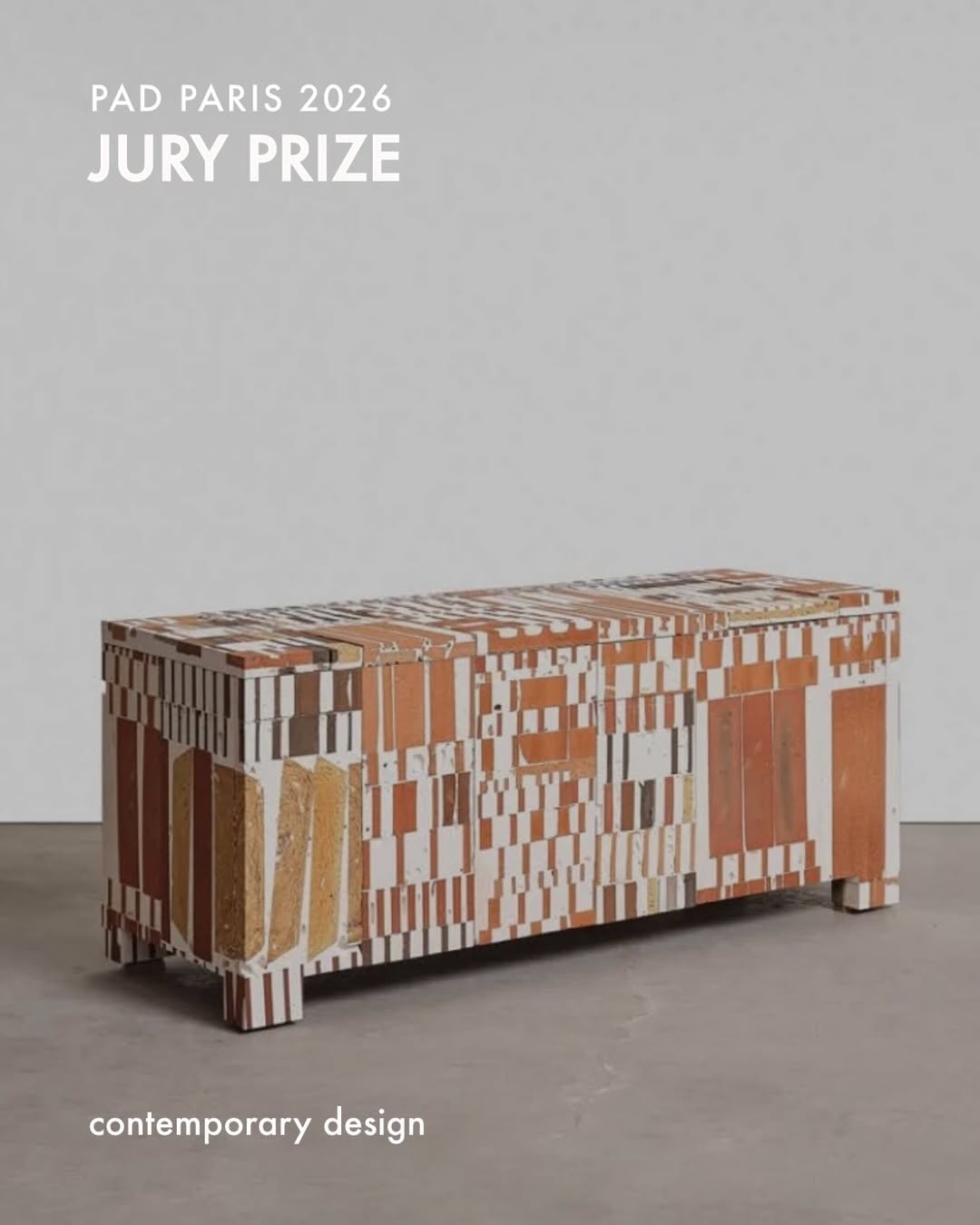
Best Contemporary Design Prize 2026 – Chest by Aurélien Veyrat
The Contemporary Design Prize was awarded to Dumonteil Design for Aurélien Veyrat’s chest. In this work, reclaimed furniture is transformed through intricate brick marquetry.
Interested in the dialogue between past and present, Veyrat uses brick – an industrial yet primordial material – as his primary medium. Coming from the earth and widely available, it allows him to express a sustainable approach to craftsmanship. He treats brick as a visual language, subverting its traditional utilitarian role.
His works exist between the archaic and the contemporary, bringing ideas of labour, memory, and continuity into a modern design context. By working with second-hand objects, he engages directly with reuse and transformation – giving new life to forgotten forms.
Special Jury Prize 2026 – Maison Intègre
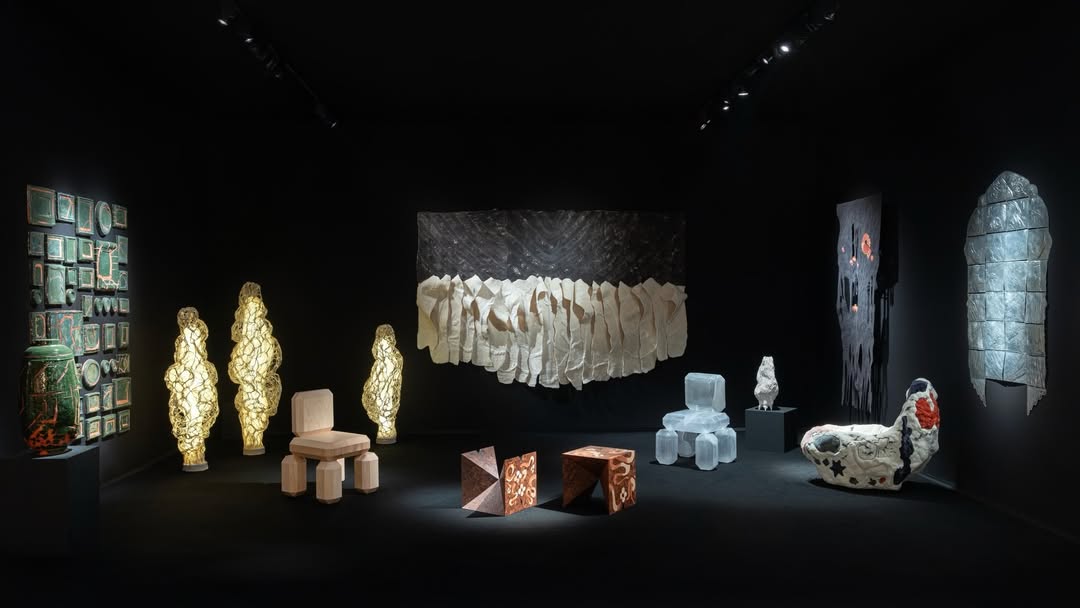
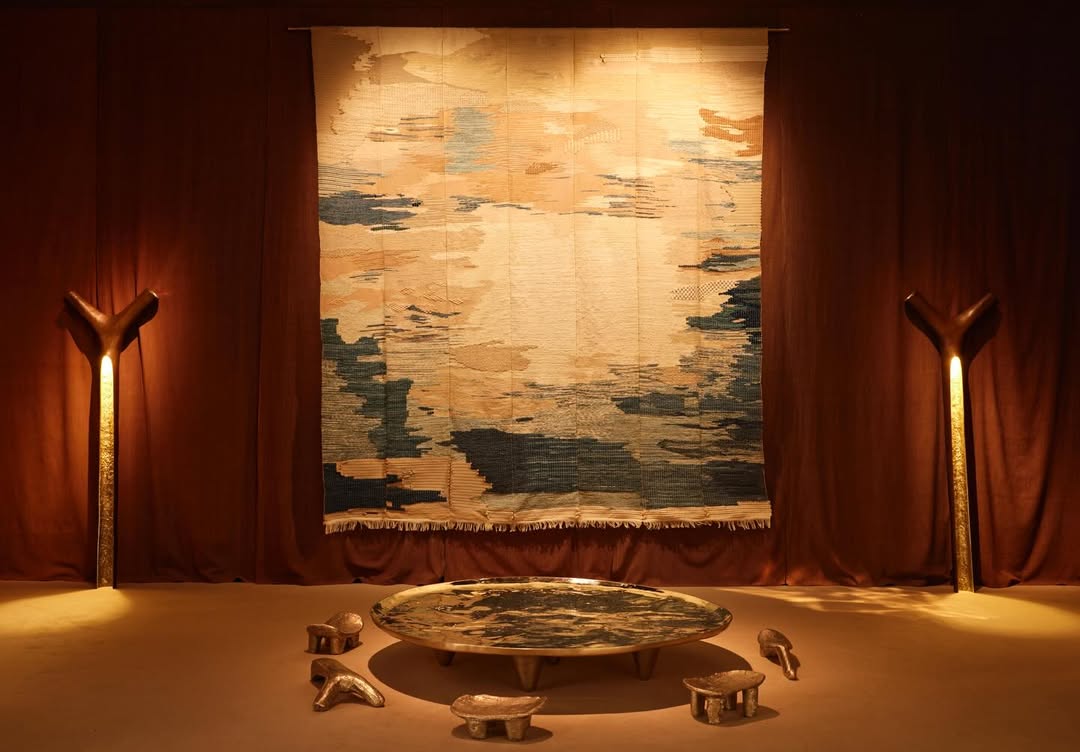
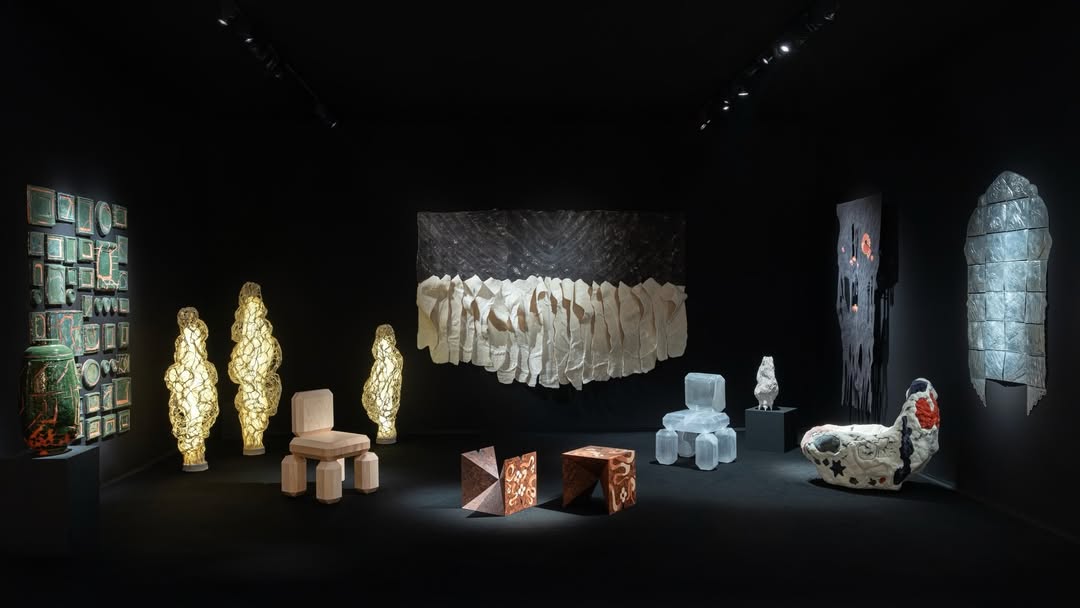
Maison Intègre presented a stand entirely devoted to West African artisanship. Founded in Ouagadougou, Burkina Faso, in 2017, the project – led by Ambre Jarno – has successfully brought local craftsmanship to an international stage.
The booth radiated warmth, evoking the atmosphere of an African village conceived as a symbolic and immersive space. A tapestry by Bogoké Collectif in collaboration with Rachel Marshil suggested the softness of a sunset, while tables and totemic lamps resembled hand-shaped or naturally eroded objects.
Working with reclaimed metals and the ancestral lost-wax technique, each piece honours Burkinabé craftsmanship while supporting local economies and fostering cross-cultural dialogue.
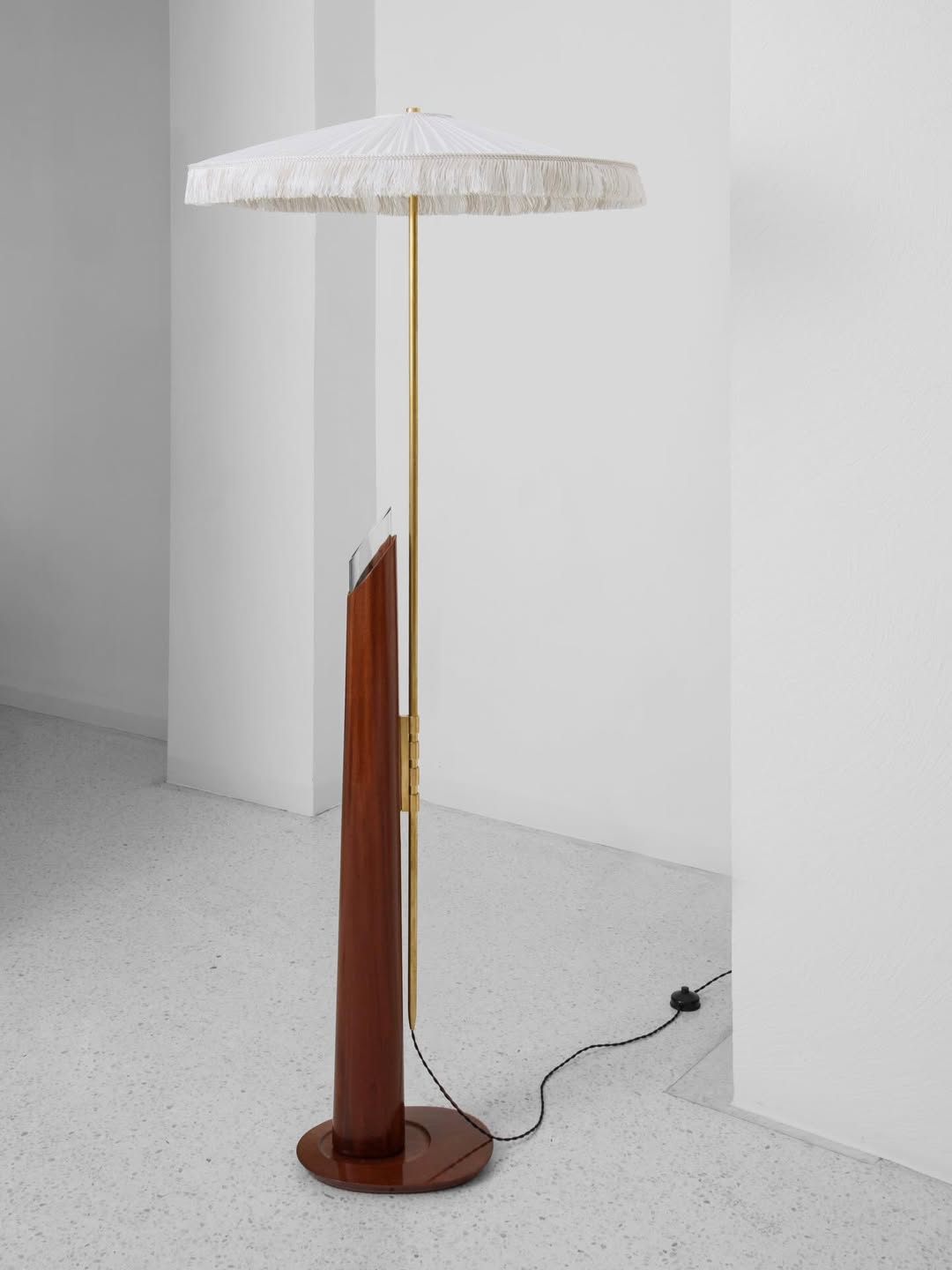
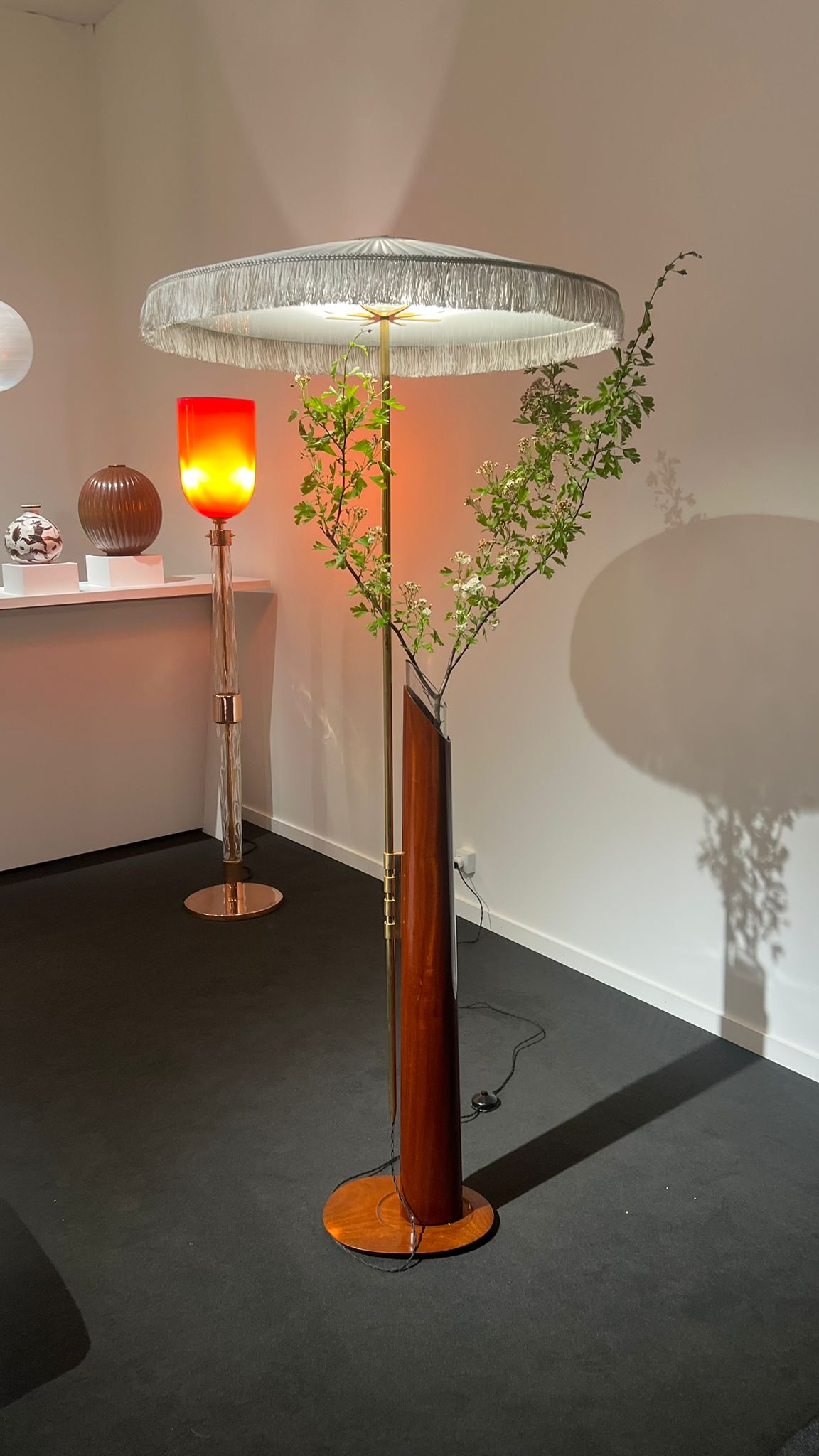
Floor Lamp by Pietro Chiesa (1892–1948), 1940
This elegant lamp, crafted from mahogany, brass, glass, lacquered metal, and silk, was produced by Fontana Arte under the direction of Pietro Chiesa in 1940.
The piece seamlessly merges functional lighting with sculptural presence, drawing from both Art Deco and early modernist influences. The piece commands attention with a distinctly theatrical presence. It stands on a circular wooden base, from which vertical wooden panels rise to frame a glass vase.
A slender brass stem runs alongside, introducing a refined contrast between warm metal and wood.
The light source sits beneath a large circular shade finished with a delicate fringe adding a couture-like softness.
Presented with a branch of hawthorn blossom, the lamp emitted a diffused, atmospheric light that interacted with its surroundings. Rather than adapting to the space, it appeared to define its own environment.
Pietro Chiesa was a leading Italian modernist and Art Deco designer, best known for his work in artistic glass. In 1933, together with Luigi Fontana and Gio Ponti, he co-founded Fontana Arte, specialisign in furniture, lighting and glass design.
The piece was presented by Giustini/Stagetti, a Rome-based gallery focusing on Italian architecture and decorative arts from the 1930s to the 1970s.
One of the veterans of PAD, Galerie Dutko presented a refined selection of works by Philippe Anthonioz, Béatrice Casadesus, Matthias Contzen, Robert Courtright, Monique Frydman, Cheiko Katsumata, Ted Larsen, among others.
Founded in 1978 by Jean-Jacques Dutko, the gallery continues to evolve while maintaining a strong dialogue between contemporary art and design. Echoing its current exhibition Rockstone, the stand featured architect Jean-Michel Wilmotte with a free-form canvas by Jean-Pierre Pincemin, creating a powerful visual interplay.
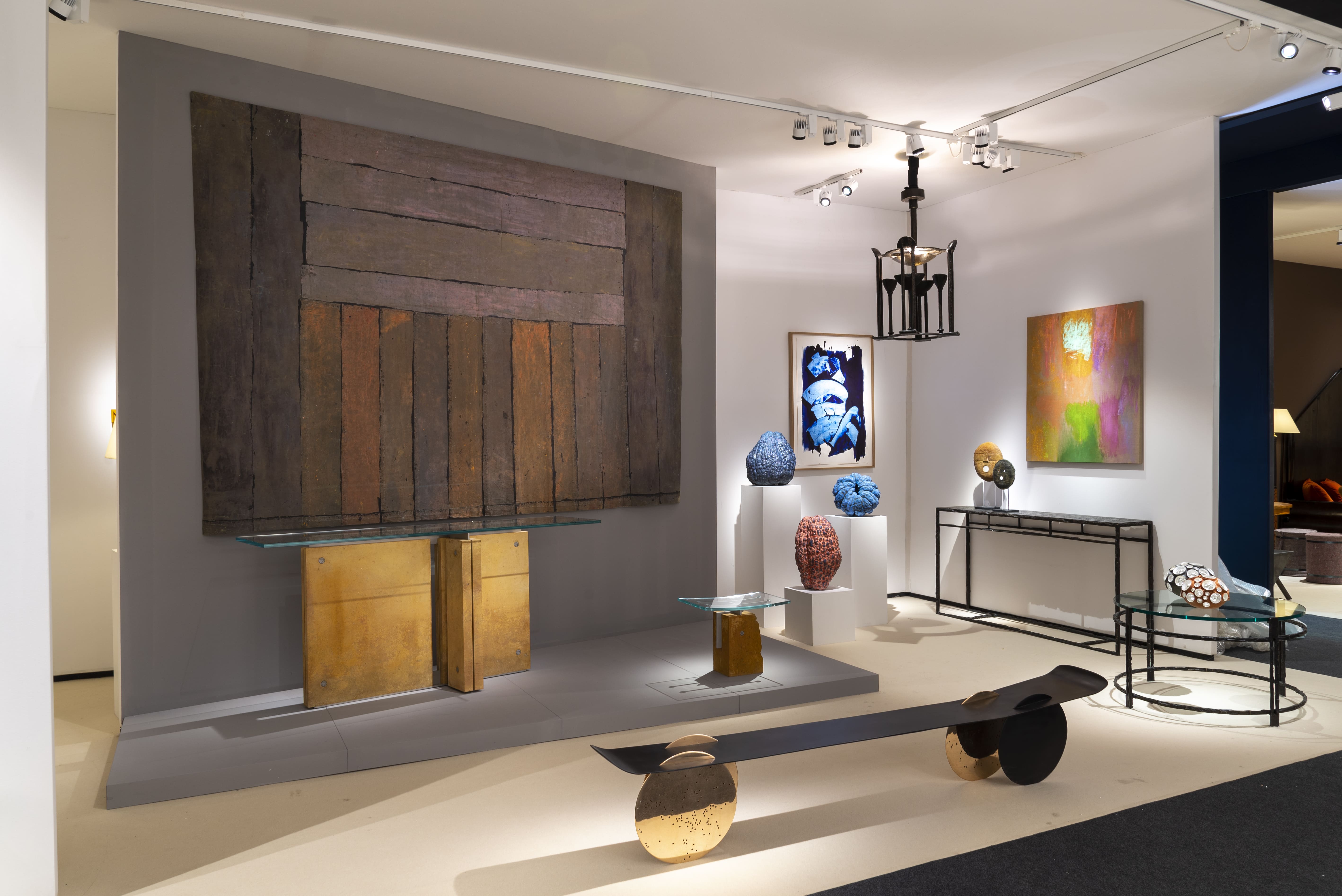
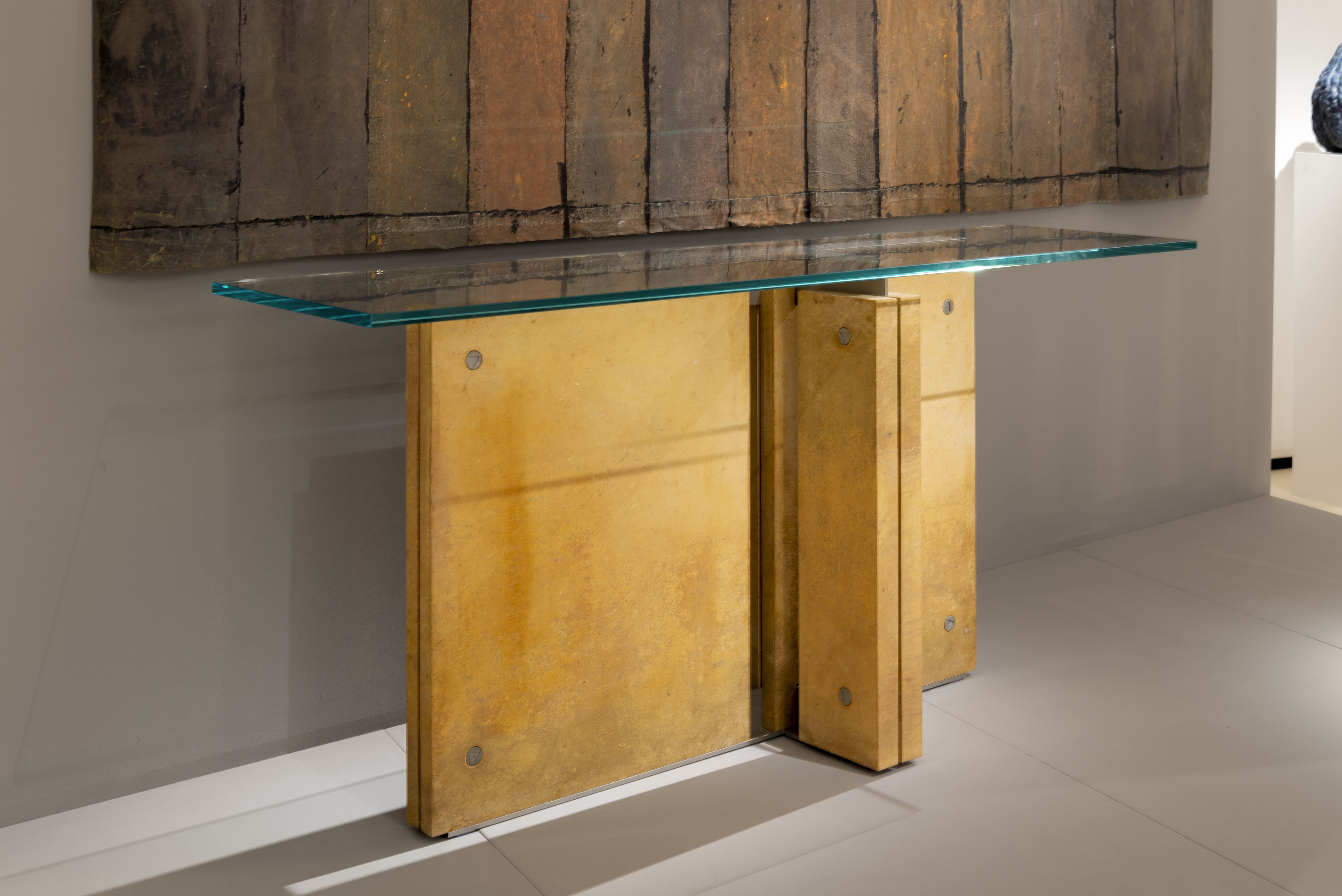
Console by Jean-Michel Wilmotte
The console immediately draws attention. Part of the Rockstone collection, it reflects Wilmotte’s pursuit of balance and precision. Monumental in presence yet visually light, it demonstrates a refined architectural sensibility.
The base is made from Indus Gold marble sourced from Pakistan. Visible circular fasteners punctuate the structure, introducing an industrial rhythm and reinforcing its engineered character.
The piece stands as a compelling expression of Wilmotte’s practice at the intersection of architecture, sculpture, and design.
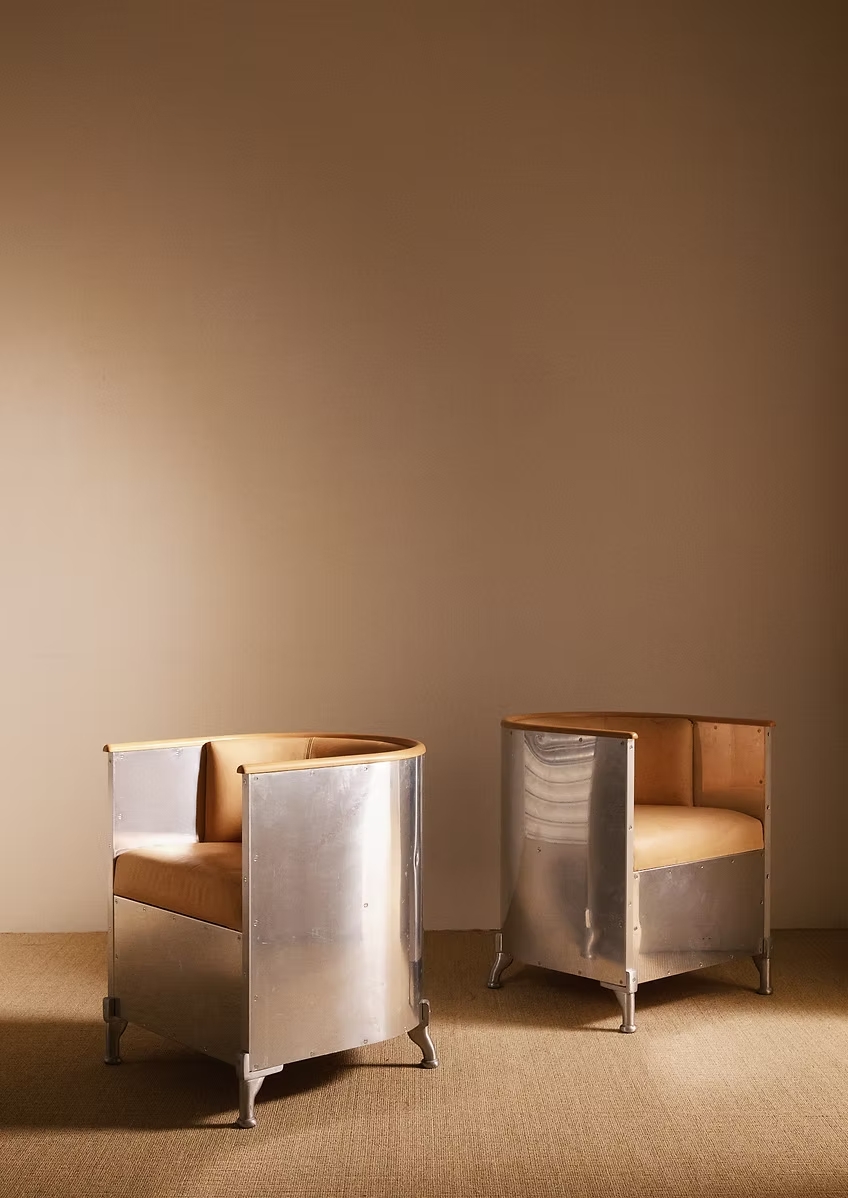
Chairs by Mats Theselius (1990s) & Fireplace by Dries Kreijkamp (1960)
At Aurélien Serre’s booth, Mats Theselius and Dries Kreijkamp stood out in a compelling dialogue. Their works share a dominance of metal, sculptural form, and industrial finish, yet they retain a sense of domestic warmth.
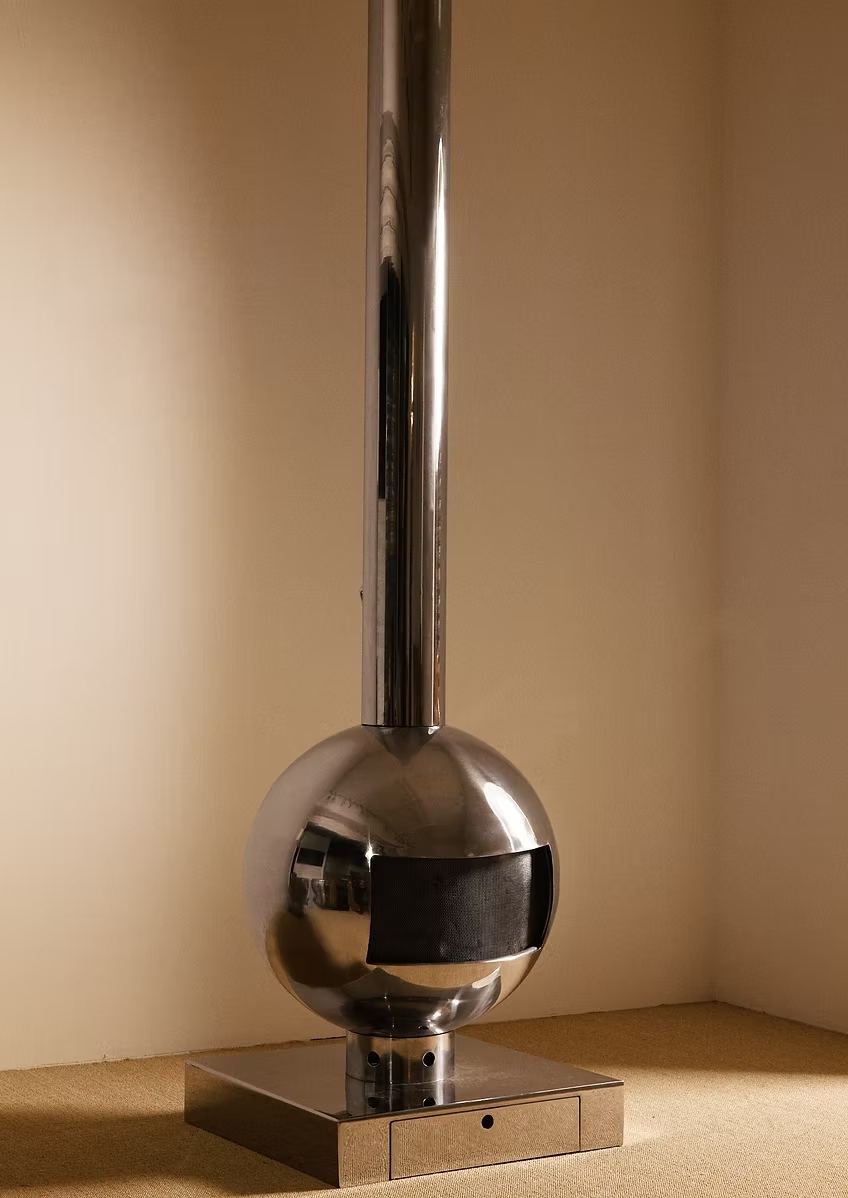
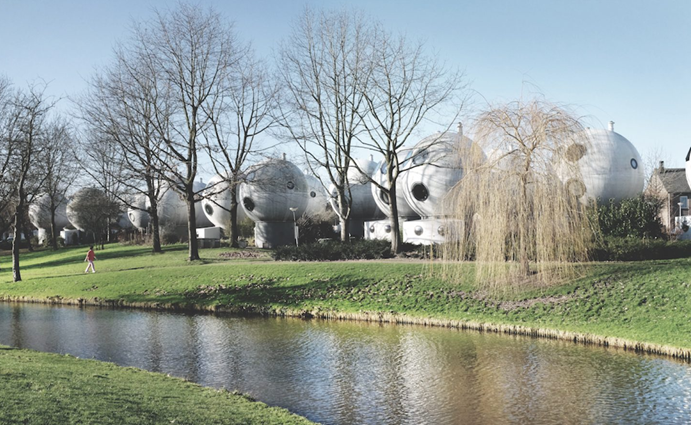
Kreijkamp’s fireplace, with its reflective surface, mirrors the surrounding space and evokes a futuristic, almost space-age aesthetic. It recalls his architectural experiment – the spherical Bolwoningen houses in the Netherlands.
Mats Theselius, a Swedish designer who emerged in the 1980s, was represented by a pair of armchairs from 1990s. Their curved aluminium shelves, paired with warm-toned upholstery, reveal their construction through visible joins and rivets. They balance brutality and softness, futurism and tactility – bridging past and present materials.
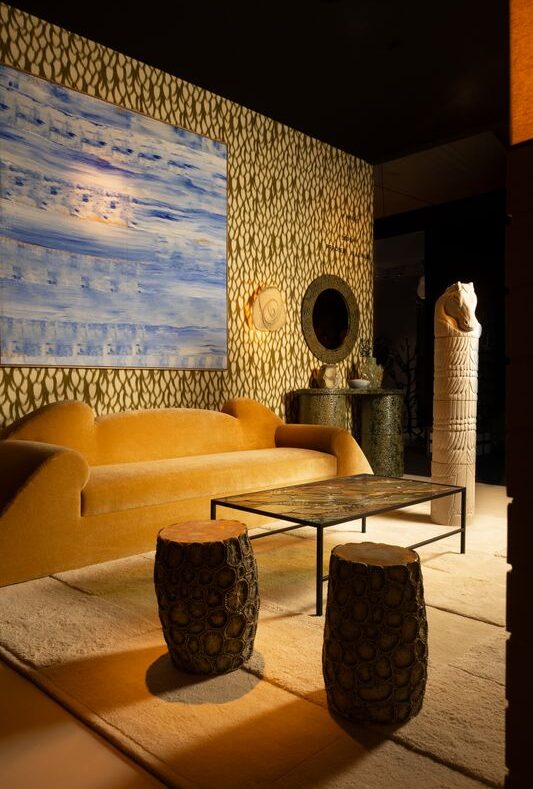
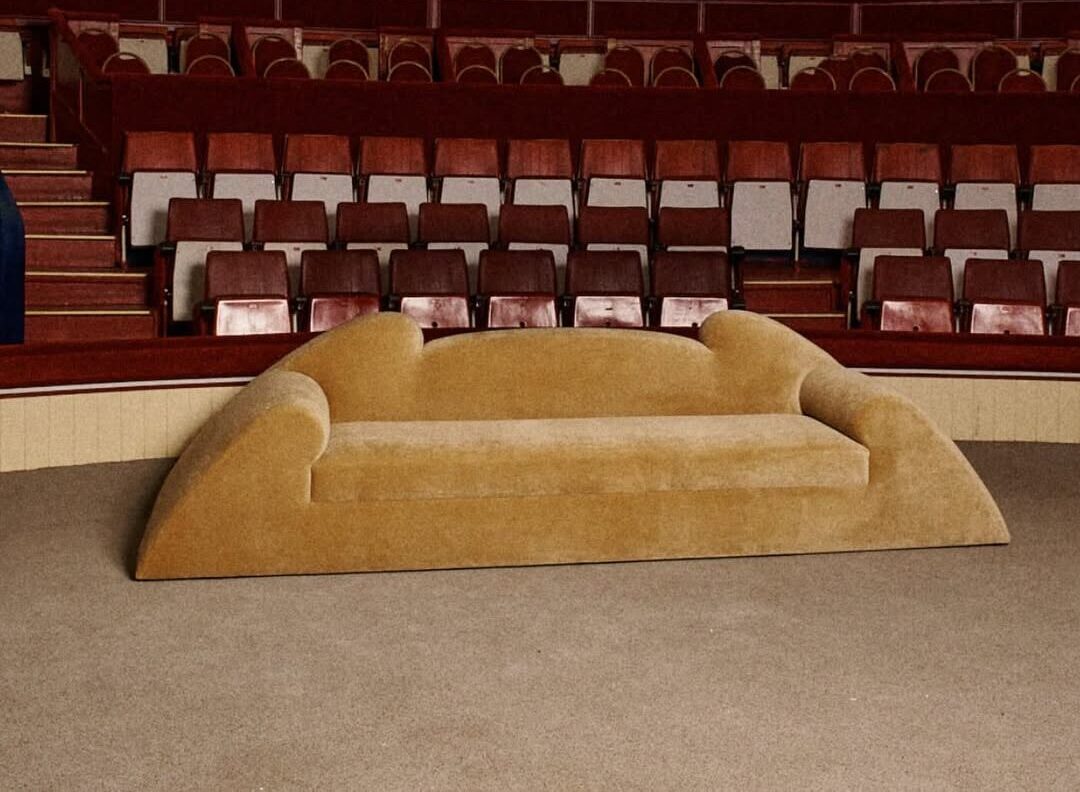
Sofa by Jérémy Pradier-Jeauneau
The curved, monumental sofa was one of the most striking pieces at the stand of Jérémy Pradier-Jeauneau. Part of the designer’s debut collection, it draws inspiration from the movement of waves translated into voluptuous form.
Despite its scale, the sofa conveys a sense of calm. Its monolithic silhouette suggests stability, while the broad, low seat encourages a relaxed posture, shifting away from formal seating conventions.
The stand itself was conceived as an immersive installation. Upon entering, visitors were enveloped in a warm, atmosphetic environment where design unfolded from floor to ceiling like an inhabited landscape – reflecting the founder’s, Jérémy Pradier-Jeauneau, background in cinema.
Wall art by Irina Razumovskaya
Among the wall-based works presented at the fair, Palaty Gallery artist Irina Razumovskaya with piece Seeing Through stood out for its material experimentation and conceptual depth.
Working with ceramics, the artist explores themes of female identity and cultural memory. The cracked surfaces of the frames evoke fragmented narratives, inviting viewers to reflect on their own memories. Each piece appears as an artefact of time, carrying its own story.
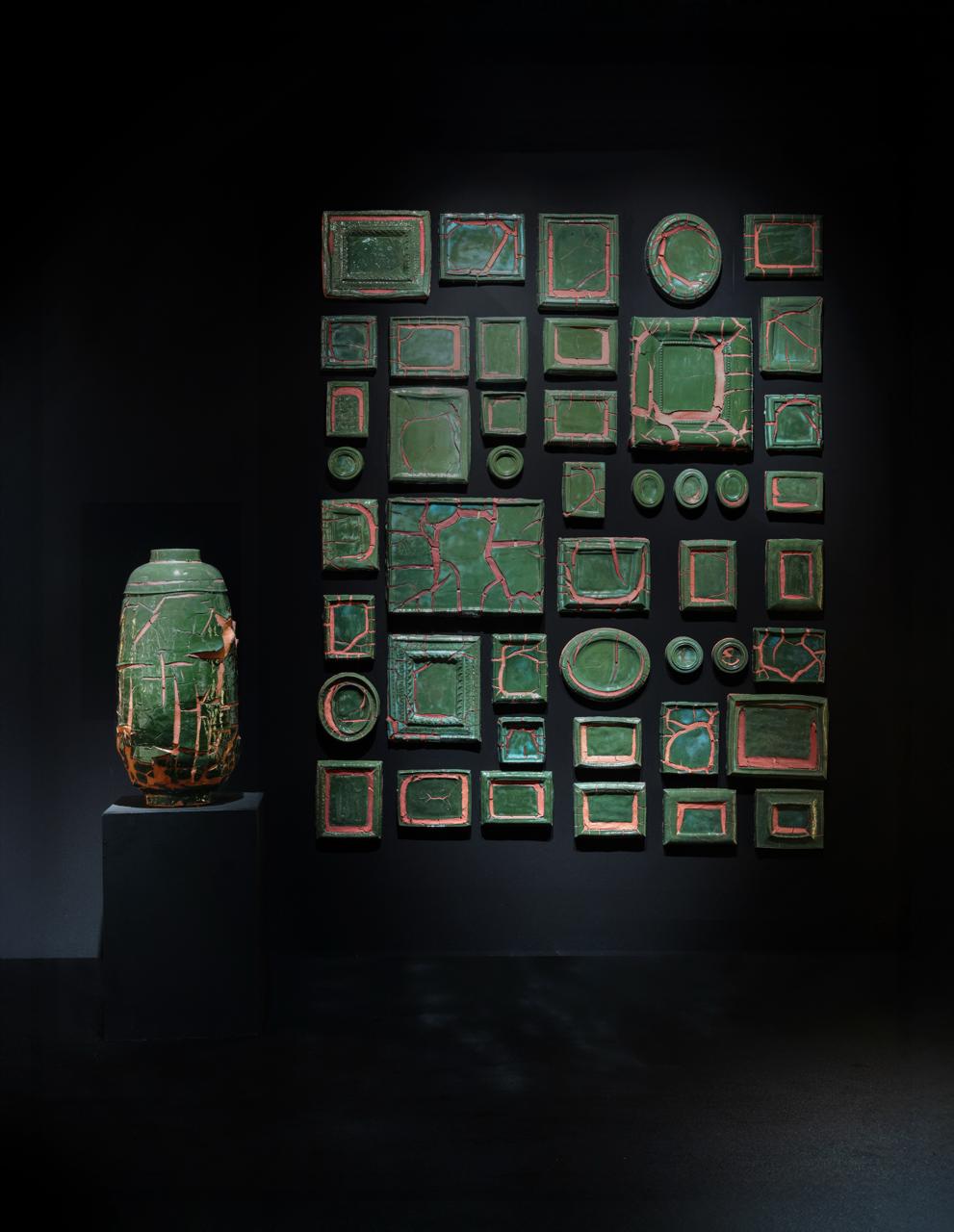
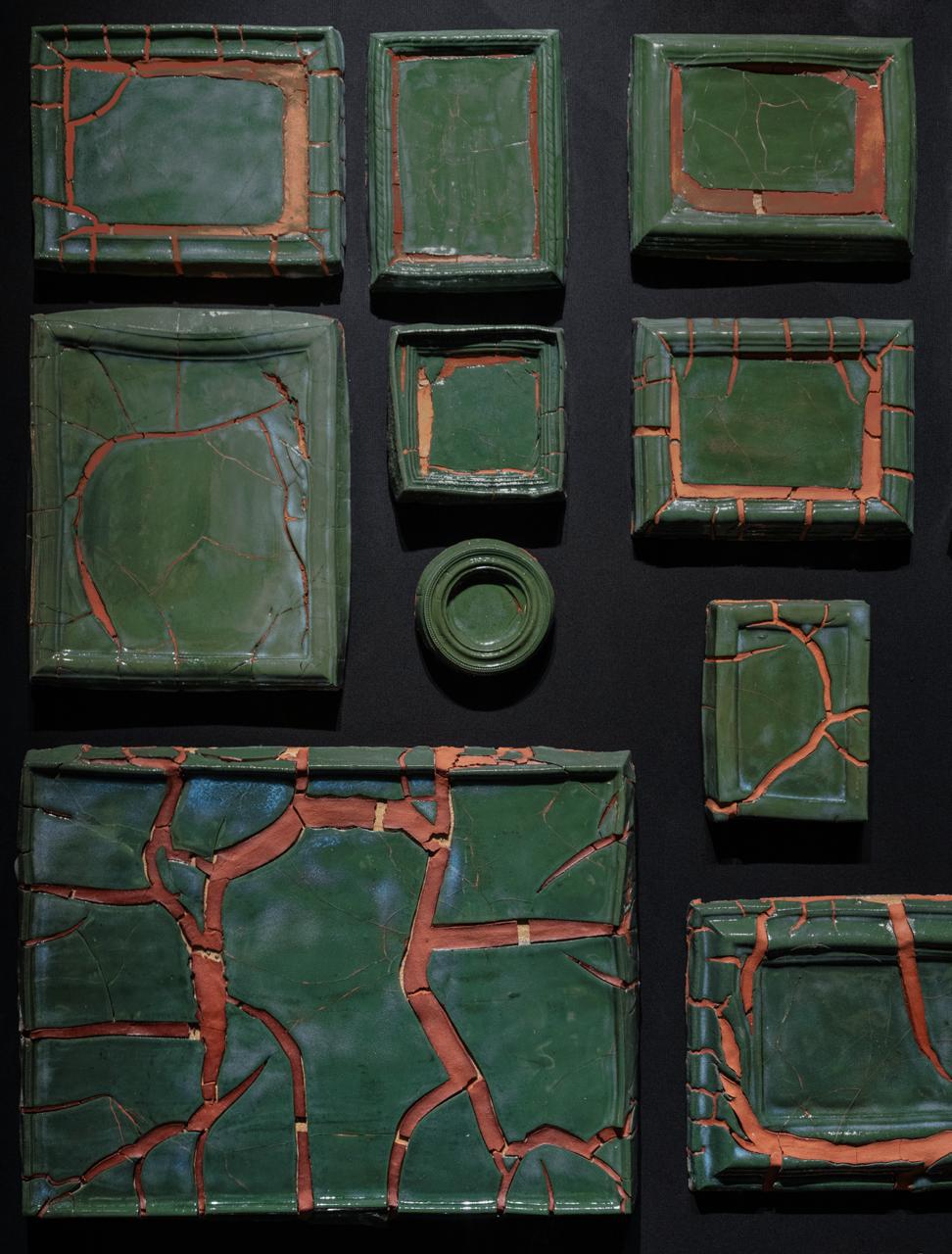
The ceramic “mirrors” act as artefacts of time. Through terracotta, Razumovskaya reflects on repair, memory, and reconstruction. The work confronts the female gaze and self-perception, transforming the idea of fracture into resilience.
The accompanying vase extends the installation into space, introducing an anthropomorphic presence. Together, the works redefine vulnerability – not as weakness, but as a space for reflection and renewal.
PALATY Gallery, a Russian gallery to participate in PAD for a second consecutive year, returned with works by Irina Razumovskaya, Milana Khalilova, Natalia Makarova, and Alexandra Lapaeva, while introducing new names to the Parisian audience.
The gallery excels in translating local cultural codes into objects that resonate within the global design context.
Chair by Nikita Erokhin
Even within a typology as familiar as a chair, new interpretations continue to emerge. Nikita Erokhin’s sculptural chair stood out at BOOROOM Gallery’s stand.
Conceived as a three-dimensional object, it reveals itself gradually as one moves around it. Resembling a rock formation, it balances refined lines with solid mass.
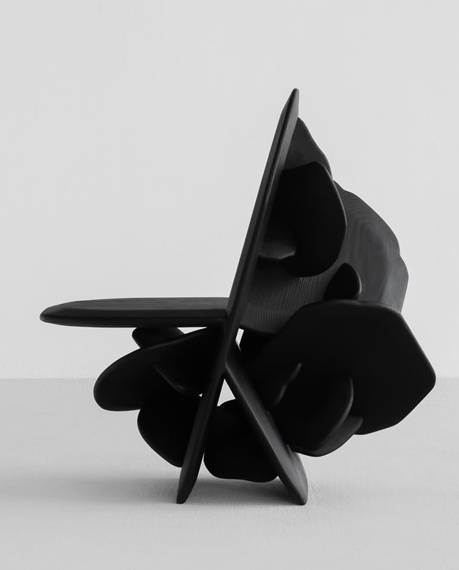
Erokhin’s work navigates between precision and emotion, merging craftsmanship with an architectural sensibility. Inspired by desert landscapes, his practice emphasises natural forces and the emotional narratives embedded within form.
Founded in 2014, BOOROOM Gallery operates on the belief that art is a universal language and that objects can carry meaning across cultures.
Its collection spans the 20th and 21st centuries, placing historical works in dialogue with contemporary experimentation while supporting emerging designers.
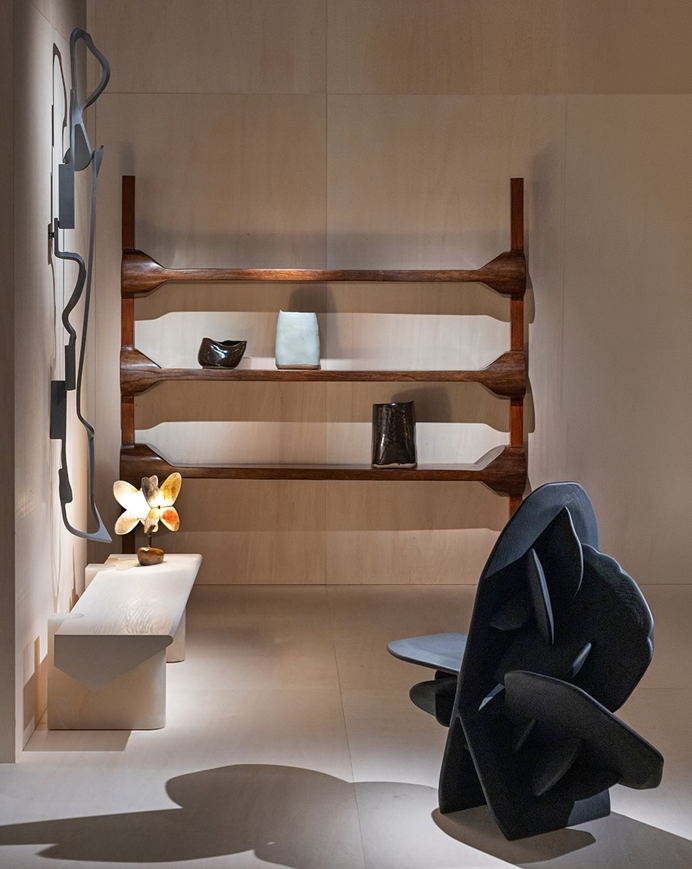
PAD Paris continues to position itself at the intersection of heritage and experimentation, where historical references meet contemporary practices. The 2026 edition once again demonstrated the vitality of collectible design – not merely as a field of objects, but as a living language driven by conceptual narrative, material, and vision.