
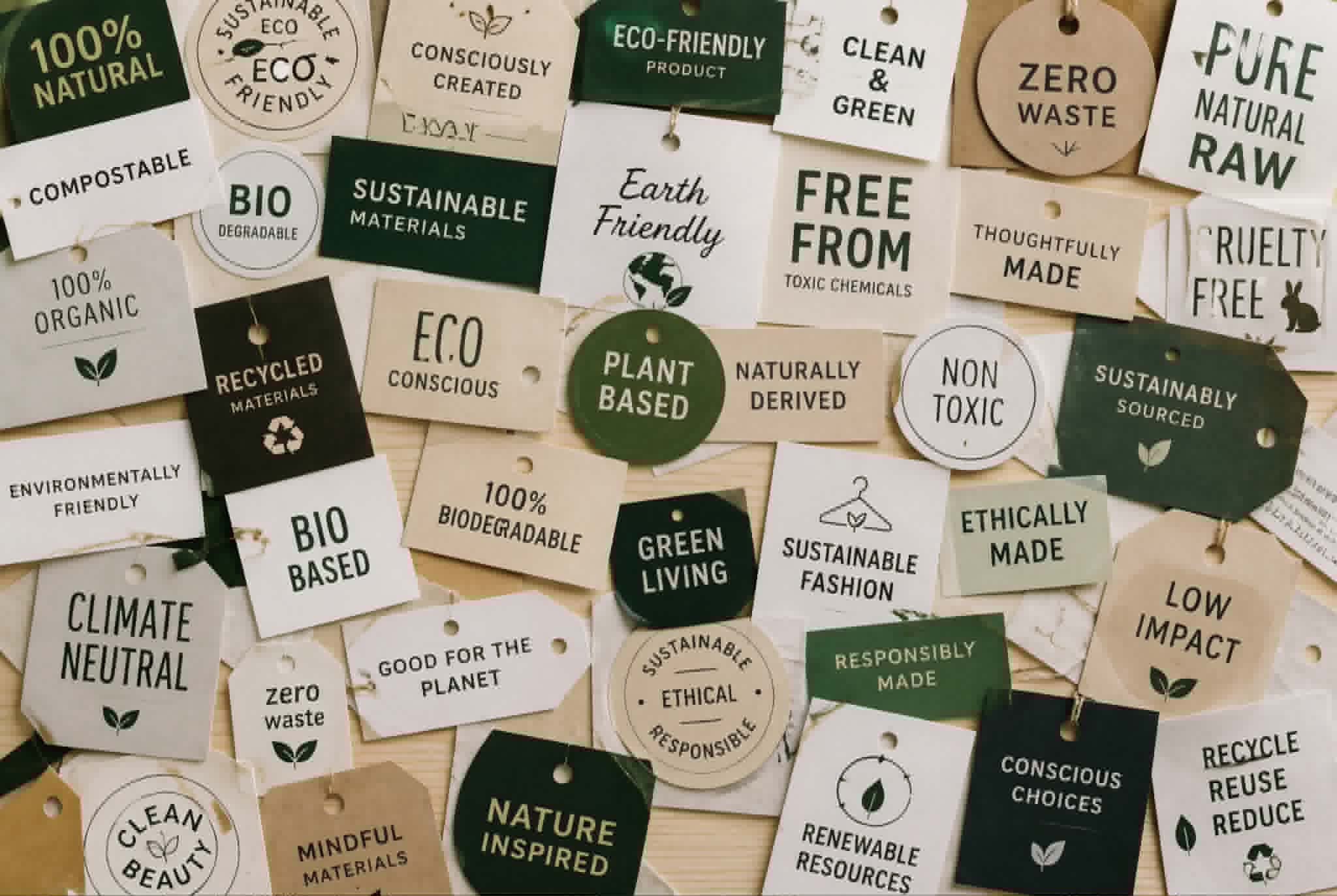
From greenwashing to greenhushing, or why «eco» does not sell

Research by McKinsey, BCG and Nielsen shows a consistent pattern: around 60–70% of consumers say that sustainability matters to them when making choices. However, the share of those who are genuinely willing to pay more consistently or change their behaviour is significantly lower: according to various estimates, in the range of 20–30%.
This gap is not accidental. It points not to a contradiction, but to the structure of the market itself. Let us examine it through a series of paradoxes.
Paradox 1. «Eco» sells better as an idea than as a product

Many consumers remain neutral or do not fully understand what should actually be considered sustainable. This is hardly surprising. Semantic inflation – the constant redefinition of materials, contexts and categories – combined with marketing simplifications, has led to a situation where fundamentally different things are described by the same word.
According to researches, trust in sustainability claims is declining, and more than half of consumers believe that brand statements are exaggerated. A fatigue with “green language” is emerging, while the term greenwashing has become not just a critique, but a marker of a shift in consumer sentiment.
As a result, sustainability is established as a norm at the level of intention, but does not become a determining factor in choice.
Paradox 2. The market is unable to distinguish between «eco» and «pseudo-eco»

Systems of certification and regulation do exist, but they operate in a fragmented way. They cover only part of the value chain, remain costly, and therefore limit access for smaller players. At the same time, there are more than 400 standards, and even professional market participants, including buyers, are not always able to interpret them correctly.
This creates a “grey zone” in which genuine and nominal solutions coexist and are purchased on equal terms. This is not always the result of deliberate manipulation, but often stems from the overall opacity and complexity of the system.
Regulatory initiatives, such as the EU’s Green Claims Directive, attempt to define the boundaries of what is acceptable, while guidelines and sanctions add a practical layer of enforcement. However, the language remains flexible, and its interpretation largely inaccessible to the end consumer.
Paradox 3. A product must become desirable before it can become responsible
Sustainability alone does not create loyalty in the mass market. In the luxury segment, it functions only in combination with other factors – value, trust and brand context.
If a material is complex, expensive, and its only argument is “eco-friendliness”, it does not sell. What actually works is a different formula: aesthetics, tactility, story, rarity or novelty and only then a layer of responsibility.
Research shows that greenwashing directly reduces trust and loyalty, particularly in the fashion industry. In this context, trust becomes the key filter in decision-making, more significant than marketing or even formal certifications. In effect, a brand puts its reputation at stake for the accuracy of its claims.
What is the market’s response?

If sustainability was once actively integrated into the language of marketing, today we are seeing a reverse movement. Increasingly, companies prefer not to speak about their environmental initiatives at all.
This phenomenon has been termed greenhushing – a deliberate silence driven by the fear of being accused of inaccuracy. Paradoxically, a market that demands transparency begins to penalise the very act of speaking. As a result, the language is not refined – it gradually disappears.
And so another question emerges: what is the market actually capable of hearing?
Within this system, marketing does not so much violate ethics as operate within the limits of what can be perceived and sold. And in this sense, new materials face not so much a problem of truth, as a problem of translation.