AY YOLA: How to Remain Yourself When the Whole World Has Heard You

For me, flying is not simply a convenient stretch of time in which to observe life. It has become part of the work. Not long ago, I found myself in Kyrgyzstan for the World Nomad Games – an event comparable in scale to the Olympics, though with a character entirely its own: thousands of people from hundreds of countries, horses, wrestling, national dress, yurts, music, dust hanging above the hippodrome. Here, the ancient world makes no attempt to imitate the past. It simply continues to exist in the present.
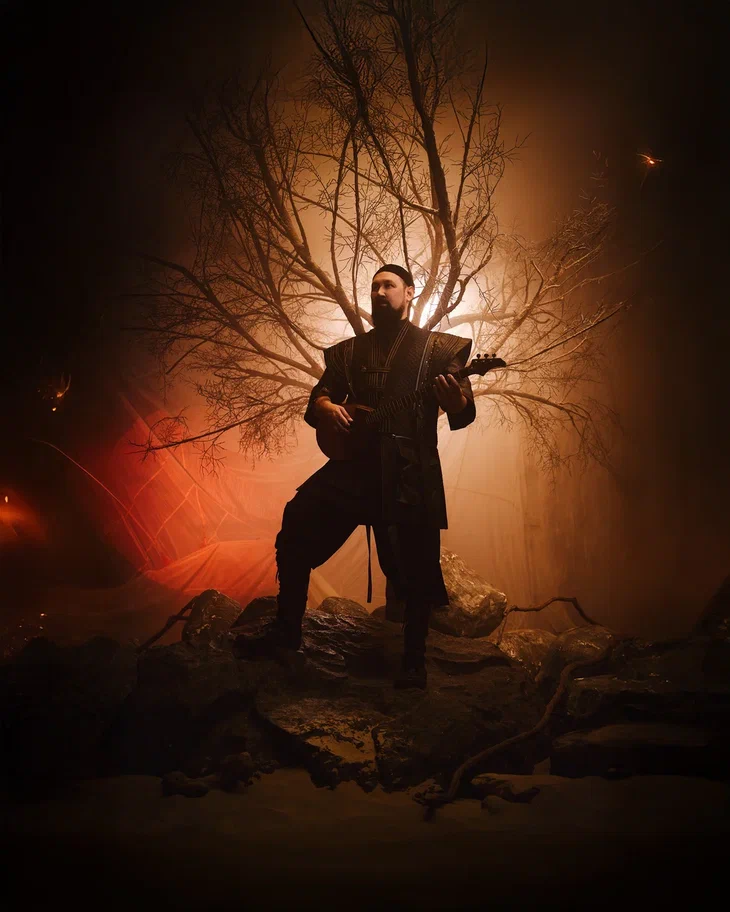
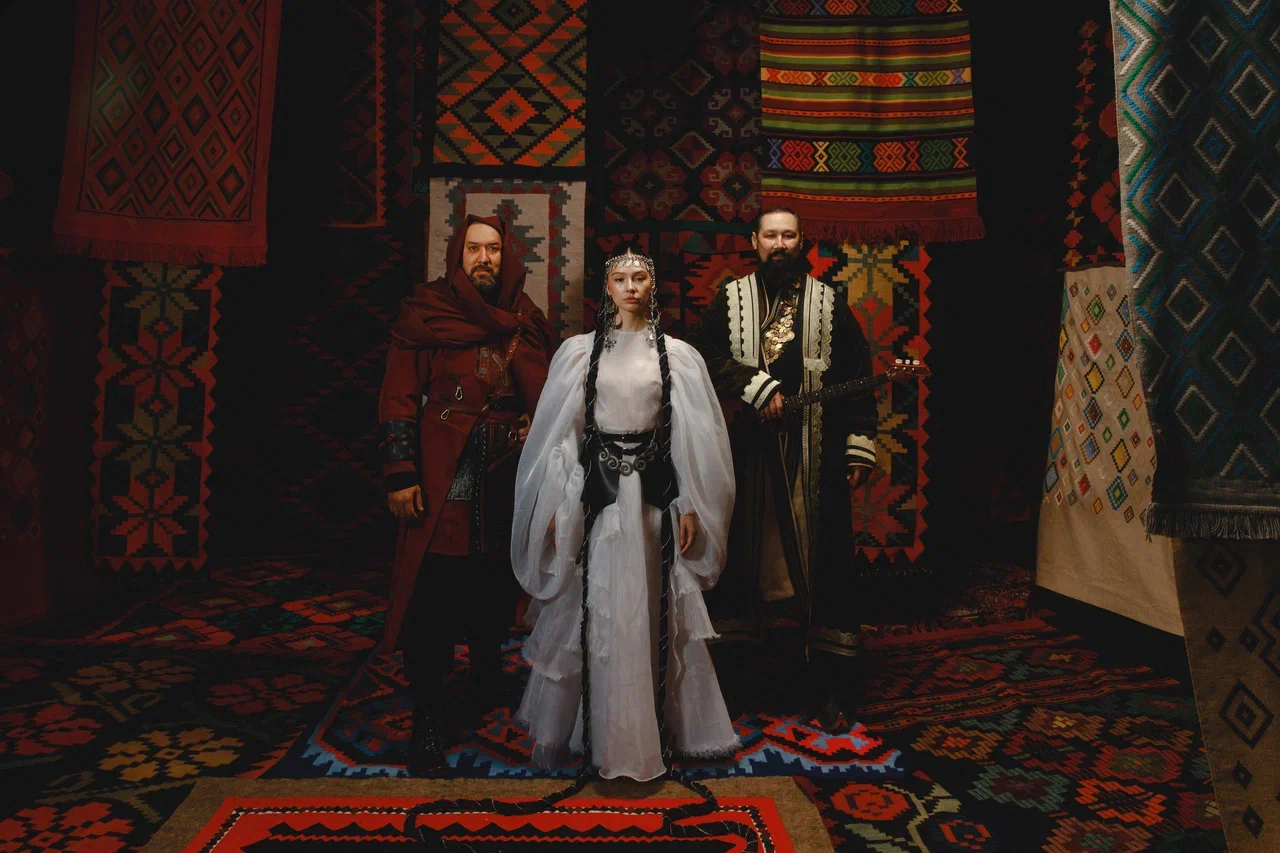
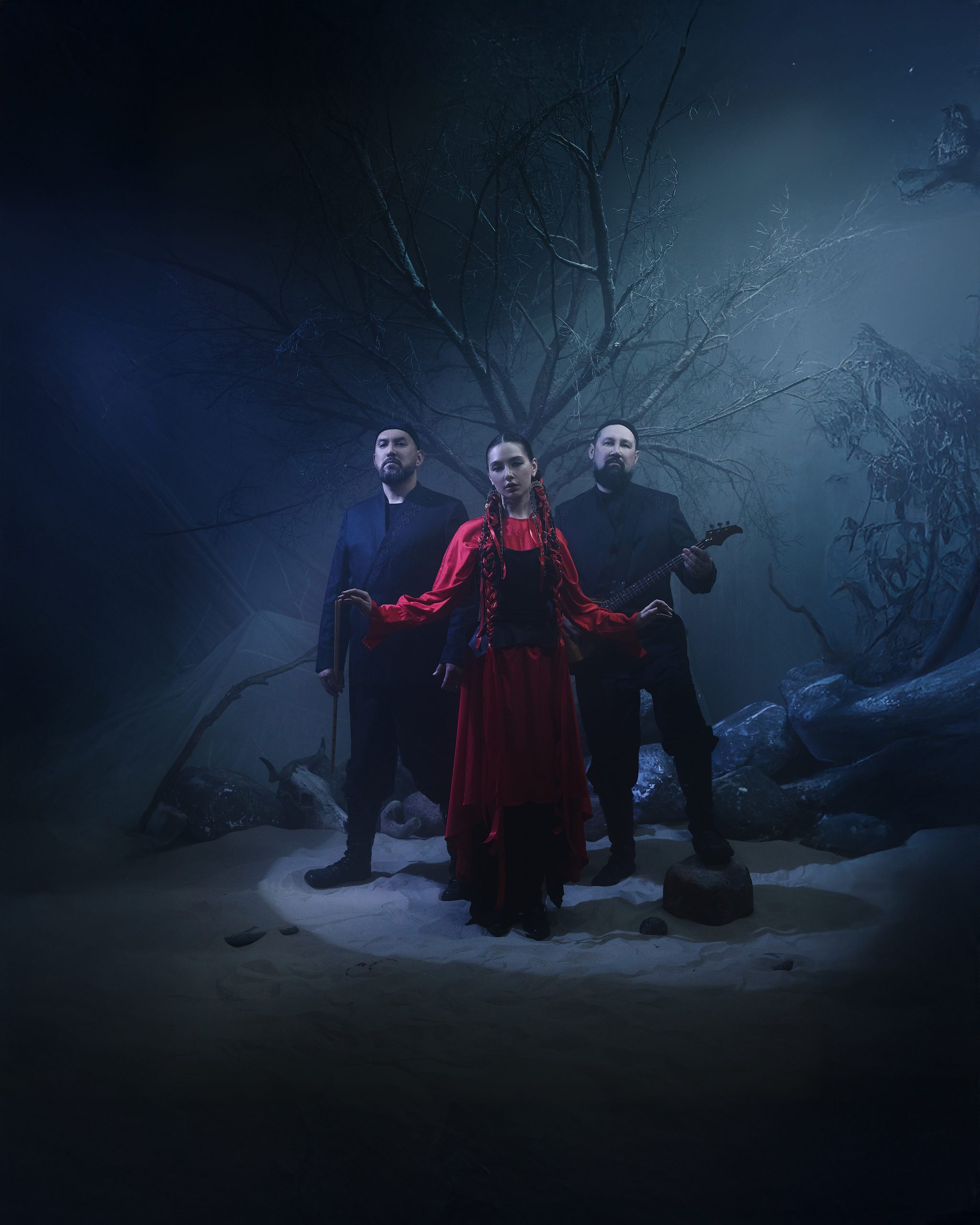
AY YOLA, the trio from Bashkortostan whose name translates as “the laws of the universe”, were ambassadors for the Games and performed at the closing ceremony in Cholpon-Ata, on the shores of Lake Issyk-Kul. Watching everything from the inside, I found myself returning to one thought: tradition remains alive only for as long as it can speak to the people of its own time in a language they understand.
That, in many ways, is what AY YOLA is built upon. In just a year and a half, the group has travelled from a project rooted in the Bashkir epic Ural Batyr to a musical story now resonating across continents. And the wider their geography becomes, the more interesting the group is to observe. Instead of moving away from their roots in pursuit of universality, they seem to be digging deeper into them.
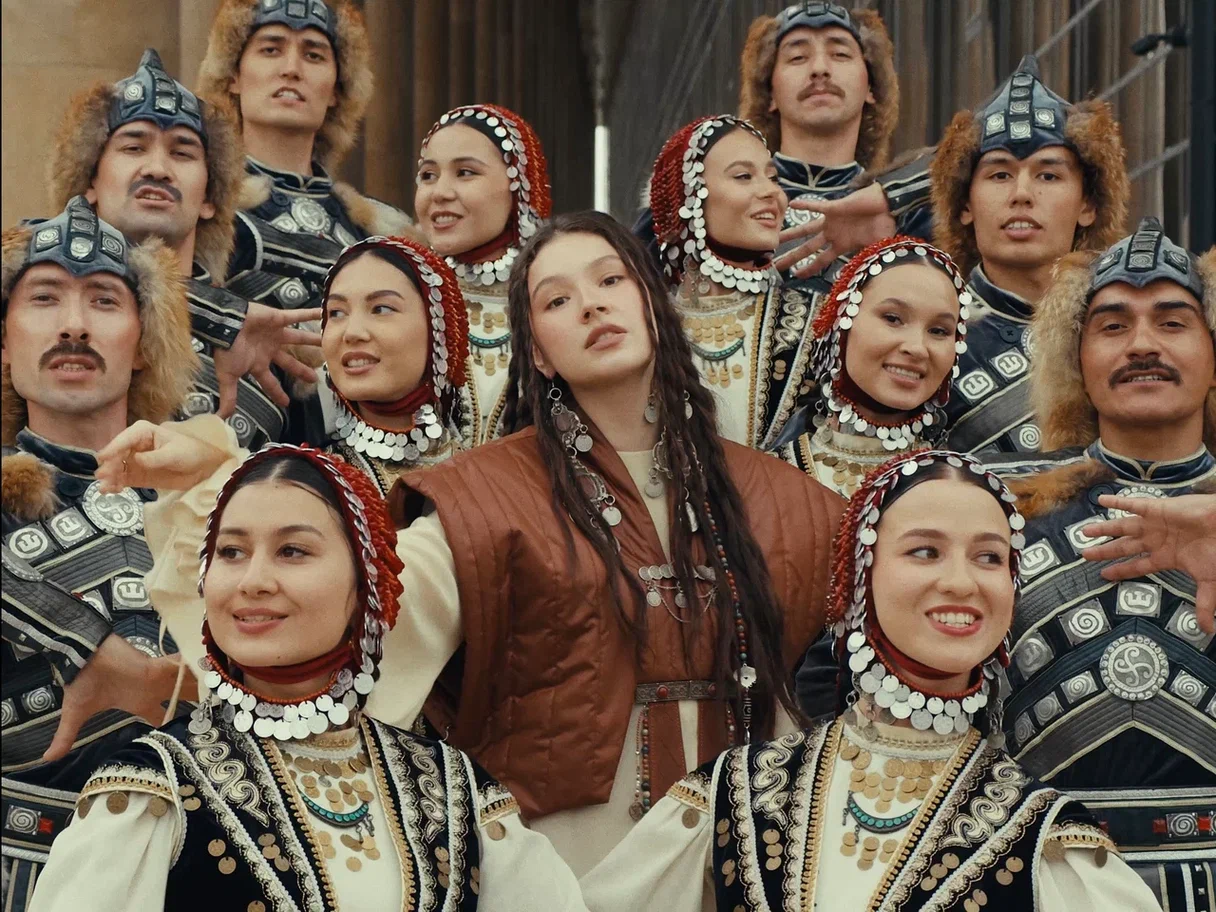
Their latest work develops that idea further: an epic does not truly belong to one people alone. In the song AMANAT, heroes and traditions from different cultures meet – Ural, Manas, Olonkho, Gilgamesh, the Mahabharata, Koroglu, Jangar and Alpamysh. The accompanying video gives this idea a visual language of its own, turning cultural difference into an image of shared human memory.
On the journey back from the Games, I had the chance to speak with the band. At ten thousand metres, conversation has a way of becoming more honest.
Over the past year, your lives have changed almost completely. What inside you has remained unchanged?
Our relationship with what we do. Music is still not a way for us to become more visible; it is work, and it carries a great deal of responsibility. Everything around us has changed — the schedule, the geography, the audience, the size of the stages. But the inner feeling that we simply have to keep doing our work has never disappeared. Success has undoubtedly opened more doors, but it has never given us a reason to think of ourselves as different people.
You can usually tell when artists have come not simply to occupy a space, but to bring something into it. There is a strong sense of that with you. But let’s begin simply: when someone encounters AY YOLA for the first time, what do you want them to feel within the first thirty seconds?
That they have stepped into a story – into a space where an ancient meaning is speaking in a contemporary language. We want them to recognise something real about life and about the choices we make.
For you, Ural Batyr is not merely an inspiration. It is the foundation. Why this particular story?
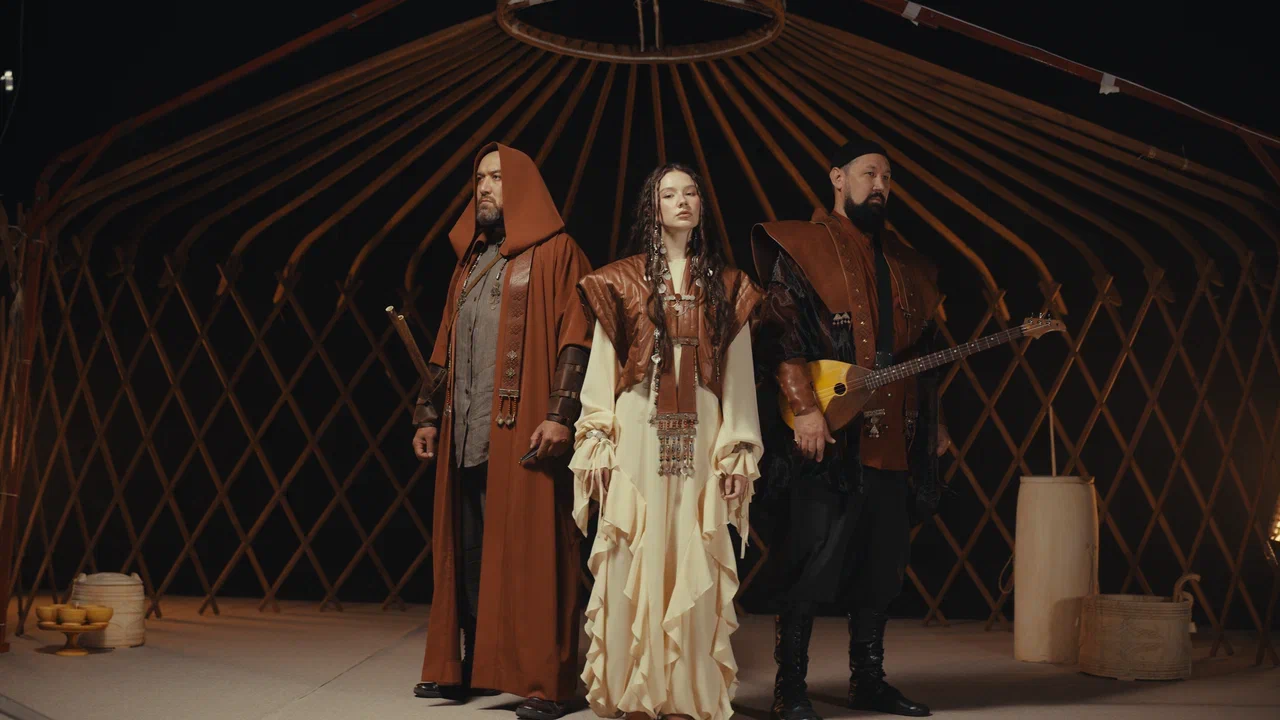
Because it is one of the oldest epic texts of Eurasia, our native Bashkir epic, and at the same time it is profoundly human. It speaks about very simple principles on which the world rests: respect your elders, protect the weak, love the land you belong to. We created this project with one purpose – to bring the epic to as wide an audience as possible, not as a museum artefact, but as a living story expressed through the language of contemporary music.
Many artists wear tradition on stage like a beautiful costume. How do you make sure you are not simply using your heritage, but actually entering into a dialogue with it?
For us, tradition is a system of coordinates. We have an internal filter. If an idea looks impressive but does not correspond with our principles, it does not make it through. We constantly return to the source – to the imagery, the spirit of the story, its intonations. And we spend a great deal of time thinking about how all of this will sound to someone who grew up within an entirely different culture.
At what point did you realise that AY YOLA was no longer simply a project, but something closer to a mission?
When people started writing to us not about the song, but about themselves. About their mothers. About childhood. About tears. About suddenly feeling a connection to their own roots – even when those roots belonged to a completely different country.
The numbers surrounding the project are enormous — hundreds of millions of views and streams, hundreds of thousands of followers. This is clearly no longer a local story. When that much attention suddenly falls on you, how do you avoid becoming prisoners of the noise?
We hold on to routine and to meaning. And to the people close to us. Fame is a peculiar thing. It can become a mirror you start staring into. We try instead to look beyond popularity – towards the music, the show, the team, the story we are telling.
Tell me about the live performance. What you create feels less like a conventional concert and more like a staged experience suspended somewhere between storytelling and contemporary spectacle. How does it work?
Every song is accompanied by a video installation that builds the atmosphere of the epic. The audience does not simply hear the music; they see the legend come alive. There are live instruments, live vocals, and production that binds everything together into a single cinematic arc.
Despite the stylistic range of your music, the voices of Rinat and Adel still seem to remain at its centre. What does the human voice mean within this project?
It is a genuine bridge between centuries — something that connects ritual and modernity. Rinat’s throat singing seems to draw us back into the past, while Adel’s voice carries us towards the future. The electronic world created by Ruslan Shaikhitdinov provides the energy that allows both to exist in the present. But the human voice is always truth. And when it sounds alongside the kurai or the kubyz, you begin to sense that time is not necessarily linear.
There is a moment when an artist begins thinking too much about the market and seems to lose a certain nerve. You are now riding an international wave, appearing in charts and performing on major stages. How do you protect that nerve?
We never begin with the question, “What will work?” The question is different: “What is true?” Only after that do we think about how to shape it in a way that feels both contemporary and honest. If the nerve is there, the market will follow. If it is not, you can surround yourself with all the marketing in the world and nothing of real value will happen.
Let’s talk about values. If Ural Batyr were not a text, but a moral compass, what three directions would it point towards today?
First, remember where you come from and where your roots lie. Second, keep your word, even when doing so is difficult. And third, respect the traditions of every people.
When you perform for an audience that does not share your cultural context — people from another country, with a completely different system of symbols — what is it that still reaches them? Why do they feel it?
Because real meaning has no borders. Even when someone does not understand the language, they can still feel the emotion, the structure, the tension and the light within the music. It is like watching a film without subtitles: if the truth is there, it still comes through. We are not giving the audience an examination on their knowledge of the epic. We are giving them an experience. And if that experience resonates, perhaps they will later find their own way towards the text, the culture and the language. Sometimes music is simply the key to a locked door.
You describe the album as twelve songs – twelve chapters of a legend. That is an ambitious structure. What did you want the listener to experience from the first track to the last?
A journey. To rise into the sky with Humai, to meet Akbuzat, to hear Shulgen’s first steps into darkness and to feel the power of Ural’s sword cutting through it. It is not a collection of tracks. It is one continuous story. And we genuinely want people to leave a concert with one feeling: there is strength in me to remain human.
How do relationships work inside the group? Disagreements must happen. How do you deal with them?
Above all, we know how to listen to one another – and how to truly hear one another. Of course, it does not always work perfectly, but that too is something we are learning. There is no single leader within the group. AY YOLA is one whole. And when we stand by one another, we become very difficult to break.
What have you lost over the past year? What have you gained? And what do you most want to preserve in yourselves despite the success, the touring schedules, the numbers and the pressure?
We have undoubtedly lost an enormous amount of free time and a certain degree of privacy. But that feels like a very small price to pay for the meaning and the connection with people that we have gained. What we want to preserve is simplicity. The ability to be surprised. And respect – for people, for the stage, for music. We do not want success to become a wall between us and life. We want it to become a bridge towards greater meaning – and towards more people.
If you could say one thing to the versions of yourselves who existed before the big numbers and the headlines, what would it be?
Do not rush to become somebody. Remain yourself, and do the work as though there were only one person listening — one person who genuinely needed to hear it.
What do you want to bring into the world next?
We want to keep telling stories in a way that leaves people feeling stronger and somehow clearer inside. We want to make music that connects eras, people and cultures. And to continue the traditions in which we ourselves were raised.
***
AY YOLA have recently released the video for AMANAT, a song that invokes eight ancient epic traditions: the Bashkir Ural Batyr, the Kyrgyz Manas, the Yakut Olonkho, the ancient Mesopotamian Epic of Gilgamesh, the Indian Mahabharata, Koroglu – shared across Azerbaijani, Turkish, Turkmen, Uzbek and Kazakh traditions, the Kalmyk Jangar, and the Kazakh, Uzbek and Karakalpak Alpamysh.
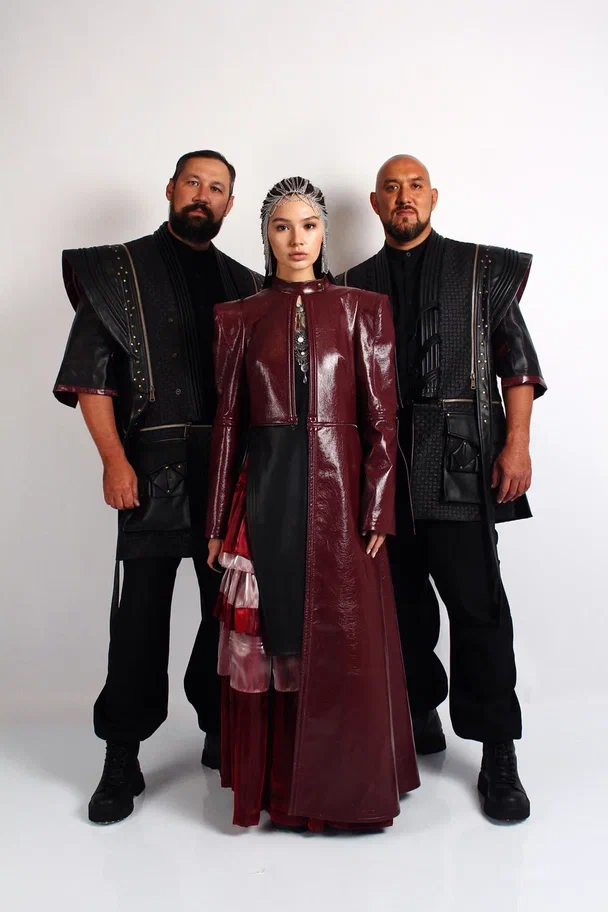
Rinat Ramazanov is a vocalist, kurai player and multi-instrumentalist, a People’s Artist of the Republic of Bashkortostan and recipient of the Shaikhzada Babich Republican State Youth Prize.
Adel Shakhitdinova is a vocalist, an Honoured Artist of the Republic of Bashkortostan and Grand Prix winner of the international Inspiration competition.
Ruslan Shaikhitdinov is a music producer, keyboard player and performer on the kyl-kubyz and dombyra, and an Honoured Artist of the Republic of Bashkortostan.
In 2025, AY YOLA released their debut album Ural Batyr, consisting of twelve compositions structured as musical chapters of the epic. Homay became the group’s most recognisable track, gathering millions of streams across digital platforms and entering streaming charts. The total number of streams for the Ural Batyr album has surpassed three billion.