
Google Genie 3: The AI That Creates Worlds

Not so long ago, turning a text prompt into a 3D model or video clip was the pinnacle of neural network generation. Even then, game designers and filmmakers were starting to worry—seriously—about the future of their professions. And now the rules of the game have shifted once again. A few months ago, Google unveiled what might be the potential “game-dev killer.”
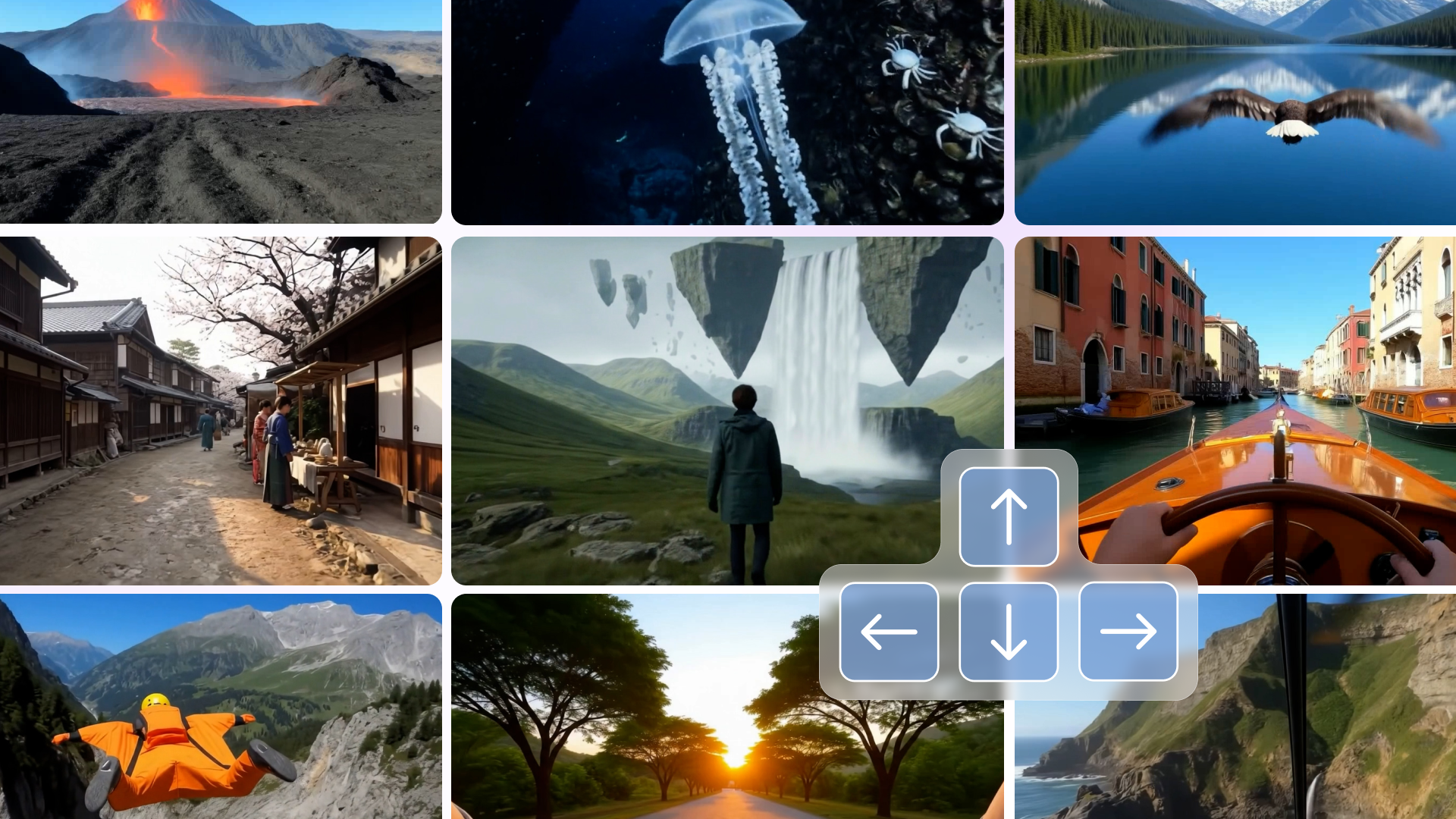
To step into a world of sword and sorcery, wander an abandoned space station, or dive into the ocean’s depths atop a dinosaur, Google Genie 3 can make any wish come true. All it takes is a text prompt, and the AI generates a world according to your specifications. And this is no mere 3D image, like a virtual tour—it is a fully realised environment, complete with interactive objects and events. Essentially, it is a ready-made game, the rules of which you create yourself. No coding, no modelling skills, no prior knowledge of game development required.
What is particularly intriguing is the ability to edit the world in real time. During gameplay, you can write a new prompt and instantly add objects, events, or characters to the environment.
The system of conditional dependencies is equally impressive. Suppose you want it to snow in your world only on Thursdays, and that Thursday occurs every 3,000 steps of the player. It is entirely possible. While the neural network’s memory allows, any rule can be maintained. The only question is: where is the limit?
One thing is clear from official announcements: Genie 3 is a bit forgetful. Its primary focus is on visual continuity. This metric determines how well the network can maintain content that has already been generated.
Imagine spawning in a newly created world beside a smashed red Mercedes. Around you stretches a desert, dotted with cacti, and not a soul in sight. But step two hundred metres away from the car, and it vanishes—or is replaced by another vehicle. In some games, such quirks are justified by gameplay mechanics, but in AAA projects with serious, meticulously crafted worlds, such behaviour is unacceptable.
As for the visuals, Google Genie 3 can currently generate worlds at 720p with a frame rate of 24 fps. For a test model, this is impressive, but the product is not market-ready. The solution, however, is straightforward: simply increase server capacity.
Will the industry die? Eventually, yes. But certainly not tomorrow. The capabilities of Google Genie 3 are remarkable, and such a tool will inevitably become central to game development. Yet there are several significant obstacles to its use today.
Foremost among them is neural network memory—not just Google Genie 3, but all networks. Recent updates have improved the AI’s ability to retain conversational context, but the more logical constructs it must handle, the harder it is for the electronic mind to keep track. And in game development, logic and dependencies are essential. Not to mention spatial reasoning!
Take, for example, a simple puzzle that any child can solve but which provokes serious cognitive dissonance for ChatGPT. You have a metal mug without a bottom, and the top is sealed. Can you drink from it? The obvious answer is yes, because it is essentially just an upside-down mug. But GPT cannot grasp the concept. To it, the bottom is always down, and the top is always up—it cannot imagine flipping the mug mentally.
On the other hand, when it comes to generating textures and landscapes, neural networks are already a huge help to developers. Tasks that once took months can now be completed in hours. In short, the release of Google Genie 3 marks a new chapter in the evolution of game development.