In Your Own Rhythm: The Role of Music Education in Child Development

It has long been an axiom: the first five years of life are a period of intense development. Parents buy flashcards for language skills, sign children up for gymnastics classes, and track every stage of development. However, music is still perceived by many as a luxury – a beautiful but optional addition to be addressed only if there is time left after “truly important activities”. This is a dangerous misconception.
Modern childhood researchers have shown that music is a fundamental cognitive and emotional foundation. Without it, the development of speech, coordination, and, most importantly, emotional intelligence loses one of its primary driving forces. Fortunately, London’s cultural environment today offers a variety of formats: from intimate classes to full-scale concerts that turn early music education into a natural part of life.
In the early years, emotions do not just accompany a toddler’s life – they dominate it. During this time, music fulfills a child’s need to express emotions through action: vocalization and movement.
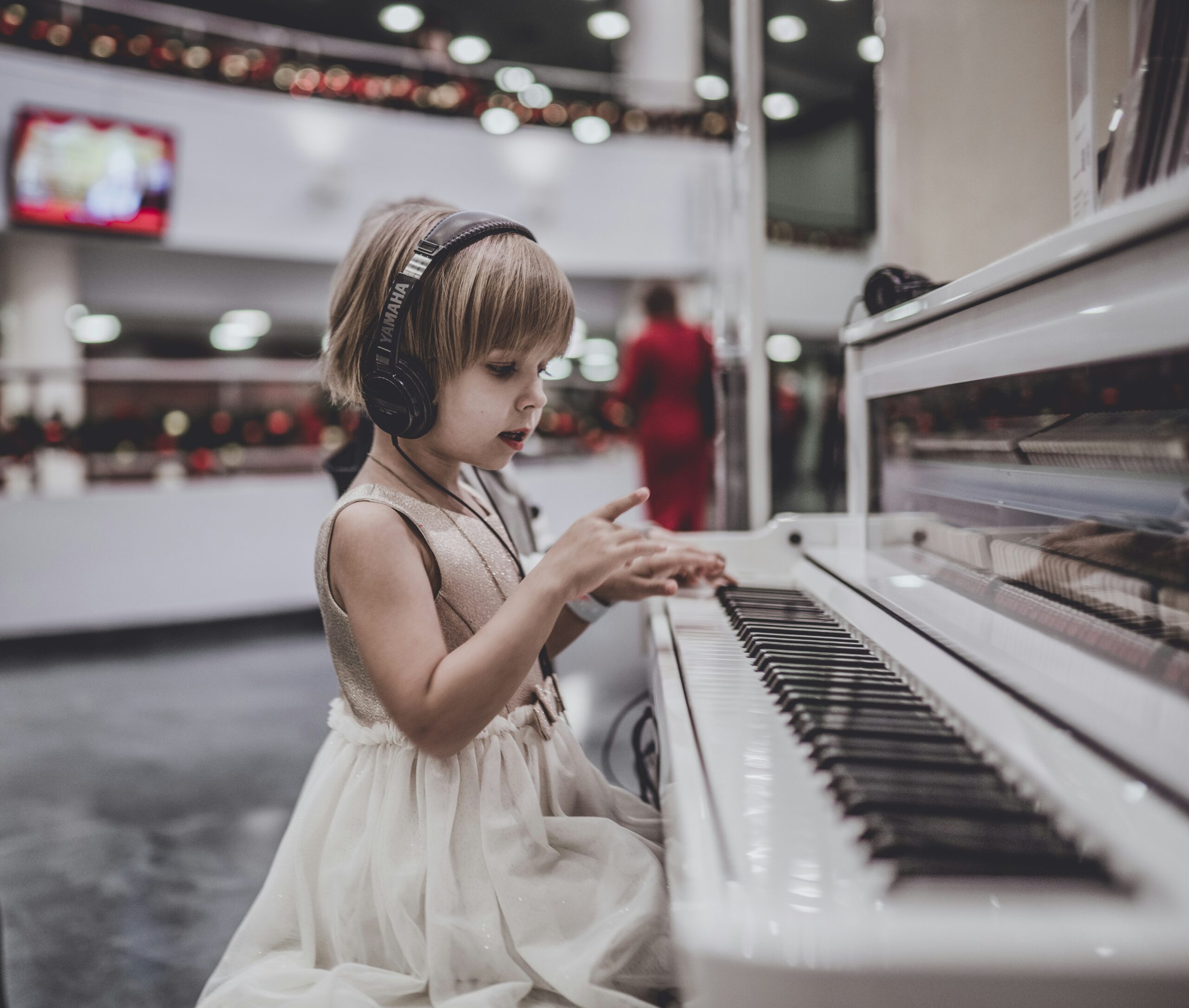
Musical development follows the same stages as language acquisition. Even newborns are capable of distinguishing frequency and melody, and the first vocal experiments begin as early as three to four months. But before a sound can turn into a clearly sung note, it must become part of internal thinking. In the theory of American scholar Edwin Gordon, this is called audiation – the ability not just to hear music, but to perceive and comprehend it within the mind. This is the foundation without which any external action – whether singing or pressing keys – remains merely mechanical imitation, devoid of meaning.
Daria Papysheva, founder and director of Toddler Music Academy, notes: “Young children internalise musical structures long before they demonstrate them externally. A child may lie on the floor, move through the room, or observe quietly; these behaviours do not indicate disengagement. Often, children who appear externally passive reproduce repertoire accurately at home after only a few sessions. Exposure to carefully selected repertoire strengthens listening, supports memory formation, refines motor integration, and cultivates sustained attention”.
In a world where sound is often merely background noise, live music creates moments of deep listening. Pieces with a clear rhythmic pulse and pentatonic melodies are particularly attractive to children.
The London Symphony Orchestra (LSO) places great emphasis on engaging with young audiences, building a large-scale educational programme for children. Vanessa King, early years animateur, share her observations on why children need concerts: “A live concert awakens all the senses. Children can see where the sound comes from, which allows their eyes and ears to connect in a way that recorded music can’t replicate. Instead of sound coming from a machine, it comes from people—from instruments being played right in front of them. There is also a powerful social dimension. In a concert space you are surrounded by other people, and children notice how others respond. They see their peers moving, listening, reacting, or simply being curious. Live music becomes not just something to hear, but something to experience together”.
However, early learning carries its own risk – the risk of turning music from a tool of discovery into a tool of achievement. As soon as parental expectations begin to weigh down a child’s interest, vivid creativity is replaced by drill. Adults should avoid an early focus on grades, comparisons with peers, and reward-based motivation. Furthermore, parents do not need a specialized musical education. A mother or father who sings imperfectly but with joy provides a child with much more than a technically skilled adult who creates an atmosphere of pressure. When music is integrated into family life as a natural element, the child organically develops confidence and aesthetic sensitivity.
Choosing a teacher who shares these principles is equally important. Tiziana Pozzo, founder of the Music Tree school, formulates her approach as follows: “Can they play an instrument at three? The real value is: Can they listen and connect deeply with the world around them? Can we help them coordinate body with voice and breathing, instead of spending increasing amounts of time in front of a screen? Can they experience beauty, motivation, and passion without the pressure of performance?”
Musicians on stage, in turn, must remember: they are communicating with human beings who react honestly and without preconceived expectations. This makes the performance experience for children more immediate and alive – happening “here and now.”
At this age, music should remain a territory of free exploration, where improvisation is the norm and the joy of the process matters more than flawless execution. The task for adults is not to produce a “product” in the form of a mini-virtuoso, but to strengthen that very artistic foundation upon which a thinking, listening, and feeling human being will grow.