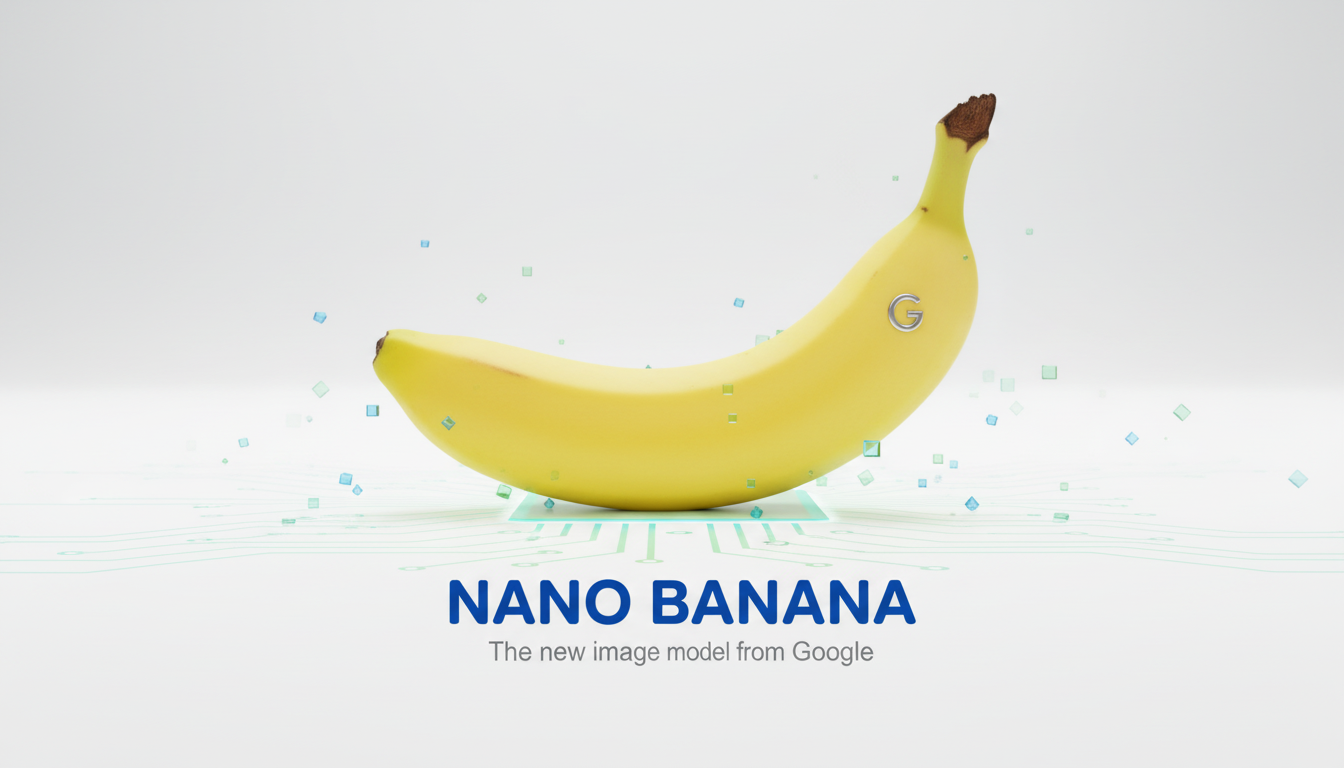
What Is Nano Banana, and Why Is Everyone Talking About It?

At heart, it is a kind of neural Photoshop built on Google’s Gemini platform. For the moment, it is a tool without direct rivals, capable of generating and editing images with a high degree of precision. Does this mean that, in the near future, traditional photo editors will become obsolete?
Google’s updated generative model is no magic wand, although it does try hard to be as close to one as possible. It can produce images at resolutions of up to 4K and make highly targeted alterations without losing contextual coherence. This alone makes it markedly more versatile than Midjourney, which until recently was considered the leading generative model for photorealistic imagery. That said, such interventions don’t come without losses, nor without the familiar problems inherent to generative AI.
Let’s look at a concrete example.
We give the AI the following prompt:
“Create a photorealistic image of a young man wearing a beige leather jacket. The jacket should feature patches with warning signs. His face is calm and conveys confidence. Medium shot: an urban landscape in the background with soft, diffused lighting. In his hand, the young man is holding a cup of coffee.”
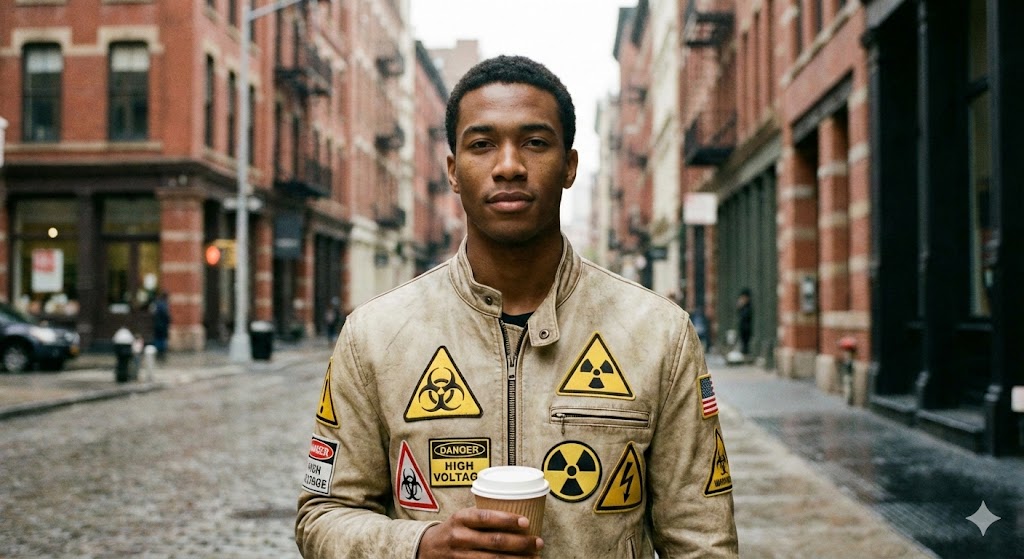
The result is a kind of “ghost hunter”. But other models are capable of producing something similar. The AI starts shining when we introduce substantial, finely detailed changes. For instance, the character needs a different hairstyle, and he should be looking off to the side.
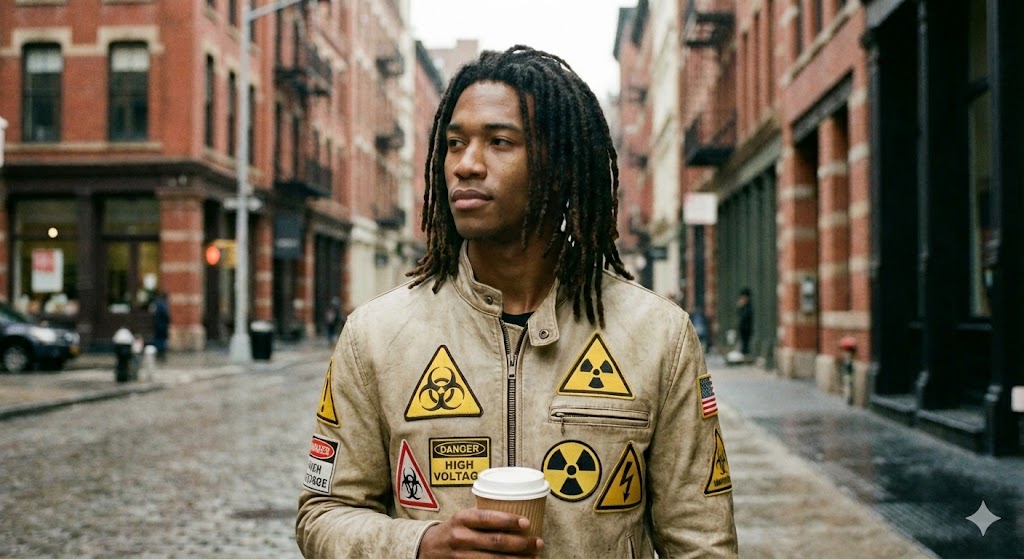
At first glance, the AI appears to have handled the task flawlessly. It’s the same character in the same setting, yet after these changes the quality of the facial textures has deteriorated. A light, but clearly visible, veil of digital “dust” has appeared. And the more changes we introduce, the more noticeable the decline in quality becomes.
Now let’s push things further and relocate our “hunter” to an entirely different environment, using the following prompt:
“Let him no longer be walking down a street, but standing in the middle of a desert next to a wrecked fire engine. Change the character’s facial expression to tired, remove the cup of coffee, and smear the jacket with oil and soot.”
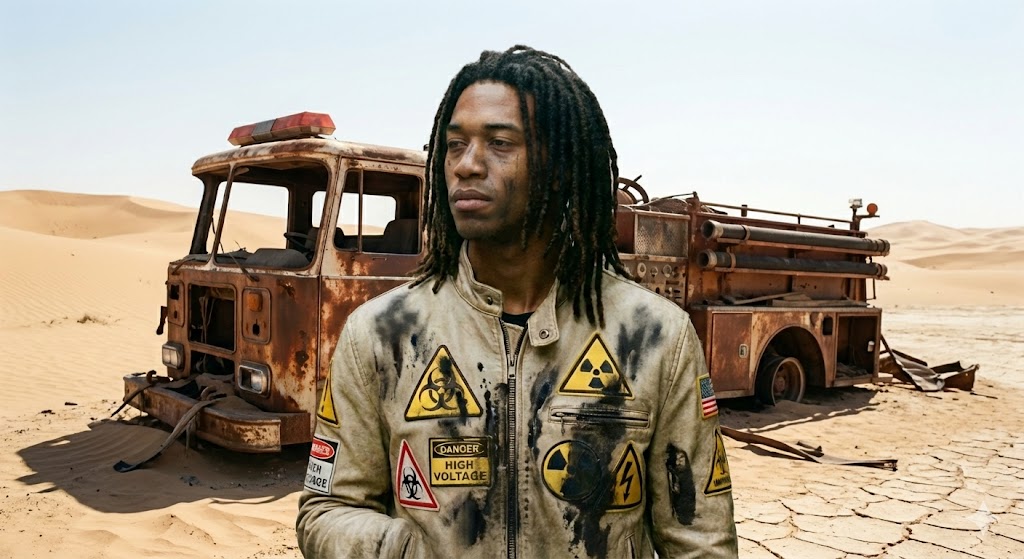
And there we have it. This example clearly reveals the limits of Nano Banana’s capabilities. Yes, it can generate a new background, extract the character from the original image, and place him into a different setting, but it does so at roughly the level of someone opening Photoshop for the very first time. Everything begins to unravel: lighting, proportions, even anatomy. As for photorealistic textures, they fare no better. Where the jacket has been stained, a grotesque blur is immediately apparent. The same applies to the skin texture. These distortions are directly proportional to both the number of edits and the precision of the prompt. Taken together, this means that Nano Banana is not only incapable of replacing a skilled Photoshop user, but is also unlikely to significantly simplify their work.
Для завершения теста попросим нейросеть исправить изображение, хотя бы выровняв свет и композицию. Предложим нейросети такой вариант: «Пусть человек на фото сидит на земле, прислонившись к машине спиной. Он должен смотреть на зрителя. Поправь свет и композицию. Повысь качество текстур и сделай изображение более реалистичным».
To complete the test, we ask the neural network to correct the image, at the very least by balancing the lighting and composition. We give it the following prompt:
“Let the person in the photo be sitting on the ground, leaning back against the vehicle. He should be looking at the viewer. Adjust the lighting and composition. Improve the texture quality and make the image more realistic.”

On the whole, this can be considered a success. Yes, the text on one of the patches has turned into nonsensical gibberish, and the character’s face now bears only a passing resemblance to our original “hunter”, but the lighting has improved slightly, as has the texture of the jacket. Most of these shortcomings can be addressed manually.
Итоги: в качестве отдельного инструмента, вшитого в Photoshop, Nano Banana покажет себя хорошо в некоторых задачах. Особенно в точечном изменении фото. Главное не переборщить с количеством редакций и не требовать от нейросети чего-то сверх сложного. Еще лучше генерировать изображение в максимальном качестве, а затем самостоятельно его выравнивать на отдельных участках.
In conclusion: as a standalone tool integrated into Photoshop, Nano Banana is likely to perform well in certain, narrowly defined tasks. Particularly in precise, localised photo edits. The key is not to overdo the number of revisions and not to demand anything excessively complex from the neural network. Better still, generate the image at the highest possible quality and then refine individual areas by hand.