Heavenly Melancholy: an Irish tragicomedy at the National Theatre

Playwright John Synge wrote The Playboy of the Western World in 1907. It was staged at the then brand-new Abbey Theatre. The premiere struck like both thunder and a hurricane at once.
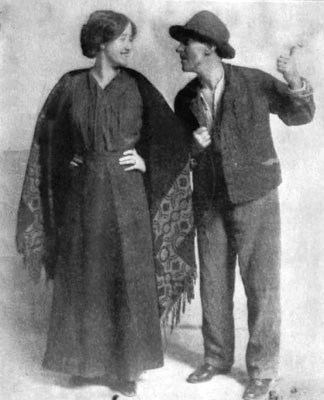
Фото: Wikimedia.org
Legend has it that audience members climbed onto the stage to fight the actors, while the actors fought back and kept performing. Such was the public outrage at the dawn of the 20th century when it was confronted with a comedy mocking the very, forgive the phrase, sacred “moral pillars” of society. Moreover, Synge wrote The Playboy of the Western Worldwith great attention to the linguistic peculiarities of Ireland—to Hiberno-English.
Naturally, in 2025 Caitríona McLaughlin, who spent several seasons working at Dublin’s Abbey Theatre, pays tribute to every layer of this famous play’s history. An intellectual director who stages productions not only in her native Ireland (including opera), but also in London and New York, McLaughlin works with the text scrupulously and meticulously, devoting obvious attention to the inner lives of the characters. They inhabit the razor-sharp comic world of The Playboywith utter seriousness: an entire Buster-Keaton-like universe operates so that a ripple of laughter or a spark of live reaction may roll through the auditorium. And her work with accents is especially painstaking. The entire cast seems to breathe in Hiberno-English—it is not a performed detail, but a massive pillar around which the entire museum-like structure of the production is built.
“Museum-like” not in the sense that the sets and costumes are generously dusted with suffocating mothballs. There is no mothball smell at all—but there is monumentality, reverence for the text, and a university-bred intellectual rigor.
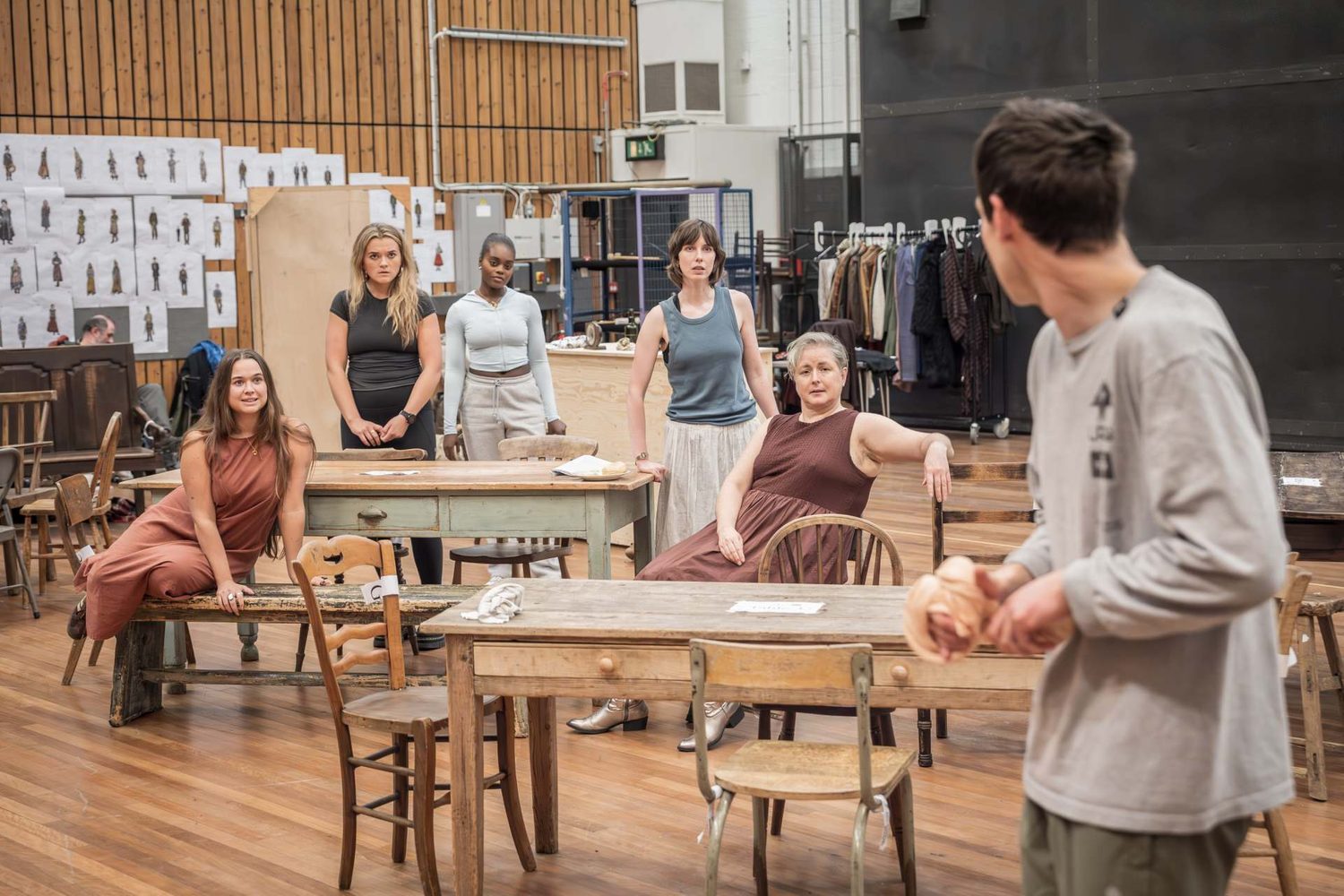
Photo by Marc Brenner, nationaltheatre.org.uk
All of this is abundantly watered with rain—it pours, then stops, somewhere upstage, where the low pearly Irish sky flares up and darkens again. The beauty quite takes your breath away. Against this sky and rain, musicians slowly drift across the space: a distinctive Irish fiddle and another strange horn, more like a didgeridoo. Either the tin whistle has been reborn (imagine such a giant in Paddy Moloney’s collection!), or it is the trump of Jericho, rumbling over a sinful world.
It is in this setting that the comedy unfolds: a frail good-for-nothing strikes his enraged father on the head, runs off, wanders through neighboring villages and hides. And the local girls admire his “feat” so much that they long to claim the hapless hero for themselves. Retelling the plot would, first, only spoil it, and second, the play is so well known in the English-speaking world that its story seems familiar to every schoolchild.
This is, therefore, an ideal “classical” production, where acting takes center stage.
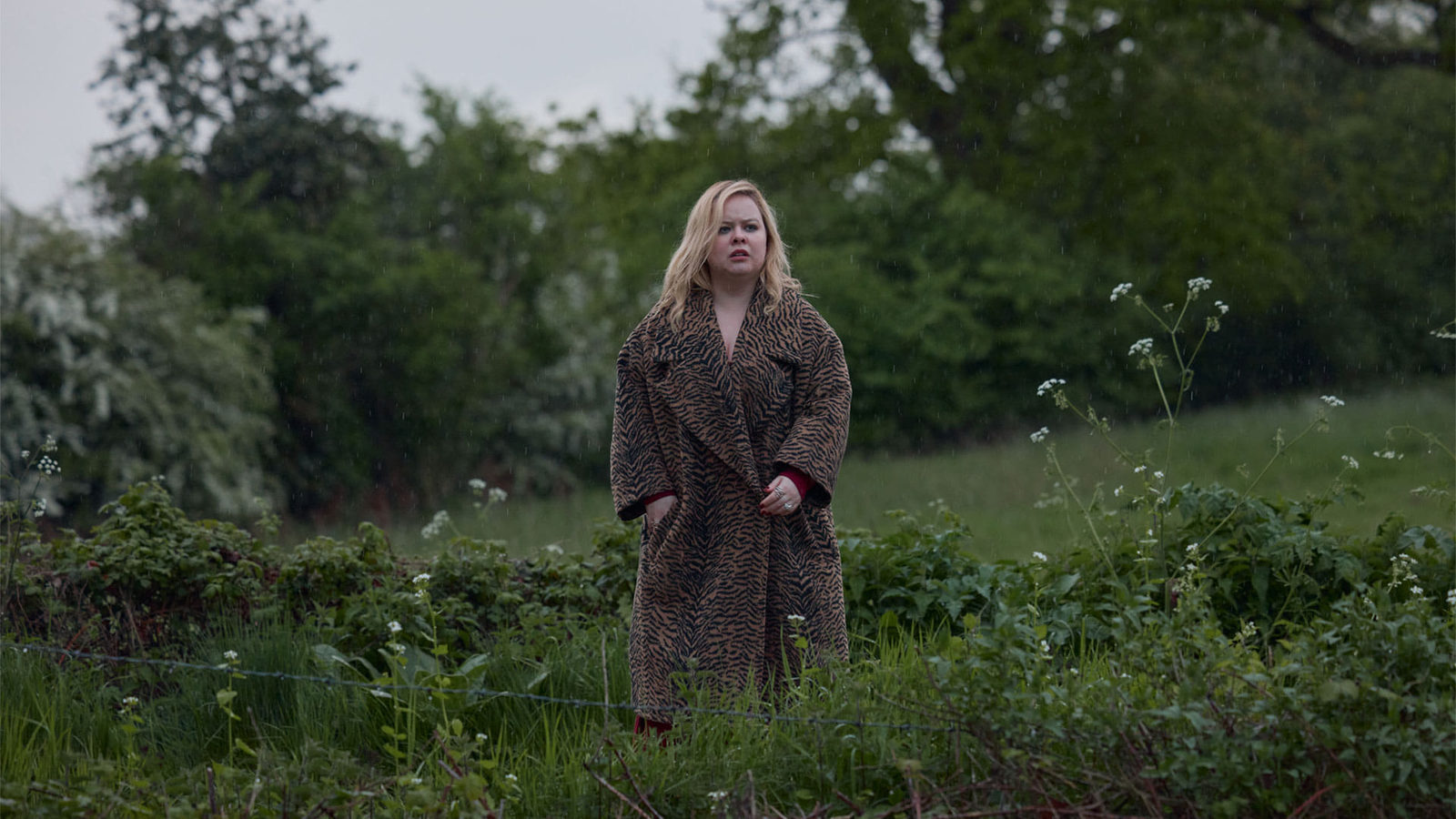
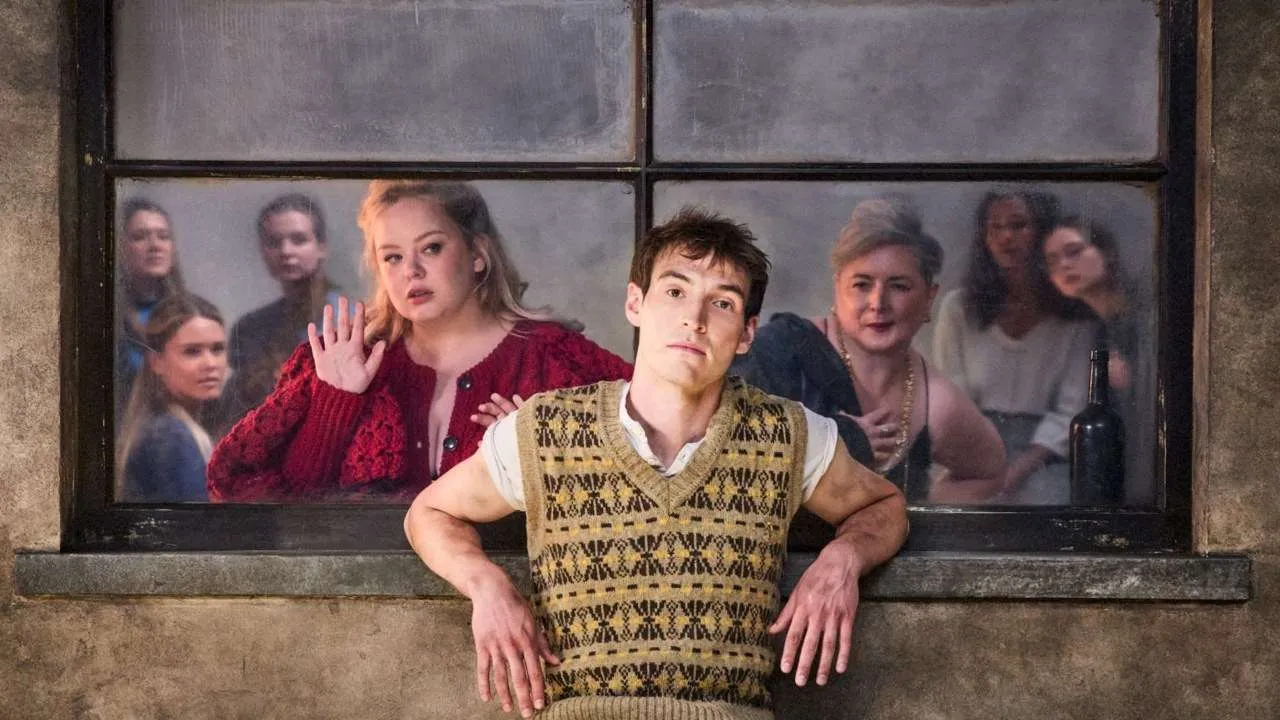
First of all, there is film star Nicola Coughlan—the very one who played Lady Whistledown in Bridgerton. Her charm and magnetic allure, a God-given acting quality, have not vanished here. They have transformed in accordance with character. Pub owner Pegeen is young, but shrewd, capable, and seemingly free of illusions. So why does she become so visibly bewitched by the newcomer, Christy? Not because he is especially handsome, but because he is “someone new,” because life is boring, because in a world where one day resembles the next like one pint resembles another, a completely unprecedented figure suddenly appears.
And here is Widow Quin, played by Siobhán McSweeney. At first it seems she turns the role into a sharply comic character part, but in fact there is no deliberately “performed” comedy here. Widow Quin truly is just such an eccentric woman. She openly lures him into her stifling embrace, and it seems as if she is about to suck him into her scorching depths. He flees her like a praying mantis female, like the eternal terror of the vagina dentata. And Christy is cowardly in general—but more on him later.
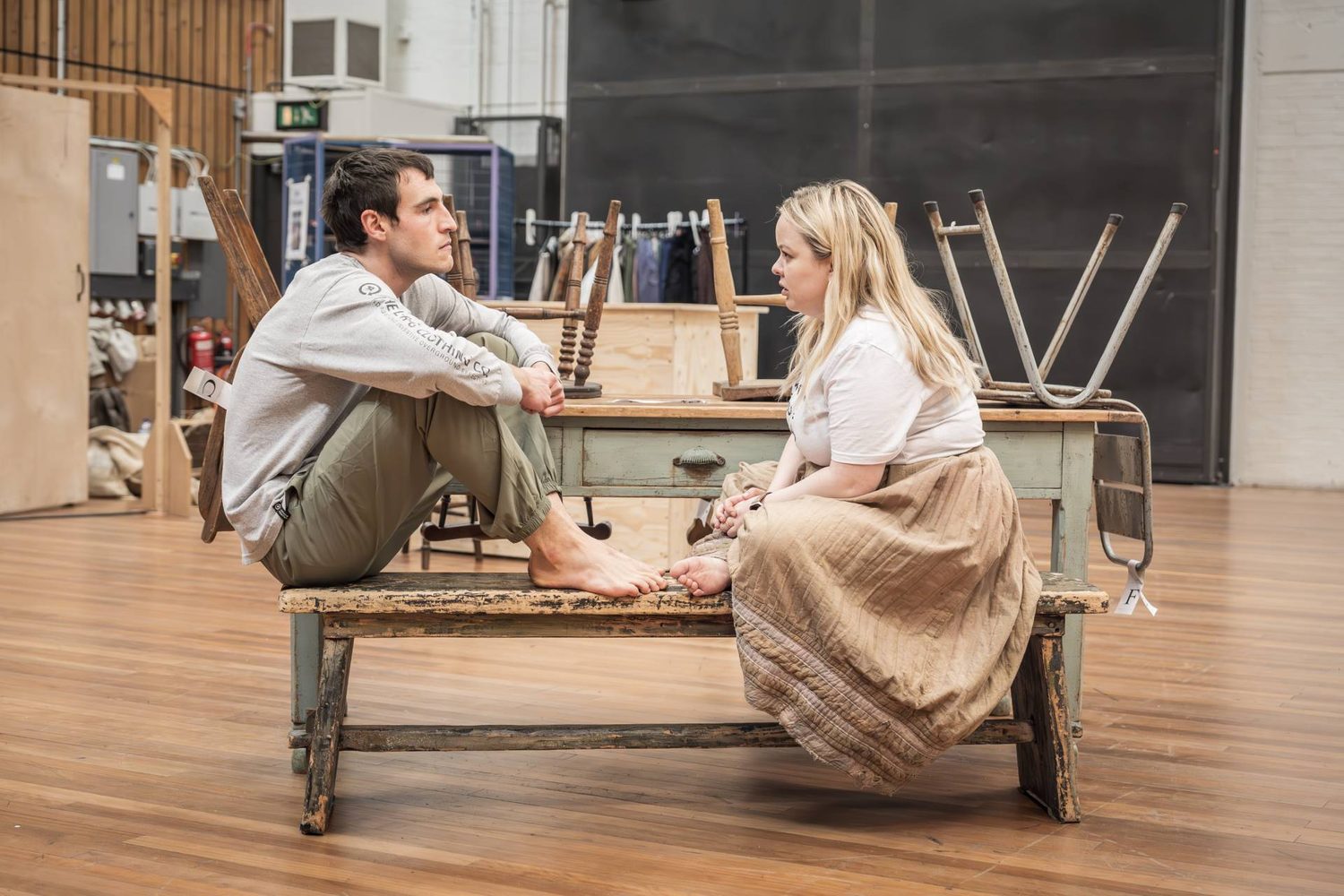
Photo by Marc Brenner, nationaltheatre.org.uk
It is interesting that the rivalry between the two characters—Widow Quin and Pegeen—seems to spill over into a rivalry between the two actresses. At any rate, partnership between them is scarcely visible—perhaps the ensemble has not yet achieved perfect cohesion. This sparkling rivalry brings to mind Maugham’s immortal novel Theatre. Who will outplay whom? Who will outshine whom in wit? Who will be more beautiful? And it is in this electrically charged space that the unfortunate, tiny, frail Christy exists—precisely as Éanna Hardwicke plays him. He is certainly no dashing hero, no lady-killer, but a small, miserable, lost boy. He is always cold, always hungry, he hides as a tiny cartoon mouse would hide—certainly not as a romantic protagonist. He hides from everyone—men, women, and his father.
Onstage we see the interior of the pub—very modest. A few mismatched tables and chairs, a small bar counter. But there is a fireplace, with real fire burning in it, and the characters take turns running over to warm themselves. At moments one almost longs to join them—they do it so cozily. The walls are cluttered with all sorts of junk, and of course it is all destined to be used—like Chekhov’s gun, which must fire if it hangs on the wall. A poor, everyday, utterly real environment.
But above all of this hangs the sky—the low, dense Irish sky that constantly changes color, floods with rain, then clears again. The sky is one of the main characters here, perhaps the very main one, and perhaps it is an image of that very Ireland which is so vital both to Synge the playwright and to McLaughlin the director.
And the most important thing in this Playboy is not the comedy, not the explosions of audience laughter, not the skirmishes between beautiful women enchanted by one man—but longing.
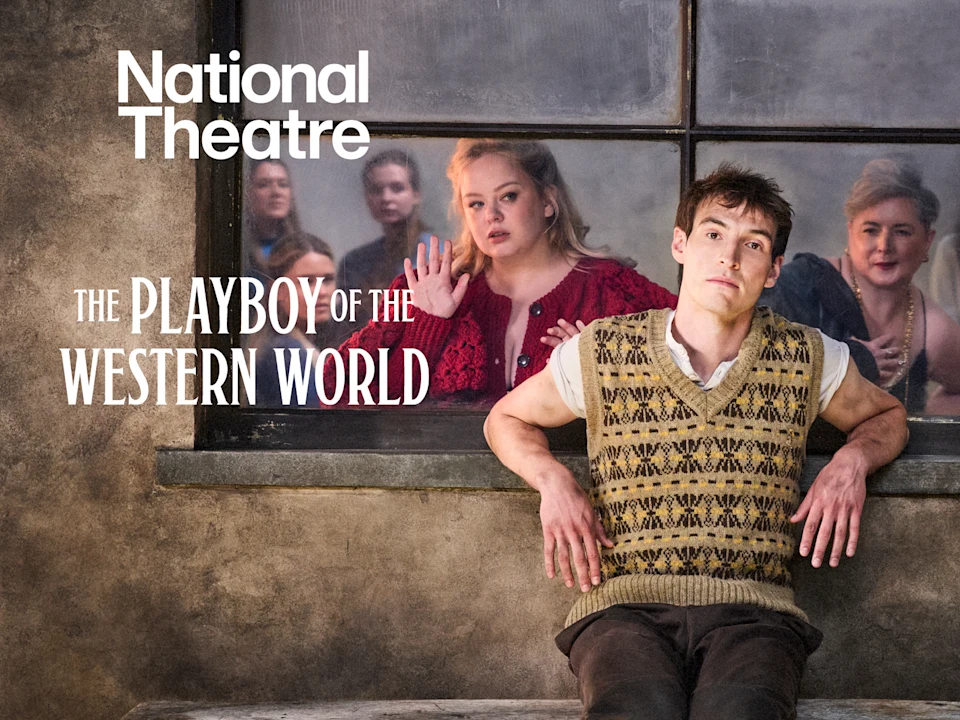
Endless, eternal, inescapable. Lead-heavy. It is in everything: in the pub regulars who monotonously wish one another blessings, in the unmatched chairs, in the bundles of dry grass sticking up at the front of the stage, even in the young and beautiful girls who have gathered from all over the village and keep pushing and pushing through the enormous doors just to glimpse the dashing hero. There will be no happiness here. No peace, no freedom either. There will be tears, confusion, and bitterness—even if this ending can be called a happy one.