Another Music: Roman Mints’s New Festival in London

Violinist Roman Mints founded Another Music Festival and successfully staged it in late January. This was the first event of its kind that Roman has organised in London (Moscow audiences may also remember his festival “Return”). Here’s how it went — and Roman’s own take on Another Music Festival.
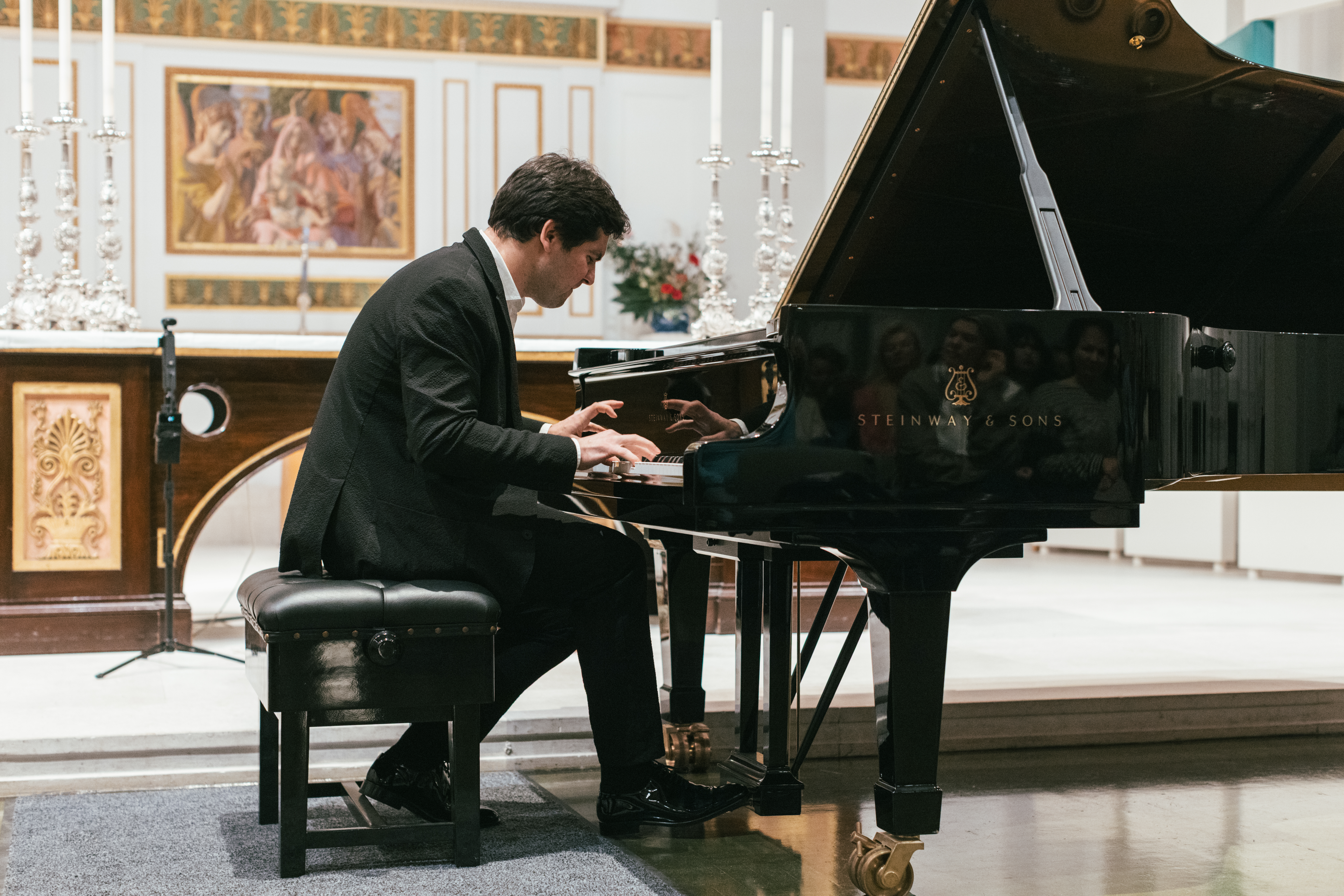
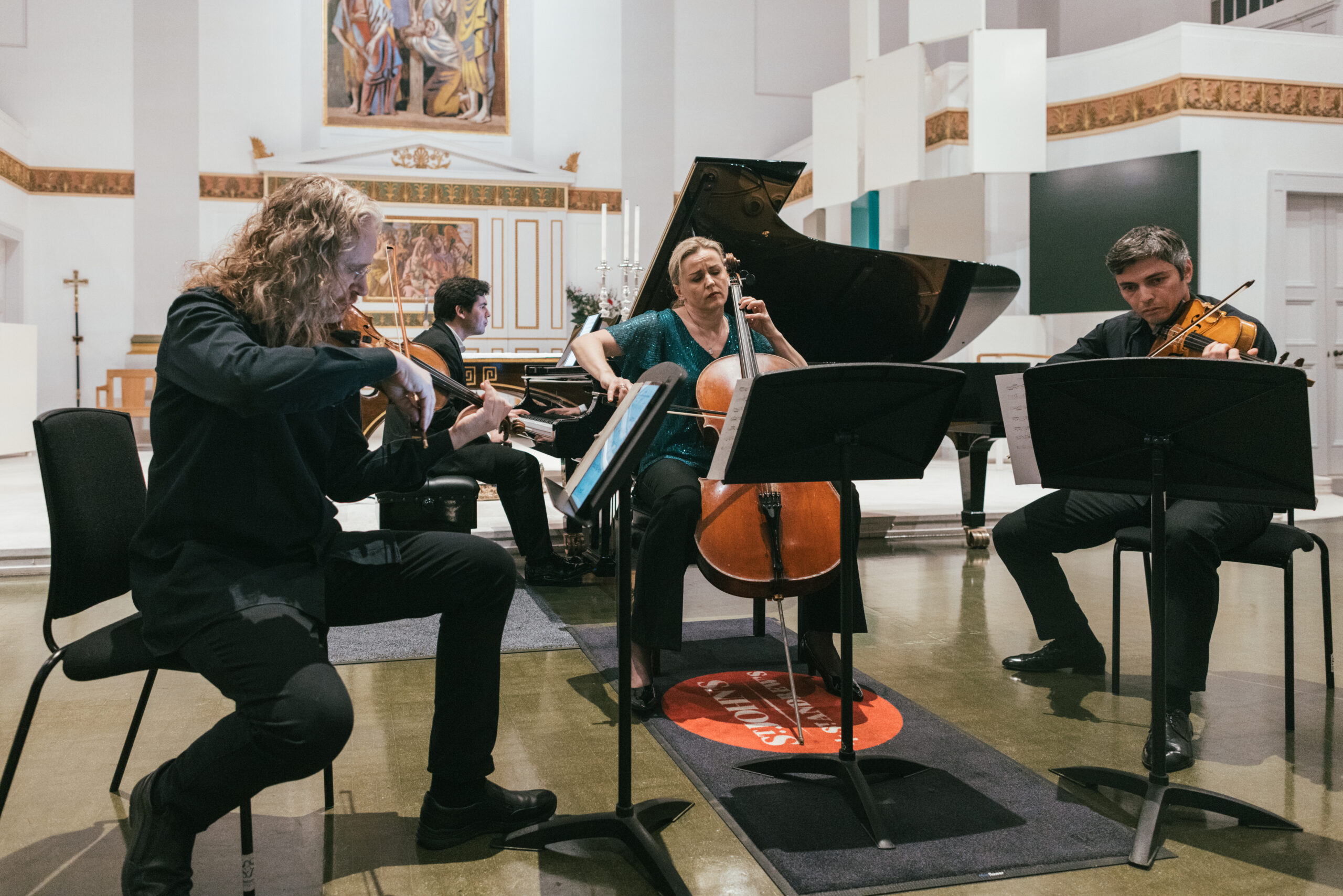
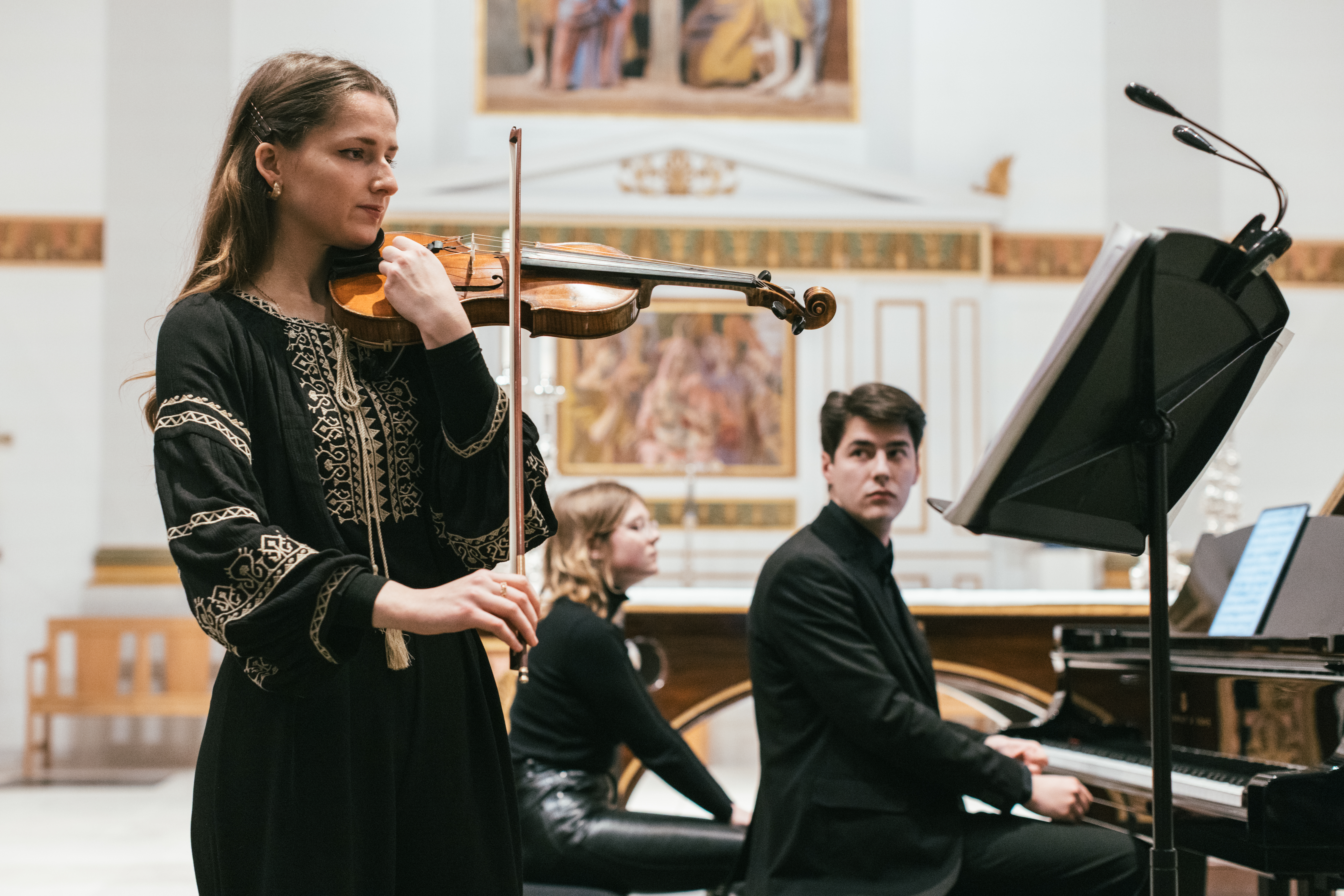
The new London festival ran over three days at St John’s Waterloo. This year’s theme was “Displaced.”
A painful and acutely contemporary subject — the lives of emigrants, refugees and displaced people — was reflected in the works included in the programme. Artistic director and violinist Roman Mints, like an architect, designed three chamber-music concerts that brought together works by both classical composers (Chopin, Stravinsky, Rachmaninov) and contemporary ones (Boris Filanovsky, Alexey Kurbatov, Leonid Desyatnikov, Elena Langer).
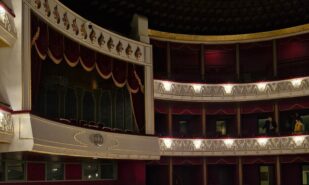
Roman Mints had already worked at St John’s Waterloo — a church situated neatly between the Southbank Centre and the Old Vic theatre — in 2025, when he presented the WE ARE! Concert in Support of Ukraine there. Now he returned beneath the vaults of St John’s with a new idea and a new programme.
The choice of venue proved almost ideal. Chamber music sounds here as if it were a private, intimate conversation with the listener, creating a sense of dialogue — one that is timeless, almost mystical. It is not an experience of detached contemplation, nor merely of listening, but of shared presence and empathy.
This is not a repetition of the Moscow Return festival, which Mints curated for many years and which audiences loved so deeply. It is an entirely new festival — in a new city, with an artistic director who has gained new experience: personal, human, and professional.
Another Music Festival is constructed with directorial precision. Over three days, musicians and listeners explored states of acute despair. They examined migration as a force that has always had the power to destroy, yet has just as persistently compelled composers to create. Exile was felt as a powerful imprint — and at the same time as a challenge and a stimulus (one would not wish such a stimulus on anyone, of course).
These are states in which the loss of home and the attempt to be reborn, to put down new roots, become part of a creative — and musical — language, and thus a subject for reflection.
It is extraordinarily difficult to comprehend what one is living through in the present moment. When emotion overwhelms philosophy, and acute grief makes analysis impossible, it becomes all the more important to turn to music — a wordless form of thought — and to share it with others in the hall. This creates the kind of communal experience necessary for survival, one that cannot be achieved by other means.
The first concert, “Between Loss and Belonging,” addressed the sharpness of loss alongside the simultaneous search for new belonging. It was one of those strange moments when time becomes non-linear, when today’s displaced people sense a kinship with Chopin, Stravinsky, George Enescu, and Paul Hindemith. The connection lies not in style or language, but in shared experience: forced migration, life between countries, exile. Music written in radically different historical periods revealed a single theme — the condition of a person deprived of a stable point of support.
Yet when loss accumulates over decades, like barnacles on the hull of a ship, it loses its sharpness. On the one hand, it acquires a philosophical patina; on the other, it offers a strange consolation to today’s displaced people. On stage that evening were violinists Roman Mints and Iryna Marchuk, pianists Katya Apekisheva, Vadym Kholodenko, and Maxym Artemenko, cellist Kristina Blaumane, and violist Mikhail Rudoy.
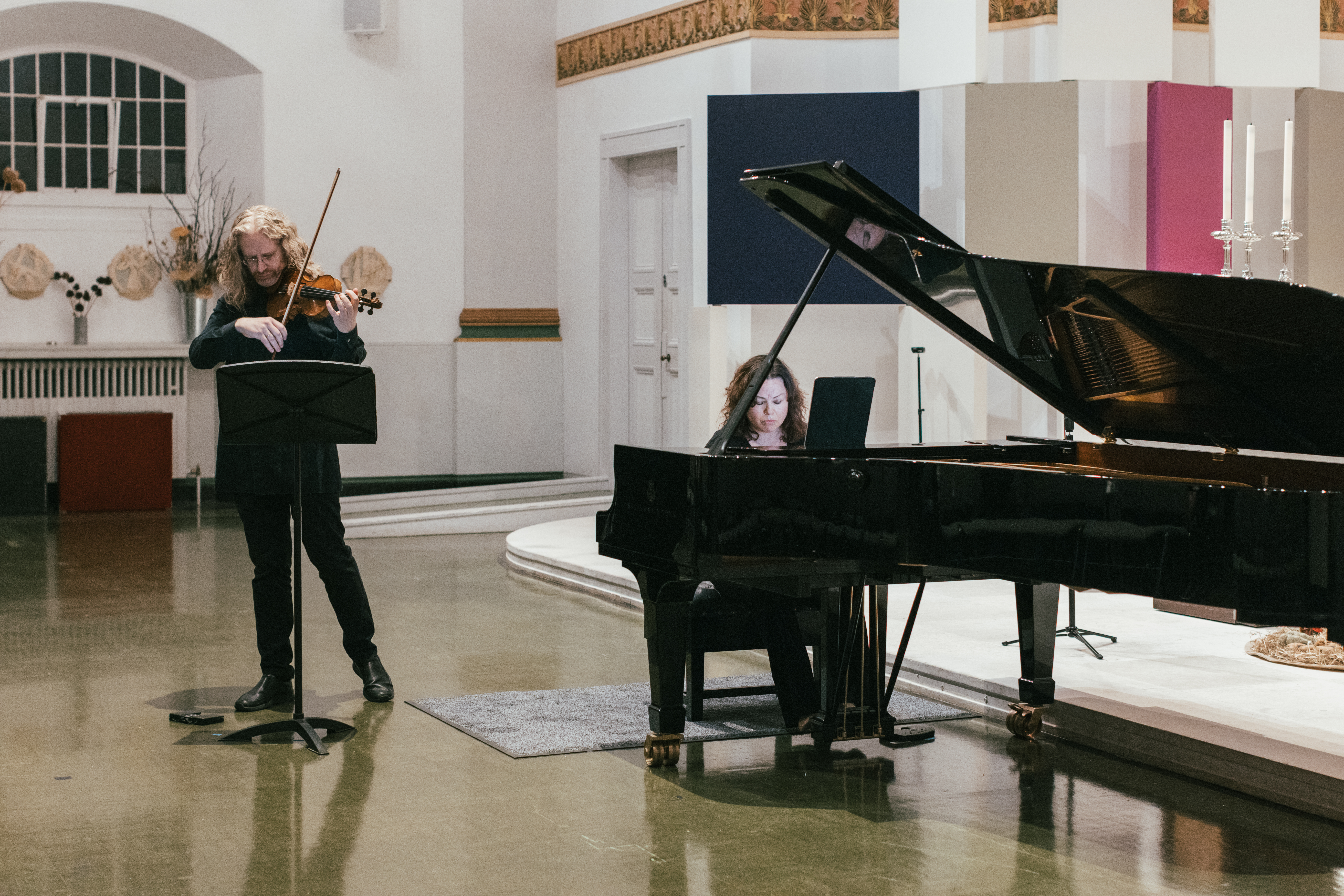
The second evening, titled “In-Betweenness,” explored the state of being “between” cultures and identities — that moment when one has leapt but not yet landed, and it is unclear whether one will land at all. Uncertainty, the search for balance, fear, hope — choose your own emphasis; all are valid. At the same time, the second day formed an arch from distant historical periods to the present, from baroque music to London premieres of contemporary works.
Pavana Dolorosa, written by Peter Philips, stands at the fracture point between artistic epochs: formally late Renaissance, yet already leaning toward early Baroque. Philips’s own life was marked by a tragic loss of home — as a Catholic, he never returned to England. This piece was performed on the harpsichord by Richard Gowers.
Elena Langer’s Landscape with Three People — with the composer present in the hall — is music about parallel destinies, an eschatological tragedy of two lines that never meet. Hope is incorporeal: the invisible wall proves indestructible by human will. What we hear is the ancient Greek Ananke expressed in sound — necessity that leaves no room for choice.
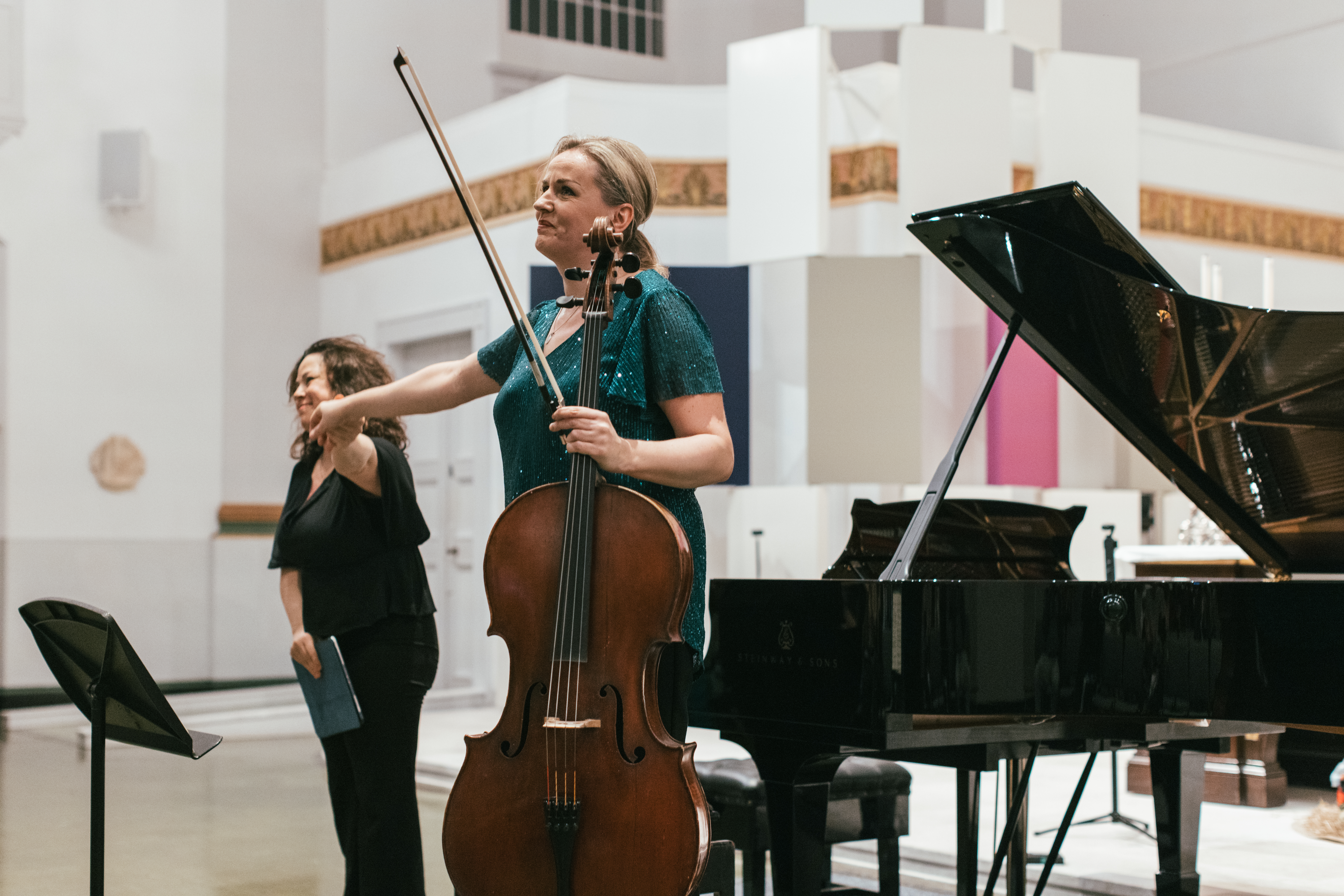
Among the other musicians of the festival’s second day were pianist Katya Apekisheva, violist Meghan Cassidy, violinists Natalia Lomeiko and Alexandra Raikhlina, cellists Ashok Klouda and Julia Morneweg, as well as two singers: soprano Hilary Cronin and countertenor Francis Gush.
The third concert, which concluded the festival, was titled “Hidden Voices.” It brought together “hidden” treasures — unjustly forgotten, rarely played, and seldom heard works.
Among the musicians appearing on the third day were violinists Alexandra Raikhlina, Patrick Savage, and Elly Suh, pianists Sasha Grynyuk and Katya Apekisheva, violists Yuri Zhislin and Milena Simovic, and cellists Julia Morneweg and Rebecca Gilliver.
The festival programme observed, with almost pharmaceutical precision, a balance between experimentation and music accessible to a wider audience. The hall included not only highly experienced listeners, but also those still untrained in the demands of complex contemporary music. There was grace, and even a touch of irony — surprising as that may seem within such heavy and painful subject matter. In this sense, the festival also fulfilled an educational role for those just beginning to learn how to listen to contemporary classical music.
One must also note the sensitivity of the audience. You know how applause sometimes breaks out between movements — at a comma rather than a full stop? Not once was there applause before the bows were fully lifted from the strings.
Another Music Festival is more than a series of concerts. It is a new way of thinking about and experiencing music, bringing together both audiences and musicians — established, brilliant professionals and young students alike.
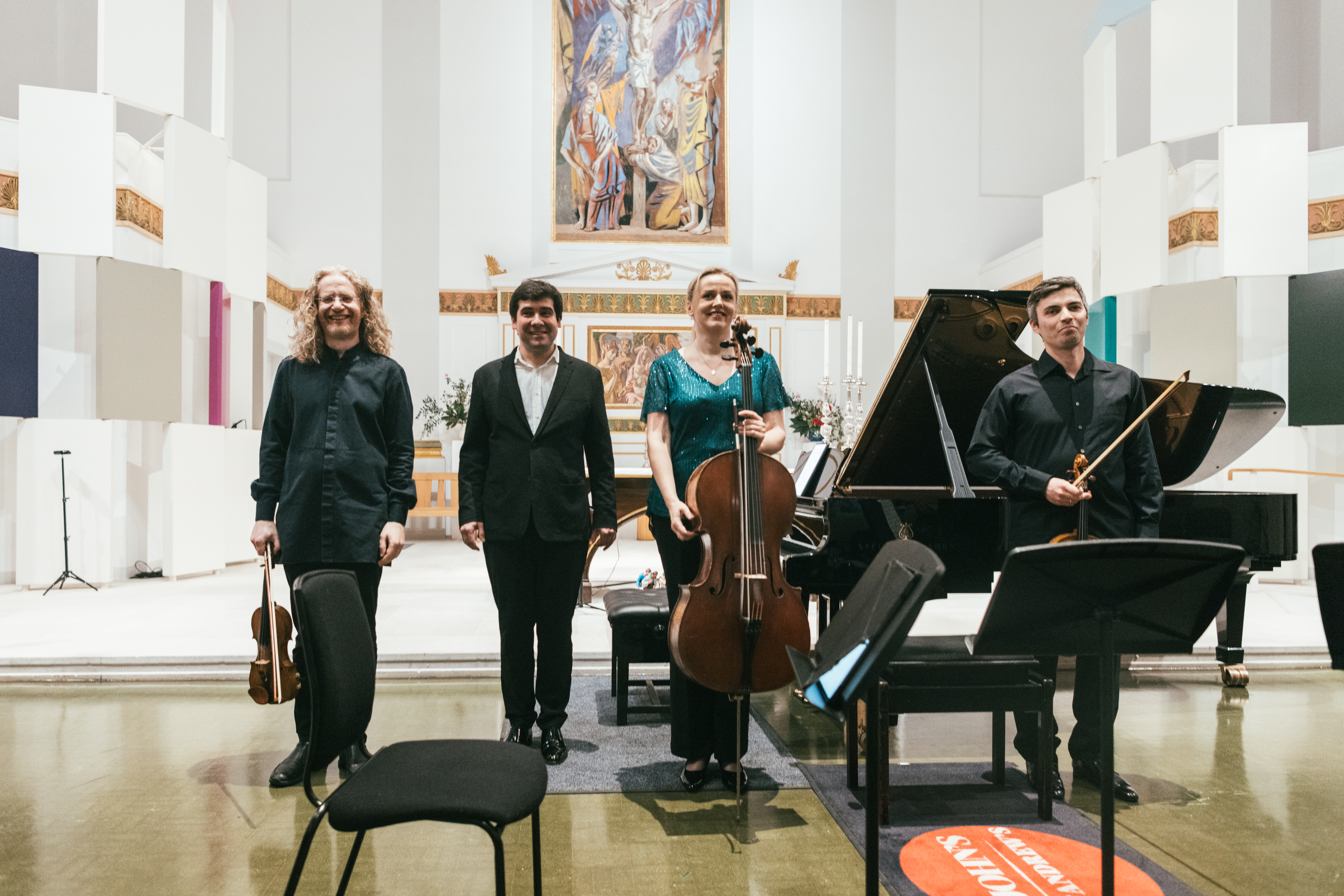
The festival concluded with Last Round, written in 1996 by Argentine composer Osvaldo Golijov. Tragic and incandescent, the music coils into a glass-hot spiral that repeatedly shatters into fragments. In its despair, it compels action — to live, to act, to continue. Dramaturgically exact, this final piece marked not a full stop, but a dash — between the first Another Music Festival and the next.
After Another Music Festival ended, we spoke with its founder, Roman Mints.
The festival ended on Friday. Today is Sunday. How does it feel?
I’m already working again — I don’t even have time to analyse it properly. Artistically, everything certainly worked out. But I had no doubts about that, because I knew which musicians were involved. I have a very solid track record in that respect.
Overall, everything went well in general. Today an article was published in The Observer, which for a first-time festival is considered an unheard-of success. We live in a city where a hundred concerts happen simultaneously every day, so even very good concerts don’t always get press coverage. There are far fewer journalists than concerts. So it means that something in the programme, or in the idea of the festival, struck the journalist as interesting enough to come.
On the second day of the festival, composer Leonid Desyatnikov was in the audience…
He didn’t warn me that he was coming. He flew in специально but kept it from me, thinking he could slip into the hall unnoticed. And at that exact moment I happened to step out into the foyer. Of course I was surprised and delighted, but the thing is — he’s a very demanding composer.
On the other hand, this piece has already had a life of its own, so another performance is not as critical as it would be if it were a premiere. I only told the conductor that Desyatnikov was in the hall; I kept it from the rest of the musicians so as not to create unnecessary tension.
The festival included premieres by contemporary composers — the first performances of works by Boris Filanovsky and Alexey Kurbatov. Was it important for you that there were premieres?
At one point in Moscow, at Homecoming, we had the goal of commissioning new works specifically for the festival, but we almost never had the money for that. For a while we even ran a competition for the best score, but with competitions there’s never a guarantee that even one good score will arrive.
At Another Music Festival, everything depended solely on my own desire. During the years when I wasn’t organising festivals, I accumulated a lot of unperformed music. So it wasn’t a goal in itself — it just happened that way. For example, Filanovsky’s premiere didn’t take place because of the pandemic. I think it sounded very interesting now.

How do you feel about St John’s Waterloo as a venue?
It’s a good hall. I’m happy with everything. And geographically, on the one hand, we’re almost part of Southbank, but at the same time we’re doing something different.
From a theatrical and dramaturgical point of view, the transitions between pieces looked almost cosmic.
I met the stage manager, Shaun Bajnoczky, when I was doing the Concert in Support of Ukraine at St John’s Waterloo a year ago. I was simply stunned — I’ve never seen that level of work in my life.
This guy arrives with a flight case. The first thing he does is go up to the orchestra and say: “Hello, I’m your stage manager. If any of you need light for your stand, to charge a device, blocks for your chair — come to me, I have everything with me.” He arrives at every rehearsal at two o’clock, marks the floor with tape showing where each music stand goes for each piece. Five minutes before the next number he tells the musicians it’s time to go on stage.
I told everyone that when I decided to do the festival, the first person I called was Shaun Bajnoczky. I deeply respect people who do their job professionally. It’s so rare. And the further we go, the rarer it becomes.
But not among musicians!
It varies. I noticed that during rehearsals, the only people who were sometimes late were students. The adults arrived half an hour or fifteen minutes early. Students — not always. Life hasn’t forced them yet.
The festival featured both established musicians and students. Did you know how it would feel for your students to perform?
I hope my students don’t feel too nervous when we’re on stage together. Of course, there is some anxiety — simply because they have much less experience. But you see, I don’t even think in those terms: students or not students.
For example, the clarinettist Lily Payne is officially a student, but you can hear that she is already a fully formed musician. That’s the only thing that has ever mattered to me. When I was their age, older colleagues took me into ensembles in exactly the same way and gave me experience.
Age is simply not a category for me when shaping a programme or a line-up — for a festival or for any concert. As for my own students with whom I played Bechara El-Khoury’s piece, it’s important to understand that all of these students are from Ukraine — and it’s clear why they are here now (Iryna Marchuk, Sofiia Yavorska, Anna Nemchuk, Kateryna Kolosok, Sofi Lomidze).
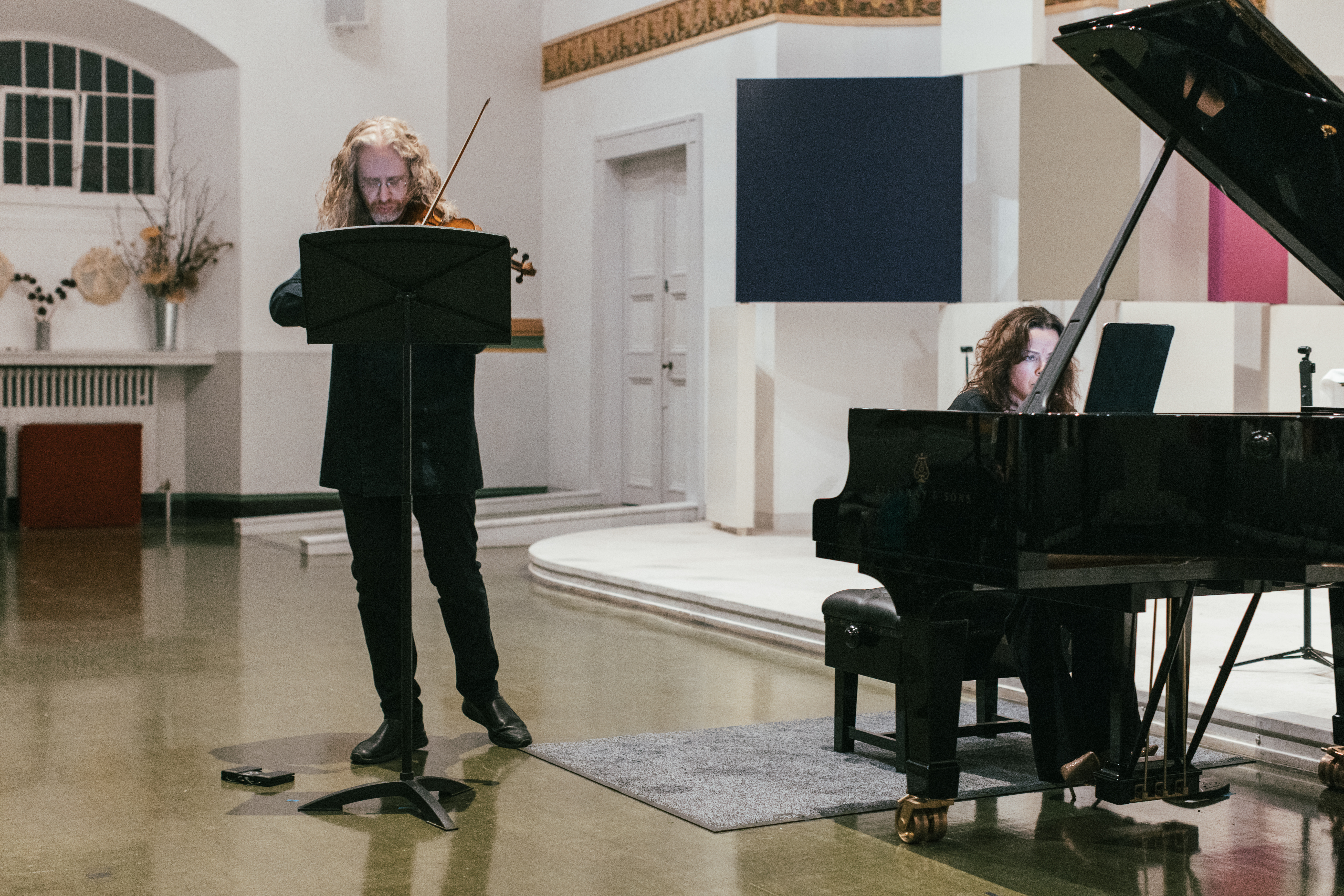
My relationship with them goes beyond teaching; I try to help them in every possible way. And this was also paid work for them. And, very importantly, it was a chance to perform in the same concert with such musicians, to hear this music, and to go with me to the BBC before the festival — a very significant experience, playing live on the radio for the first time in their lives. I didn’t have that opportunity at their age.
Were there any pitfalls in organising a festival in London?
The main thing is enormous competition. You have to convince people that they should drop everything and come to you today. In Moscow, in the later years of Homecoming, people came because they trusted us. You didn’t have to worry whether the Small Hall of the Conservatoire would sell out. But that took many years to build.
Here, of course, that audience still needs to be gathered and developed.
Do you plan to make the festival annual?
If we manage to raise the money — yes. It’s difficult, but as it turns out, it’s possible.