Power — and How to Rid Oneself of It: London Theatres in February

What does February 2026 have in store for us? Quite a lot, as it turns out. Theatres have shaken off the Christmas frenzy, audiences have replenished their wallets, and the season has finally come into its own. This month’s programme offers reflections on the nature of power (including parental power), ways of confronting family conflict, a dash of politics and a touch of friendship. Take your pick.
Man and Boy
Dorfman Theatre
National Theatre
London SE1 9PX
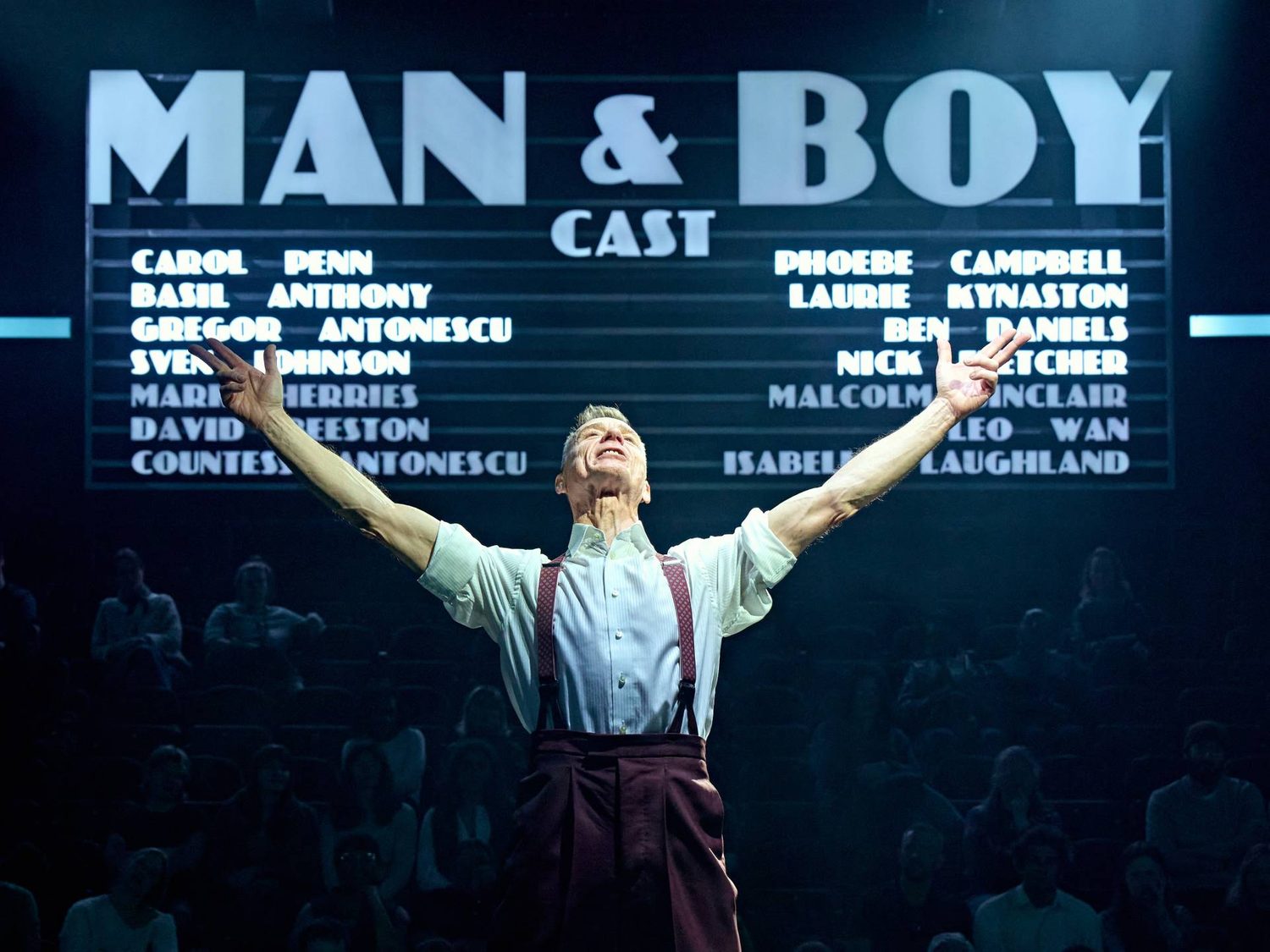
Photo by Manuel Harlan, nationaltheatre.org.uk
This play is by one of the most celebrated dramatists of the twentieth century, Terence Rattigan. A master of the “well-made play”, whose works remained in repertoire long after their thousandth performance, Rattigan devoted his writing to examining the darkest and most painful aspects of human nature and relationships — particularly within the family. His characters were brought to life by such towering figures as John Gielgud and Paul Scofield.
In 1946, Rattigan wrote The Winslow Boy, a play in which a father spares no effort to restore his son’s good name. It won the New York Drama Critics’ Circle Award and enjoyed a triumphant run on Broadway.
Seventeen years later, Rattigan returned to the theme of family obligation with Man and Boy, set during the Great Depression. This time the story is inverted: a father demands that his son save the family at the cost of the son’s own happiness. Long unjustly neglected, the play is now revived by director Anthony Lau at the Dorfman Theatre.
The father, financier Gregor Antonescu, is played by Ben Daniels. It is a gruelling, complex portrait of a cold, calculating man incapable of love or tenderness towards his son. And yet it is almost impossible to look away from Daniels on stage. To follow the development of the character — the way he achieves his goals, every turn of the head, every modulation of that rich voice aimed with sniper-like precision at his son — is to witness acting of the highest order.
Gregor’s son Basil is played by Laurie Kynaston, winner of the Evening Standard Award for Emerging Talent for The Sonin the West End in 2019. Together, the two actors form a remarkable duo: the victor is obvious from the start, and the defeat of the weaker party only serves to underline just what a monster the winner truly is.
Broken Glass
Young Vic Theatre
66 The Cut
London SE1 8LZ
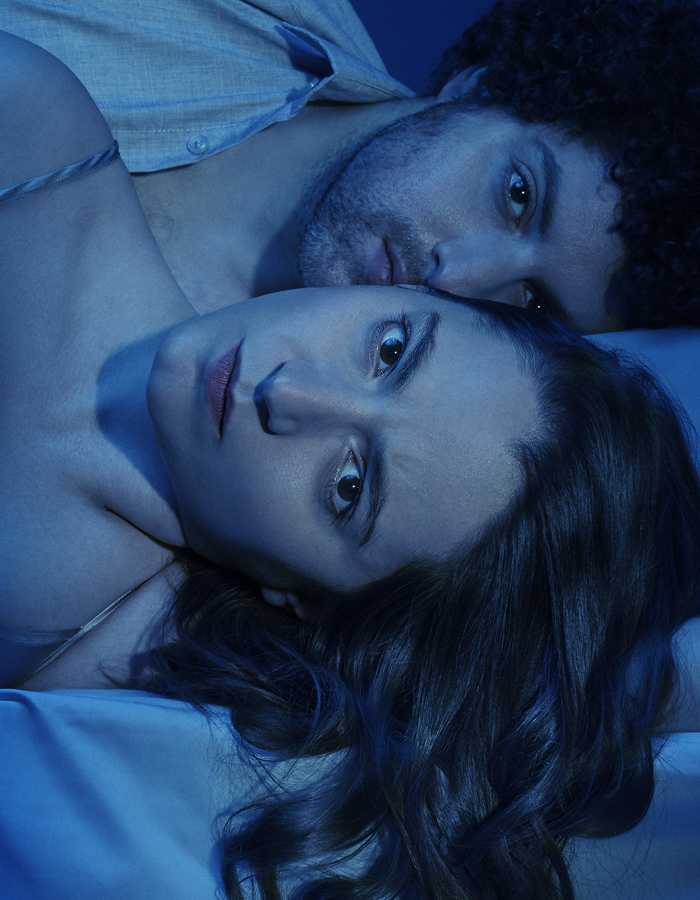
Another exploration of power, fear and the destruction of the family, Broken Glass is set thirty years earlier than Man and Boy. This late play by Arthur Miller, written in 1994, takes us to Brooklyn in 1938, as Kristallnacht unfolds in Germany.
Sylvia Gellburg suddenly becomes paralysed, although doctors can find no physical cause. Her husband Philip, a successful but emotionally distant man, does not openly tyrannise his wife — but he dismisses her suffering and renders her invisible. “This has nothing to do with us,” he insists. He is convinced he has assimilated, that America is safe, that none of this matters.
Sylvia, however, is paralysed less by illness than by terror. As a Jewish woman, she is haunted by the image of shattered shop windows, by pavements carpeted with broken glass — and her body, from the waist down, ceases to respond.
At the Young Vic, the play is directed by Jordan Fein, an American director now based in London. (He recently staged Fiddler on the Roof at Regent’s Park Open Air Theatre, which won three Olivier Awards.) His production of Into the Woods is currently running at the Bridge Theatre — a hauntingly beautiful and melancholic musical about the collapse of a familiar world.
In this new production, Sylvia is played by Pearl Chanda, whose stage debut came in 2021 as Nina in a Chekhov project with Headlong Theatre. Her husband Philip is portrayed by British-American actor Eli Gelb, a Tony Award nominee.
Bird Grove
Hampstead Theatre
Eton Ave
London NW3 3EU
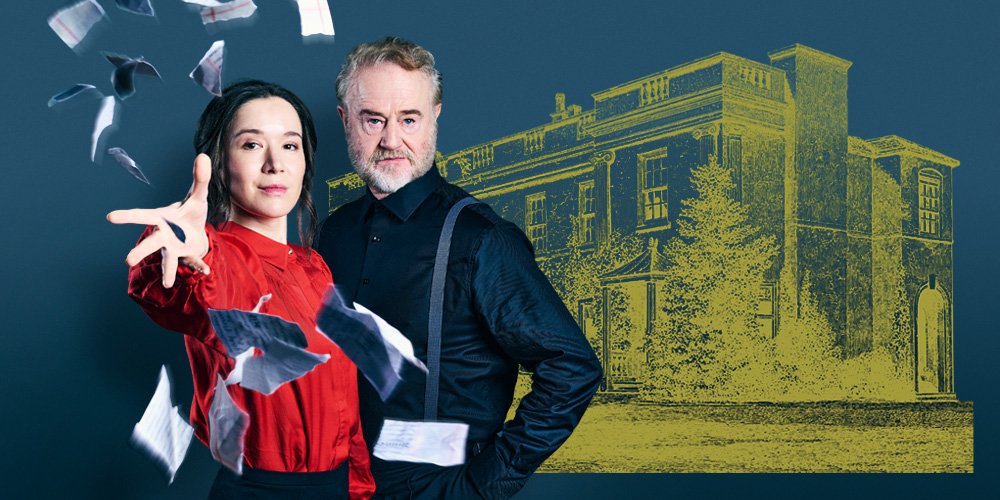
This is the world premiere of a new play by Alexi Kaye Campbell, centred on the life of a young woman named Mary Ann Evans. The year is 1841. She lives in her own house, in a patriarchal society, under the authority of a father who knows exactly how a young woman of marriageable age ought to live. And he intends to arrange her marriage — properly, respectably, as one should.
Mary Ann, however, has very different ideas. Bird Grove is also a biographical play.
Bird Grove is, in fact, a real house in the Foleshill area of Coventry, where this very story unfolded. Mary Ann Evans — the future George Eliot — lived there with her father from 1841 to 1849. Her biography confirms it all. Considered “plain” by her family, she was steered towards education instead, on the assumption that a successful romantic life was unlikely. She was more than happy with this arrangement: nothing interested her more than books.
Her loving father, however, believed it was his duty to secure his daughter’s future. Mary Ann truly loved him — but she refused to accept his terms. They never found common ground, right up until Robert Evans’s death. In despair, he watched as his daughter mixed with entirely the wrong sort of people — some of them, horror of horrors, agnostics.
Director Anna Ledwich stages Bird Grove with Owen Teale and Elizabeth Dulau in the leading roles. Teale, one of the finest Shakespearean actors of his generation, is widely known for his tragic portrayal of Alliser Thorne in Game of Thrones, though theatre audiences will remember his outstanding Edmund in King Lear for the Royal Shakespeare Company. Elizabeth Dulau previously appeared as Yolandi in Klippies at the Young Vic — a striking London debut.
I’m Sorry, Prime Minister
Apollo Theatre
Shaftesbury Ave
London W1D 7EZ
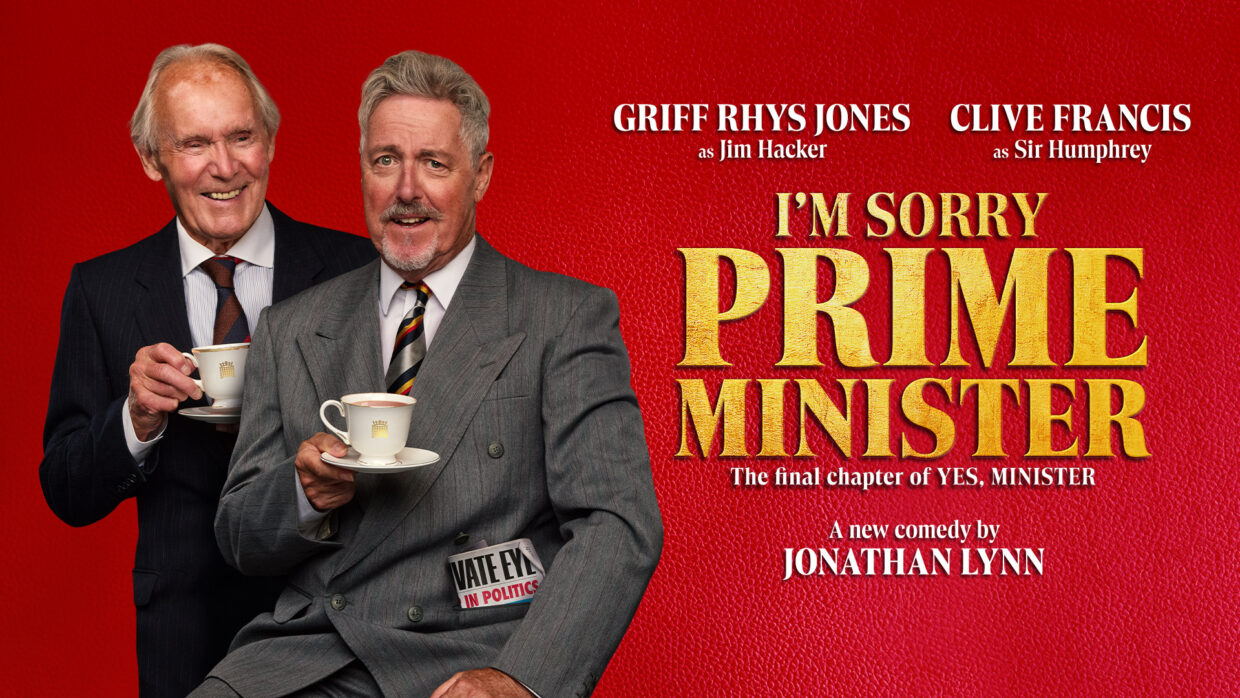
The long-awaited continuation of Britain’s classic political satire preserves the unmistakable tone of the original BBC series Yes, Minister and Yes, Prime Minister. Razor-sharp jokes about British politics, sparkling dialogue in glorious English — this is what I’m Sorry, Prime Minister delivers. The play handles politics and power with such elegance that even those without a degree in political science will find genuine pleasure in watching it.
The original series starred the much-loved Paul Eddington as Jim Hacker and Nigel Hawthorne as Sir Humphrey Appleby. Both actors are long gone — Eddington died in 1995, Hawthorne in 2001 — but Griff Rhys Jones and Clive Francis perform a clear homage, without directly imitating the television characters.
If you like, this production carries the same theatrical and social DNA — not least because the writer of the TV series, the playwright of the current work and the director are all the same person: Jonathan Lynn. I’m Sorry, Prime Minister is the final chapter of a political-satirical saga, written by the man who created it in the first place. This is a farewell piece — not about life in power, but about life after power.
At heart, it is a story about ageing, the loss of influence, and the passage of time — and how a once-powerful individual learns to live with it. There is no anguish here: Sorry, Prime Minister is, above all, an ironic meditation on change in the world and in society.
Evening All Afternoon
Donmar Warehouse
41 Earlham St,
London WC2H 9LX

Another world premiere this February — this time a new play by Anna Ziegler. (Her earlier work Photograph 51, in which Nicole Kidman played the chemist Rosalind Franklin, explored the discovery of DNA’s structure.)
This new play could not be more different. It is an attempt at dialogue between two women caught in a deeply uncomfortable situation. Jennifer might have become Delilah’s stepmother. She desperately wants to build a relationship with the younger woman — but they are, inevitably, on opposite sides of the barricade. Jennifer’s fiancé — Delilah’s father — died before the wedding.
They are, in effect, strangers, united only by grief and longing for the man they have lost. Director Diyan Zora stages their story in minimalist sets designed by Basia Bińkowska.
Jennifer is played by Olivier and BAFTA nominee Anastasia Hille, known to television audiences for her role as Olga in A Gentleman in Moscow and as Sybil Cazalet in The Cazalets. Delilah is played by Erin Kellyman, a film and television actor best known for her role as Enfys Nest in the Star Wars universe. Evening All Afternoon marks her London stage debut.
How do you open your heart again? And should you, in fact, revisit what has been lost forever? Finally, where does one find the strength to carry on?
Night Conversation
Arc Space
13 Tottenham Mews
W1T4AQ
This is an immersive reading presented as part of the Arc Theatre Laboratory. Rather than a traditional stage production, it is a performance in which the audience is drawn into the text, the dialogue and the atmosphere itself.
Set in a Berlin kitchen at night, the piece is performed by Alisa Khazanova, Maria Bolshova and Vasiliy Zorkii, who also wrote the screenplay (it is, strictly speaking, a film script). A video camera operates throughout the space, and the reading transforms from theatre into cinema — into something close to a documentary record.
Arc Space itself can hardly be described as a conventional theatre: it is a hybrid environment combining gallery, theatre and social platform.
What is democracy? How do we prevent dialogue from descending into an ugly argument? How do we live alongside those who think entirely differently? Night Conversation is also about remaining in dialogue when agreement is almost impossible and common ground appears to shrink rather than grow. The audience here is neither observer nor judge, but a witness — almost a fourth participant.




![Sometimes You Need a Complete Vacuum to Hear Yourself: Performance [RETREAT] in Space | London Cult.](https://londoncult.co.uk/wp-content/uploads/2026/06/banner_retreat-1-309x185.jpg)