Morning Comes Unexpectedly: A staged reading of Vasily Zorky’s text took place at ARC.SPACE

“Night Conversation” is not a play but a film script that Vasily Zorky wrote before the war. The action unfolds over the course of several hours in a single location — the Berlin apartment of XX, an émigré of twenty years.
Ordinary chatter. An ordinary night in late February 2022. Two friends meeting after — terrifying to say — how many years apart, and a male friend beside them. An entirely ordinary situation. Guests, whiskey, cigarettes, Berlin after Moscow for a couple of nights — they seem to be saying, remember, remember what it was like BEFORE?
That BEFORE hangs over the audience like the sword of Damocles. It permeates the space like cigarette smoke, like quiet music. And how, one might ask, can music be compared to the sword of Damocles? More on that later.
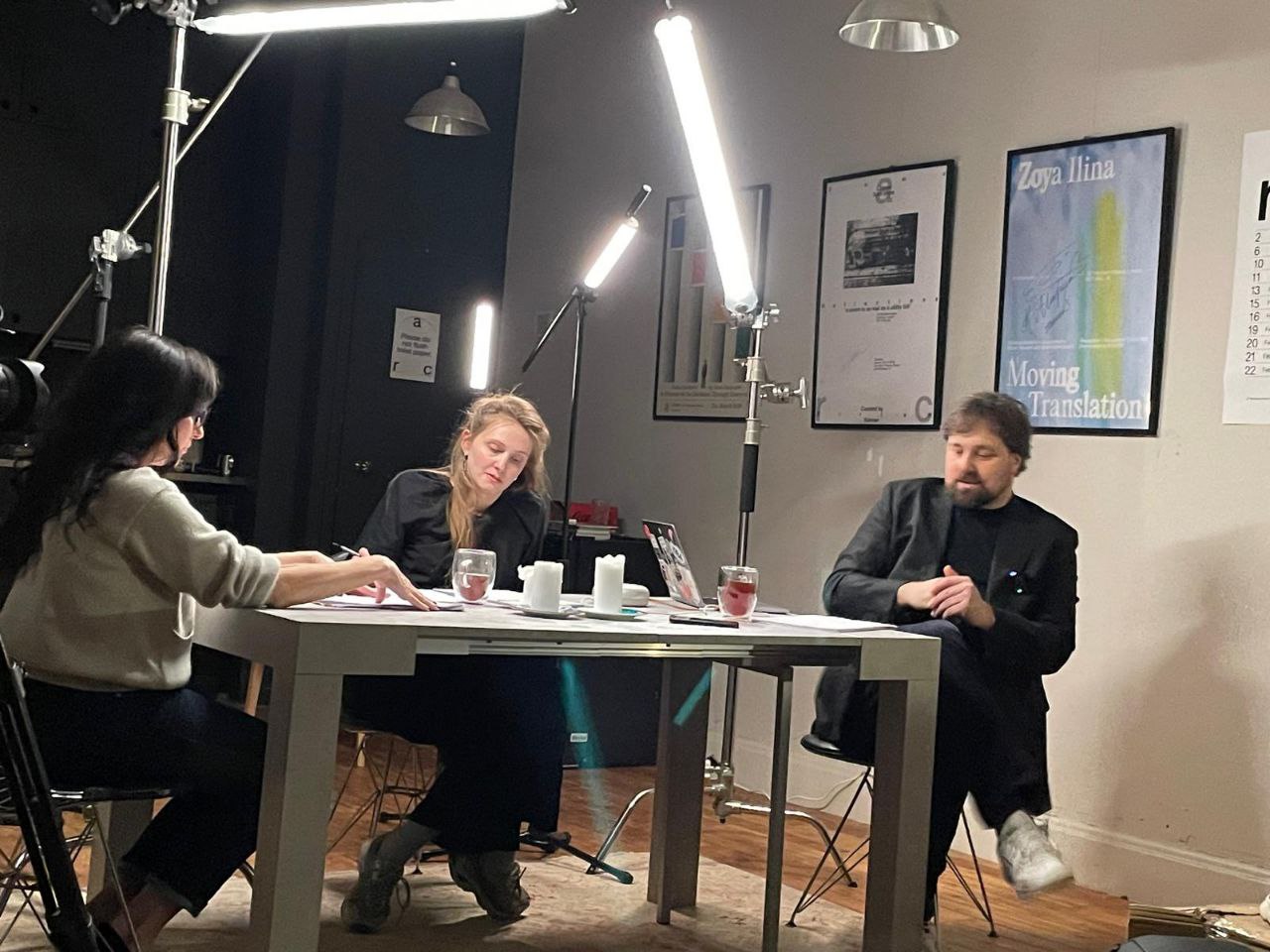
The ensemble — Alisa Khazanova, Maria Bolshova, and Vasily Zorky — perform with astonishing precision, as if they had rehearsed every day for six months. They take genuine pleasure in each other’s presence — one might even say joy — though they speak of fundamental, generational matters.
And they are all utterly different: in their acting nature, in their natural temperament. When actors perform so close to the audience, these differences become especially visible.
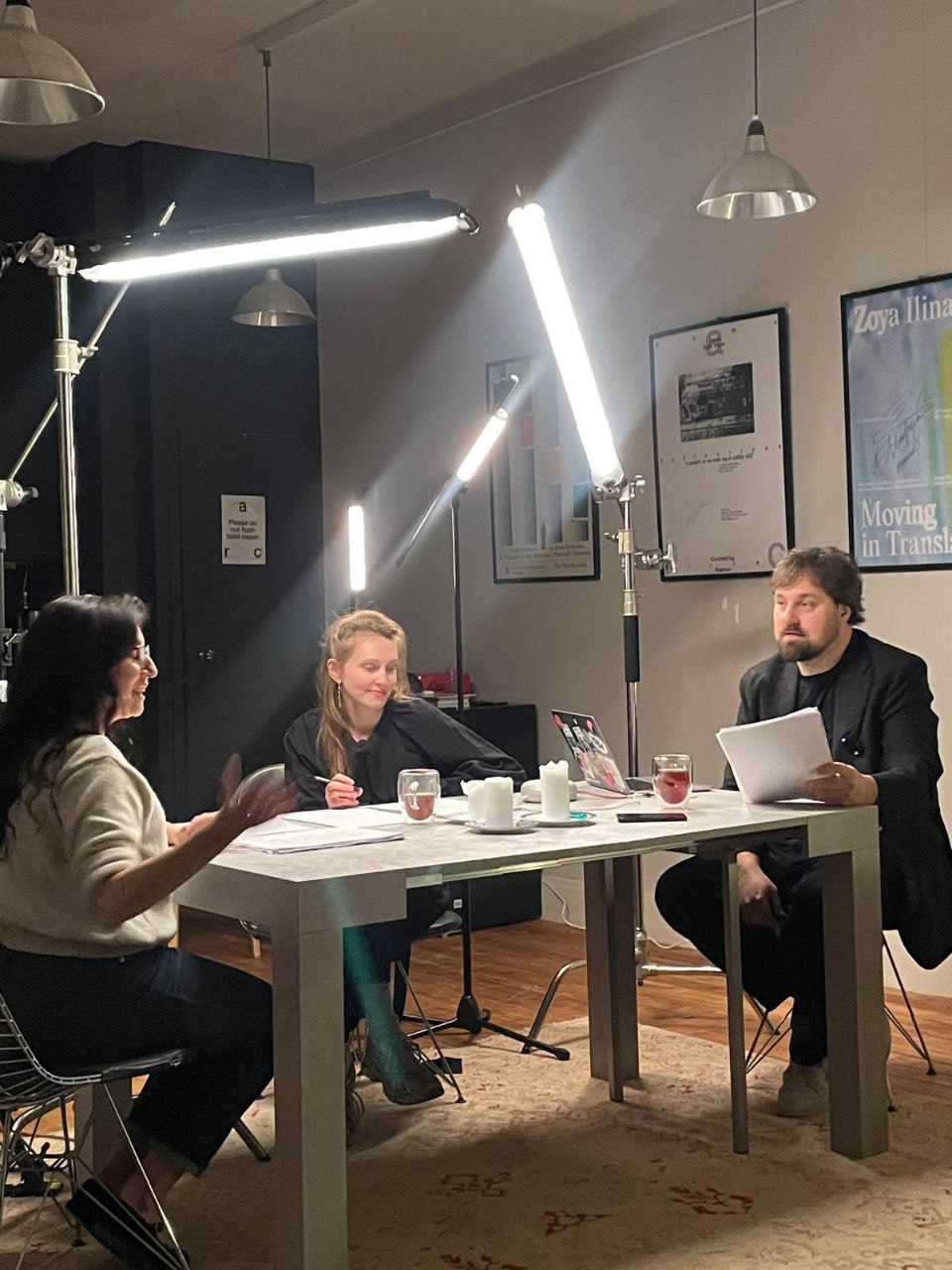
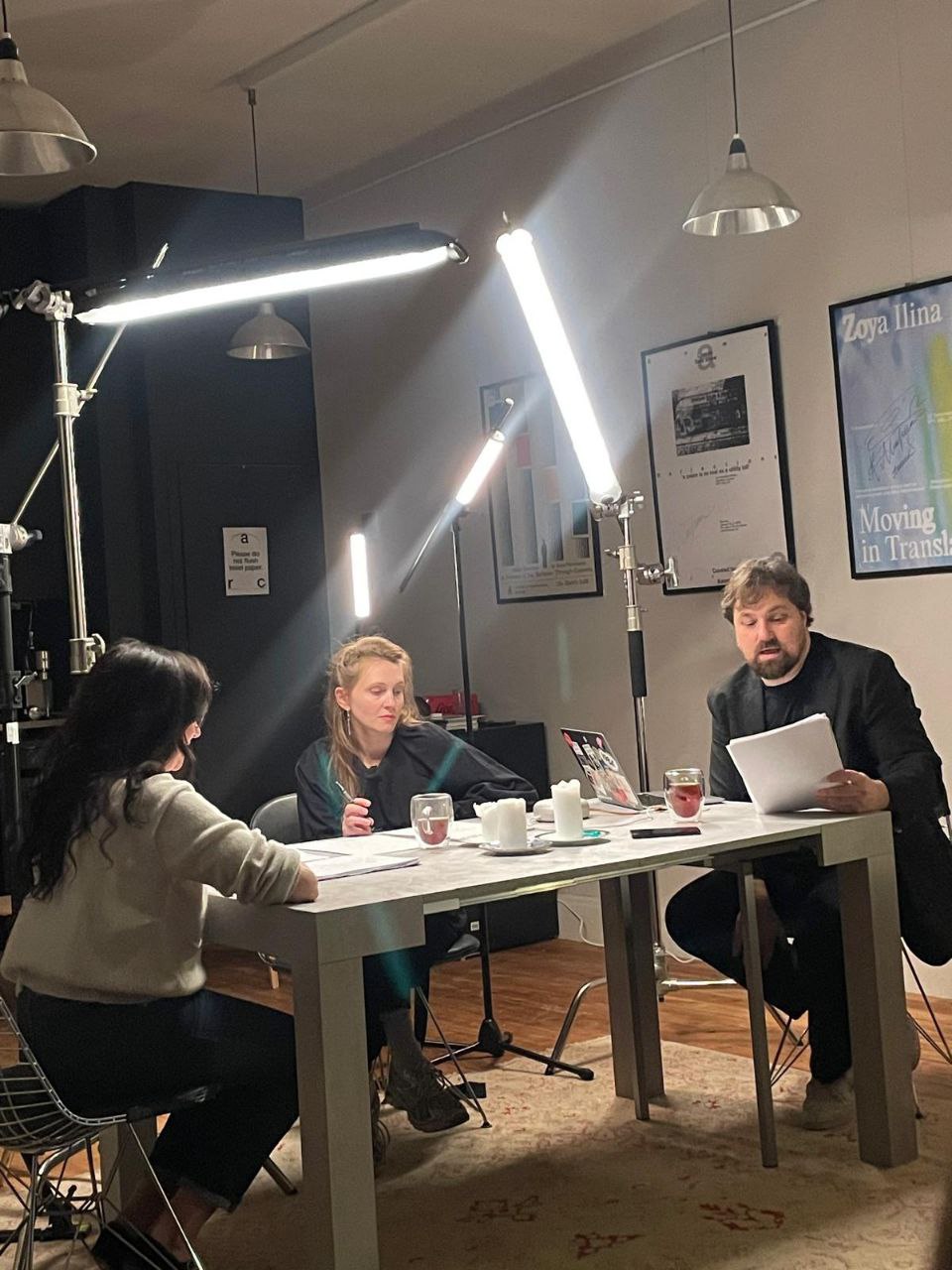
Khazanova plays cautiously, almost in half-movements — her fingers, like little bird beaks, touch the table and objects as if afraid of harming them. Her Sonya herself is cautious, her steps uncertain, as though she were not at home, as though she were apologizing for existing at all. And this image opens toward the finale like Pandora’s box for which the key has finally been found. It opens suddenly, like a wound-up clock spring snapping loose — in a perfectly executed explosion of despair and panic attack, where the past hums in the background, impossible either to change or to accept.
It is impossible to take one’s eyes off Maria Bolshova’s heroine — she plays Masha as openly beautiful, eccentric, at times hysterical, tousled and graceful. But even this openness is not complete. It will unfold further when Masha balances on the soft armrest of an armchair by the open window — so recklessly that your heart contracts. Yet she is like a cat with nine lives. Her “I want!” is not selfishness but a desperate thirst for life, a stream breaking through a thick layer of duty.
Philipp — Vasily Zorky himself, both actor and author — controls the sound of the evening. Without hiding behind a sound engineer or a booth, without theatrical tricks where sound seems to emerge from nowhere, he simply clicks the buttons of a laptop within reach.
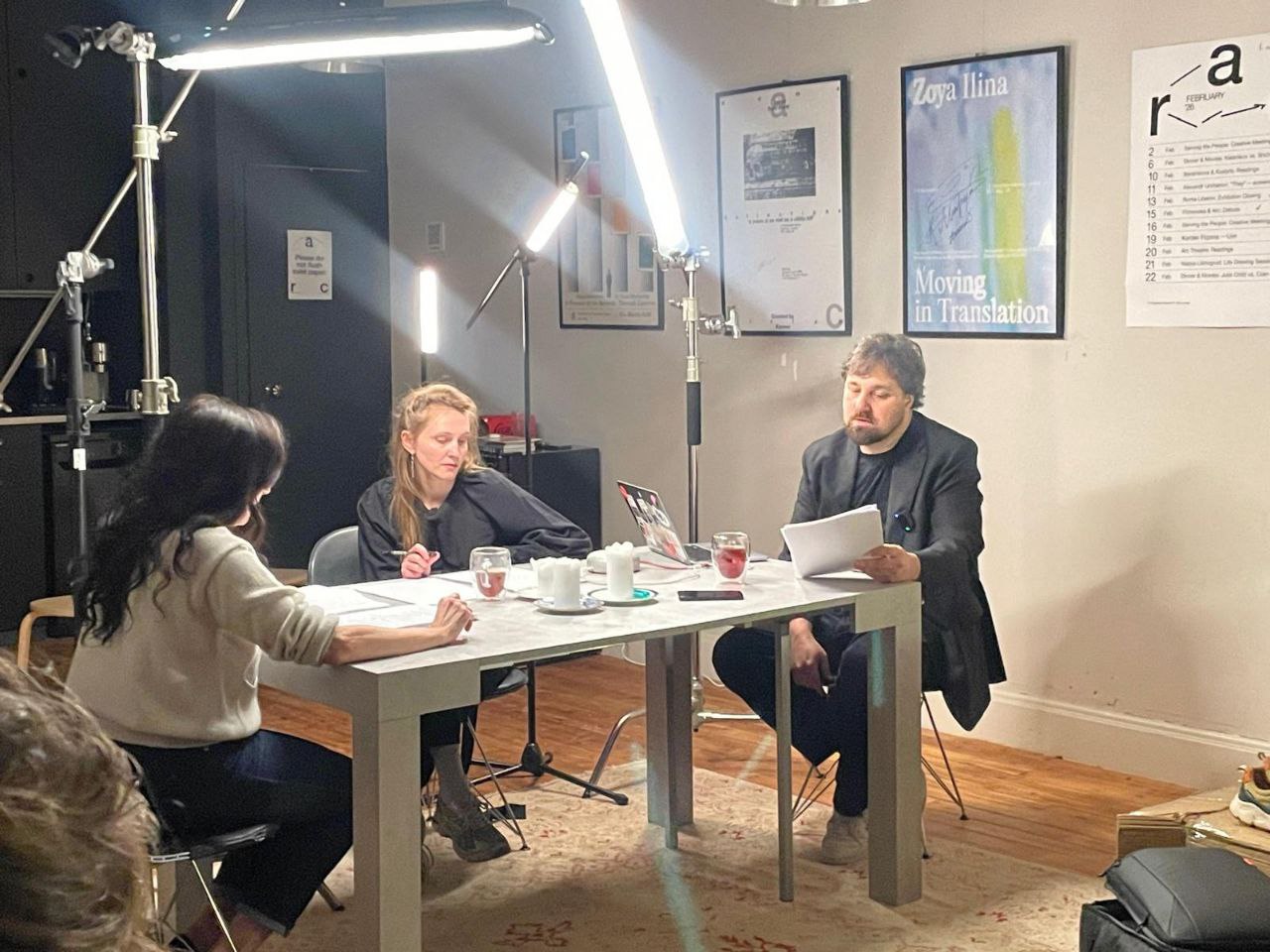
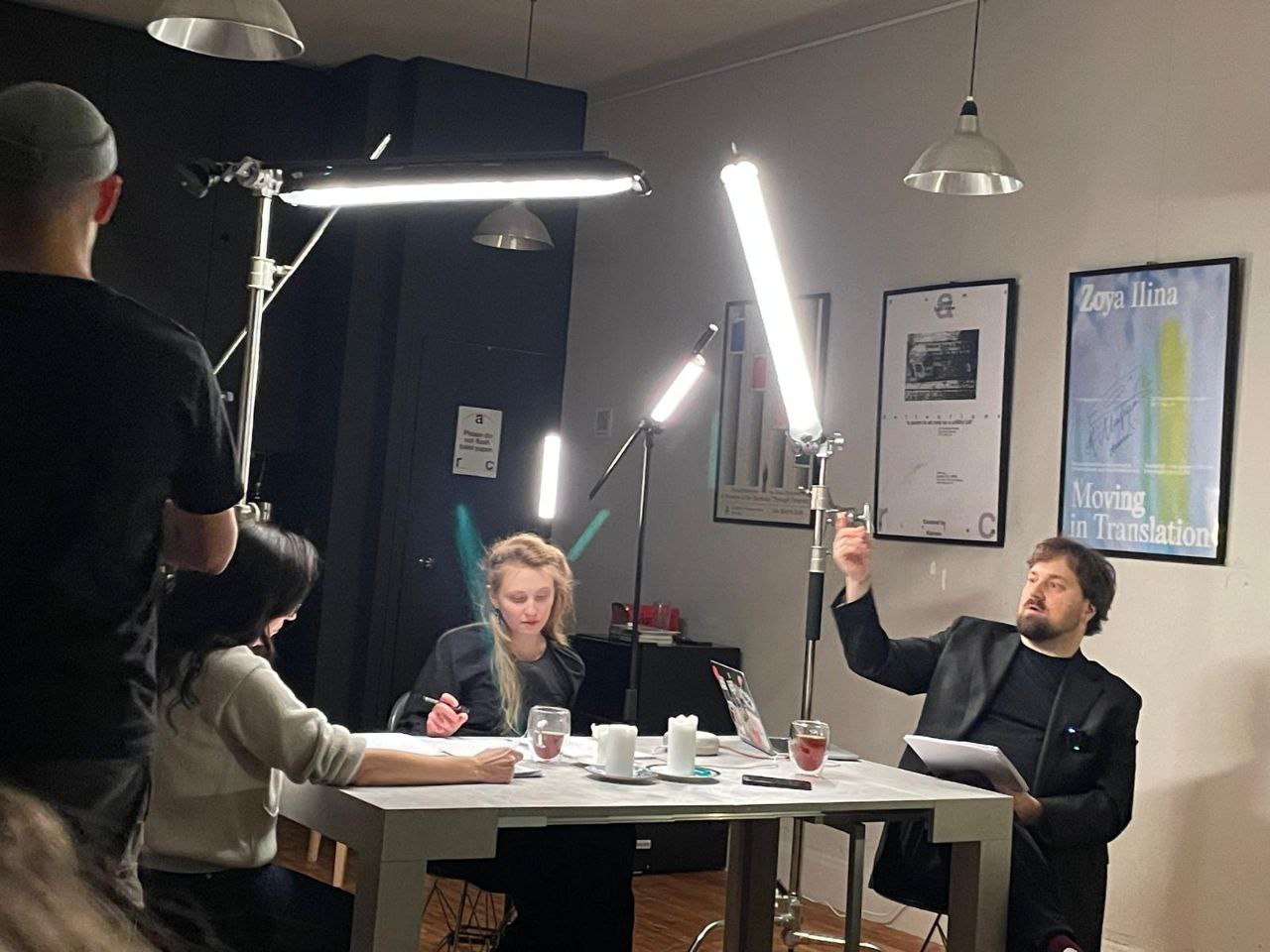
Zorky seems to observe what is happening from somewhere deep beneath the surface — with a tenth layer of consciousness, an actor-director’s gaze — yet this does not distract him from his character: languid, composed, clearly well-off, and the most closed-off of them all. Actor, screenwriter, a little director, a little host — yes, partly Zorky’s alter ego, partly a lyrical hero, and, most intriguingly, a mirror.
The more he speaks about himself, the more he illuminates his companions — a strange reflective effect. He goes to the window to smoke, he teases, jokes, grows irritated, grows sad — and in doing so provokes the women to reveal themselves.
A mischievous rock band on tour, honestly — so different, and yet together (forgive the silly quote from an old commercial; I couldn’t resist).
It is hard to resist: “Night Conversation” is full of recognizable details and quotations. Zorky writes about the world he comes from, about people he knows well. The signs of the times, the surnames, the references and subtexts are scattered generously throughout — not for their own sake, but because this is life, its imprint, almost a document of the era. Though “era” sounds too grand — everything here is so post-repost and meta-meta that it is both ridiculous and terrifying.
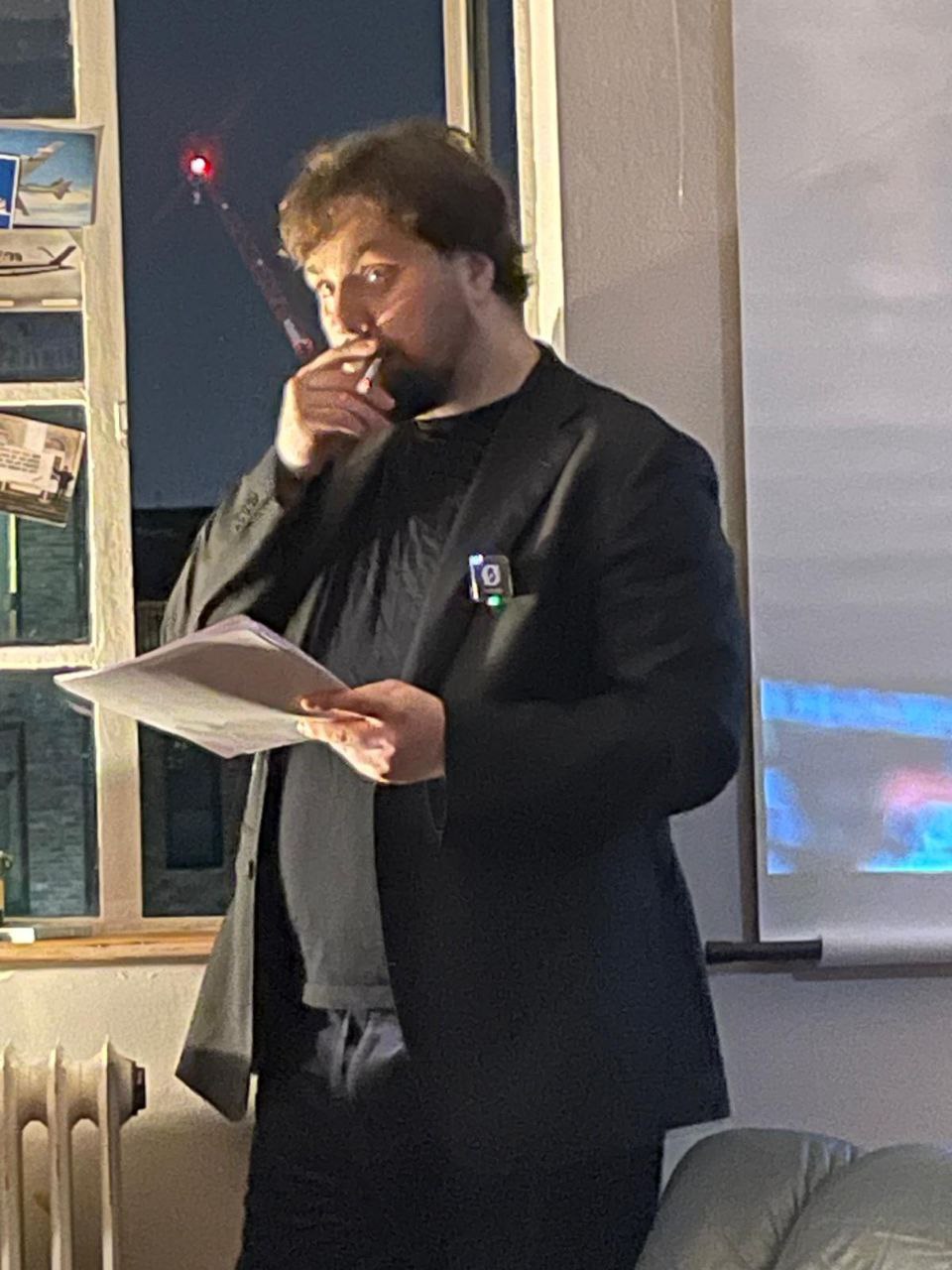
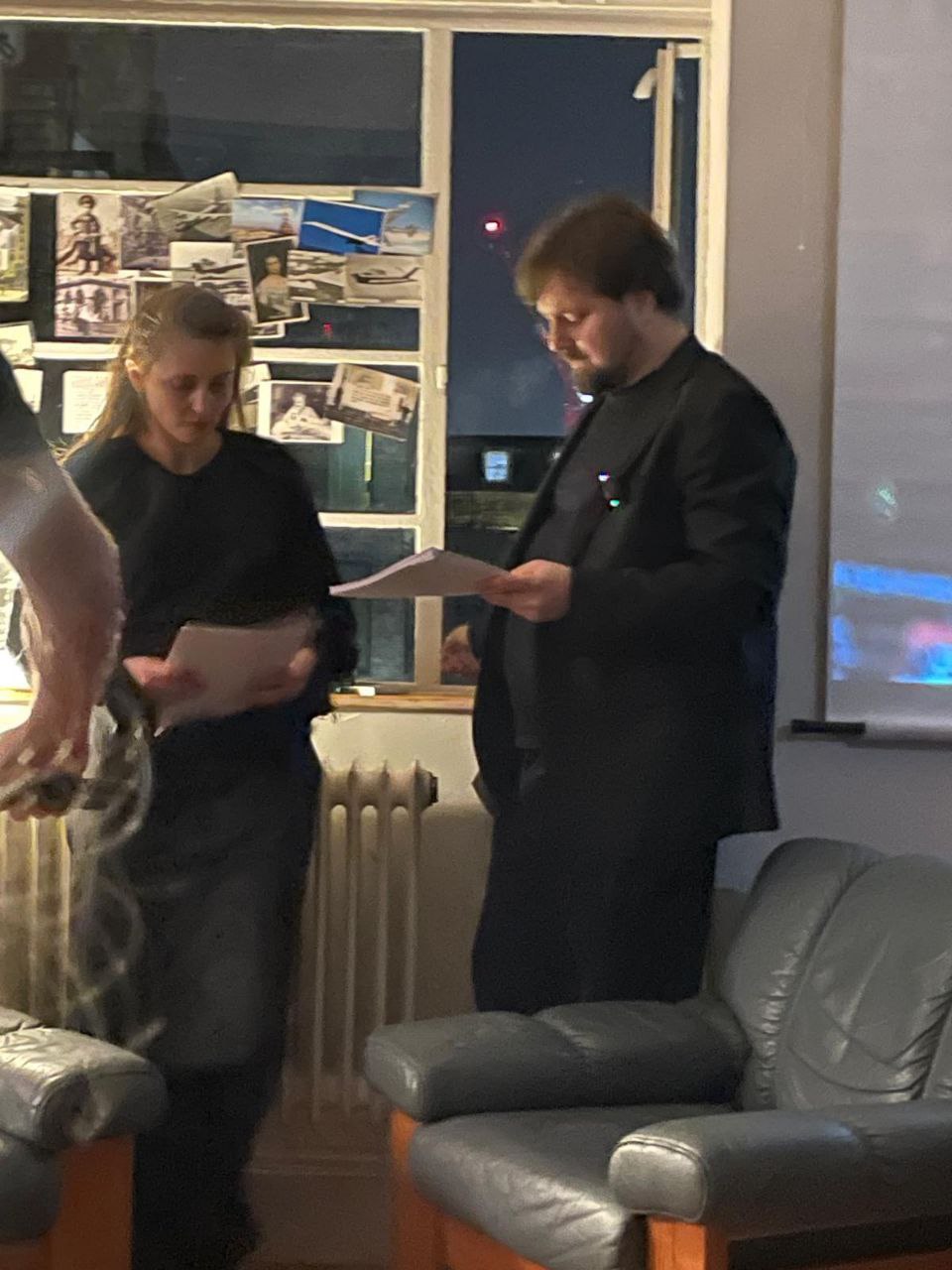
On the poster, Night Conversation is modestly described as a reading, but it is in fact a full performance. A fully directed, performed, conceived story distributed throughout the space of ARC.SPACE — and at times spilling beyond it: through the door, onto the staircase, out the window.
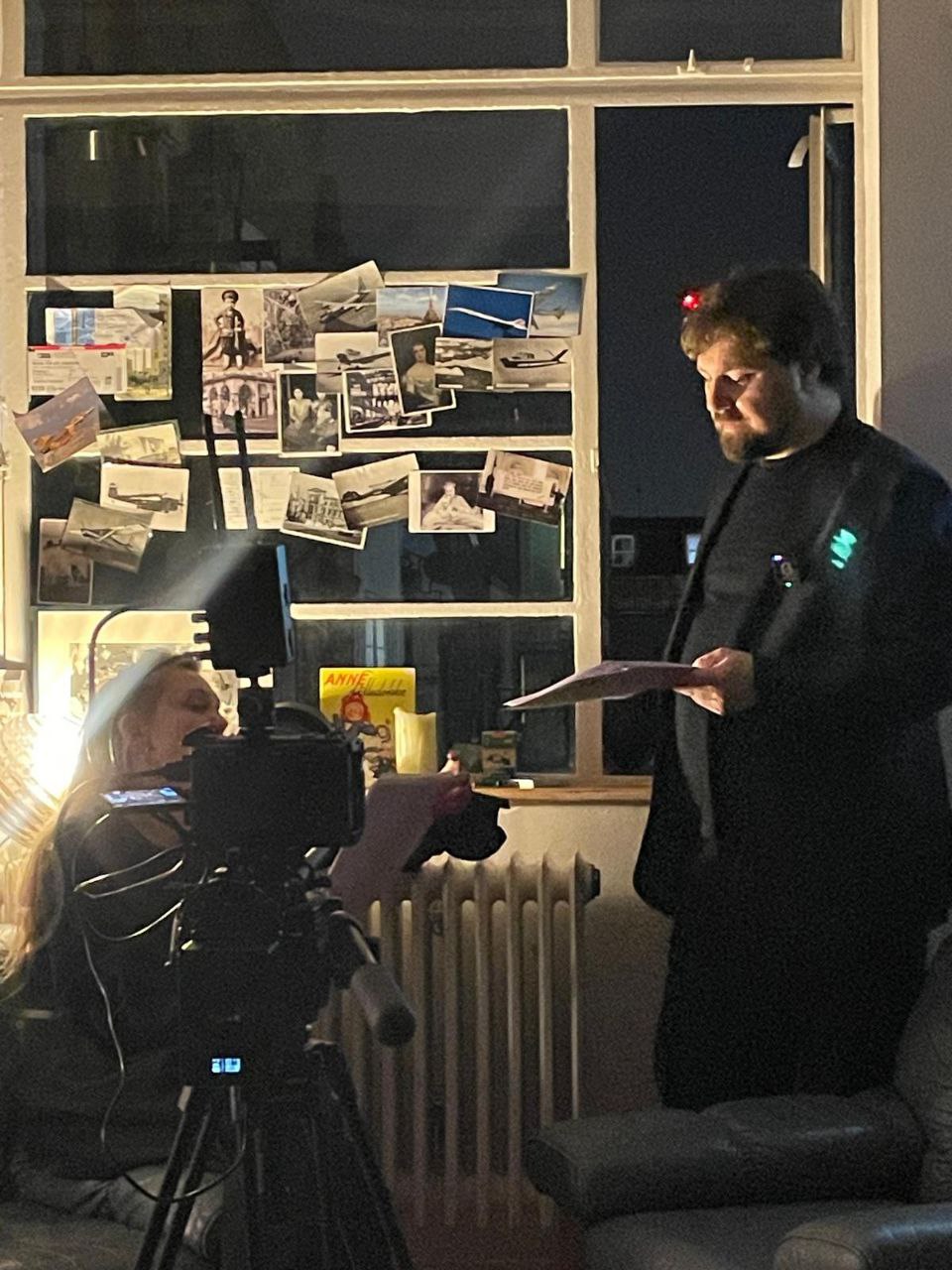
The enormous window is a set piece in itself. In the middle of it hangs a screen, not fully covering the frame, so the film is bordered by sky and rooftops. Golden window lights, heavy attic structures of old houses, blinking signals of airplanes gliding through the rapidly darkening sky. When one character or another stands against the backdrop of the city, a strange sensation arises. Often theatre breaks when it collides with reality, but here reality enriches and reinforces the theatre.
One more character must be mentioned — visible to the audience but invisible to the heroes. Cinematographer Artur Bergart, quiet and precise, either angel or surgeon (though the red knitted cap seems more suited to an angel), moves through the space between cameras and with a camera in his hands, enlarging not so much faces as eyes and their expressions. A silent witness, Bergart keeps the diary of this night — in a sense, the last one.
You can almost physically feel how today’s reality is advancing upon these still pre-war characters. Remember the sword of Damocles and the music?
There he is — Philipp — sitting in an armchair, in beautiful half-darkness pierced by slanting yellow rays from a glass lamp round as an aquarium. He sits and hums in a velvety baritone. A song. Sinatra’s My Way. Yes. In ’21 they still do not know why this song will one day make their blood run cold. We, in ’26, already know.
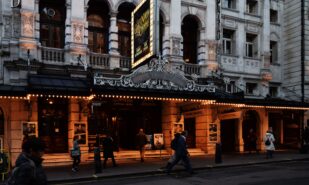
It is almost a forbidden device — the sound of that song in the breath-held studio with windows overlooking central London feels more like a cruel ritual than a performance. There is something of Grotowski’s Apocalypsis in it.
To retell the content of the characters’ conversations would only diminish it (in his introduction before the performance, Zorky said he still plans to make the film). Yes, they talk about corporate parties, about money, parental duty, acting jobs, an expensive jacket, a grandfather, children and grandchildren — but all these conversations gain meaning and weight within that February night.
Morning comes unexpectedly, and all the participants of the night conversation feel relief — finally, it is time to part, to leave, to run, not to look, not to discuss, oh no-no, no breakfast, thank you, we’ll eat somewhere.
Sonya turns on the television — just to do something. The three of them look at the screen. Silently. The end of February. Four years ago.