Alsolike: A London Space for Intimate Encounters with Objects

Alsolike is one of those rare gallery projects in London that is at once sensuous and cerebral: it combines a genuine love of material, academic depth, and a clear understanding of how small-scale works deserve to be seen. Founded in 2022 and located at 16 Chance Street in Shoreditch, the gallery has quickly established a reputation as a place where jewellery, object design, and small sculpture are given the stage they merit, presented with care and intellectual precision.
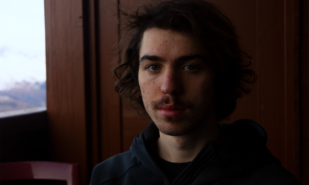
At the helm of Alsolike is curator and art writer Yiru Zhang — a graduate of the Royal College of Art, whose path from gemmology and engineering thought to curatorial practice has shaped a distinctive vision. Her scholarly expertise is palpable in the gallery’s programming: each exhibition is conceived as a miniature study in which form, technique, and context illuminate one another.
The philosophy of the space is both simple and persuasive: small objects are often lost in standard “white cube” settings; their subtle sculptural qualities and technical intricacies demand a different approach to display, light, and rhythm. Alsolike consciously addresses these challenges — from museum-grade lighting to meticulously arranged installations — allowing the viewer to read the “frame” of the work: its material, the trace of handcraft, its structure, and its poetic function. This care transforms each exhibition into an intimate inquiry into objects that ask us how we use, keep, and understand the things surrounding us.
The gallery’s programme is particularly praiseworthy: Alsolike successfully weaves together local and international voices, presenting both emerging makers and established names whose works demonstrate mastery, inventive ideas, or unexpected material transformations. The gallery also takes part in major cultural events, such as the London Design Festival and London Craft Week, underscoring its resonance in the professional field and its ability to engage broader audiences. Projects such as Secondary Function (LDF 2025) and Unanchored Crafting (London Craft Week) exemplify its commitment to exploring the plurality of function and cross-cultural craft practices.
One particularly impressive thing about Alsolike is its curatorial method, in which scholarly rigour is combined with profound respect for the maker’s hand. Exhibition texts, artist interviews, and the Artist Stories series reveal that the gallery does more than showcase objects: it archives techniques, identifies sources of inspiration, and preserves narratives of craft. Such attention to word and history deepens the viewer’s understanding of the object — from the process of its making to its resonance in daily life.
The gallery’s architectural and presentational language deserves mention as well: the space is designed for close engagement rather than monumentality. Every shadow line, every texture, every mark of metal or clay is allowed to speak. This approach is ideally suited to contemporary jewellery and object-centred projects, where the “small” requires — and rewards — heightened attention.
Commercially and culturally, Alsolike proceeds with admirable care. Collaborations with collectors, participation in fairs, and festival projects place the gallery firmly on the map of London’s independent art scene, while it retains a unique identity: a place to discover makers working with material and structure without bowing to fleeting trends. Such “slow” curating is valued by both artists and discerning collectors, who seek depth and long-term cultural connections.
To visit Alsolike is to read a miniature novel about objects: each display presents a concise yet resonant story. One may encounter a multilayered piece of jewellery, a ceramic form bearing the trace of the hand, or an experimental object poised on the threshold between function and abstraction. This diversity makes the gallery not only a platform for collecting, but also a site of learning, inspiration, and professional exchange.
In conclusion, Alsolike demonstrates how a modest space with a clear mission can transform our understanding of what an exhibition can be and how one might engage with it. Under the leadership of Yiru Zhang, the gallery maintains a rare balance of intellectual rigour and warmth towards material. For all those who value thoughtful, finely attuned approaches to object-based art, Alsolike is an essential destination on London’s cultural map. Step inside, attend to the objects, and perhaps you will perceive in them what is usually hidden from a passing glance.