Missed Connections

Planning flights grows more complicated every time. Once, a forty-minute connection at Munich’s vast airport wouldn’t have worried me. Now, three hours between flights in Istanbul can easily become a whole day torn out of my life. Yet airlines keep offering the tightest of connections, leaving the passenger to carry the risk of missing the next flight. And the cost is more than financial. Above all, it is emotional.
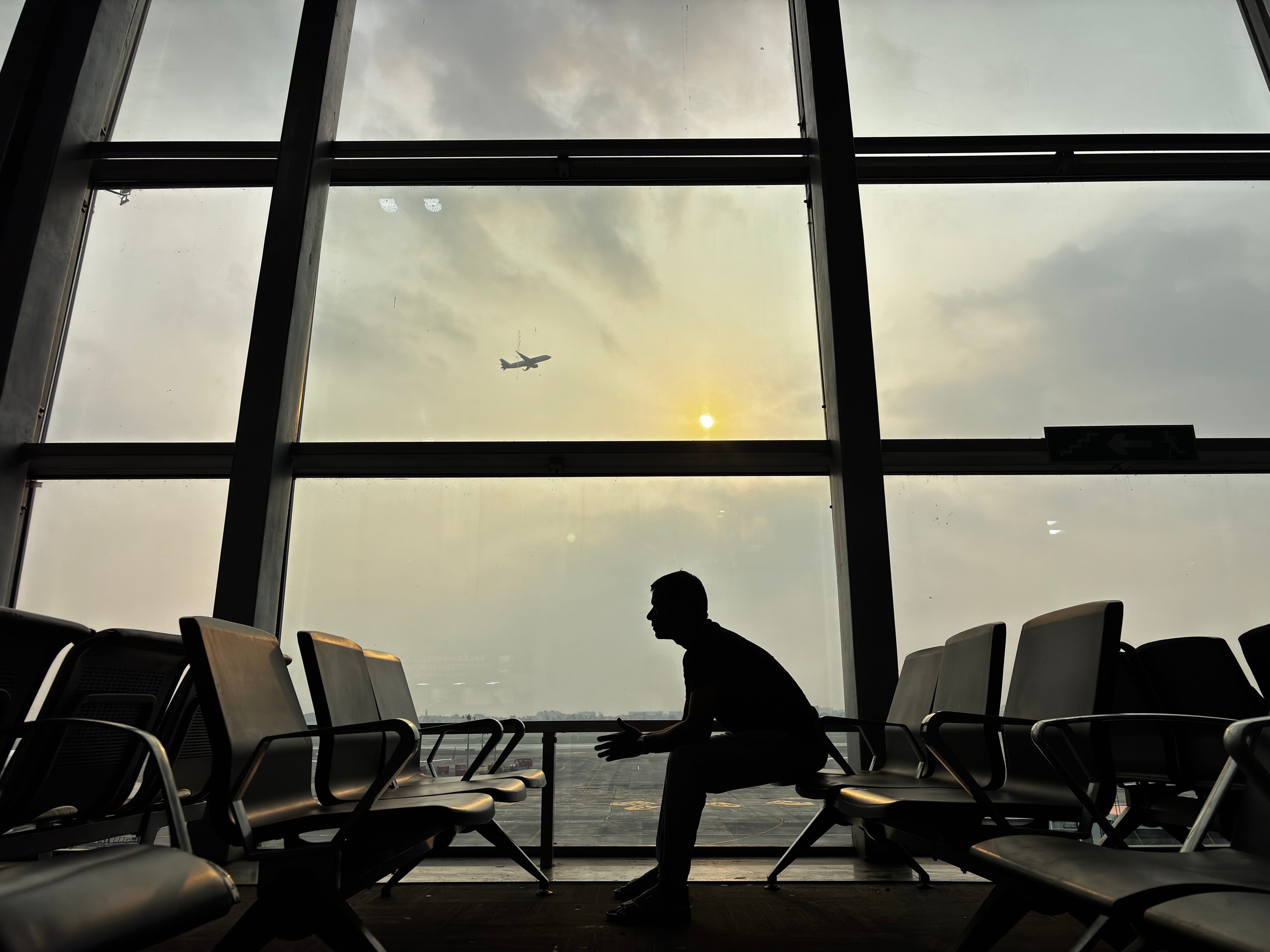
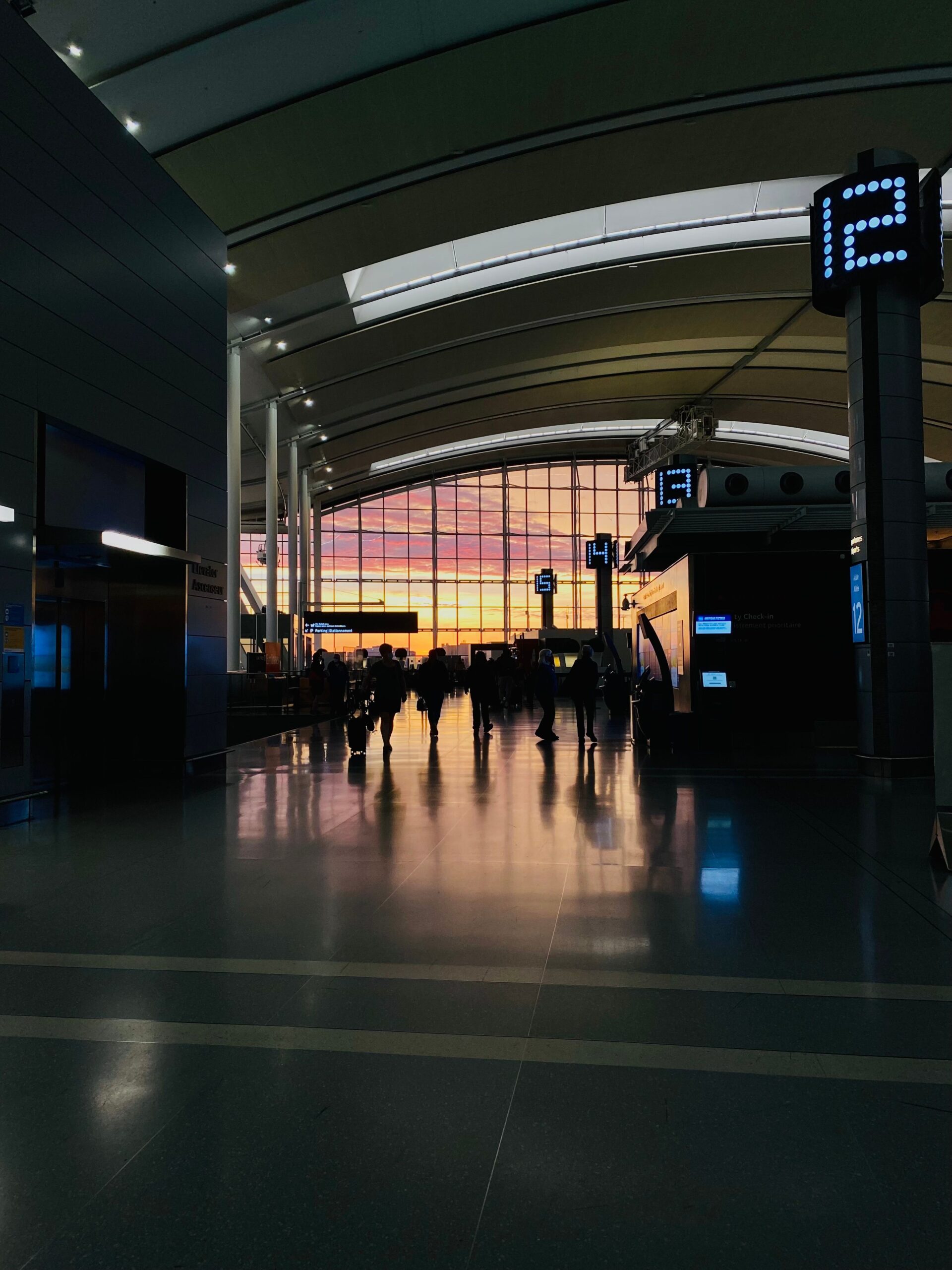
I must admit that most of these columns began at 33,000 feet, but were always finished on the ground, in transit, usually thanks to a delayed flight. Sooner or later, every Man on a Plane becomes a man between planes: one in a soft armchair in the business lounge with a glass of free sparkling wine, another on the cold floor beside a socket, paying ten pounds for five sips of water. Whatever our status, waiting for the next flight places us in a liminal space – the space between the life we have left and the one we have yet to enter. Few places give it a more familiar shape than an airport departure lounge.
In 1909, before commercial aviation had found its feet, Arnold van Gennep wrote in The Rites of Passage that initiation in many cultures follows three stages. The first is separation: a symbolic departure from your former life. Leaving your parents’ home before a wedding, leaving your village to go to war, checking in your bags before a flight. One way or another, something has to be left behind. The second is liminality, the in-between stage, which is exactly where I find myself now, at Istanbul Airport: neither here nor there, with my next flight suspended somewhere between ‘Delayed’ and ‘Awaiting boarding’. The third is incorporation: you arrive where you were heading and are welcomed in your new role. As a wife, a war hero, a passenger who has cleared passport control, collected their luggage and stepped out to the car park, where someone is waiting with their name on a sign.
The modern world, however, with the exception of airlines, has little patience for anything in between. It prefers the convenience of fixed labels: ‘married’ and ‘divorced’, ‘employed’ and ‘unemployed’. The list is endless. The modern world cannot accept a person who, for the moment, belongs to no one. The modern world asks us for certainty as a bank asks for a steady credit history, though most of us spend our lives moving from one state to another. And all the while, we try to prove ourselves worthy by rules whose authors we have never met.
After a divorce, you are no longer a husband or a wife. The ring has gone, but the habit of making breakfast for two remains. A university graduate knows their dissertation by heart, yet cannot put that knowledge to work in real life. More than a century ago, van Gennep was writing about rituals with a clear beginning and end. He could hardly have imagined how often the modern world would break off at the second stage and forget the third altogether. Earlier cultures made room for this time between lives, surrounding it with rituals and the support of a community. Perhaps that is why transit lounges have come to feel like something we need, and a delayed flight can offer a brief chance to belong to no one. There is a curious paradox here: a place built around the certainty of schedules, boarding passes and passengers paying attention has become a place where nothing is certain at all.
There is freedom in this passage from one life to another, or at least a feeling of freedom. There is also the bitterness of a life postponed until boarding. We carry both feelings at once: the unexpected relief of a pause in the rush to get somewhere, and the anger of losing a day we had other plans for. Usually, anger wins. But when did we become so impatient, so unwilling to allow things to take their course? When did we forget that everyday life needs time to catch up with what has happened?
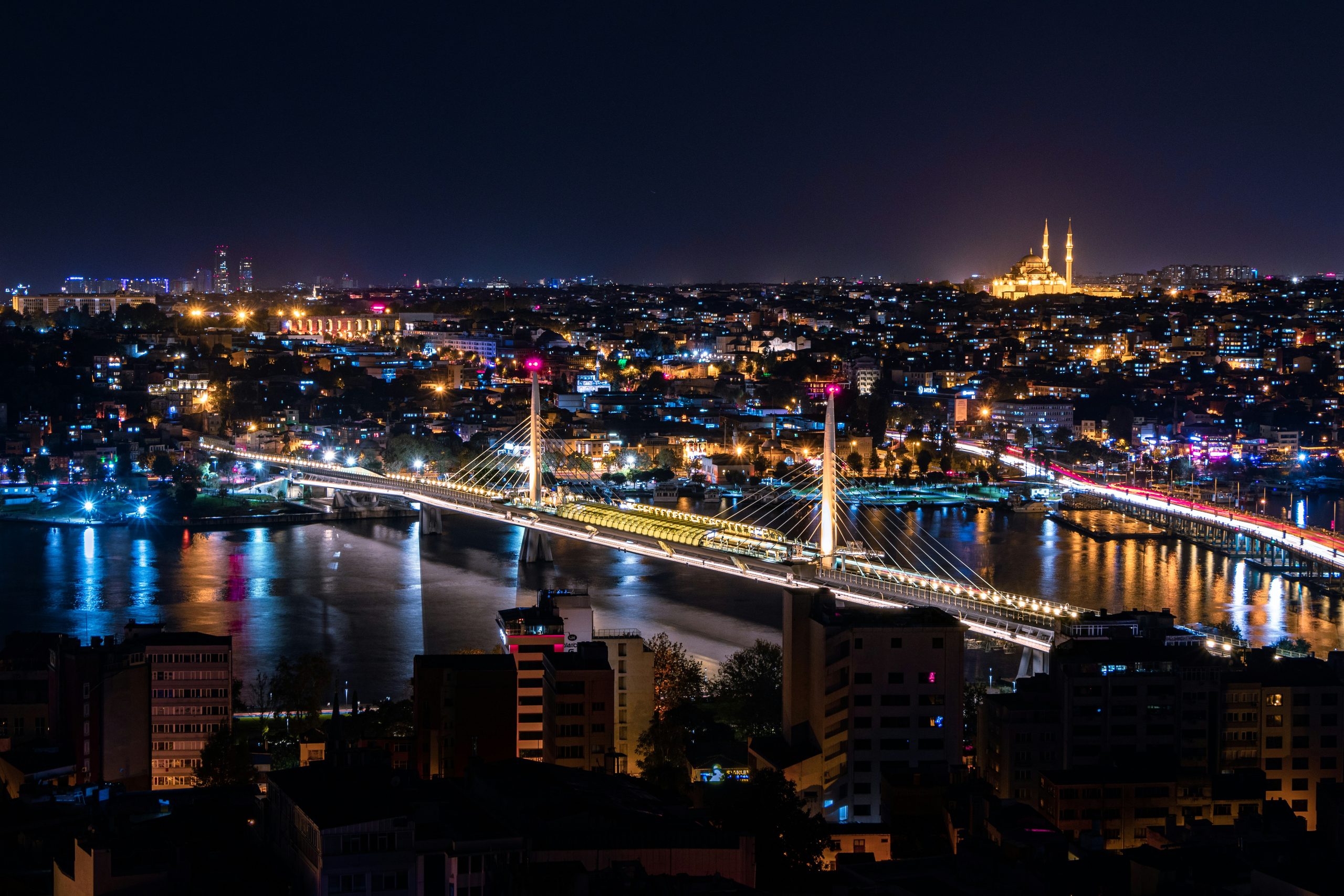
Too many questions. Too much liminality. Too much airport, with the real Istanbul waiting beyond its walls. I’ll step outside for a while. This city has a relationship with time all of its own.
Here they devised gurubi saat, counting each new day from sunset. A taxi takes me to Hagia Sophia, where, almost two hundred years ago, a house was built for time: the muvakkithane. Here worked the muvakkits, the keepers of time. People brought their pocket watches to them to ask the hour; government offices and steamship companies set their working hours by it. The muvakkits taught people not to hurry. The muvakkits taught people precision.
The tradition of gurubi saat reached beyond Istanbul. In Sarajevo, the clock on the tower beside the Gazi Husrev-beg Mosque shows twelve at sunset. A muvekit keeps it adjusted, and the mechanism itself came from London in 1875. In London, meanwhile, there was a woman who carried the exact time in her handbag. Once a week, Ruth Belville took her eighteenth-century pocket chronometer, Arnold, to Greenwich Observatory and set it against the reference clock. Then she called on her customers, who paid to set their own watches by hers. Her trade survived the arrival of the telegraph and competition from companies broadcasting time signals.
Today, the exact time comes straight to the screen of any phone, anywhere in the world. Even the clocks on airport displays keep it faithfully. Departure times are another matter. My boarding notification arrived while I was standing on Galata Bridge eating balık ekmek, a fish sandwich. With it came the realisation that I would miss my flight and, quite unintentionally, spend a little longer in my own liminal space. And gladly, too. I watch the sun slide across the rooftops of Fatih, the Süleymaniye Mosque darkening to my left, the wakes of ferries breaking the sky’s reflection on the Golden Horn. It is the hour of alacakaranlık, that uncertain stretch between sunset and nightfall. Twilight.
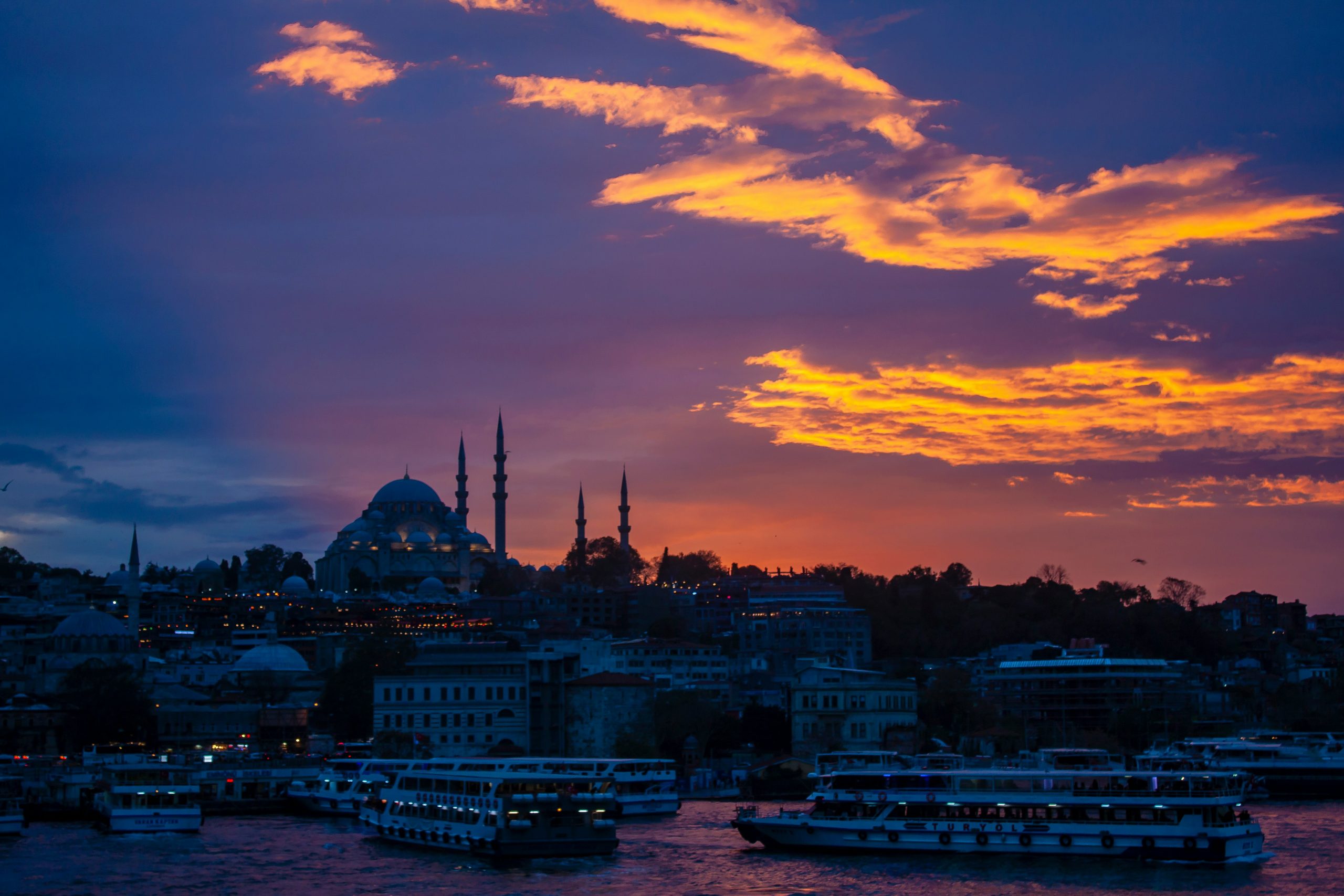
And this is no longer a liminal space, but a liminal state – the state in which our whole world now finds itself. The same world that demands certainty from us has none to offer the eight billion people stranded in its transit lounge. We are all waiting for that third stage, for our return to life: to land at our destination after a long delay, walk out of the airport and find a smiling person holding a sign with our name on it. PEACE.
Sadly, that is not going to happen. The pilots of our plane lost their bearings long ago. They are still carving up the sky, while the voice over the speakers assures us that the flight is proceeding as normal. Just fasten your seat belts. And however much of an optimist I may be, twilight is always followed by a dark night.
But there is also şafak, when the sun is not yet visible, but hope is already there. Here on Galata Bridge, still caught between one state and another, I long to see gün doğumu — sunrise, a civilisation rising above the thought of its own destruction. Here I am finishing this piece. Here I am in the second stage of initiation. And here I want us all to reach the third.
For now, the only third on the horizon is a third world war. Only war. Only night.