Myths in Music, Music in Myths

It was music that made me “the man from the aeroplane.” Almost every week, my weekends began and ended at some airport: I was in high demand as a DJ and toured extensively. I logged countless hours and miles in Eurasia’s skies from Phnom Penh to Amsterdam. Unfortunately, the enthusiasm for electronic music waxed and waned, but the flying schedule did not. These days, I am the manager of a newly ascendant band in the world charts, and their music is based on an ancient myth. Up in the sky, I normally have excellent conversation partners, although at the moment they are all in their headphones, and I’m gazing out at the clouds drawn across the horizon like some kind of musical staff…
Yuval Noah Harari, citing the hypothesis of primatologist Robin Dunbar on the social grooming process, wherein fur was mutually picked to bond the group, argued that once the numbers were too large to allow “grooming” to continue, song and dance took its place and created a bond through emotional synchronization among the tribe. Singing and ritual dance were the way the tribe was brought together prior to the development of language.
Neanderthals made use of acoustically resonant objects long before the appearance of the first primitive musical instruments. They produced sound and rhythm with stones or bones and sought out spaces where sound responded to their ritual acts. In almost all Palaeolithic caves where rock art has been discovered, the images are most often found in places with distinctive echo and resonance. Stone lithophones, shells with holes, animal bones marked with regular notches, a kind of metronome, all clearly suggest that musical behaviour became an innate trait of the social animal. Moreover, early Homo sapiens already had a larynx and hyoid bone capable of producing articulated sound, a highly developed sense of hearing attuned to musical pitch, and active brain regions responsible for rhythm and auditory memory.

The anthropologist Ian Morley and Professor Steven Mithen view the origins of music as a deep, biologically rooted process that predates language and culture. Mithen introduced the concept of HMMM communication, a holistic, multimodal, manipulative, musical and mimetic form of interaction in which sound, gesture and movement constituted a single language before words emerged. Morley, extending this line of thought, is convinced that musicality did not arise as a sudden invention, like the wheel, but as the result of anatomical evolution, when the body itself became the first instrument and medium of social exchange. From this pre-linguistic musical system, two streams then diverged: speech became a tool for transmitting information, while music became a means of expressing collective feeling. On the basis of their research, one can say that music is not a by-product of speech, but its progenitor, a primary form of connection through vibration and rhythm.
Whent the cognitive revolution came about, some seventy thousand years ago, our ancestors first learned to imagine what wasn’t there and developed a collective faith in stories. A brief while after, the first musical instruments appeared: the forty-five thousand-year-old flutes, carved out of the bones of vultures and mammoths, found in the Hohle Fels cave in Germany, date back to the earliest days of humanity’s musical expression. Another forty thousand years passed before the first myth was put into writing, a brief flicker of time on the cosmic clock, a pause between the inhalation and exhalation of a star.
The Epic of Gilgamesh is the oldest recorded text known to us, dating back some four thousand years. It tells the story of a man who seeks immortality and fails to find it. Originally, it was sung, in Sumerian temples and in the marketplaces of Uruk and Nippur, among the first cities of human civilisation. At the same time, myth began to sound in Egypt: priests composed hymns to Ra and Osiris, and for their performance harps and sistrums appeared, the first stringed and percussion instruments. Music did not adorn myth, it was myth itself. In India, the Vedas were transmitted orally before being written down, and one of the four Vedas was the Samaveda, the Veda of Songs. It consists almost entirely of verses from the Rigveda, yet they are intricately interwoven with samans, musical melodies. The Samaveda is the first systematic record of humanity’s musical tradition, and to err in its key or pitch was considered a distortion of meaning and a violation of cosmic order. All Indian mythology begins not with a word, but with a primordial sound: Ommmmmm… Every time an aircraft touches the runway, that sound escapes my lungs.
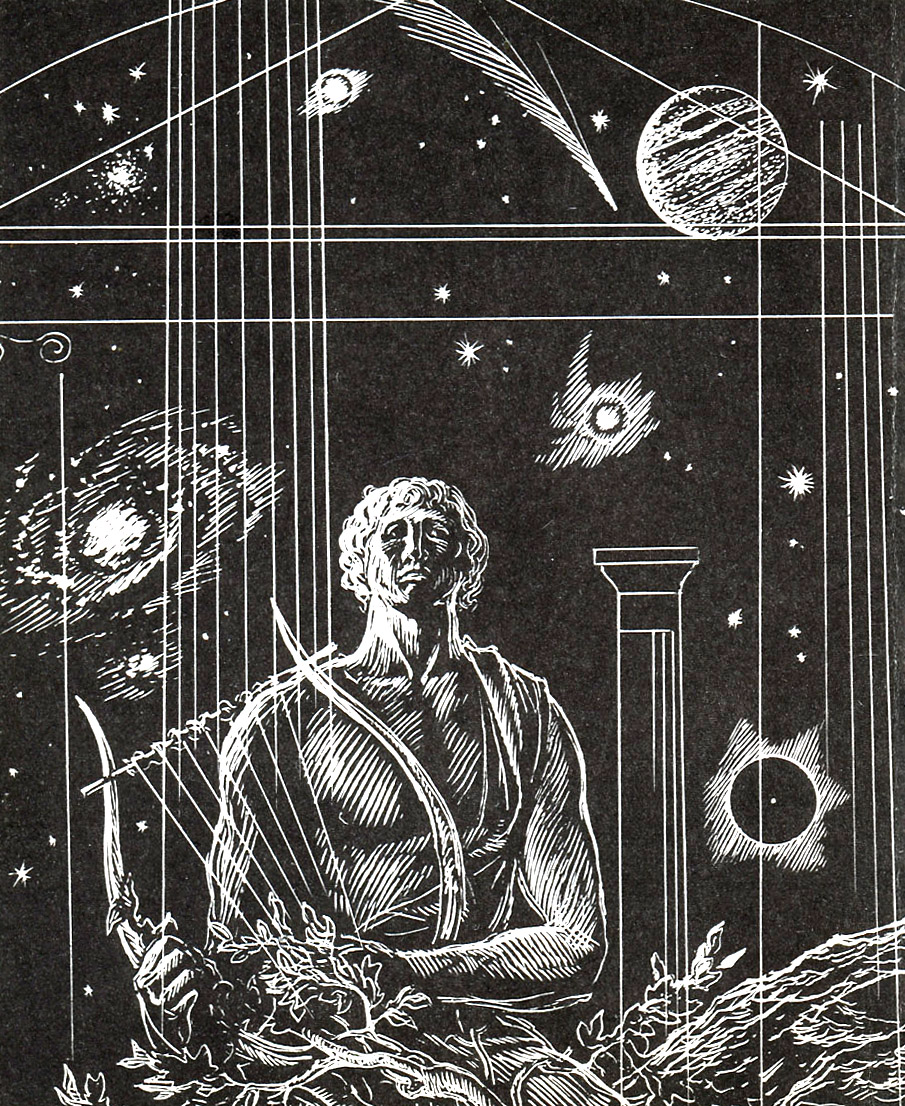
Musical storytellers are not an entertainment class but the direct heirs of mythopoetics. The aoidoi and rhapsodes of Ancient Greece, the gōsāns of Persia, the druids and bards of the Celts, the skalds of Scandinavia, the troubadours and minstrels of Europe, the guslars of the Slavs, the Arab hafiz and the Bashkir sesen, all carried experience, knowledge and tradition in the songs of their peoples. Every nation had its song, woven in meaning, one way or another, into the shared myth of humanity. A myth in which it never achieved physical immortality, yet attained it in the memory of generations, passed on like strands of DNA.
The closer we come to the present day, the further myth drifts from sacred texts. Gods in legends were replaced by people, and the weighty chorales of temples gave way to light melodies about love, the road, and the journey home. They no longer explain the structure of the universe, no special knowledge is required to understand them, music need only be felt. It demands no belief and deftly draws the listener into participation. A perfect story for extracting maximum profit.
Whatever we touch in human history, the twentieth century ground it through the millstones of marketing. Music is one of the clearest examples. People learned to reproduce, package and sell it. Sound ceased to be an event and became background. A musician’s success is measured not by the power of influence but by the number of copies sold or streams accumulated. Music is no longer switched on to be listened to, it is merely the service staff of everyday life, in the gym, the club, the corporate event. Much like religion.

The saddest thing is not that music began to be sold en masse, but that it is produced en masse. Once, we flew to London for records, spending hours in music stores simply to choose the best from the good. Today, to find even a single diamond for a DJ set, one must rummage deep in a heap of manure. It is hardly surprising that silence now services most of my daily life.
Last November, an average of around fifty thousand new tracks were uploaded to Deezer every day, a third of them created by artificial intelligence. Many even made it into the Spotify and Billboard charts, competing successfully with humans. Yet it’s difficult to remain a true music lover in today’s reality of endless streaming, and ever harder for musicians to reach their listeners. AI music, whose production is advancing as rapidly as the evolution of artificial intelligence itself, is neither good nor bad, it simply bears no responsibility for shaping the present and the future, as legendary names once did, and still do, names surrounded by myths of their own.
Yet we still need mutual grooming. It’s precisely this primal instinct that occasionally compels us to disconnect from streaming, buy a ticket, travel to another city, stand in a long queue for the sake of two hours of a live concert with a dozen, a hundred, or several thousand fellow tribespeople, briefly stepping outside the everyday. Attending a concert, or a rave, or a festival is the same kind of ritual as gathering in a cave with the best acoustics.
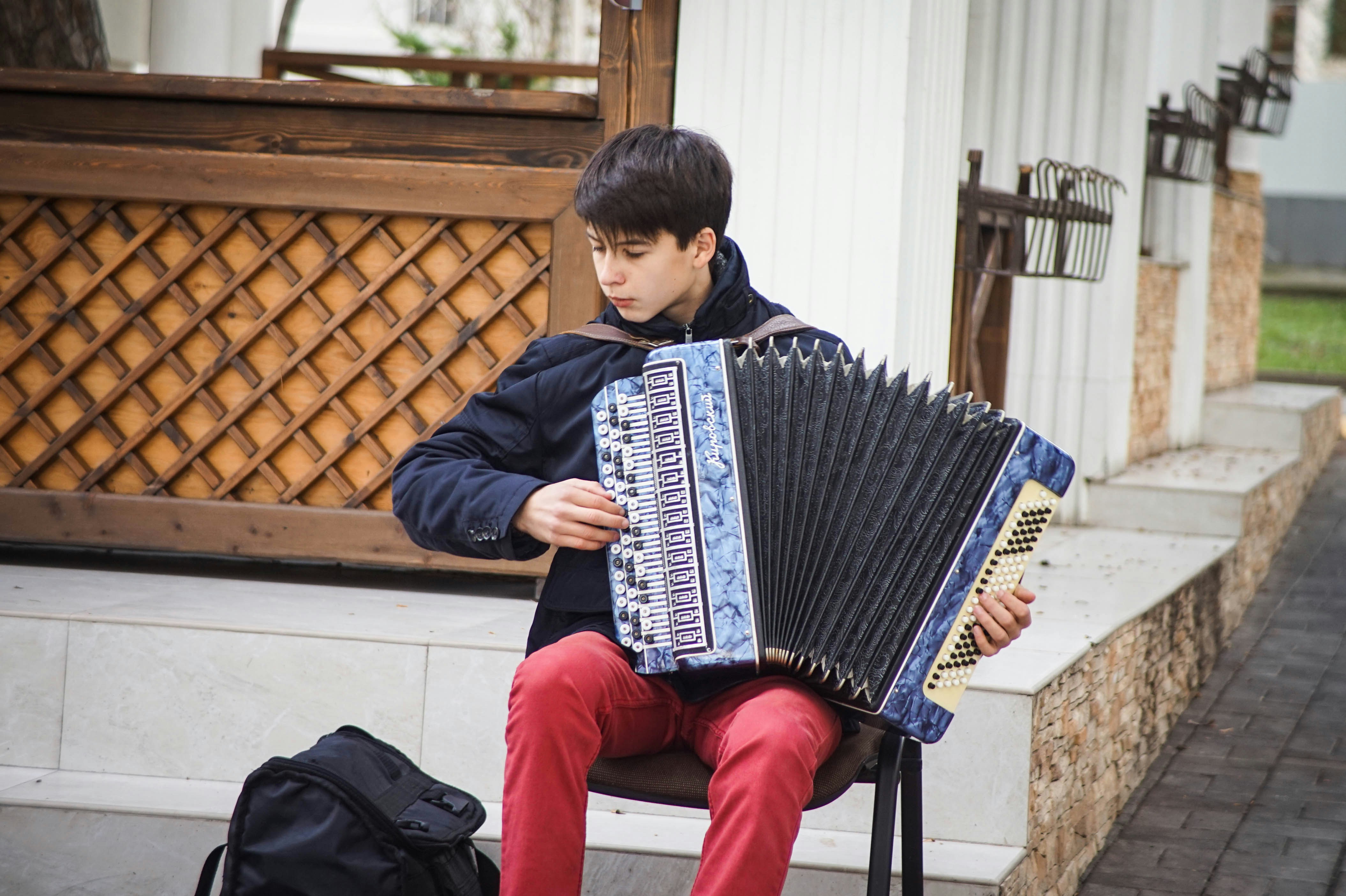
Each time I stop by street musicians, I study closely the people who have found a way to break free from the flow, who have pressed pause on themselves and on time. I see how music unites, erases social and racial boundaries, leads primates away from the need to divide anything, and certainly from killing for it. I imagine how meetings of the UN Security Council or negotiations between world leaders might unfold here, on the street, in front of bearded guitarists in worn jeans. But these are only fantasies, an unrealised personal myth about music, without which life is almost impossible.