
Never Too Early: Theatre for Children Under Five

I am a theatre researcher, but I am also a mother to a curious toddler. When I first took him to see a performance – he was just eight months old – I felt genuinely anxious. Would he like it? What if he got frightened, and the experience turned into something negative, even traumatic?
That feeling did not disappear when he grew older. When my son was a year and a half, my worries simply shifted: would he be able to cope with a performance at all? Would he manage to stay for even half of it?
It was then that I began to seriously reflect on what theatre for very young audiences actually is, what forms it can take, and why some people approach it with deep scepticism while others feel genuine enthusiasm. To explore this further, I spoke with British artists, performers, and directors who create theatre for children under the age of five.
The UK is widely considered the birthplace of theatre for very young audiences – often referred to as Theatre for the Very Young or Theatre for Early Years (TEY). In its contemporary form, TEY began to take shape in 1978 through the work of two London-based companies, Theatre Kit and Oily Cart. Over time, a distinct strand also emerged: sensory theatre, where words and narrative are less important than texture, sound, colour, weight, temperature, rhythm, movement, and touch.

Creating this kind of theatre is not a secondary or simplified task. On the contrary, it is a complex and delicate artistic challenge. When approached with honesty and care, such work can become a child’s first truly meaningful encounter with live art.
At the same time, parental scepticism is understandable. Can a very young child really “understand” anything? Are they mature enough to recognise emotions or follow a story? What if they cannot sit still? Moreover, the same performance can have a completely different effect on different children – or even on the same child at different moments in time.
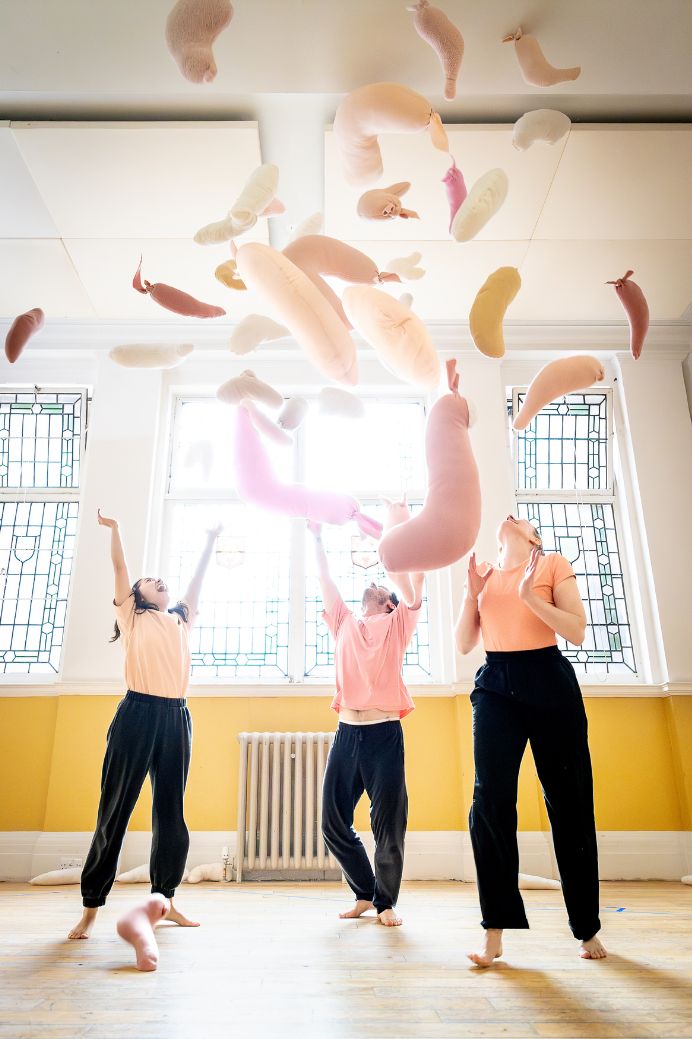
Kate Cross, director at The Egg, points out that the problem often lies not with children, but with “their” adults:
“They explain everything that’s going on. They misread fidgeting as not enjoying or taking on board. They force their child onto the stage and then take a photo of them. They sit on their phones throughout the play. They do not appreciate the children talking even though this is part of the decoding process. They think they need to understand what is going on because they are the adult. They get cross therefore if its too abstract. They don’t trust the child’s capacities. They are going to a play for social climbing reasons rather than to develop artistic intelligence.”
This is where tension frequently arises. Adults fear a “bad experience” for the child and project their own expectations onto them. At the same time, it must be acknowledged that some children’s programmes genuinely prioritise entertainment or simplification over the development of perception and sensitivity – and this understandably alienates many parents.

Artist and co-founder of Long Nose Puppets, Katherine Morton, reflects on this experience:
“The most surprising thing about making theatre in today’s world for me is the heartening reminder that children don’t change and they come to the theatre open and ready to go on a journey. They want to laugh and join in and are not held back by expectations or social constructs. I feel children get a bad reputation with labels such as ‘poor attention span’ or ‘disruptive’. From our experience, a child will usually give you his or her full honest reaction and sit for quite a lot of time if the piece is engaging.”

Another issue is the existence of poorly made work. Cameron Reynolds, artistic director of Groove Baby, puts it bluntly:
“Too often producers are looking to shape an existing artist into a young audience performer – rather than looking for people who are naturally gifted and driven to make this work. It often feels like a dumbing down or cash in because the creators hearts are not really in it.”
Indeed, many productions aim to explain everything, spell out meanings, guide children towards the “right” conclusion and provide a clear moral. But children do not learn through explanation alone. They learn through experience – through being immersed, affected and involved. Good theatre does not impose meaning; it leaves space for it to emerge.
Neuroscientific research confirms that the first three years of life play a crucial role in shaping the brain and its neural connections. Visual, auditory and aesthetic experiences during this period have a profound impact. Theatre for a largely non-verbal audience therefore requires artists to rethink traditional dramaturgy. Linear storytelling gives way to sensory, audience-centred forms.
This, in turn, raises another question: what about stage adaptations of children’s books? Surely children want to see their favourite characters brought to life? This, however, is a subject for a separate discussion.
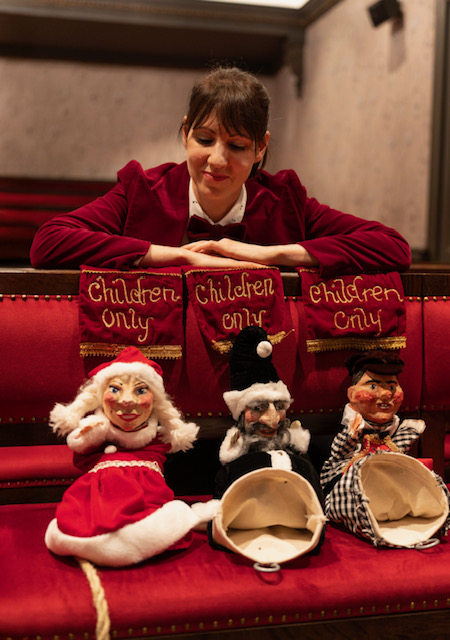
Young audiences respond with remarkable sensitivity to injustice. They shout at villains, support heroes and try to intervene. Their sense of justice is emotional and immediate. At The Well Walk Theatre, practitioners emphasise:
“We deliberately avoid work that is condescending to children or that underestimates their intelligence and sensitivity. We approach our shows for very young audiences with the same care and rigour we would apply to work for adults, paying close attention to detail, well-crafted costumes, thoughtfully designed sets, and a strong overall aesthetic.”
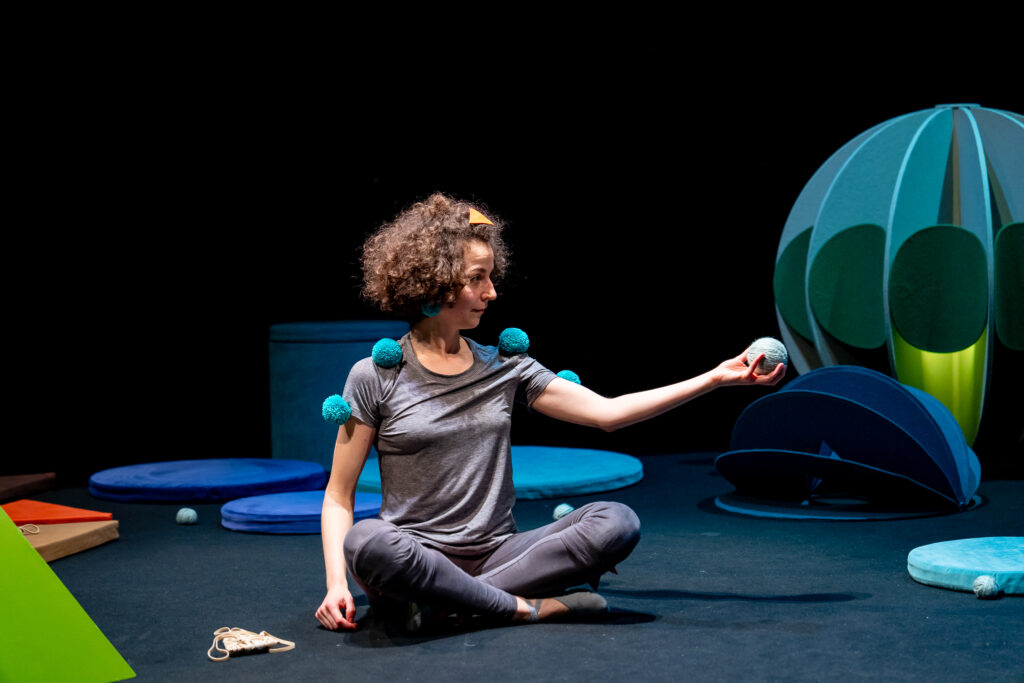
A common misconception is that theatre for toddlers must be loud, fast and overstimulating. In reality, children need pace, space and pauses. As Stephen Beeny from Half Moon Young People’s Theatre notes:
“Young children are drawn to clear visual storytelling, music and rhythm, repetition, and moments where they’re gently invited to participate. Live theatre allows them to feel seen and included, and that shared experience – between performer, child and accompanying adult – is incredibly powerful.”
Ultimately, the question is not whether a child will remember a particular performance. We do not remember every smile, every disagreement or every journey – but that does not mean they did not matter. Theatre for very young audiences is not about memory; it is about shaping emotional intelligence, aesthetic sensitivity and a basic sense of trust in the world.
Theatre for toddlers is not there to explain or instruct. It exists so that a child can encounter beauty, poetry, and love – and so that we, as adults, allow that encounter simply to happen.