Istanbul: Changing Faces and Meanings

Istanbul has always been a city of transformation: from Constantinople, the capital of Byzantium, to a modern metropolis, its identity has shifted over the centuries. Today, its many roles have been augmented by another: as a global center for aesthetic medicine. We came to Istanbul to experience this side of the city firsthand.
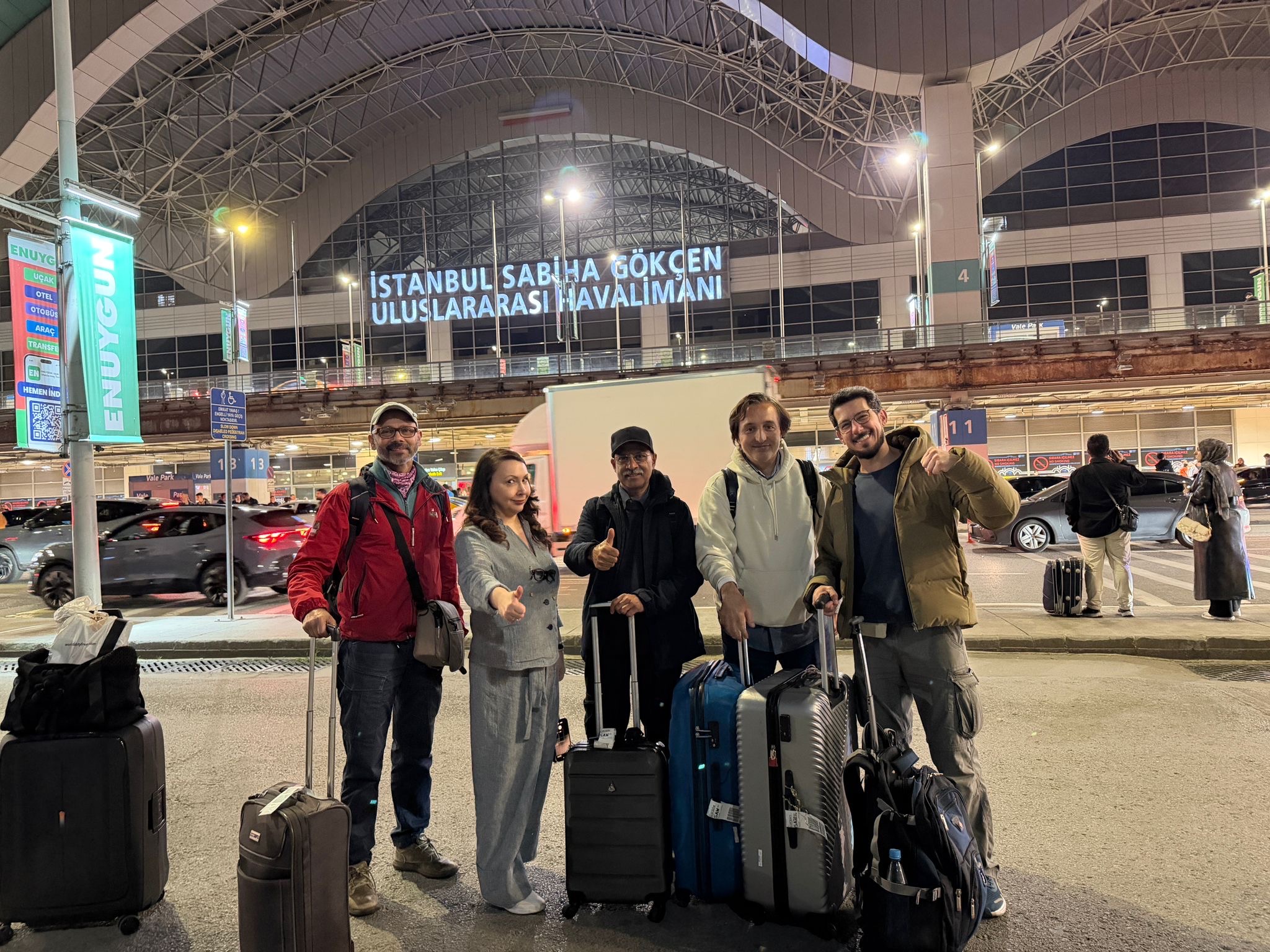
A flight from London to Istanbul takes about four hours: enough to shift not only the geography but also the internal context. We were met at the airport by the team from Esteworld, one of Turkey’s first and most reputable clinics specializing in plastic and aesthetic surgery. Here, we will explore the industry that in recent years has transformed Istanbul into a key destination for patients from around the world.
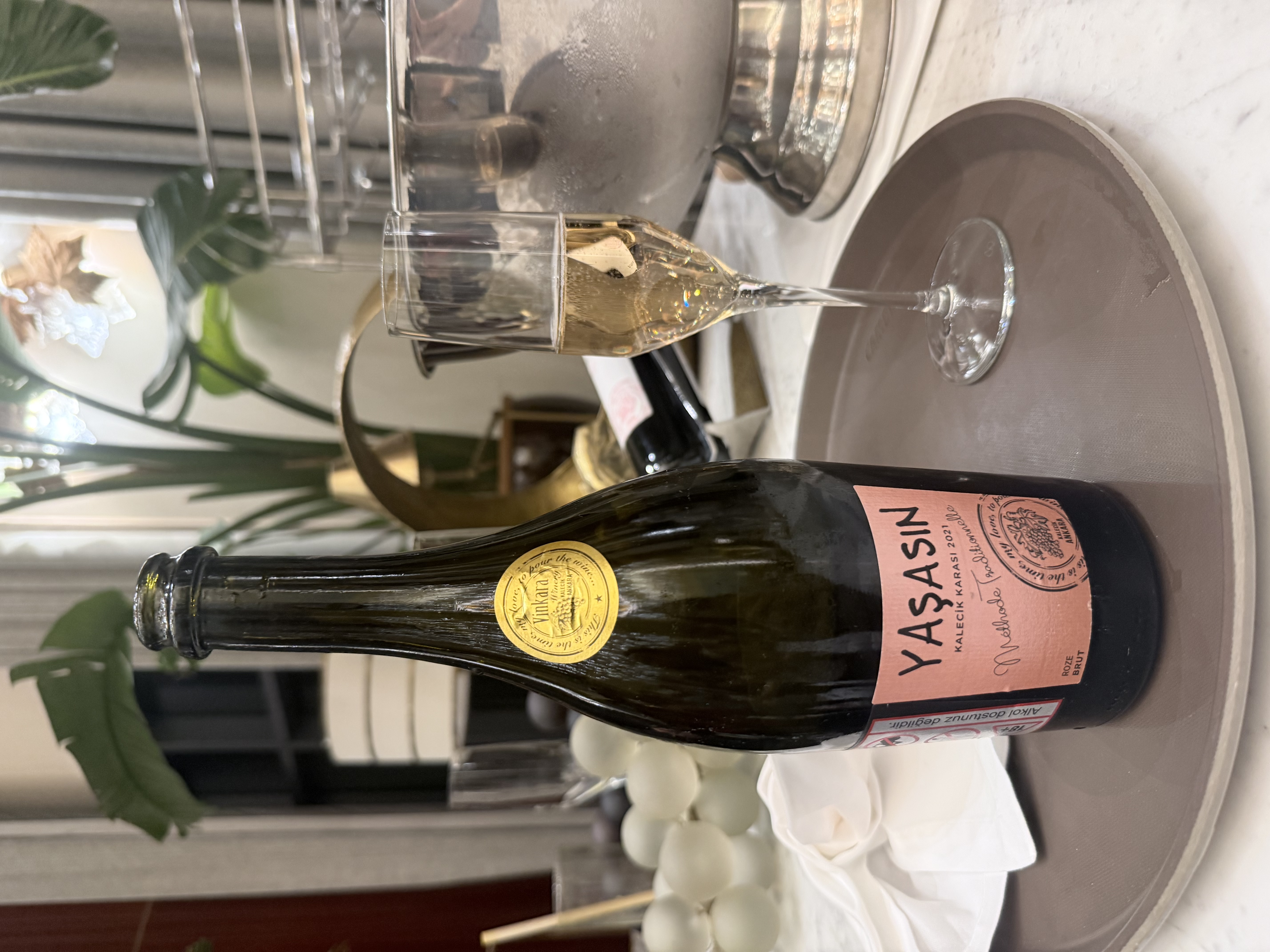
My first impression upon meeting was unexpected: Turkish champagne. Frankly, I didn’t know such a thing existed. It turns out it does. And it’s quite decent…
DAY ONE
INSIDE ESTEWORLD: DETAILS
Mornings at Esteworld start early. Already at breakfast, it’s clear you’re part of an international flow. At the neighboring tables are people from all over the world, post-rhinoplasty, post-mammoplasty, or hair transplant. They do not shy away and are eager to connect. Most patients are British, but there are also other patients from other countries or regions of Turkey. And almost everyone says one thing: they’re satisfied. Not just with the results, but also with how everything is organized. The stay doesn’t feel like a stressful medical necessity. Rather, it’s a thoughtful process of change.
We were led through the floors. The space is organized systematically: clear logistics, a division of zones, constant movement. Already reaching the first floor, we overhear an interesting conversation. A patient from the Netherlands explains that he received the procedure as a birthday gift from his wife. He flew in for a hair transplant and, being offered the opportunity, he decided to stay for a rhinoplasty. Sounds unusual! But in Istanbul, it’s almost routine.
HAIR TRANSPLANTATION: PRECISION
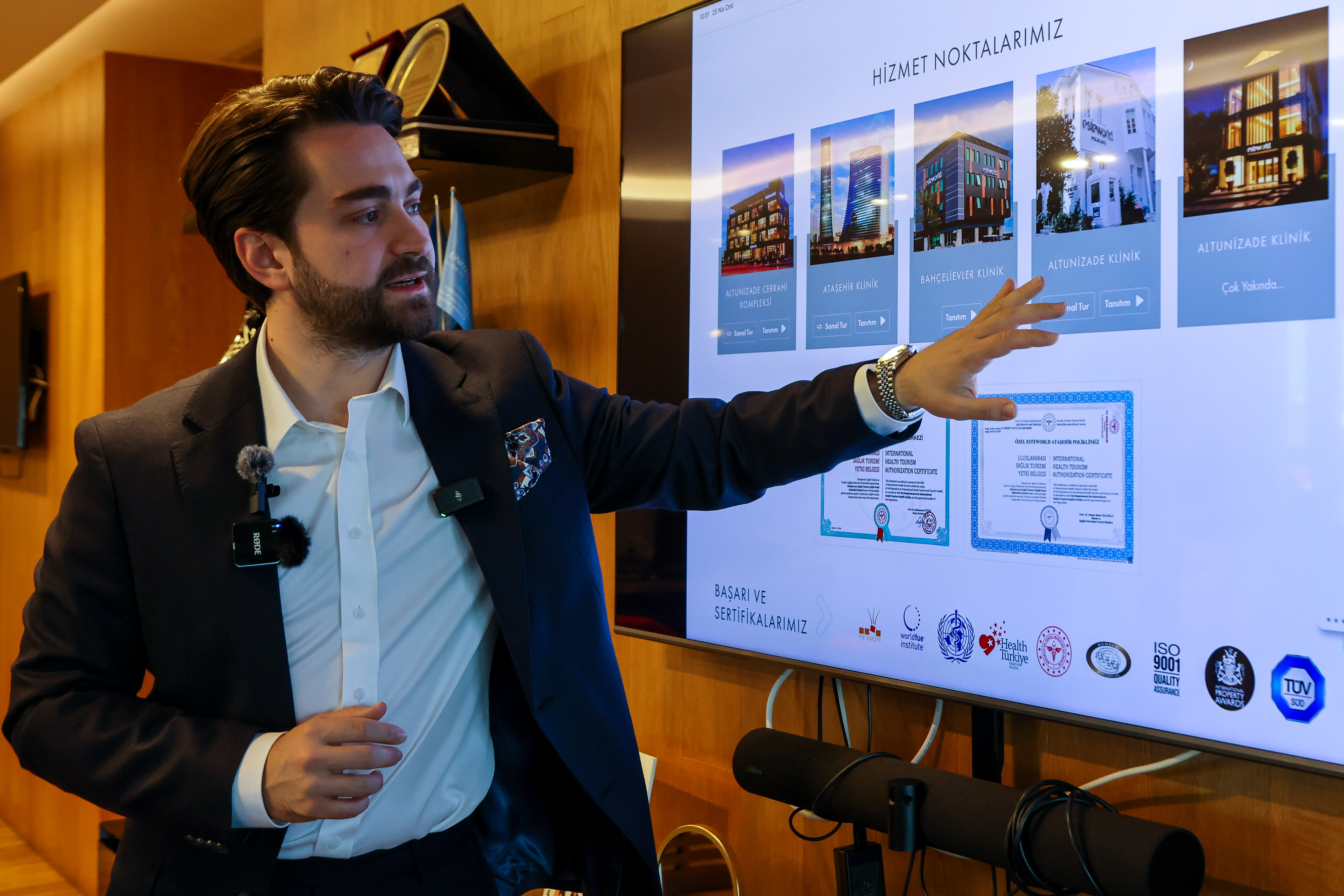
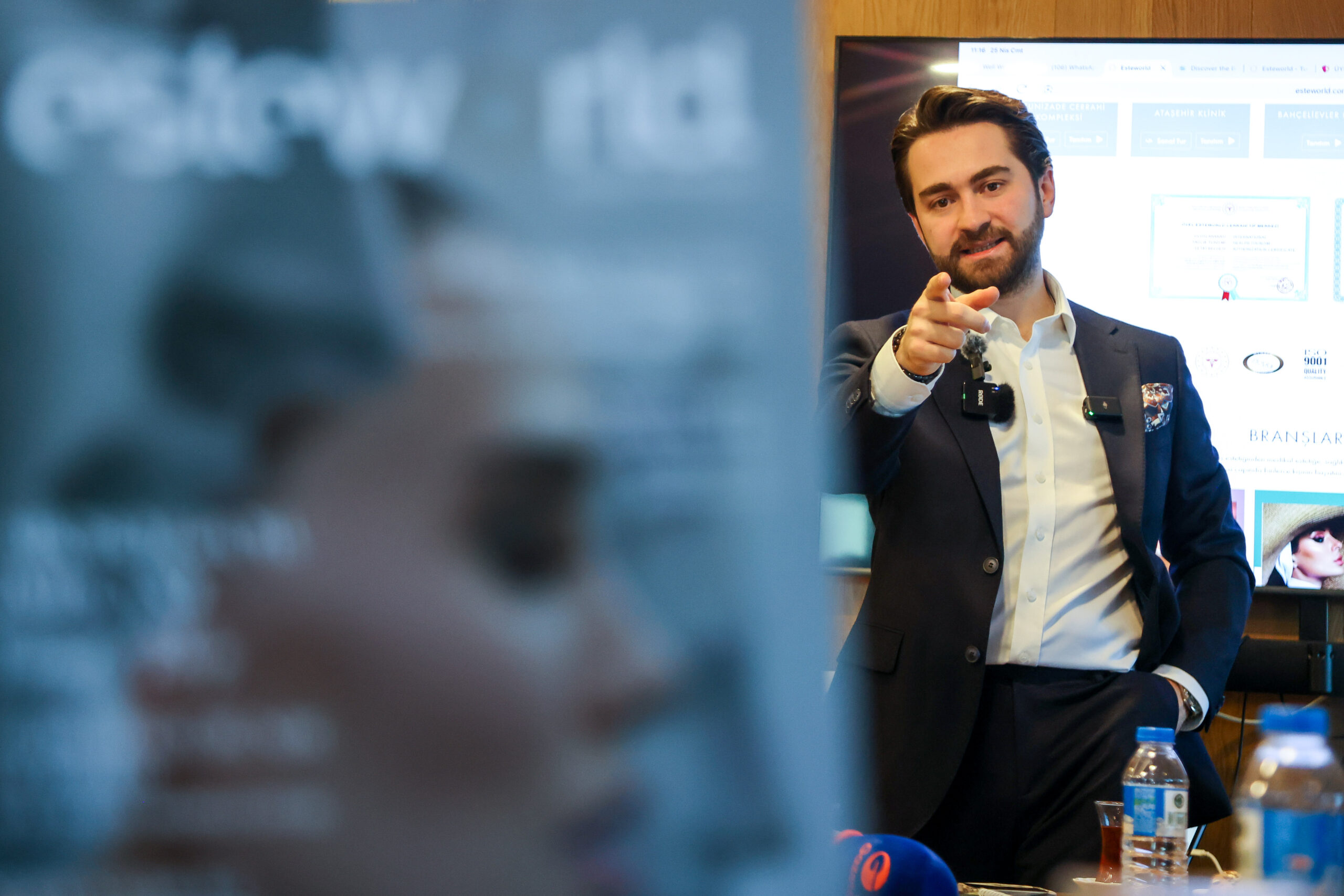
During the presentation led by Dr. Burak Tuncer, a representative of the second generation of management, the process is explained in detail using professional videos. The presentation covers the stages of alopecia, how the donor area is selected, how the follicles are analyzed under a microscope and how the transplant is planned.
The procedure itself takes 7-8 hours. Post-operative recovery requires 1-2 days, with the first results visible after a month, and the final effect after about a year. This sounds reasonable and inspires confidence.
But it’s not just the timing that matters. Understanding exactly what’s happening is crucial. It’s not hair that’s being transplanted, but follicular units: small groups of one to four hairs with the root. They’re typically taken from the back of the head, sometimes from the beard area, because these hairs are genetically resistant to hair loss.
Next comes a process that truly resembles engineering work more than a cosmetic procedure. First, the follicles are extracted: carefully, one at a time, using microinstruments. Then, the transplant area is prepared and microchannels are created. This is where the most important factors are determined: the growth angle, direction, and density. Then comes implantation. Each follicle is transferred to the new area manually. The entire procedure takes several hours and requires almost pinpoint precision. In other words, it’s not just about getting the job done; it’s about precise calculations.
FROM OPERATING ROOMS TO AESTHETICS
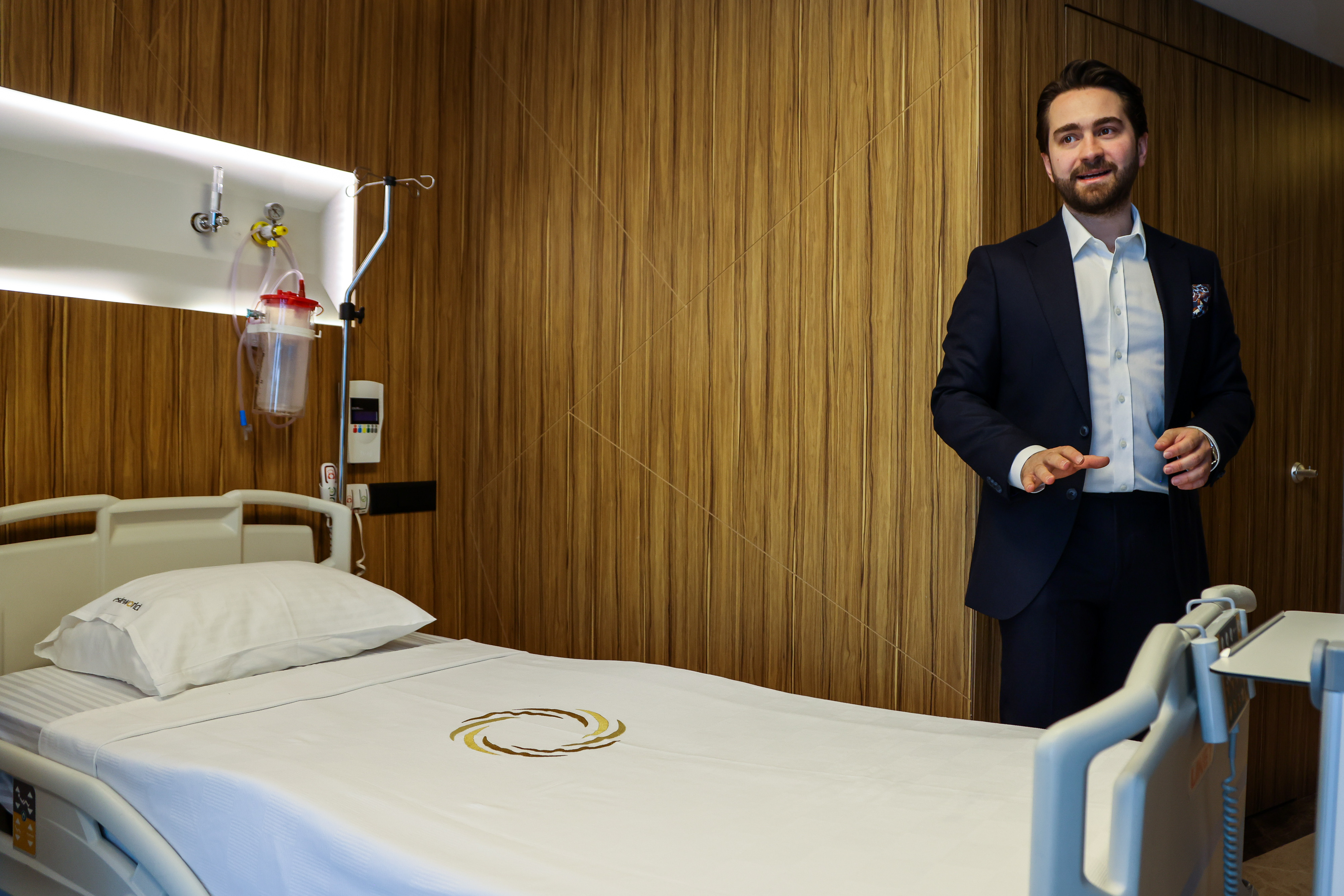
We move on to the operating rooms. A unit integrated into a unified medical structure. And at some point, it becomes clear: the procedure is performed in many clinics today, but the difference is in the outcome!
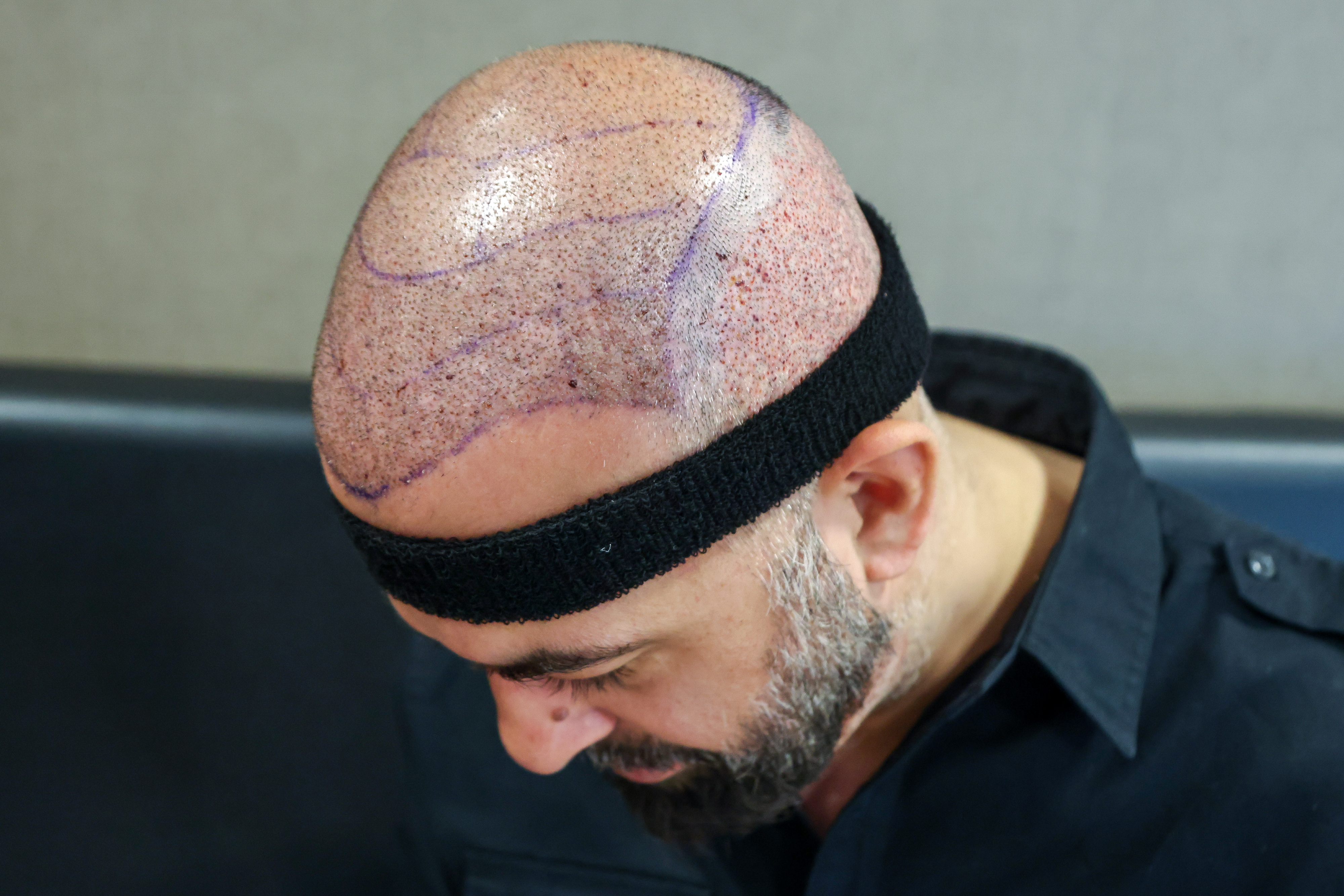
The error may not be in the surgery itself, but in the details: a hairline that’s too low or “unnatural,” an incorrect angle (hair growing upward or sideways), excess density in one area and a void in another, or damage to the donor site. How to implement these factors is a matter of taste, experience, and, to some extent, the aesthetic judgment of the doctor. A good transplant is one that’s invisible. When asked how many positive reviews you have, Dr. Burak Tuncer replied: 99.2%.
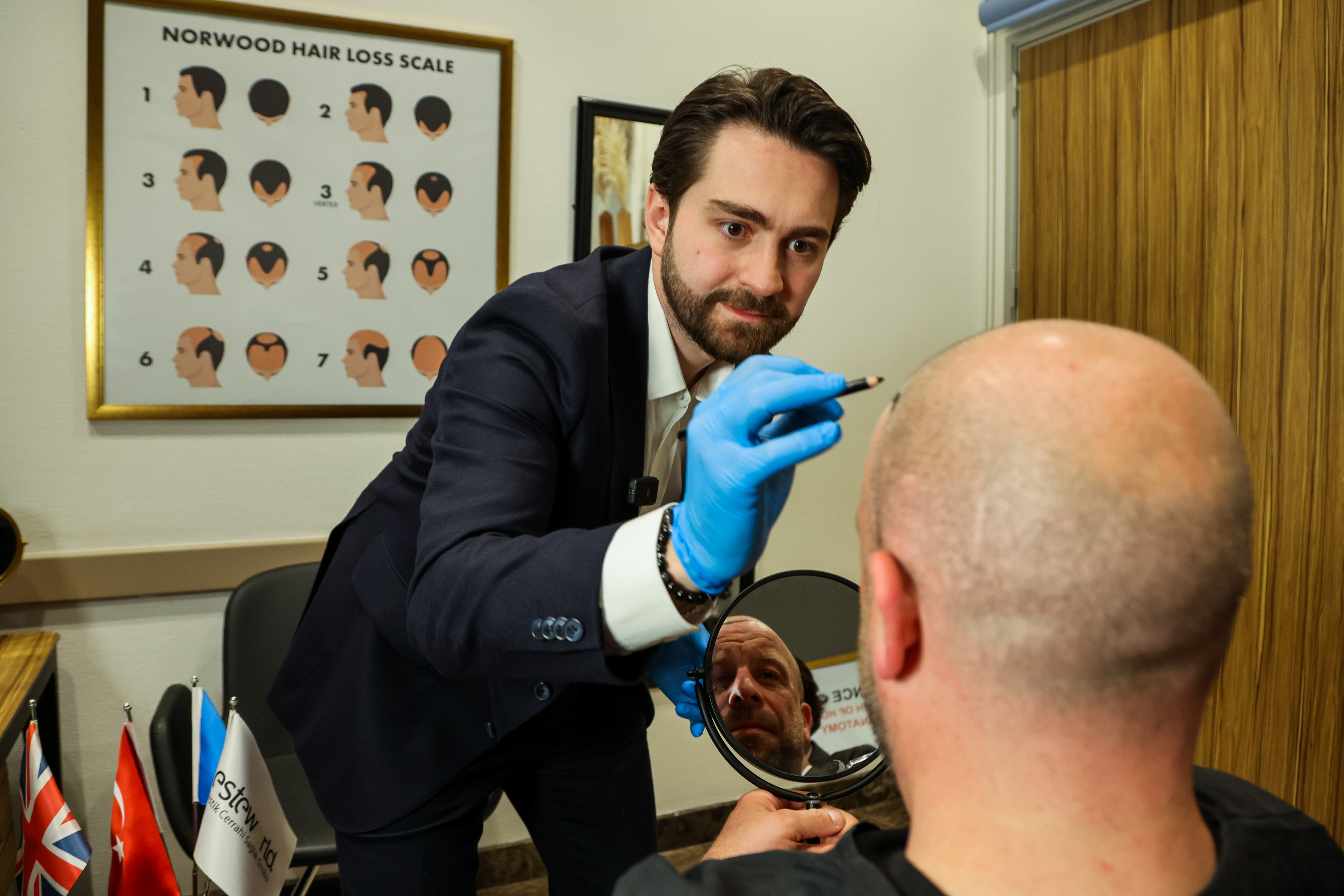
In one of the offices, we observe a consultation with a British colleague. Dr. Burak calmly draws a hairline. Erases it. Draws it again. He explains why “too perfect” is bad, how important it is to leave a slight asymmetry, and why age should be “readable.”
We were brought to a dental clinic that’s part of the Esteworld network . It has the same sense of scale: modern equipment, private rooms, and the ability to perform not only dental procedures but also injections, Botox, and physical therapy.
But perhaps the most surprising thing happens outside the offices. After a day or two, people return to the hotel, relax, and chat: there’s no sense of their operations being an event. And this is also the difference and the result of Esteworld .
PERSONAL CONCLUSION (INTERIM FOR NOW)
For us, the most unexpected thing wasn’t the technology or the scale, but the sense of normalcy surrounding it. People come to Esteworld as if it were a pre-planned event in their lives: aesthetic medicine is no longer a last resort but a part of a new everyday reality.
Turkey began actively developing medical tourism in the 2000s, focusing on combining quality and affordability. Istanbul became the center of this model thanks to its infrastructure, geography, and the flow of international patients. Esteworld, founded in 1994, was among those shaping the industry from the very beginning.
Today, Esteworld comprises several hospitals, over 1,200 employees, tens of thousands of patients annually, and a clientele from over 30 countries. Importantly, offices in Birmingham and London serve as entry points for European patients. There’s always someone to turn to for help! An office in Manchester is planned to open this year.
Perhaps this isn’t about Istanbul or even medicine. We are simply witnessing a shift in how people view themselves. What recently seemed like a radical step is now becoming a rational, almost mundane decision. The body is no longer something “given once and for all” and is becoming a project to be worked on. The only question is where the line lies between freedom of choice and a new form of normality. It seems we’re only just beginning to ask ourselves this question.
To be continued….