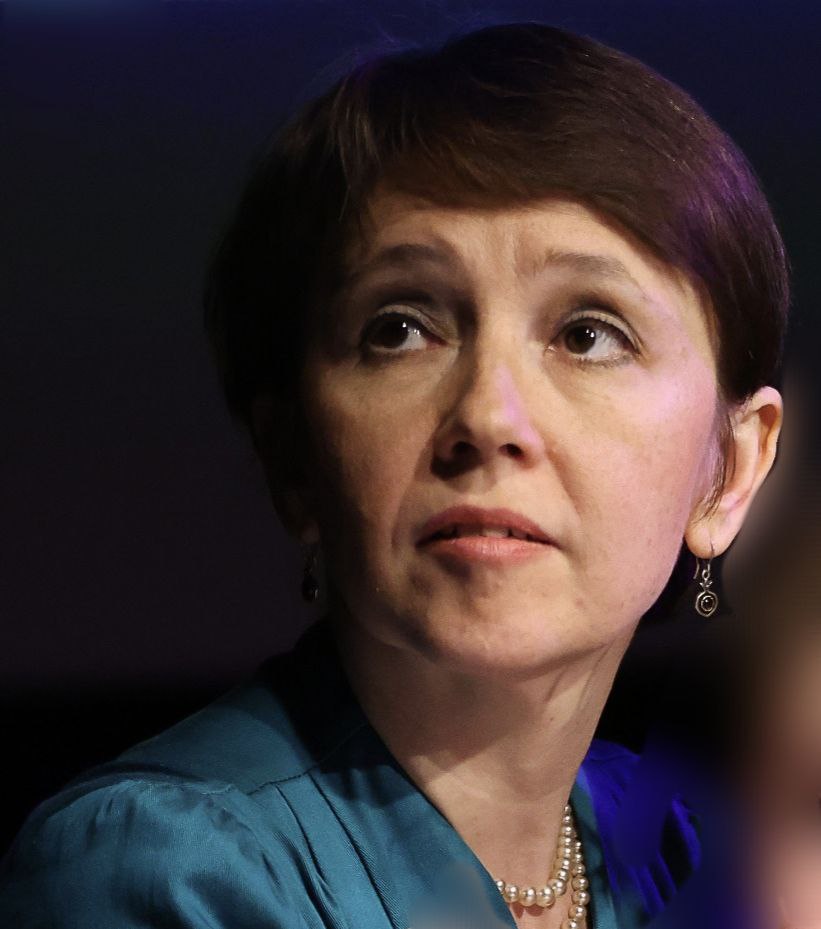
Ira Litmanovich: «Technical progress begins to dominate everything»

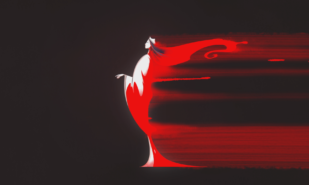
Artist and animator Ira Litmanovich filmed An Unwritten Play as a film about Alexander Volodin, but in the end it turned into a story about time, memory, the fragility of the artist, and the impossibility of holding on to reality, which constantly outruns fiction. Handmade animation, the almost vanished technique of cut-out animation, festival rejections, Covid, war, and the birth of her son — all of this became part of the film’s path, which was accepted into the competition program of the Raindance Festival. We spoke with Litmanovich about Volodin, the «light of time», animation as total control, and why a finished film is happiness mixed with bitterness in equal proportion.
Your new film An Unwritten Play is taking part in the competition program of the Raindance Festival.
It is a major festival, where not only animation is represented, but also feature films and documentary cinema. It is quite a cool festival; it has Oscar and BAFTA qualification. Honestly, for me this is a phenomenal story, because the film is not being accepted anywhere. I receive rejections in batches! There may be a million reasons for this: both content-related and of another kind. I do not want to think that my location — I write in applications that I live in Israel — also has some significance. Most likely, it does not. And if we assume that Russia today is persona non grata for European countries, then it is not as if in this film I am speaking on a topical anti-war theme.
A debatable question. The image of power in the film is, to put it mildly, not a compliment!
Well, yes, but one needs to look into it, one needs to actually see it. And it also seems to me that now direct imagery rules, poster-like imagery. And if it is not a direct, head-on statement, then perhaps they will not deal with it. Especially if the plot is resolved through such a haze — it is not nostalgia, of course, but a certain light of time. I try to convey this light regardless of what is happening in the plot. And perhaps now this «light of time from Russia» is needed by no one, does not fit into the global context. These are conjectures — but I would probably say so if I were in the place of festival selectors who are not striving to examine artistic images.
Why did the playwright Alexander Volodin become the theme of this film? You filmed this movie for almost ten years, didn’t you?
That is an exaggeration. The actual shooting in it took three and a half years, which, too, generally speaking, for a length of fifteen minutes is a fantastic amount of time, conditioned by external circumstances. And ten years is rather the time from the very birth of the idea. We wrote this script together with Viktor Shenderovich. Before that we had the album The 22nd Trolleybus and Other Sketches — it emerged very quickly; within literally a year we invented it, made it, and printed it. And among other things there was an essay about Volodin there. Viktor knew him personally, and even acted in his play Two Arrows at the theater-studio under the direction of Oleg Tabakov.
That was the graduation performance of the course in the late seventies, if I am not mistaken.
It was actually the first intake at Tabakerka. And then for a long time Viktor communicated with Volodin; he is one of the important people in his life. And for me Volodin is forever Five Evenings. Since my youth this film got inside me; it is still in my personal top five best films of world cinema — together with Tarkovsky and Fellini.
So, Viktor and I wanted to write a script for an animated film — we began to think what it could generally be about. And since in films I always proceed from myself, from what surrounds me, we first tried to fix the current time — it was 2016–2017, the time of the white-ribbon movement, Bolotnaya — and we came up with a character, a girl who lives in this world, then leaves; there was some love story there, on that Bolotnaya. We wrote and wrote it, and suddenly I realized that reality was outrunning our fantasies so much that everything we were writing instantly became journalism, a news feed. It was completely impossible to keep up with this time, to fix it. And at some point Shenderovich said: «Let’s make a film about Volodin!»
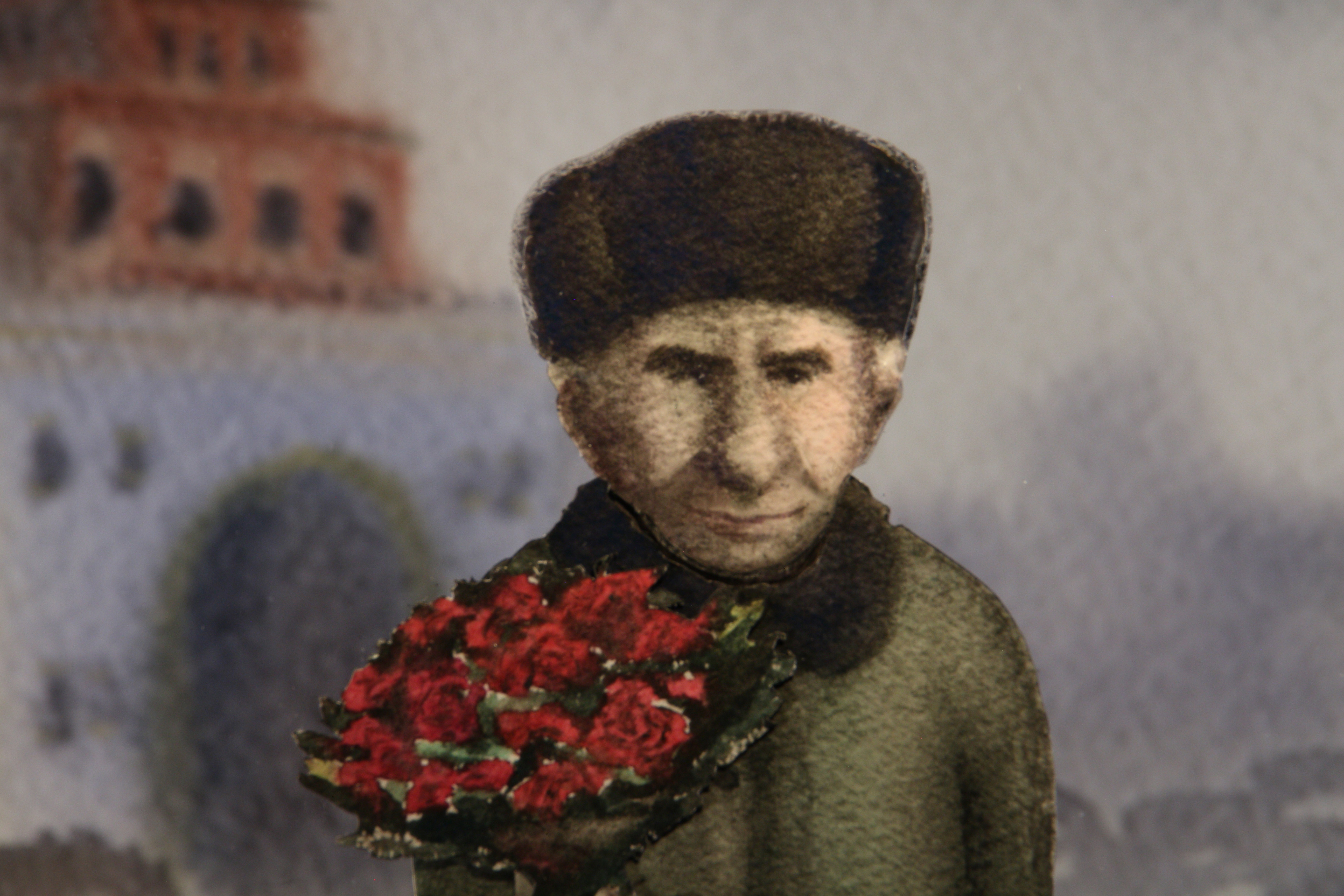
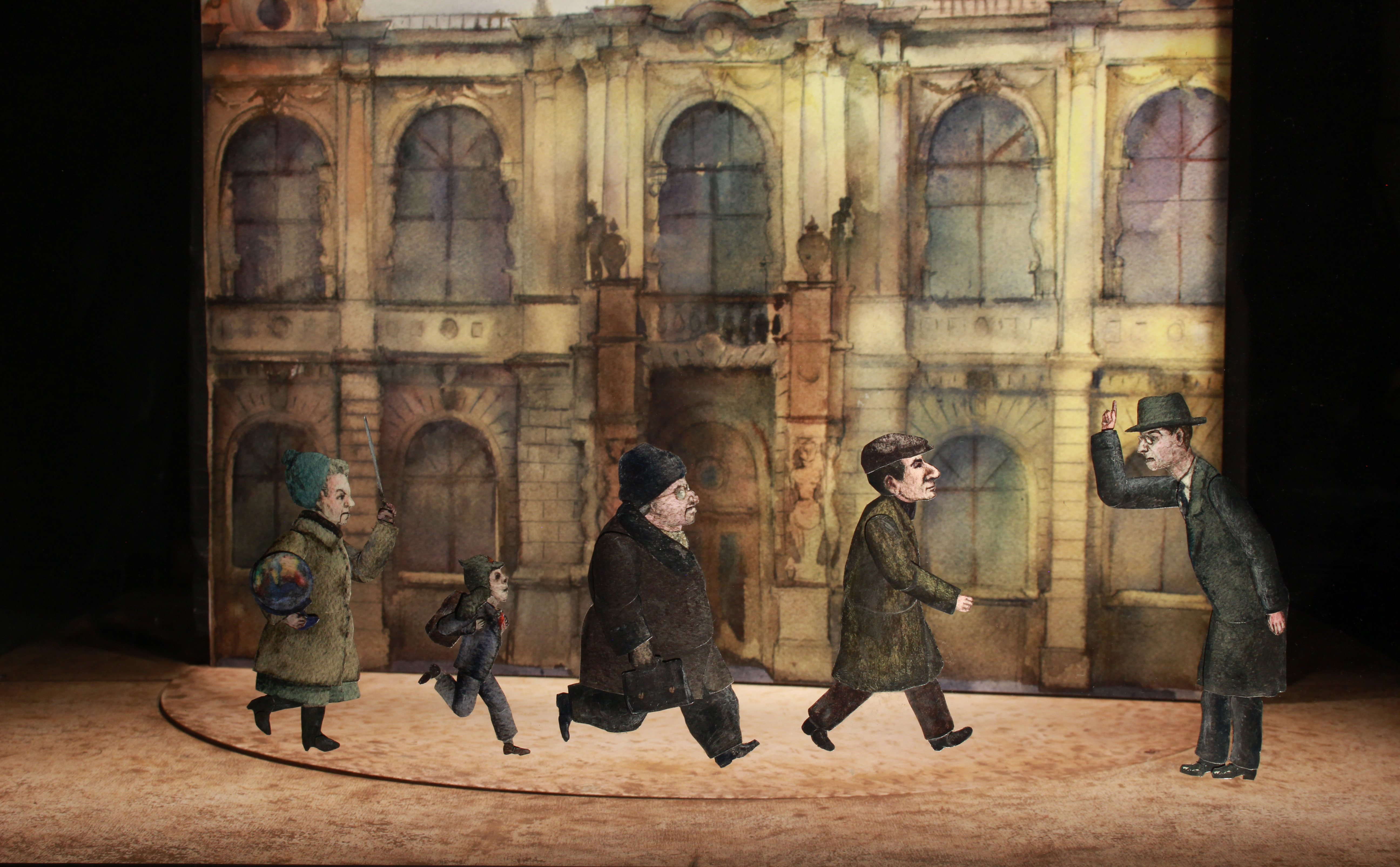
At first I was surprised: what is there in him, apart from the fact that he is simply a colorful character? This eggplant nose, little eyes, eccentric plasticity — everything is completely animated. But I did not really understand how to approach the script at all, because there was no point in retelling Volodin’s biography. Many people are doing this now, by the way — making animated films about writers and their biographies, but this is completely uninteresting to me — I needed some image, some device. So it was until I read about one episode in his life: in 1999 he received the Triumph prize, came with it to Petersburg, was walking past a shell-game operator. There stood a couple, a husband and wife — planted, of course! — who were playing out a scene: the husband was losing everything, and the wife was nagging him for it. And Volodin suddenly began to sympathize with this man, started giving him money… In short, when the money ran out, he went to get the prize, brought it to the station, and squandered all of it. I was simply stunned when I read this story.
It is clear that Volodin, of course, knew who shell-game swindlers were, but he believed so much in these given circumstances! What is this? Delusion, gambling passion, or an absolutely childlike faith? It seemed to me that this story is the key to his entire human image, and could become the key to our film as well.
Now there really are a huge number of biopic films coming out, both animated and feature films, whose heroes are almost our contemporaries — from Freddie Mercury to Bulgakov. Why have directors suddenly become interested in those who are so close by?
Probably everyone has their own reasons for this. I did not have the task of looking back specifically at a contemporary. Volodin was simply interesting to me. I read his poems, absolutely wonderful ones, and rewatched a mass of material. I was at the Five Evenings festival, which is organized in Petersburg by the theater critic Marina Dmitrevskaya. We communicated with her a great deal; she was a close person to Volodin — he wrote somewhere to her that he «adopts her as a daughter.»
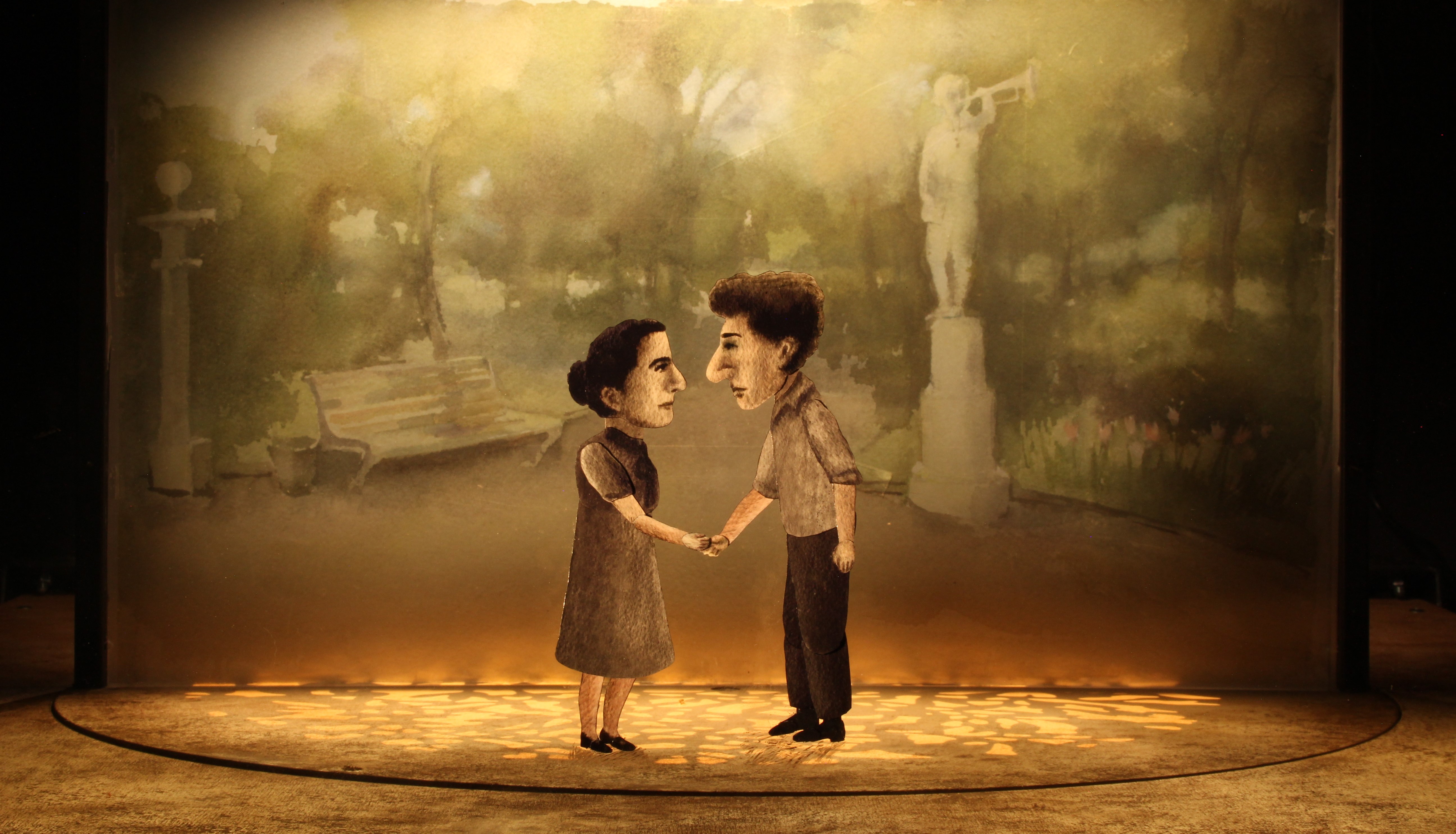
So Volodin became a very close person for me too. For me it is important that he took his personal life and transferred it into art as is, without any evasions, and it begins to resonate with the viewer. He is a revolutionary in twentieth-century dramaturgy — his plays are not about workers and collective-farm women, not about the party line! This is a return to the little person, to his fate. And this story is, of course, a rhyme with my previous films.
With Domestic Romance, for example, dedicated to your childhood? Is it the same current and memories, the same «light of time»?
Yes, yes, absolutely. In 2009, when we began filming Domestic Romance, the current of animated documentary did not exist at all; all this is a trend of the last five or six years. And at that time I was interested in conducting a documentary analysis of my own life and, at the same time, turning the document into poetic images. These childhood memories haunted me until the moment when I filmed them. I understood that if I did not make a film about them, they would keep returning all the time.
And Clouds?
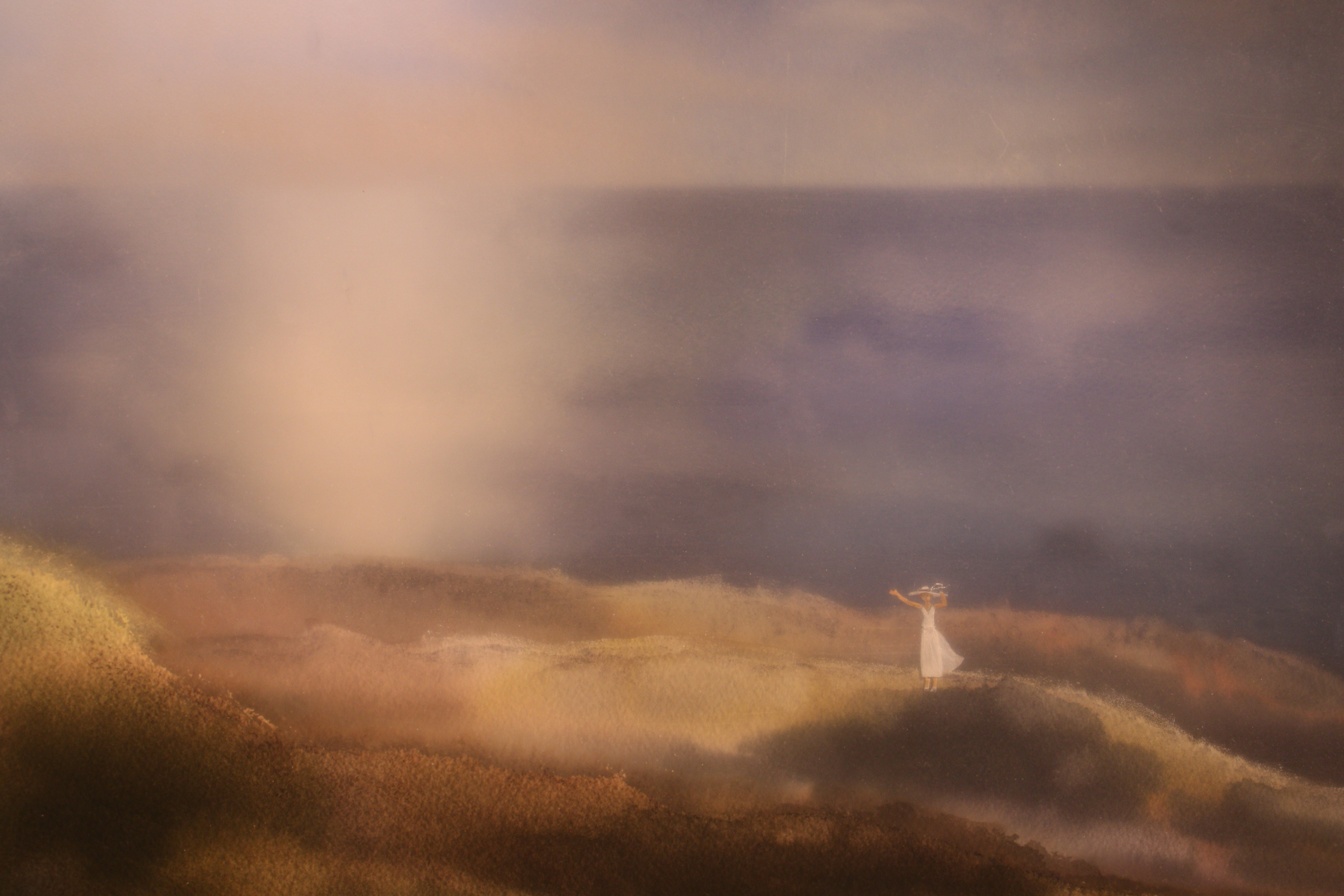
That is a completely different work. I wanted to make a film about love, including several stories in it. They are very different, but united by my understanding of the ideal — how it could be. This is, of course, not documentary, but invented stories. Only one plot is based on a real story of a friend of mine — he really was driving to the dacha, and a parachutist fell onto his hood. And the rest is absolutely invented.
Do you work in the technique of cut-out animation?
Yes, it is cut-out animation on a multiplane stand. It is celluloid, which is primed with white tempera. While the paint is fresh, it can be given any texture, and when it dries, it becomes strong, and you can work on it with any material — pencil, watercolor — a completely blessed material. I must say that this is a dying technology. As far as I understand, these stands, I think, remain only in a couple of places in Moscow, and there are no specialists anymore. Besides, shooting requires a space, and a space means rent. What matters is where artists put their energy: you can put many computers in a room, or you can put two stands. Why is all of this disappearing?.. I have no other explanation except that technical progress begins to dominate everything.
How do you store such a number of details?
There are these old-style photo albums, in which the little sheets are covered with film and held on staples. We glued all the details onto the pages and inserted them into this very album. After the film I accumulated about four such very thick albums. Each scene is prepared separately and given to the animator. And he already takes the details from there and uses them.
In our conversation I am deliberately focusing only on animation, although your works are not limited to it. But why did animation become precisely the language that was necessary for you? Why not feature cinema, after all?
Animation is such a multi-layered genre, into which music, drawing, dramaturgy, rhythm, and anything else are included. And then it is easier for me to draw than to make a person act in reality, that is, to play it myself rather than make someone else do it. I am generally a controller: the more I control, the more is subject to me, the calmer I am. In animation one can control the process a little more than in cinema, although all the same you depend on the people who help you realize the project. But there are, of course, far fewer of them than on a shooting set in feature cinema.
But in general I myself often ask the question — why did I get myself into all this, such titanic labor, while the result is very modest.
The result is a magical world?
When you know this kitchen, the magic arises only for a few seconds, when you suddenly get what you want. Fantasy becomes alive — at that moment, yes, magic happens, but it is very short-lived. And, by the way, it does not always turn out exactly the way you want: there is the error of the material, there is the error of the human factor, and if one managed to do everything at least 70%, I consider that the work succeeded. It is never 100%, and not even 90%. Animation is a dubious happiness, of course.
What does an animator feel when finishing a film?
I try not to analyze. When you come to the finale, you are already squeezed like a lemon and simply do not believe that shooting has really ended. You want to redo many things: you see all the mistakes and imperfections. In short, it is happiness mixed with bitterness in equal proportion.
And then begins the rather difficult work with festivals. By the way, this is the first time I am dealing with festivals myself. I caught myself thinking that while I worked in Moscow, the recognition of specific people was important to me, and there were quite many of them. It was not that this recognition was enough for me, but its weight was sufficient, and sounding out on the international scene was not an end in itself for me. If it worked out — good; if it did not — well, fine. And today, since my former life collapsed, I began to immerse myself deeply in the structure of the festival system, to invest in promotion.
And what was my astonishment when I began to receive nothing but rejections! In the first year this traumatized me greatly. Over all this time, a little fewer than ten festivals took An Unfinished Play into the competition program. And recently in Paris, at the Russian Film Festival, the film was shown: the proximity to Sokurov was pleasant for me. In general, only now, after a year and a half, am I more or less beginning to understand how this whole strategy should have been built. Therefore the Raindance Festival, of course, is important for me as a fact of acceptance.
I wonder, did it ever occur to you what Volodin would have said if he had seen it?
I tried not to think about that: it seems to me that he would have been greatly shocked to learn that an animated film had been made about him. Although he knew Norshtein, had been to his studio, and probably animation was not alien to him.
From the very beginning I wanted to make a film with a universal image of the poet in the context of the twentieth century — through Volodin. But I had serious fears that people who knew him personally would tell me that he was different, and that I had shown him incorrectly. That is exactly what I got. On the one hand, viewers praise the film, and the first reaction is enthusiastic, but then the same people begin to write to me that he was very impulsive, lively, eccentric. And also like this, and like that, and like that.
Guys, well, damn it, make your own film if you want to show exactly that. I was interested in something else; I never had any inclinations to make an exact portrait of him. I took some of his character traits — some, but not all.
Did you begin shooting during Covid?
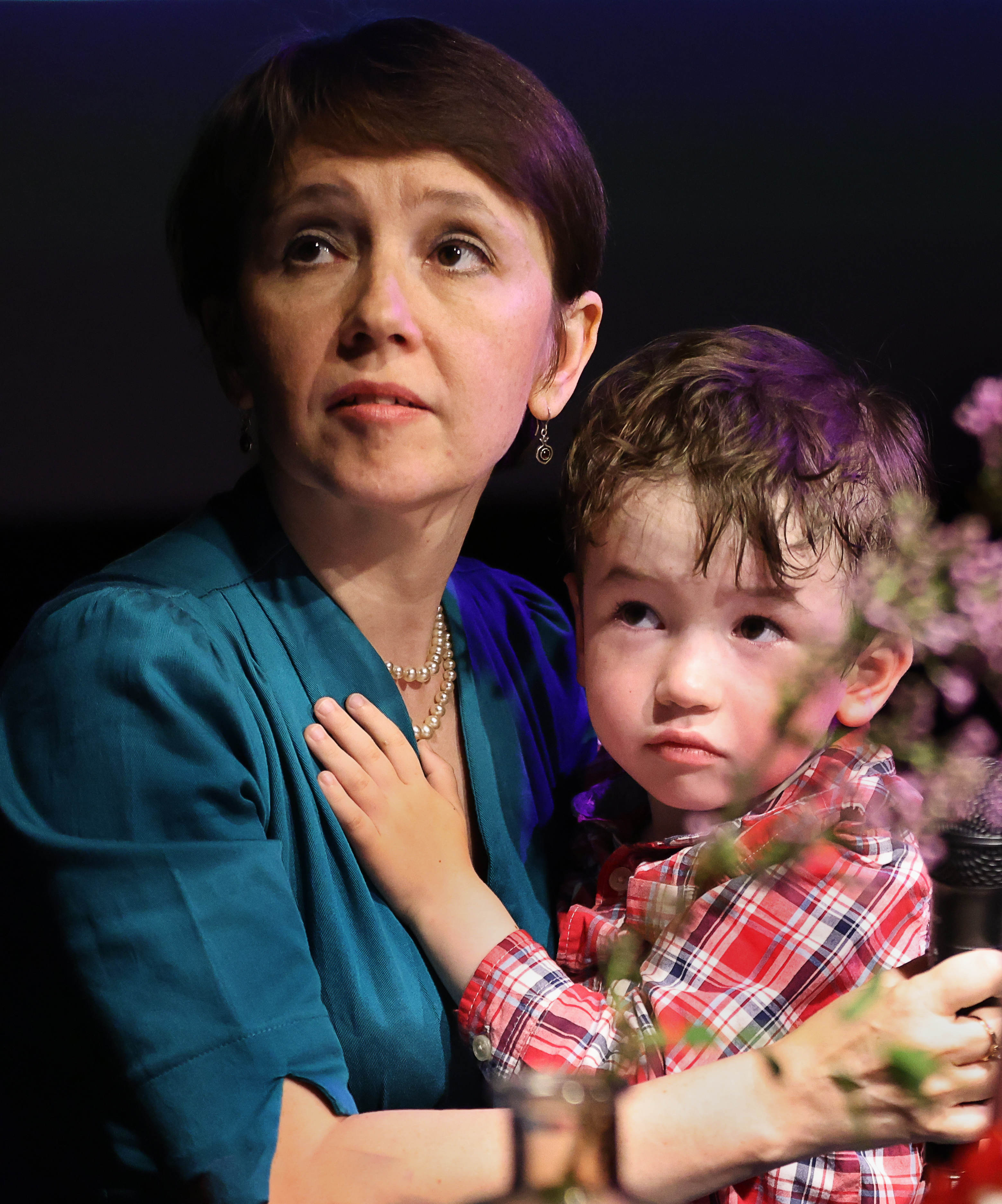
Yes, we began shooting in January 2021, and in December my son was born, and two months later the war began. Of course, the film was a real vector inside this chaos, which engulfed both me and practically everyone I knew. I understood: this is an anchor that I am holding on to, and I have to finish the film at any cost. I cannot abandon my work in the middle, even if there are a thousand indisputable reasons for doing so. It was a spirit-lifting undertaking, but very difficult from the point of view of the process: we were kicked out of the studio, and we had no money, so the fact of its existence is an absolute miracle, I believe.