«Hot» Conversations About Climate and Materials

Last week in London will be remembered by many for its record-breaking heat. It seemed as though the entire city was searching for shade, while conversations about the weather ceased, for once, to be the traditional British way of starting a conversation. Climate change had become part of everyday life.
It was against this backdrop that London Climate Action Week took place – one of the world’s leading platforms for discussing the future of climate policy, the economy and sustainable development. Symbolically, one of the sessions dedicated to adapting to extreme heat had to be cancelled because of the heat itself. It is difficult to imagine a clearer reminder that the climate crisis is no longer a conversation about a distant future.
One of the defining features of London Climate Action Week is its format. Rather than being a closed conference, it is an open platform where universities, companies, research institutions, charities and independent organisations can host their own events under the umbrella of the programme.
As a result, the week brings together not only those shaping climate policy but also those turning ideas into action every day. This open ecosystem has made London Climate Action Week far more than a conference programme; it has become a space where new ideas, partnerships and practical initiatives emerge.
Running in parallel was Future Fabrics Expo. This year, the exhibition, which had long been a fixture of London’s sustainability calendar, moved to Brussels for the first time. The relocation proved successful, bringing together an even broader international community of European and Asian manufacturers, material innovators and industry experts. The exhibition has evolved beyond a showcase of innovation into a platform where the future of the textile industry is actively being shaped.
At first glance, the two events seem difficult to compare. One focuses on global policy, investment and international cooperation. The other centres on textiles, materials and manufacturing. Yet both were ultimately addressing the same question: sustainability is gradually moving beyond being an idea and becoming a system.
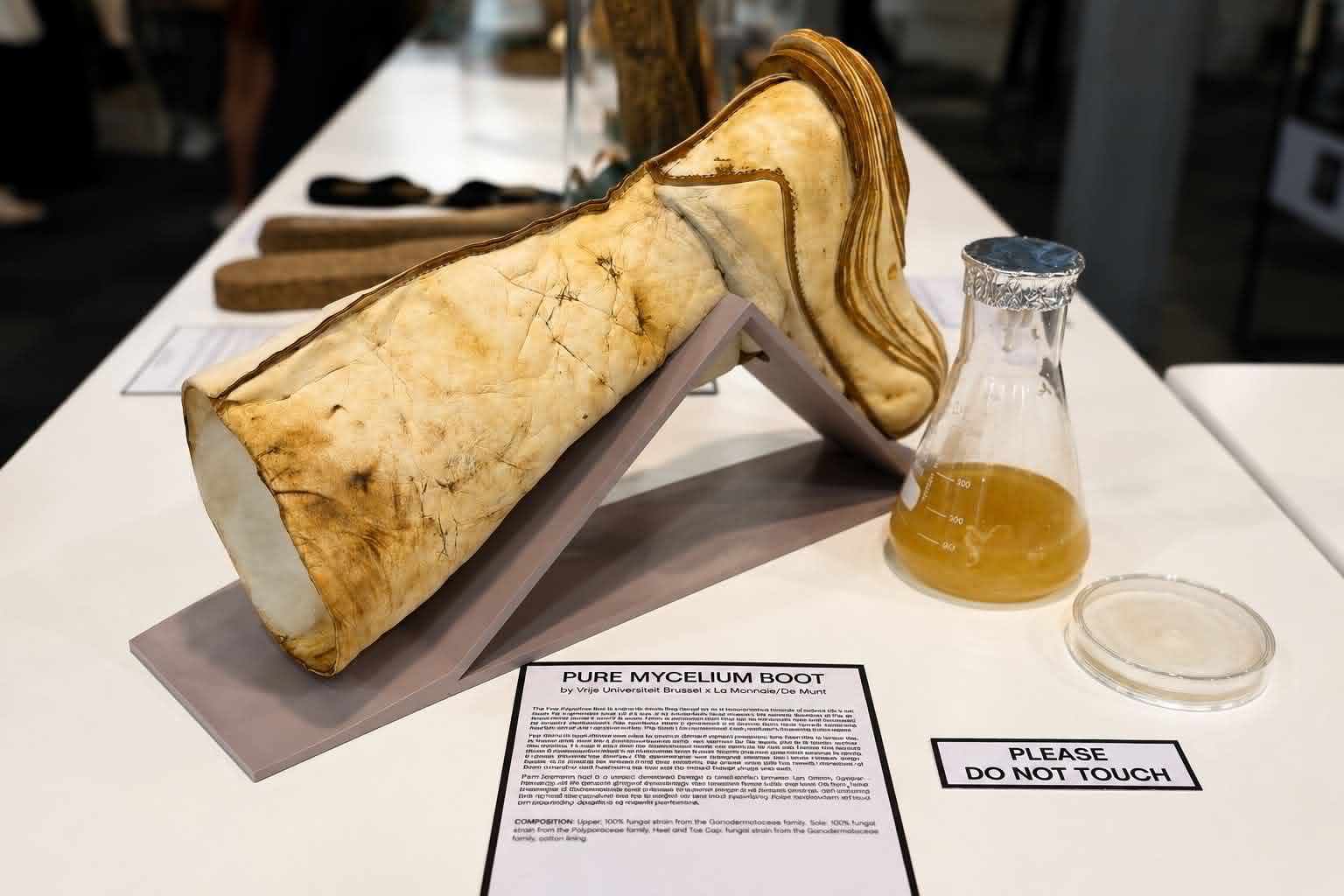
Future Fabrics Expo has grown considerably over recent years. Many exhibitors spoke about this transformation. Yet its evolution is not simply a matter of scale. Its focus has changed as well.
A few years ago, events like this were primarily places to discover the next breakthrough material – a new fibre, an alternative leather, a novel biopolymer. The central question was simple: What will be the next innovation? Today, that question no longer dominates the conversation.
Innovative materials remain at the heart of the exhibition, but increasing attention is now being given to everything that enables those materials to move beyond the laboratory. Traceability, Digital Product Passports, recycling technologies, regenerative agriculture, next-generation chemical processing, certification, textile sorting systems and circular supply chains have become the new focal points of industry discussion.
It feels as though the sector is gradually replacing one question with another. Instead of asking, “What will the next material be?” it is increasingly asking, “What needs to change for new materials to succeed at an industrial scale?” No single laboratory can answer that question alone.
What impressed me most this year, however, was the atmosphere. Although many companies operate within closely related fields, conversations rarely felt competitive. People introduced one another to new contacts, openly discussed shared challenges, exchanged experience and spoke enthusiastically about future collaborations. There was a genuine sense that the industry is beginning to see itself as a connected ecosystem, where the success of one participant strengthens opportunities for everyone else. It was here that London and Brussels unexpectedly came together.
While London Climate Action Week focused on strategy, investment, regulation and long-term direction – from international policy to local initiatives – Future Fabrics Expo spoke the language of materials, technology and manufacturing. Gradually it became clear that these two events are not competing with one another. They represent two sides of the same transformation: in one place the agenda for the future is being shaped, while in the other it is already beginning to take form through new materials, technologies and supply chains.
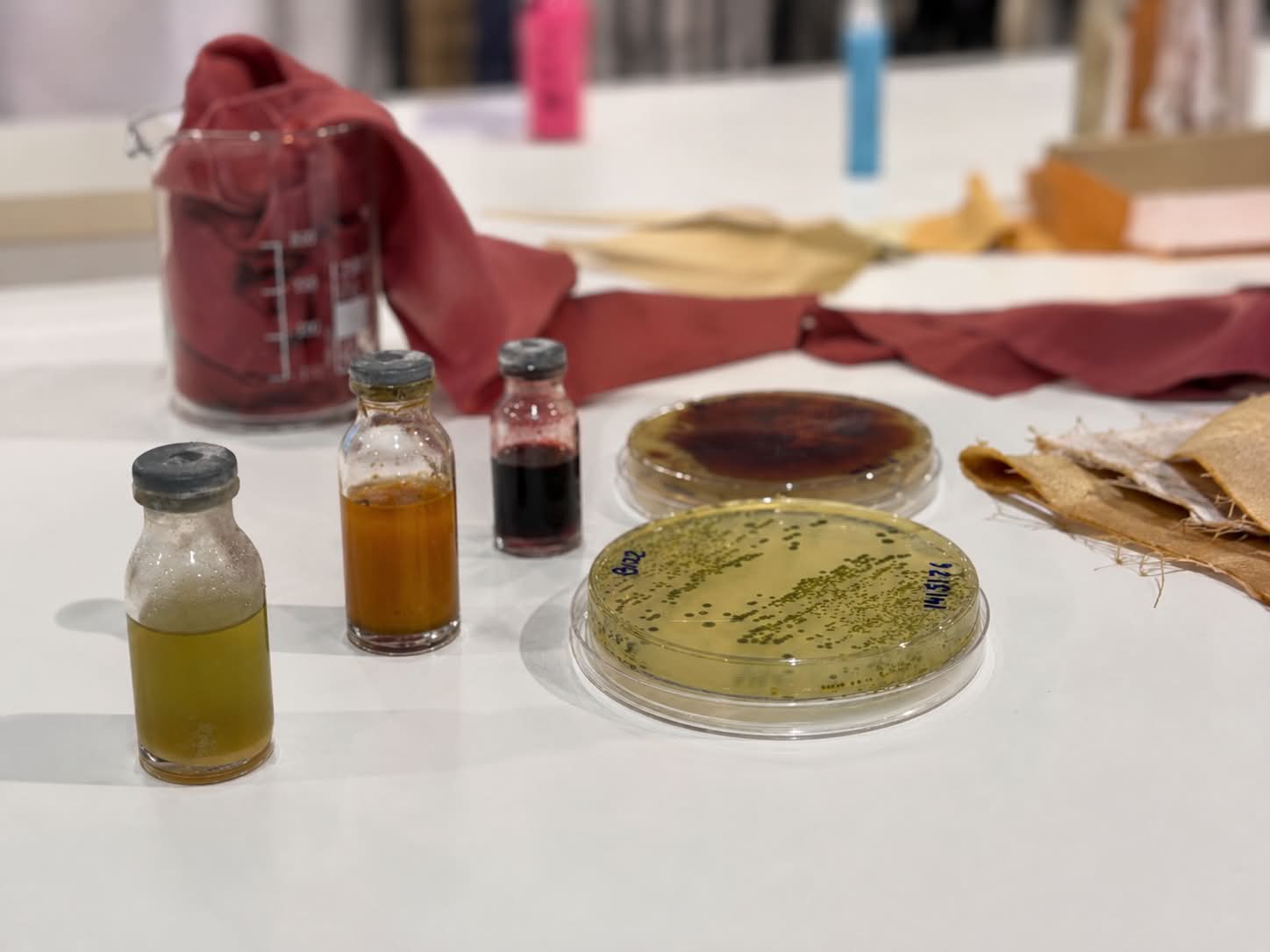
As I travelled home from Brussels, I realised I was not thinking about any single material that had caught my attention. What stayed with me most was the growing maturity of the sector itself.
Perhaps that is what distinguishes this moment from where we were only a few years ago. We are becoming less fascinated by individual breakthroughs and increasingly focused on creating the conditions that allow those breakthroughs to transform an entire industry. The future will not be built by new technologies alone. It will be built when ideas become collective action, and when individual innovations become part of a system that truly works.
Photo by Tasha Lapidus