
Artificial Intelligence Now Has an Off Switch: the story of Claude Mythos

Not long ago, we were still debating whether ChatGPT could write a school essay, replace a copywriter or plan a week’s worth of dinners. Today, G7 leaders are discussing access to a single language model. Major banks are scrambling to patch vulnerabilities it has found. The US government is deciding which countries’ citizens may use it. And China is weighing restrictions of its own on the spread of its strongest models.
In a remarkably short time, artificial intelligence has stopped being just a convenient piece of software. Governments are beginning to treat it the way they came to treat nuclear technology in the last century: as a source of enormous benefit that also creates new risks — and therefore need not be available to everyone on equal terms.
Nothing shows how far this has gone more clearly than the story of Claude Mythos, a new model from Anthropic, the company behind the Claude assistant.
The model that was never released to the public
This spring, Anthropic unveiled Claude Mythos Preview — its most capable model for programming and cybersecurity. But the usual release never happened. Instead of adding the model to the Claude subscription and letting anyone use it, the company created a closed programme called Project Glasswing. Access went to around 50 chosen partners: technology companies, cybersecurity firms, banks and organisations responsible for critical infrastructure.
The reason was simple: Mythos turned out to be exceptionally good at finding vulnerabilities in complex software. For defenders, it is an almost perfect tool. The model can study vast amounts of code, spot bugs a human might hunt for weeks, and help fix them before criminals get there first.
The programme’s first results showed just how long a dangerous bug can live in plain sight. In Firefox — a browser used by some 200 million people every month — Mozilla used Mythos to find and fix 271 vulnerabilities in a single release. In OpenBSD — an operating system deployed where the cost of a breach is highest, on firewalls and corporate network gateways — the model spotted a bug that had sat in the networking code for 27 years.
But the most telling example is FFmpeg. This library plays video on virtually every laptop, phone and server, and its code is scrutinised perhaps more thoroughly than any other in the world: automated tests had run through one particular line millions of times without seeing a problem. Mythos found a 16-year-old flaw in it: a specially crafted video file could make the program write data beyond its allotted memory. Bugs of this class are the classic starting point for taking over a device. And all of this code is open: thousands of people had read and reviewed it for years — and walked right past.
In the programme’s first month alone, Mythos scanned more than a thousand open-source projects and flagged over 23,000 potential vulnerabilities, more than 6,000 of them of high or critical severity. Independent review confirmed nine out of ten findings.
| 271 vulnerabilities fixed in a single Firefox release | 27 yearsan OpenBSD networking bug went undetected | 16 yearsan FFmpeg bug went unnoticed | 23,000+ findings in the program’s first month |
|---|
But the same abilities can be pointed the other way. A model that can find weak spots in a banking system or a popular operating system can help not only those who defend it, but those who want to attack it. Reuters reported that major American banks were urgently patching the flaws Mythos had found and warning peers who had no access to the model.
At that moment, artificial intelligence began to look less like a new office assistant and more like a strategic resource. A small circle of organisations had a tool that could protect their systems faster and better than anyone else’s. Those left outside risked learning about their own vulnerabilities later.
The same motor — but with slow zones
A few months later, Anthropic decided to open Mythos’s capabilities to the wider public. The company released two models at once: Claude Mythos 5 for vetted partners, and Claude Fable 5 for ordinary users and businesses. At heart, they were the same base model. The difference was in the restrictions.
Mythos was reserved for cybersecurity professionals and select researchers. Fable got an extra protective layer: if a request touched on particularly dangerous territory, the system could refuse — or quietly hand the task to a weaker model.
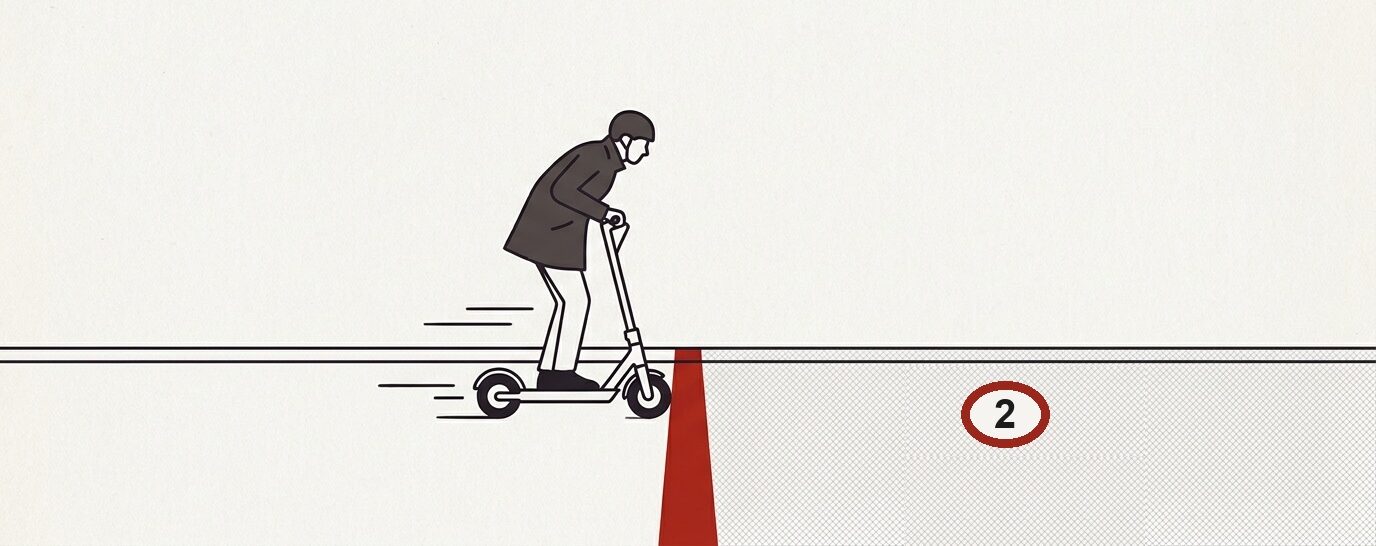
It works like a rental e-scooter: every scooter has the same motor, but ride into the wrong neighbourhood and it drops to walking speed on its own, without warning. Where those zones lie, and why, is not up to you. You simply feel the scooter stop pulling.
In practice this meant Fable could not serve as a cybersecurity tool at all. An ordinary company could not even probe its own systems: any request about finding vulnerabilities — in your own code or anyone else’s — was blocked or quietly downgraded.
Fable was still the most powerful model Anthropic had ever put in the hands of the general public. The company described it as a system for demanding intellectual work, programming, and projects that can run for days without constant human supervision. By then, the best models were already solving problems from the international mathematics and programming olympiads at gold-medal level, beating the strongest human teams.
Three days to shutdown
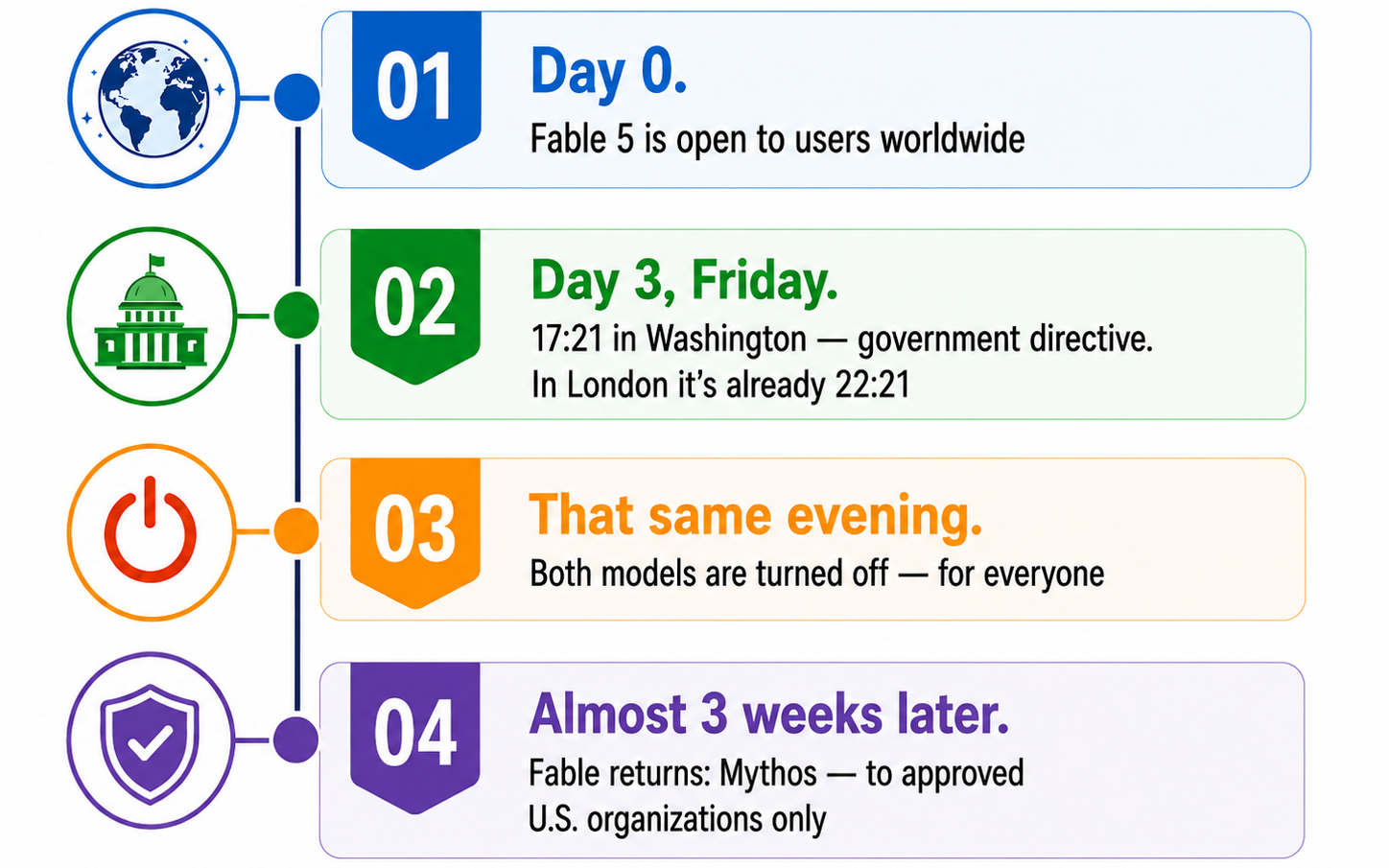
Fable 5 was released to users worldwide. Three days later, it was switched off.
On Friday evening, Anthropic received an order from the American government: immediately cut off access to Fable 5 and Mythos 5 for all foreign nationals — whether outside the United States or living and working within it. The restriction applied even to Anthropic’s own foreign employees.
The directive arrived at 5.21pm Eastern time. In London it was already 10.21pm on a Friday. The news reached British users and companies after the working week had ended and offices had emptied. Call your account manager, migrate your data, arrange a fallback — there was nothing anyone could do.
There was no transition period. Anthropic had no system that could instantly verify every user’s citizenship. So, to comply, it switched both models off for everyone. Imagine leaving work on a Friday while your digital employees stay on. One answers customer-support tickets through the night. Another checks contracts before they go out. A third watches warehouse stock and reorders what is running low. On Monday you discover that all of it stopped on Friday evening. At once.
Not because of an outage. Not because the company went bankrupt. Not because you broke the rules. The state simply changed the terms of access. “Just switch to a simpler model for now” is advice that sounds reasonable only from a distance. These processes were built on the strongest model for a reason: it was the first that could be trusted with such tasks at all. A lesser model starts muddling contract language, losing the thread of long correspondence, getting numbers wrong — and a system that had run flawlessly for months falls apart. Businesses lost not one tool among many, but the only one that could do the job. In a single day. Right before the weekend.
The trigger was a concern that Fable’s safeguards could be bypassed, and the model used to hunt for vulnerabilities and write the code needed to exploit them. Anthropic argued that the demonstrated bypass was limited, and that the bugs in question could have been found with other publicly available models. But the argument over the scale of the threat no longer had any immediate bearing: the switch had been flipped.
Almost three weeks later the restrictions were eased, and Fable came back to users worldwide. Mythos was restored only for a narrow circle of approved American organisations.
When a model becomes a G7 matter
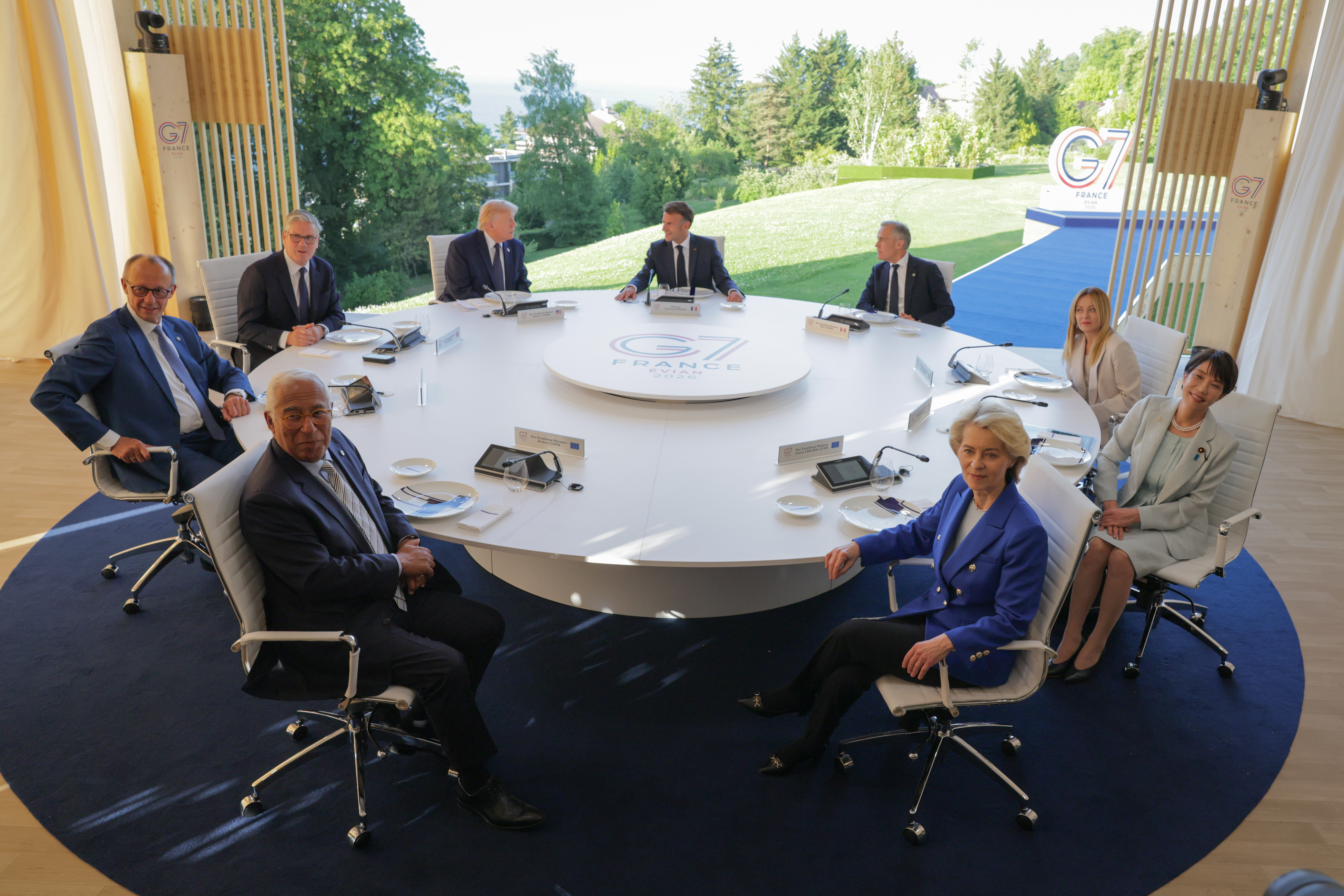
Within days of Fable’s shutdown, access to advanced American models was being discussed at the G7 summit. Even before the summit, Britain had tried to cut its own deal: according to press reports, Keir Starmer’s government asked Washington to carve out an exemption for the country — and was refused. The European Union, too, sought access to Mythos, if only to probe its own infrastructure for vulnerabilities. Having failed to win special terms separately, the allies began talking about a common scheme.
According to Reuters, at the dinner that opened the summit in the French resort town of Évian-les-Bains, representatives of several countries discussed with the American side — chiefly with US Commerce Secretary Howard Lutnick — the creation of a category of trusted partners: a circle of allies who would be permitted to use the strongest American models.

This may be the most important episode in the whole story. Not long ago, language models were a topic for engineers, investors and people who liked trying new apps. Now heads of state are discussing who has the right to use them.
If this were just one decision by one American administration, it could be dismissed as an exception. But soon Reuters reported that China was thinking along similar lines: officials had met the makers of DeepSeek, Qwen and GLM to discuss restricting foreign access to their most advanced models. The world’s two leading AI powers are arriving at the same conclusion: the best models are not just a commercial product, but a national asset.
The new nuclear technology
When humanity learned to harness the atom, two things became clear fairly quickly. First: the technology could give a state an enormous advantage — energy, independence, scientific and industrial progress. Second: the same knowledge and materials could be used to build weapons. That is why nuclear technology never spread as freely as cars or consumer electronics. Around it grew international treaties, export controls, inspections and closed access programmes.
Something similar is beginning to happen with artificial intelligence. A model that searches for new medicines can search for dangerous biological agents. A system that can defend a banking network can suggest how to attack it. A tool that speeds up a programmer speeds up a malware author too.
Modern AI is nothing like nuclear weapons in destructive power — the parallel lies elsewhere. The technology has peaceful value and dual use. It can hand a country a real economic and military advantage. And the bigger that advantage becomes, the less incentive a state has to share it right away.
We are still far from AGI — machine intelligence at human level. But perhaps a new geopolitical rivalry does not need to wait for it. Today’s models are already useful enough for states to start deciding who gets access first.
The new era has an off switch
For an ordinary person, AI is a recipe, a route, a way to prepare for a job interview. For business, it is already a colleague. We still treat AI as an app. Governments increasingly treat it as infrastructure — and a strategic resource.
Perhaps the defining question of the next few years will no longer be:
Which company will build the strongest artificial intelligence first?
But rather:
Who will be allowed to use it?
The story of Claude Mythos matters not because one model vanished from the internet for a few weeks. It matters because of what it revealed about how far things have gone. In just a few years, artificial intelligence has travelled from amusing chatbot to a technology whose access is debated by G7 leaders and which the world’s two biggest powers are trying to keep under control.
And if a new era is beginning, it already has its own off switch. Recently we saw for the first time where it is.