


“And We Shall Play a Game of Chess”: Exploring One Motif in ‘The Waste Land’ by T. S. Eliot

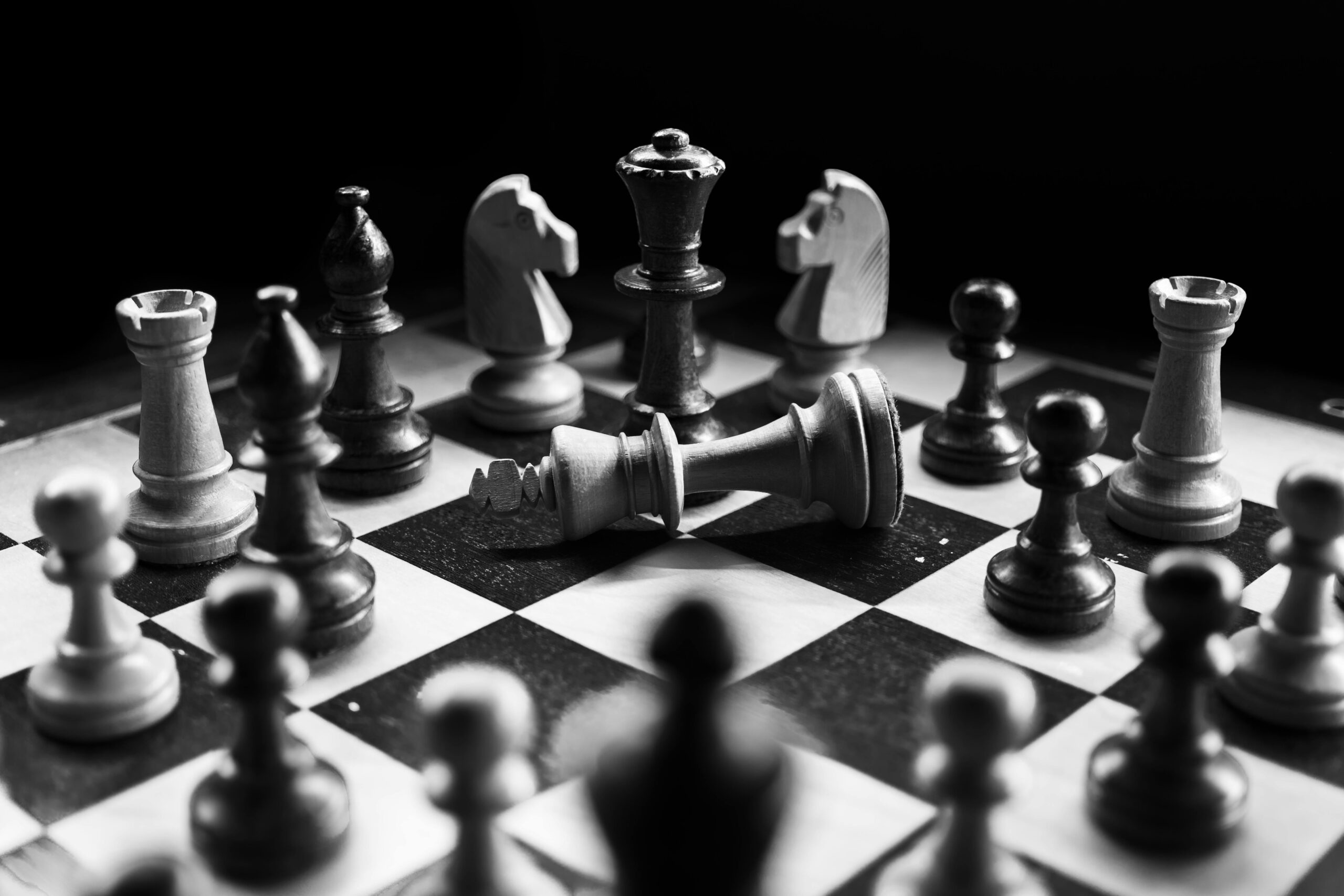
When we think of chess in literature, we imagine the chessboard as a metaphor for an intellectual mind game and the players as neurotic geniuses. It seems as though any allusion to the game is predisposed to reflect some sort of opposition. Being historically perceived and culturally framed as an almost exclusively male-dominated game, chess mirrors the battlefield in its embodiment of strategy, conflict and power. Say, Nabokov’s grandmaster Luzhin descending into madness over his obsession with chess, Zweig’s Dr. B. trying and failing to preserve his sanity playing against himself in solitary confinement under the Nazi regime, or the chess references in ‘Ulysses’ reflecting both the political manoeuvres of Dublin’s social life and Joyce’s modernist narrative strategy.
But should we take a look at ‘The Waste Land’, yet another pillar of the modernism movement, written in 1922 by T. S. Eliot, we will notice a certain semantical shift on the topic. The poem, reporting the condition of postwar Europe through a collage of intertextual techniques — direct quotation as well as allusions, imitation and pastiche — has, in a way, achieved the same in verse as Joyce did in prose that same year.

As a fact, we know that Eliot had a deep personal connection with the game himself, a passion he shared with his father having played transatlantic chess by letter until the latter’s death in 1919. Interestingly enough, ‘The Waste Land’ has one of the few rare mentions of chess in his literary works, and even in this case there is not much said.
The second section out of five of the poem opens with the name ‘A Game of Chess’. There are two scenes, juxtaposed as the black and white chess pieces standing on the same chessboard, different from the first sight, but taking part in the same game. In the first scene there is a wealthy woman, surrounded with a plethora of expensive things — jewels, antiques and art — and various literary allusions. The queen in the solitude of her palace. Having been introduced to the grand setting of her life, we now hear her voice first-person. Her speech becomes more and more fragmented, fractured as she asks someone anxiously: What are you thinking of? What thinking? What? You know nothing? Do you see nothing? Do you remember ‘Nothing?’ Are you alive, or not? What shall we ever do?, yet she cannot be satisfied with the scarce answers she receives. The alienated voice that is answering seems to be that of her husband’s, who finally tells her what they shall do. That’s where we see the only line on the subject of chess, giving the entire section its name and meaning: And we shall play a game of chess.
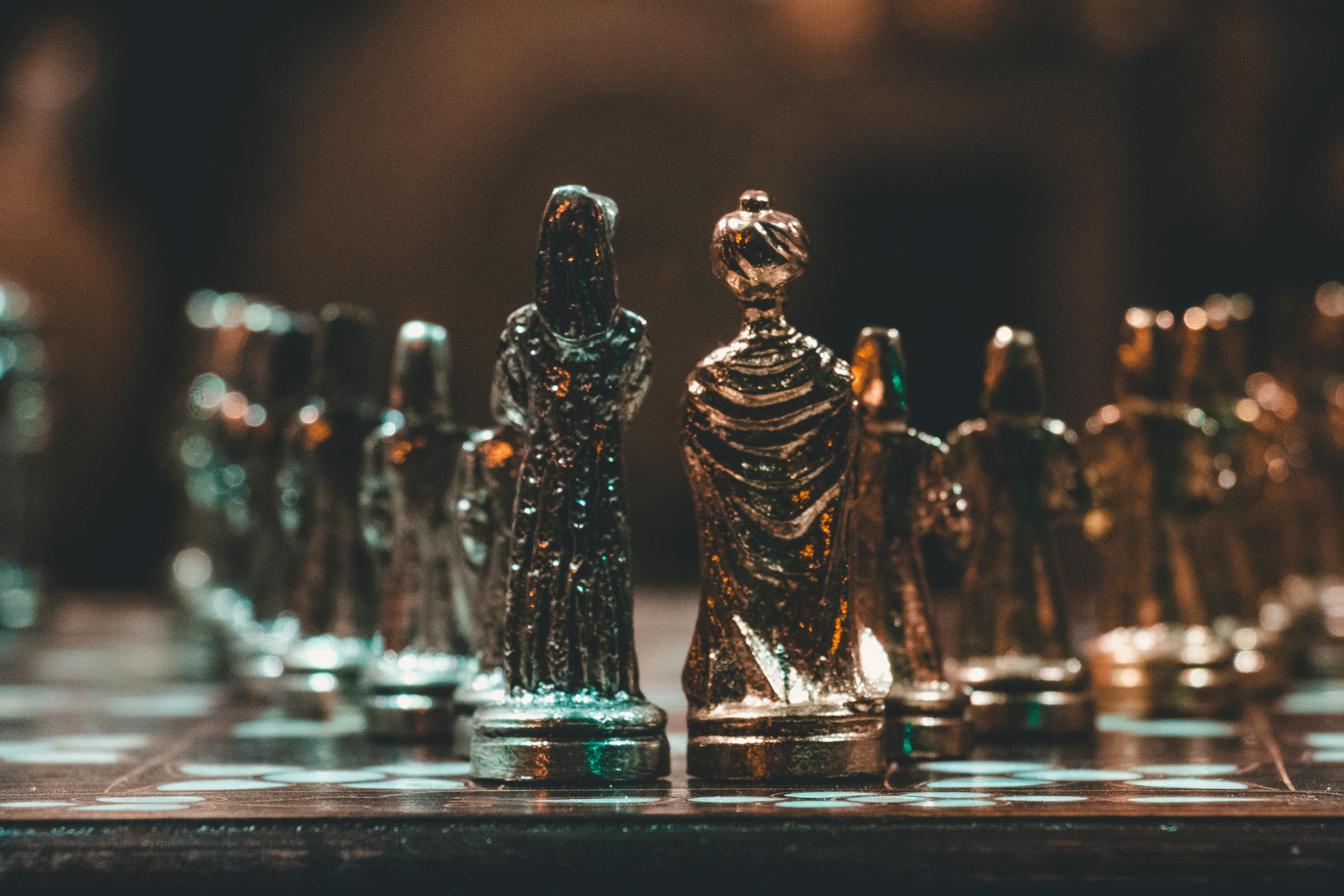
The second scene appears, and out of nowhere we are transferred to a pub with the line ‘HURRY UP PLEASE ITS TIME‘ from the bartender reminding us it is closing time. This time there is a woman talking to another woman about her hardships in life with the husband coming back from the army. The rhythm in the scene changes instantly compared to the first one: the phrases are abrupt, each finished with the words ‘I said’, the language is far less sophisticated, and the topics range from false teeth to abortion. As the bartender shouts for closing time, we delve into the misery of this woman’s life. Then suddenly the scene finishes with Ophelia’s last words from ‘Hamlet’: ‘Good night, ladies, good night, sweet ladies, good night, good night’. We, of course, remember what Ophelia does next and how happy she was in her relationship.
Having looked at both scenes, let’s now go back to the line that overrules the entire section. So why do the chess appear, and why is it key to understanding this part of the poem?
The hot water at ten.
And if it rains, a closed car at four.
And we shall play a game of chess,
Pressing lidless eyes and waiting for a knock upon the door.
Chess here is nothing but a way to spend the time in anticipation for something better — ‘a knock upon the door’. It is no longer an intellectual battle or a way to gain (or lose) control over your life, or, for that matter — a game for men. This lifeless portrayal of chess is actually quite the opposite from what we’re used to. It might even start to seem that chess itself has no semantical weight in the poem, as if it could be easily replaced with cross-stitching or reading as pastimes. Then we remember that chess typically requires two to play. Simultaneously, the game becomes a symbol of the listless routine of the couple’s life and perhaps the only way to address the conflict of the disconnected relationship.
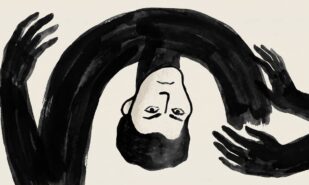
In ‘The Waste Land’ Eliot uses a polyphony of voices that create a sort of fragmented soliloquy. In ‘A Game of Chess’ specifically the two main voices are two examples of the loneliness and alienation a wife experiences in a loveless relationship. Chess in ‘The Waste Land’ is a symbol of such relationship and mentioned once expands its symbolism to both scenes under one title of the section. The expected antagonism of the game is suddenly reduced to underlining fractured communication, but the symbolical meaning of chess is extended. There is no power attributed to it, no obsession, and there is certainly no strategy to use in the spiritual barrenness of Eliot’s Waste Land, and that perhaps is much more like the real life than anything we’ve seen about chess before and after him.
Comments are closed.




1 Comment.
You have omitted to mention line 137a of The Waste Land, which has been restored to the definitive version of this passage. The line reads:
(The ivory men make company between us)
This line was omitted from the published version at the request of his then wife, Vivien Eliot. T.S. Eliot restored it in his later handwritten copies of the poem. There has been speculation that she felt the line reflected further upon their relationship, and possibly upon its childlessness.
The definitive passage as now published should therefore read:
“And if it rains, a closed car at four.
And we shall play a game of chess,
(The ivory men make company between us.)
Pressing lidless eyes and waiting for a knock upon the door.”