London theatre in July: shows for conversation and reflection

Summer is in full swing! You want to relax, wear beautiful clothes, drink champagne or lemonade, wander thoughtlessly through streets or fields, and meet up with friends. For nice clothes and meetings with friends, the theatre is an excellent place. We have selected seven shows for you that you absolutely must see this summer — and then discuss over a glass of something. There is everything here: comedy, drama, history, and, of course, stars!
The Oresteia
Bridge Theatre
3 Potters Flds Pk, London SE1 2SG
Literally yesterday it became officially known that Bridge Theatre had been bought by Trafalgar Entertainment. For Bridge, this marks the end of a major chapter and a rather nervous moment: Nicholas Hytner is leaving as artistic leader, and now we will have to see who will programme the theatre and whether it will preserve its reputation as a venue for director-led productions. Incidentally, Nick Starr will remain and will advise the new team. But this event does not cancel the theatre’s immediate plans: Into The Woods is moving to the West End, while on the stage of Bridge Theatre itself there is a premiere — The Oresteia.
The director and author of the adaptation is Simon Stone, one of the most prominent contemporary directors, famous for his bold reworkings of classics. He is often associated with acclaimed modern versions of Yerma and Phaedra; he is often described as a director who strips classical texts down to their skeletal essence and transfers ancient moral dilemmas into a contemporary context.
Once again, Stone takes one of the great ancient Greek tragedies — this time the story of the cursed House of Atreus, a story of murder, revenge and inherited family guilt — and brings it into the present day, reimagining the text of the play. A modern family “wakes up inside a Greek myth” and cannot escape its monstrous fate.
The Oresteia has been radically rewritten for today’s world; its museum-like untouchability has been completely removed. In the case of Oresteia, this feels especially organic: the story of a family crippled by an unjust war, trauma, violence and intergenerational conflict sounds frighteningly relevant — and who would know that better than us?..
For Bridge Theatre itself, this is also a strong move: working with the director on the creative team are set designer Lizzie Clachan, lighting designer Nick Schlieper and composer Stefan Gregory.
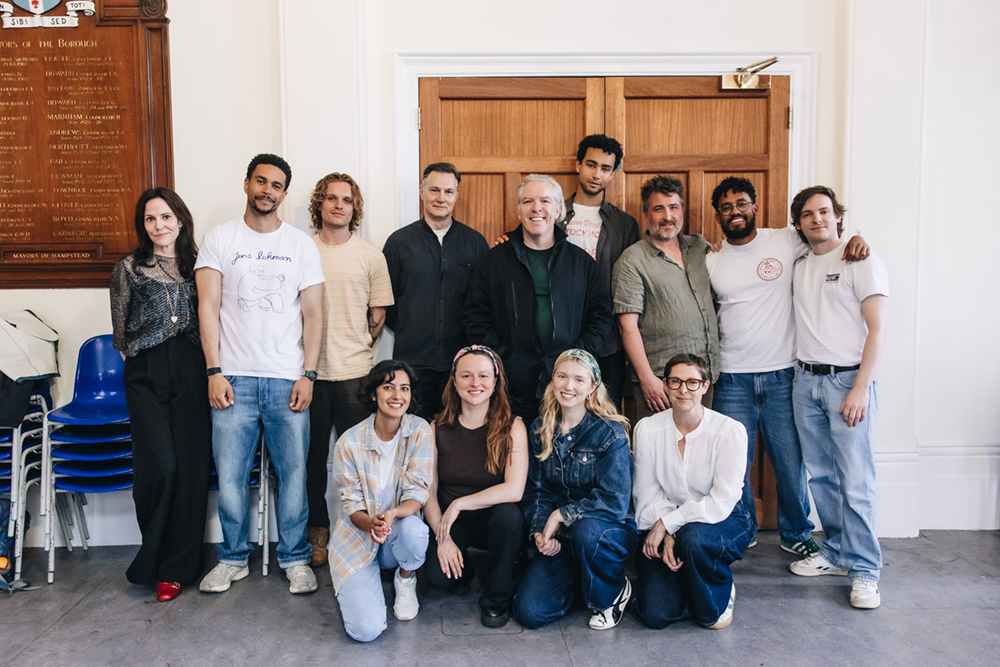
And the cast is truly starry: Mary-Louise Parker is known for the series Weeds and Angels in America, and in theatre she won a Tony Award for The Sound Inside. David Morrissey is a powerful British actor, familiar to audiences from The Walking Dead, Sherwood and State of Play, and on stage from Hangmen, Julius Caesar at Bridge Theatre and work at the National Theatre and Donmar.
Among the younger members of the ensemble is Tom Glynn-Carney, whom many know from House of the Dragon and the film Dunkirk, while theatre audiences remember him from The Ferryman and The Glass Menagerie. And, of course, Rosie Sheehy, a brilliant actress with two recent Olivier nominations for Guess How Much I Love You? and Machinal. And also the magnificent Archie Madekwe — you surely remember him from Saltburn, Gran Turismo and Midsommar. It looks as though The Oresteia is a tense, modern family thriller built on the bones of an ancient tragedy, with stars in the leading roles.
How the Other Half Loves
The Old Vic
103 The Cut, London SE1 8NB
An English farce — light, fast-paced and very actor-driven. A classic British comedy by Alan Ayckbourn about three married couples, two homes and the catastrophic power of a little lie. How the Other Half Loves is a play from 1969; it is one of Ayckbourn’s early comedies, and it has had a happy stage life: it was first staged in 1969 in Scarborough, and then in 1970 it was performed in London, where in the West End it ran for almost 1,000 performances.
At the centre of the plot are Fiona Foster and Bob Phillips, whom their spouses suspect of having an affair with each other. To get out of trouble, the characters drag the harmless Featherstone family into the story. Without wanting to, the Featherstones become an alibi, a smokescreen and the main accelerator of chaos. What emerges is not simply a farce about infidelity, but a very precise and Homerically funny comedy about marriage, class differences, self-deception and the way people desperately try to save face when everything is already going to hell.
As often happens at the Old Vic, the play is performed in the round — that is, the audience surrounds the stage on all sides. Interestingly, Ayckbourn wrote this text precisely for this kind of spatial game. Two flats, two realities and several lines of deception and misunderstanding exist almost simultaneously, and the comedy is born not only from the lines, but from the precise mechanics: who is standing where, who hears whom, who lies to whom, and who realises too late that they have ended up inside someone else’s family drama.
The director of the current iteration is Phillip Breen, a director with experience in Shakespearean plays and a strong comic sensibility. He has worked extensively with the Royal Shakespeare Company, directing The Merry Wives of Windsor, The Comedy of Errors, The Provoked Wife and The Hypocrite — in other words, he knows very well how to handle plays in which social satire, physical pace and human stupidity must work as a single mechanism. For How the Other Half Loves, he is a very suitable director: what is needed here is not simply “funny bustle”, but a perfectly constructed ensemble in which every pause, every entrance of a character and every thing left unsaid launches a new wave of disorder.
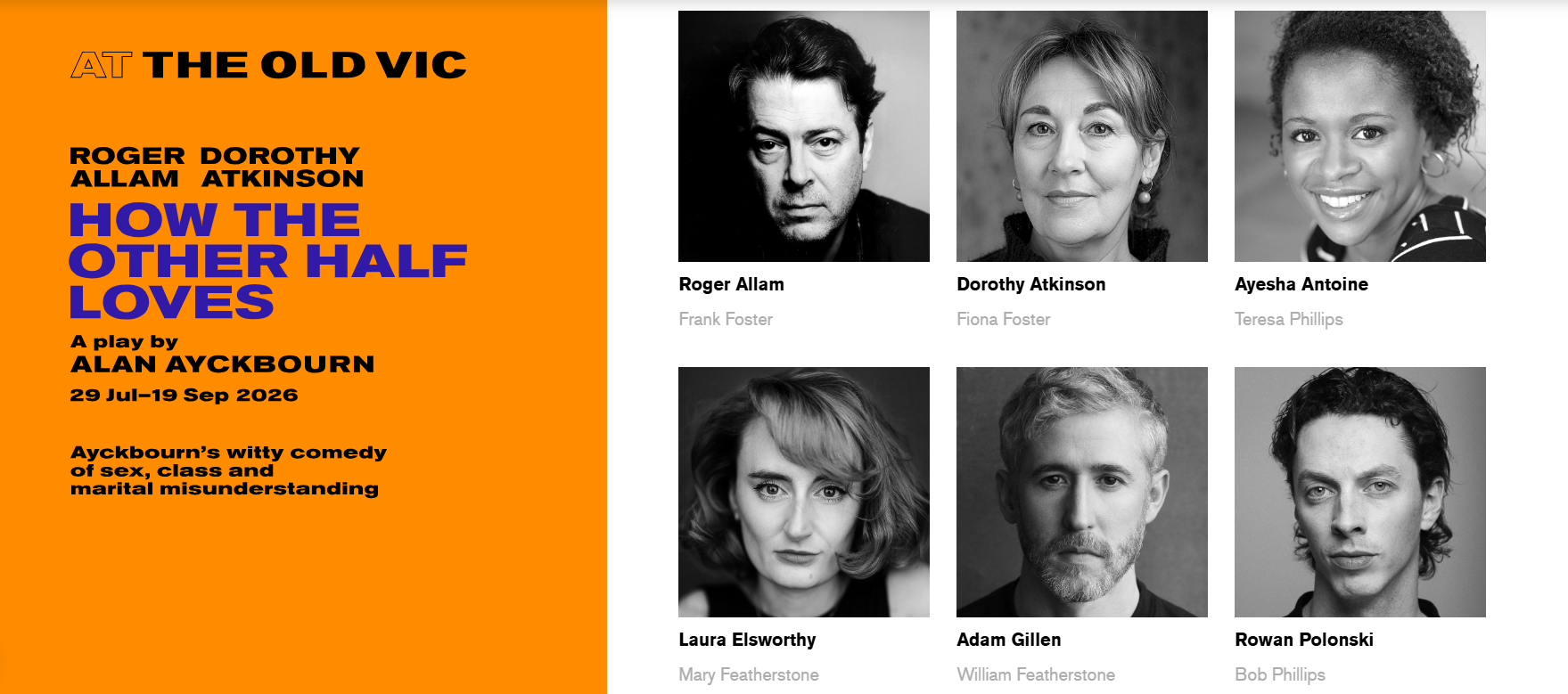
In the leading roles are Roger Allam and Dorothy Atkinson. Allam, who plays Frank, is one of the most recognisable British actors, winner of several Olivier Awards, known for Endeavour, The Thick of It, Les Misérables, The Tempest, Henry IV and many major theatre roles. Atkinson plays Fiona Foster; she is known for her work with Mike Leigh, including Mr Turner, as well as for Call the Midwife, Mum, Harlots and other screen roles. In short, a fabulous cast: not just a domestic comedy, but bright madness built on the contrast between outward respectability and inner panic.
Also appearing in the production are Ayesha Antoine as Teresa Phillips, Rowan Polonski as Bob Phillips, Laura Elsworthy as Mary Featherstone and Adam Gillen as William Featherstone.
Archduke
Royal Court
50-51 Sloane Square, London SW1W 8AS
The American playwright Rajiv Joseph, a finalist for the Pulitzer Prize and author of the famous play Bengal Tiger at the Baghdad Zoo, is deeply interested in stories where history, war, violence and absurdity collide with the most ordinary human life, with cosy, slightly boring routine. Archduke is his black historical comedy, whose world premiere took place in 2017 in Los Angeles, but the current production on the Royal Court stage is the play’s European premiere.
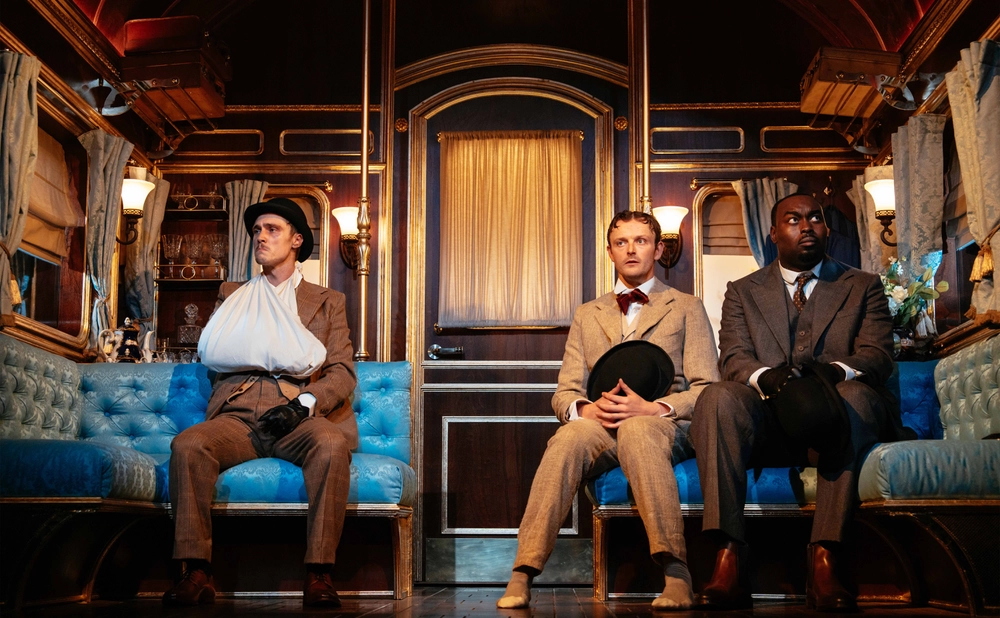
Several young, poor and terminally ill young men find themselves drawn into a terrible conspiracy that will lead to the assassination of Archduke Franz Ferdinand and become the cause of the First World War. Gavrilo Princip — played by Stanley Morgan — and his comrades are not heroic monuments of an era, but confused, hungry, vulnerable boys who are promised meaning, glory and a place in history. But most importantly — food!
The director of Archduke, Lyndsey Turner, is one of the strongest British directors, an Olivier Award winner, known for her work at the National Theatre, Almeida, Donmar and in the West End. She knows how to turn intellectual plays into funny and unsettling sketches that are deeply human and psychologically precise. How readiness to become a weapon in someone else’s hands is born out of humiliation, illness and emptiness — this is what the director reflects on in Archduke. This is not a dry reconstruction of the Sarajevo assassination, but a “fantasy” about radicalisation, nationalism and how easily young and unhappy people can be turned into God knows what. In the Royal Court production, visual scale also seems to play an important role: the set by Es Devlin, a superstar of design, resembles an enormous, eerie tunnel.
Archduke tries to tell us not only about the year 1914, but about any time when a desperate person can be seduced by the idea of a “great cause”. Among the actors are Chris Walley — familiar to audiences from The Young Offenders and his theatre work in The Lieutenant of Inishmore — Abraham Popoola — whom you surely remember from Shiver — and Marc Wootton, a comic actor with a substantial television and theatre career.
Trainspotting
Theatre Royal Haymarket
Haymarket, London SW1Y 4HT
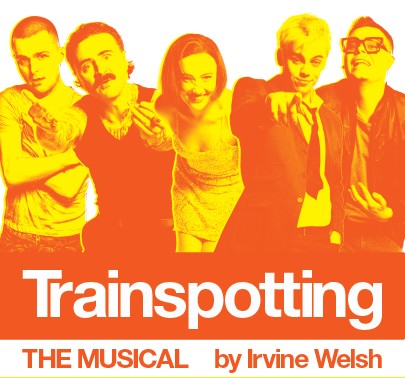
This is a new musical version of Irvine Welsh’s cult novel of the same name from 1993. A harsh, funny, dirty, very vivid story about young people in Edinburgh, about addiction, poverty, friendship, self-destruction and attempts to escape an endless hell. In 1996, Danny Boyle made the cult film based on it, with Ewan McGregor in the leading role. Trainspotting was first a 1993 novel, then a cult 1996 film directed by Danny Boyle, with Ewan McGregor as Renton.
The guys from a working-class background live on the edge — between addiction, friendship, rage, poverty, self-destruction and a desperate desire to break out somewhere, into some unknown proper life. The production becomes not simply a nostalgic return to the 1996 film and the famous “Choose Life” monologue — Renton’s scathing tirade about what society calls normal life: a job, a family, a mortgage, a television, consumption and the right decisions, which to the characters seem like just as much of a trap as addiction. In 2026, this is above all an attempt to hear the familiar story anew through today’s world: addiction has become less visible, but it has not disappeared; the feeling of powerlessness, social dead end and hunger remains, even if it is now hidden a little better than it was 30 years ago.
It is surprising, of course, that Trainspotting has been turned into a musical. You would think: death, violence, dirty humour, anti-glamour energy — and suddenly songs, a live band, the big West End. But this is precisely where the project’s audacity lies: it is not a “sweet musical based on a famous film”, but rather an anti-musical, using music as a way of making the material even louder, more physical and more dangerous. The production promises both new songs and classic tracks associated with the film.
Interestingly, Irvine Welsh himself is involved in creating the musical version — not as a distant “rights holder”, but as an author who is reassembling his own material together with musician Stephen McGuinness.
The director of the production is Caroline Jay Ranger, known above all for her work on commercial, highly audience-friendly musical theatre, including Only Fools and Horses The Musical; in other words, she has experience turning cultural material into a living stage form. The visual side is handled by set and costume designer Colin Richmond, and choreography by Christina Andrea.
In the leading role is Robbie Scott, for whom this is a West End debut: it is very symbolic that the central character is played not by a “big star”, but by a new young actor whom one can believe as a living, present-day desperate person… “from the lower depths”? What are you talking about, what lower depths! Familiar material turns into a story about everyone. Also appearing in the production are Sheridan Townsley, Kieran Andrew, Frankie O’Connor, Finlay Paul and Yana Harris. It seems this will be a show for those who love risky — almost punk! — musical theatre: loud, dirty, painful and clearly not designed for a cosy evening out.
Springwood
Hampstead Theatre
Eton Ave, London NW3 3EU
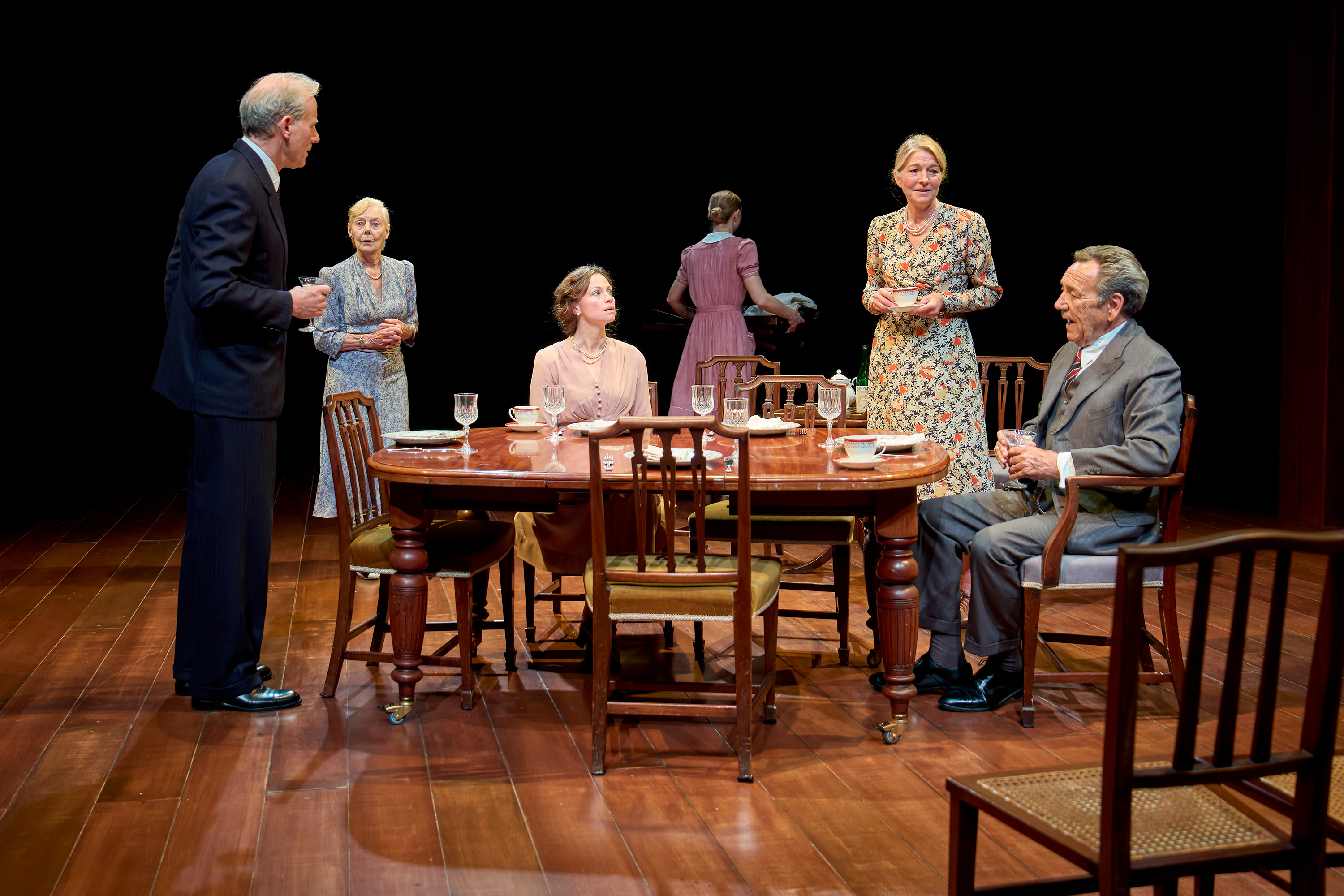
Richard Nelson, an American playwright and director, winner of a Tony Award and an Olivier Award, is known for plays in which big history becomes the background to the private lives of small people: family conversations, dinners, pauses, awkwardness, everyday details, chamber scenes through which politics, war and fear suddenly seep.
Springwood, a play based on the material of the film Hyde Park on Hudson, is written about a real historical meeting on which, in 1939, far more depended than might seem at first glance: King George VI and Queen Elizabeth travel to the United States to visit President Franklin Roosevelt and his wife Eleanor. This is the first visit of a reigning British monarch to America. Europe is already on the threshold of a great war, Britain desperately needs support, and the play speaks to us through a domestic, intimate situation: a weekend in a country house, thin walls, social awkwardness, fears, secrets and the famous picnic of the first persons with hot dogs and beer.
A combination of historical scale and intimate human perspective, Springwood does not look like a ceremonial drama about “great people”, but tells us about their doubts, complexes, bodily vulnerability, family troubles and cultural differences. For Springwood, this is an especially precise path of storytelling, because diplomacy here depends not only on speeches, but also on human tact.
At the centre of the production are Robert Lindsay as Franklin Roosevelt — he is a BAFTA, Tony and two-time Olivier-winning actor whom many know from the series My Family, while theatre audiences know him from Prism, Anything Goes, Dirty Rotten Scoundrels and the big West End — and Jemma Redgrave as Eleanor Roosevelt, an actress from the famous Redgrave acting dynasty, familiar to viewers from Silent Witness, Doctor Who, Grantchester and Howards End. The royal couple are played by Andrew Havill and Rebecca Night. Also appearing in the production are Harry Anton, Teresa Banham, John Mackay, Bryony Miller, Eileen Nicholas and Rachel Pickup.
The Producers
Garrick Theatre
2 Charing Cross Rd, London WC2H 0HH
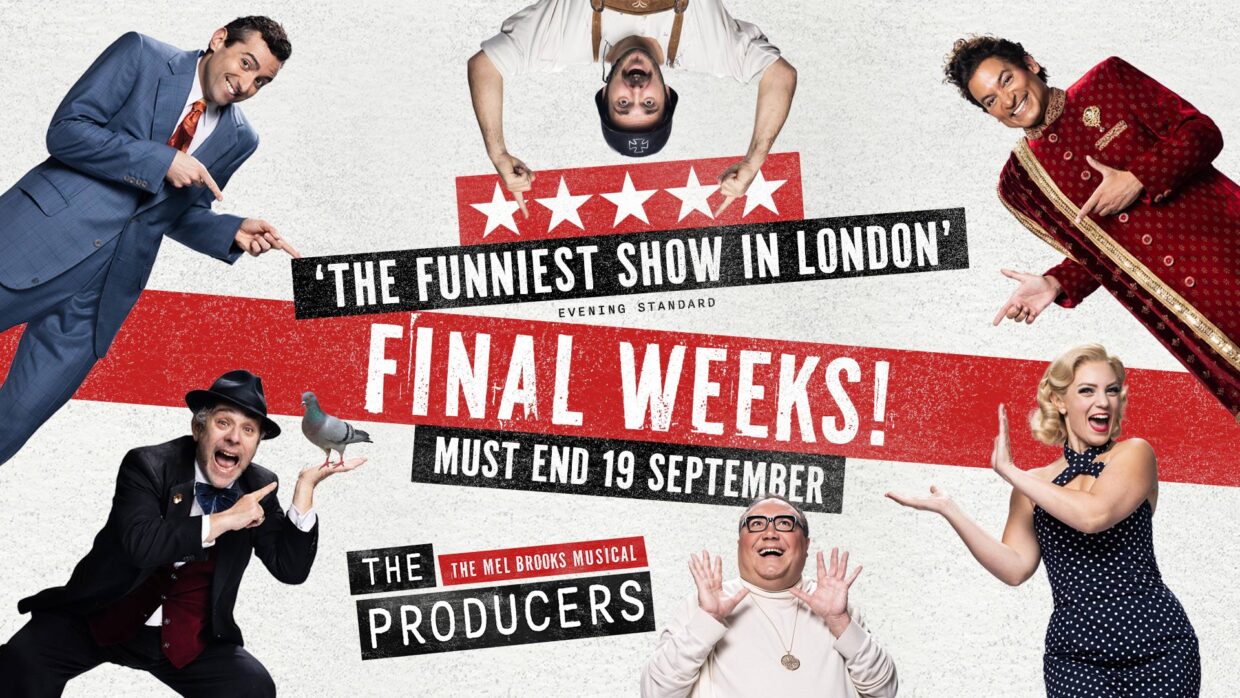
Final weeks of the run! Hurry! Hurry — whether you have already seen it, and especially if you have not! The legendary musical by Mel Brooks and Thomas Meehan about two theatrical adventurers who come up with what seems to them the perfect scam: to stage a deliberately disastrous show, raise too much money from investors, close after the first night and keep the profit for themselves. The producer Max and the accountant Leo find “the worst play”, “the worst director” and do everything as badly as possible — but, of course, the catastrophe does not go according to plan; as a result, their show becomes incredibly successful, and the audience of their scam gets an insane theatrical farce about greed, show business and the way Broadway can turn any nonsense into a number with glitter and feathers.
This production has already made its way from Menier Chocolate Factory to the West End and is now playing its final dates at Garrick Theatre, so if you want to catch precisely this version — with its current cast, pace, reviews and already warmed-up reputation as one of the funniest shows in London — you need to hurry now.
This version was created by the playwright and director, Tony winner Patrick Marber. And of course, he treats the musical not as a museum-level classic, but as a living comedy: the production may seem to rest on old-fashioned Broadway scale, but its pace, acting precision and degree of madness feel very contemporary. Also on the team are choreographer Lorin Latarro, set designer Scott Pask and costume designer Paul Farnsworth.
In the leading role of Max is Andy Nyman, an actor with a powerful theatre and screen career, known for Ghost Stories, Fiddler on the Roof, Hangmen, as well as for film and television. Leo is played by Marc Antolin — an actor with a strong musical-comedy nature, and it was for this very role in The Producers that he won the Olivier Award in 2026. Their duet is important: Max is pure cynicism and nerve; he is a marvellous theatrical predator. Leo is a cocktail of neurosis, accountant’s panic and secret dreams of the stage.
Also in the cast are Trevor Ashley as Roger de Bris, Raj Ghatak as Carmen Ghia, Harry Morrison as Franz Liebkind and Joanna Woodward as Ulla. In short: if you need an evening of loud laughter, indecent sparkle and good old Broadway chaos, this is one of those shows you should catch before it closes.
Sinatra The Musical
Aldwych Theatre
49 Aldwych, London WC2B 4DF
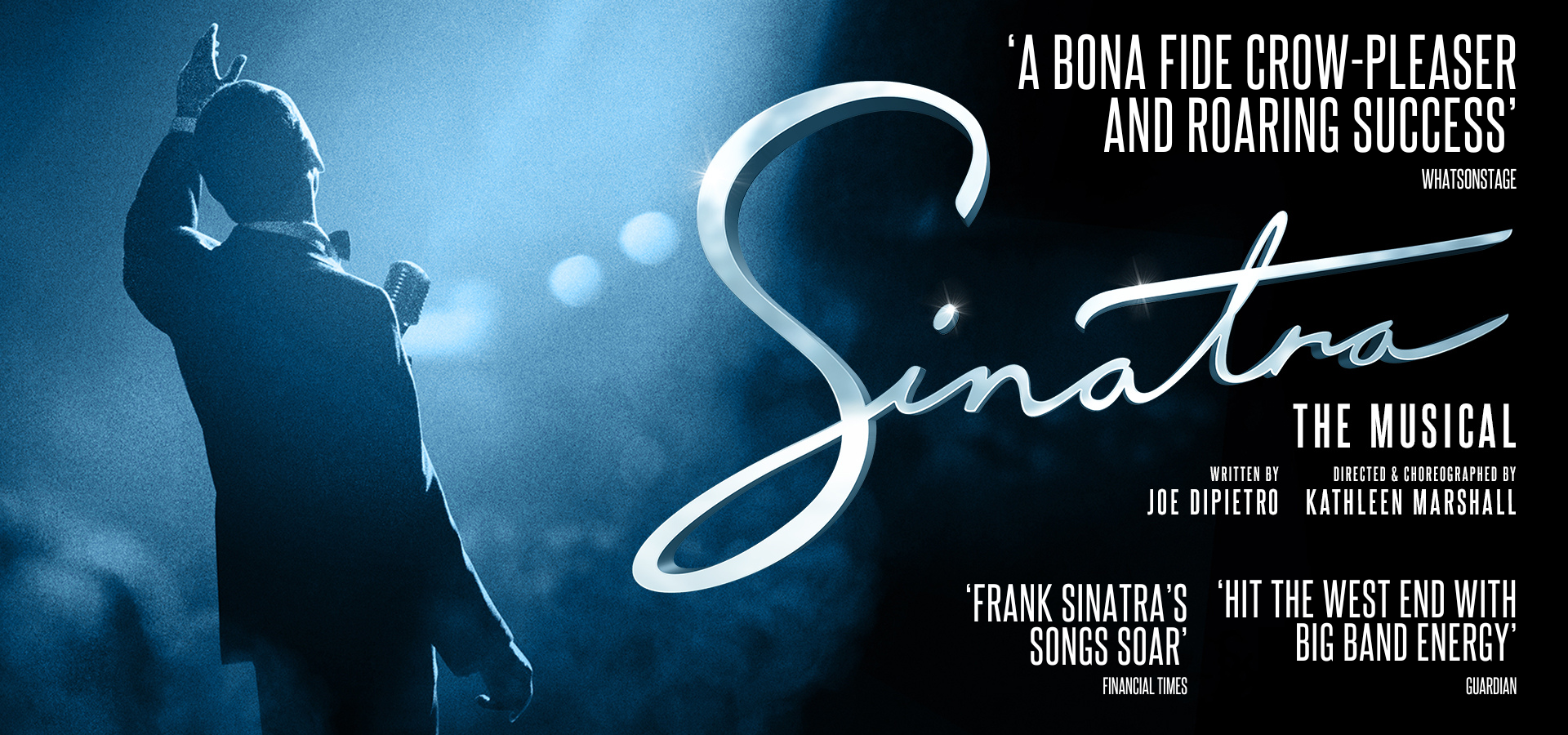
This is a major biographical musical about Frank Sinatra, not simply a “concert of favourite hits”. The narrative begins in 1942, when 27-year-old Sinatra steps onto the stage of New York’s Paramount Theatre and suddenly becomes the voice of a generation: crowds of female fans await him, fame crashes down upon him, he feels the pressure of the press, but he also has a family, ambitions and the wild feeling that the whole world is now looking only at him. He moves through his early triumph, personal mistakes, a career crisis and a turbulent romance with Ava Gardner — towards the moment when the legend could have been knocked from its pedestal.
It is interesting that this is an officially approved story: among the producers is Tina Sinatra, Frank Sinatra’s daughter, and the project clearly seeks to show not only the smooth myth of the genius with the velvet voice, but also the ordinary man named Frank. The production features more than twenty of his songs, including Come Fly With Me, That’s Life, One For My Baby and The Best Is Yet To Come, and they are played by a live orchestra. This is not a chamber drama about a star, but a magnificent, chic, dazzling and — whatever other superlative epithets you may wish to choose — production: costumes, choreography and the recognisable standards of old Hollywood glamour.
The book was written by Joe DiPietro — a two-time Tony winner and author of the musical Memphis. The director and choreographer is Kathleen Marshall, one of the leading figures in American musical theatre, winner of an Olivier and three Tony Awards.
Frank Sinatra is played by Joel Harper-Jackson — an actor and singer who is very well known in London musical theatre. He does not parody Sinatra, but captures his manner, voice and the inner vulnerability of a man whom the public is used to seeing as an icon. Ana Villafañe plays Ava Gardner, and her Ava is not a femme fatale, but a force that simultaneously seduces, destroys and reflects Sinatra’s own dangerous fame.
The role of his first wife Nancy is played by Phoebe Panaretos, and Sinatra’s mother is played by Jenna Russell — one of the most respected British actresses in musical theatre and an Olivier winner. Sinatra The Musical is a show for those who want not only to hear great songs, but also to try to imagine how, in place of a living, contradictory, flawed human being, a myth suddenly appears. It is a show about fame, love, failure, return — and about how real talent can survive all scandals, marriages, falls and even defeat time.