Shakespeare and Company: Shakespeare, Sylvia Beach and a Table with a View of Notre-Dame

How can Shakespeare help you explore Paris? Where can you get a truly delicious cup of coffee with a view of Notre-Dame? And is there a quiet, peaceful spot in the very heart of the city’s hustle? The answer to all these questions is the Parisian bookshop Shakespeare and Company! Let’s go inside together…
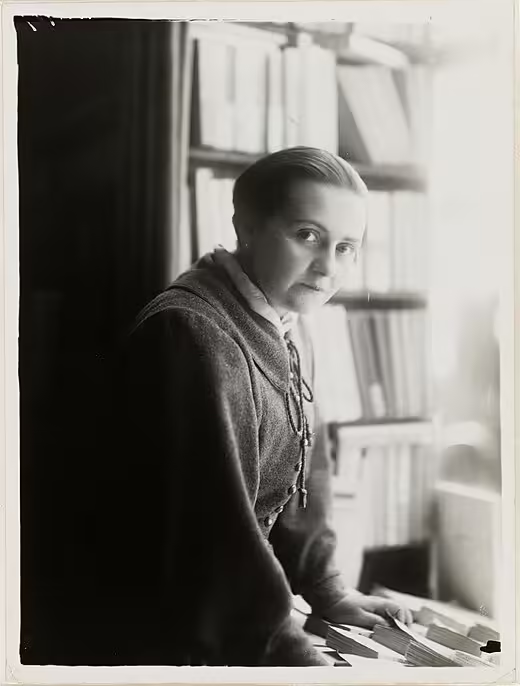
Two remarkable women — Sylvia Beach and Adrienne Monnier — first met in Paris in 1917. Two years earlier, Adrienne Monnier had opened La Maison des Amis des Livres (The House of the Friends of Books) on the Rue de l’Odéon in the 6th arrondissement. In 1919, inspired by her example, Sylvia Beach opened a bookshop on the Rue Dupuytren. In 1921, the shop moved to larger premises on the same Rue de l’Odéon. Sylvia would later say that she had seen the name “Shakespeare and Company” in a dream.
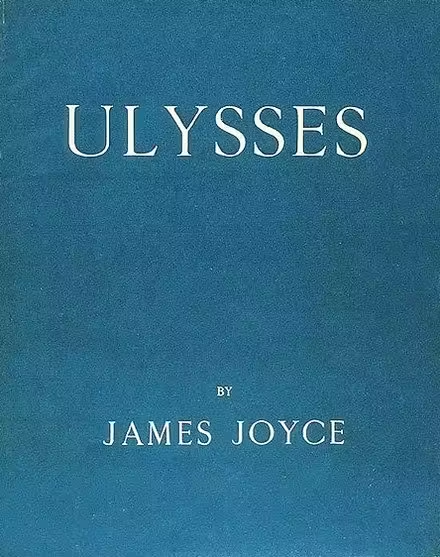
Five years later, on February 2, 1922 — James Joyce’s birthday — Sylvia received the first three copies from the printer of Ulysses: a novel banned by censors in Great Britain and the United States, a novel that critics called The former’s Ulysses is likened to ‘a heap of dung, crawling with worms, photographed by a cinema apparatus through a microscope ” Virginia Woolf wrote of the book: “Ulysses was a memorable catastrophe — immense in daring, terrific in disaster.”
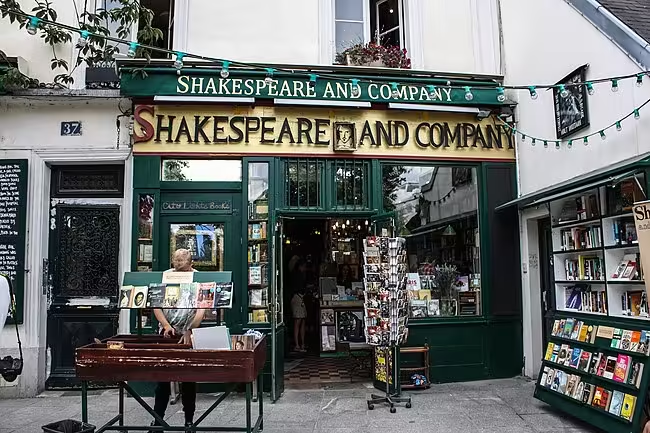
But all these events shaking the literary world came later. For now, let us return to the Rue de l’Odéon. Sylvia Beach had made real the dream of many writers and their patrons: she gave those who write for a living a way not to have to toil for bread. “A socialist utopia masquerading as a bookstore,” George Whitman would call it years later. Shakespeare and Company became a symbol of the unstable world of the so-called Lost Generation (génération perdue):
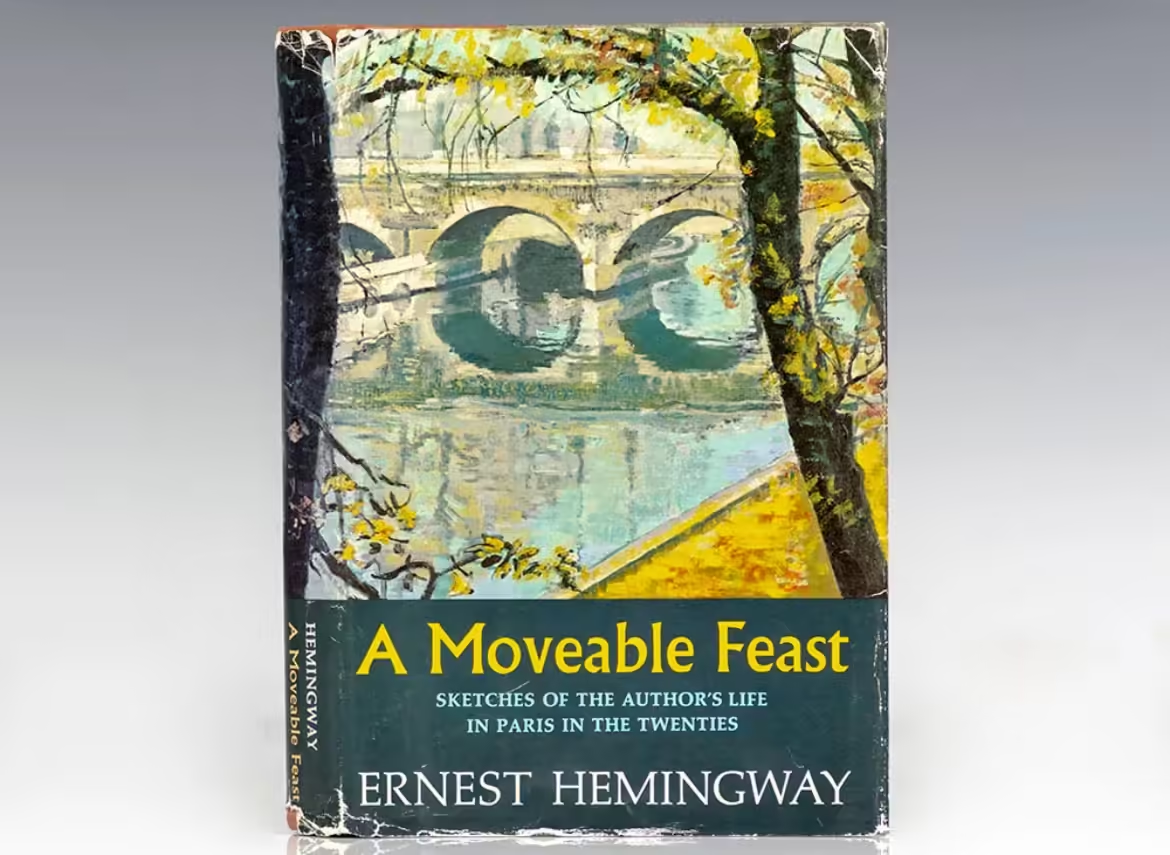
“It was when we had come back from Canada and were living in the rue Notre-Dame-des-Champs and Miss Stein and I were still good friends that Miss Stein made the remark about the lost generation. She had some ignition trouble with the old Model T Ford she then drove and the young man who worked in the garage and had served in the last year of the war had not been adept, or perhaps had not broken the priority of other vehicles, in repairing Miss Stein’s Ford. Anyway he had not been sérieux and had been corrected severely by the patron of the garage after Miss Stein’s protest. The patron had said to him, ‘You are all a génération perdue.”That’s what you are. That’s what you all are,’ Miss Stein said. ‘All of you young people who served in the war. You are a lost generation.” (Ernest Hemingway, A Moveable Feast)
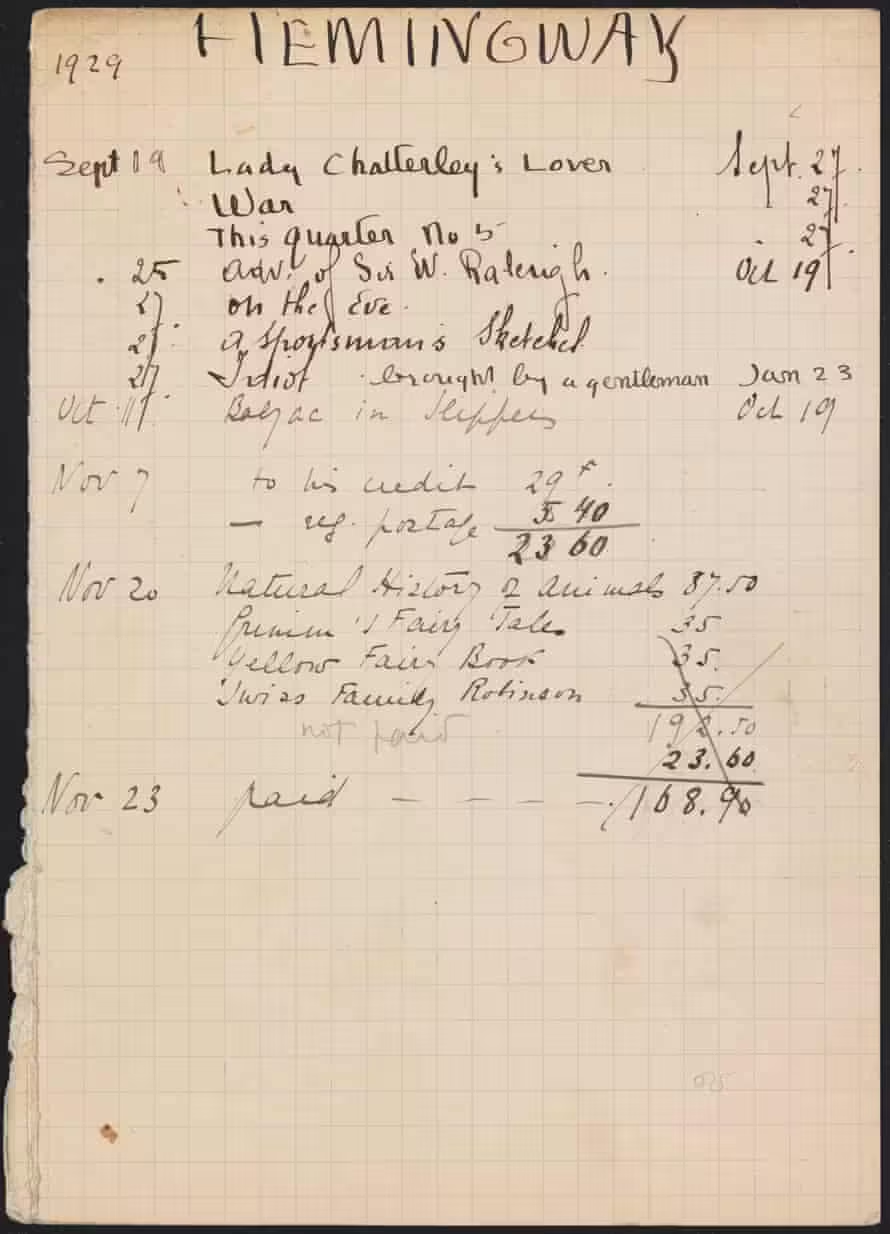
The bookshop witnessed the interbellum years – the time between two wars, after the First and before the Second. Books were expensive and the bookshop gradually evolved into a library where patrons paid a subscription fee. Sylvia called her subscribers bunnies – from the French abonné (subscriber). She was meticulous and thorough in her record-keeping and all the library cards, letters and documents have survived to this day.
Ernest Hemingway describes his encounter with Sylvia in the chapter “Shakespeare and Company” in A Moveable Feast:
“I was very shy when I first went into the bookshop and I did not have enough money on me to join the rental library. She told me I could pay the deposit any time I had the money and made me out a card and said I could take as many books as I wished. There was no reason for her to trust me. She did not know me and the address I had given her, 74 rue Cardinal Lemoine, could not have been a poorer one. But she was delightful and charming and welcoming and behind her, as high as the wall and stretching out into the back room which gave onto the inner court of the building, were the shelves and shelves of the richness of the library. I started with Turgenev and took the two volumes of A Sportsman’s Sketches and an early book of D.H. Lawrence, I think it was Sons and Lovers, and Sylvia told me to take more books if I wanted. I chose the Constance Garnett edition of War and Peace and The Gambler and Other Stories by Dostoyevsky.” (Ernest Hemingway, A Moveable Feast)
Later in the book, he says of the bookshop’s owner: “No one that I ever knew was nicer to me.”
During the German occupation of Paris, the shop did not last long. Sylvia Beach was forced to close it in 1941 after she refused to sell a Nazi officer the last remaining copy of Joyce’s Finnegans Wake.
In 1951, the spirit of Shakespeare and Company was reborn in a new bookshop opened by George Whitman — grandson of Walt Whitman — on the opposite bank of the Seine. Its original name was Le Mistral, but Sylvia Beach later transferred to him the rights to the name Shakespeare and Company. It is open to this day and it is the most welcoming and peaceful bookshop in the heart of Paris.
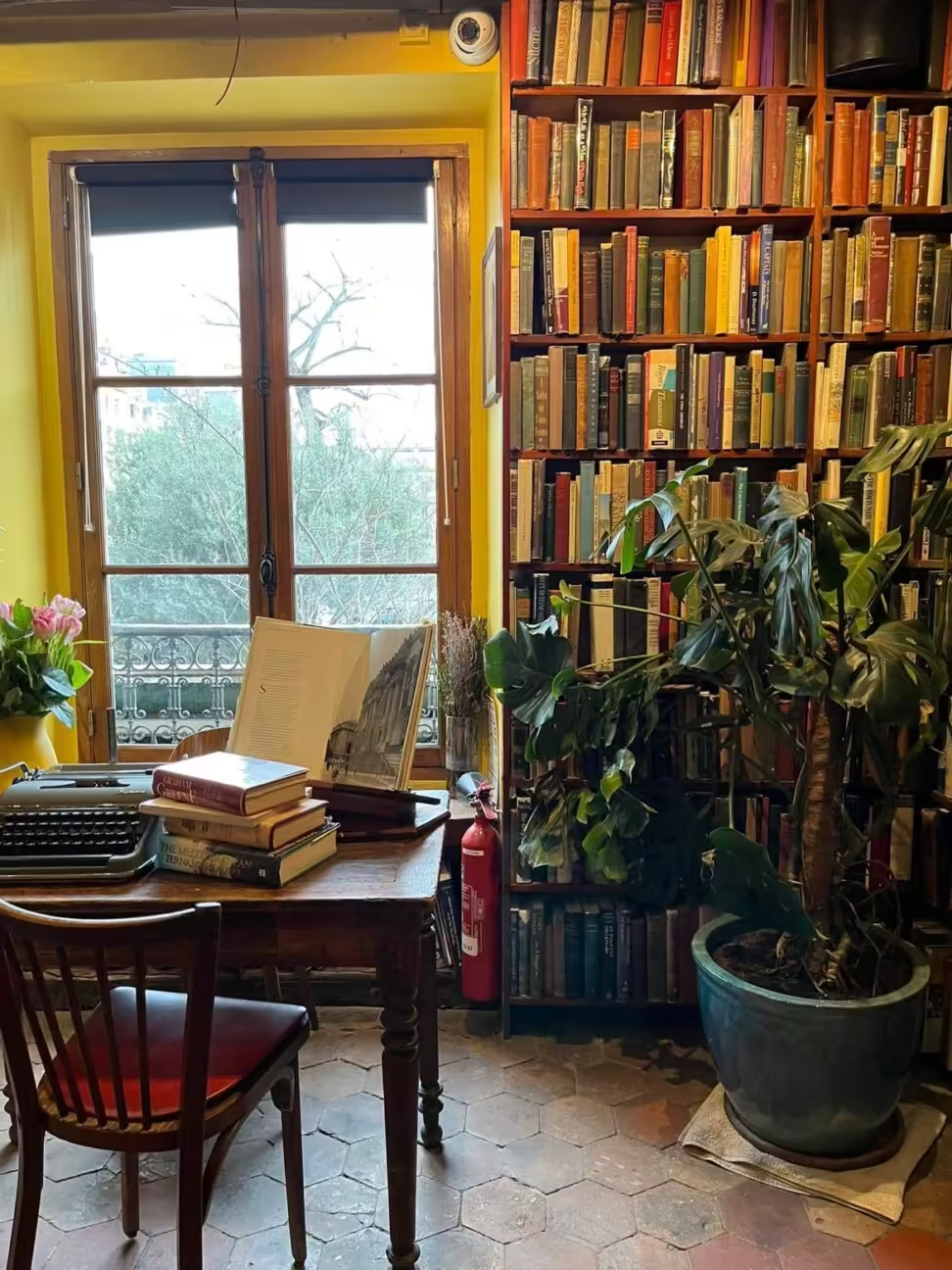
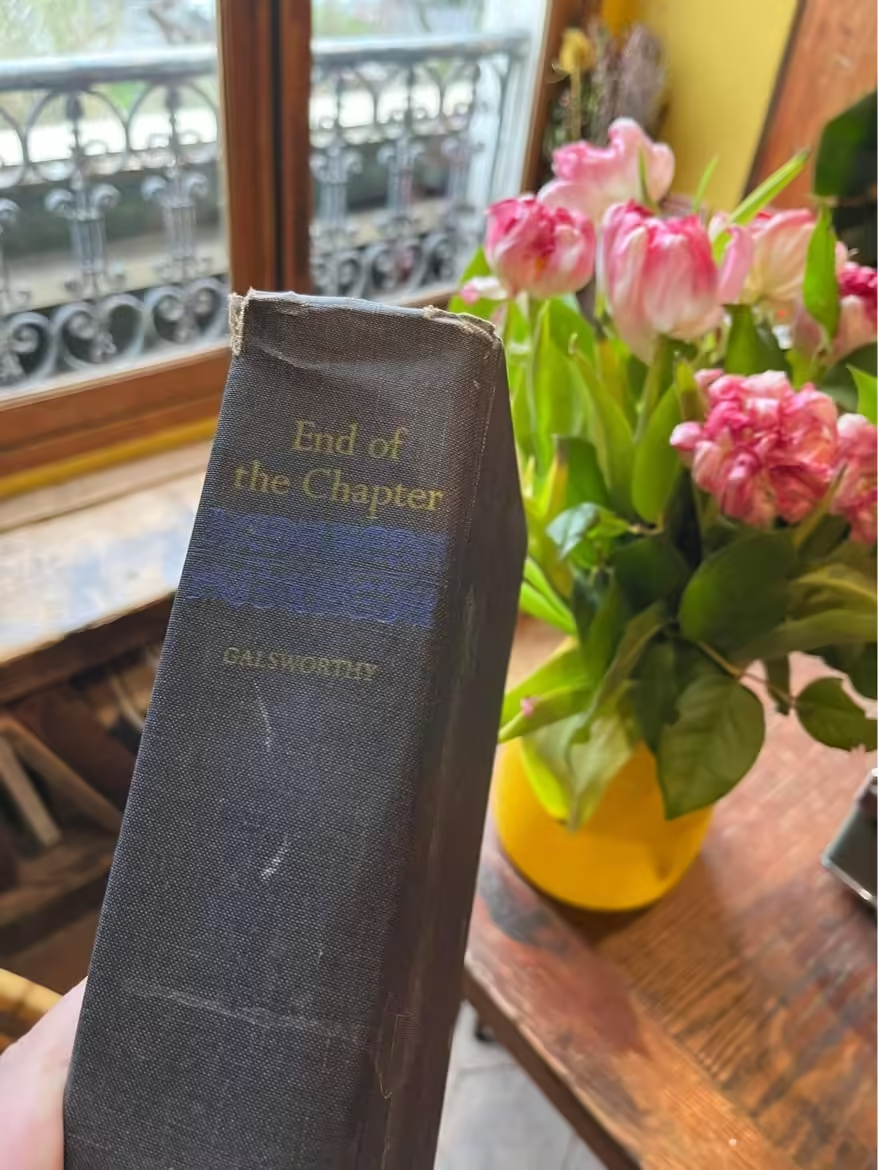
Shakespeare and Company comprises three parts: the main bookshop where the second floor has a “writer’s corner.” No talking or taking photos is permitted there, but you are welcome to read any of the books or even to write some of your own (there is no shortage of inspiration). The second door to the left leads to a secondhand bookshop. Pick up a first edition of Andersen’s fairy tales and leaf through it, it is well worth your while. The third part is the café. Wooden benches, the finest cappuccino in Paris, a charming little selection of literature in the tiny bathroom and a view of Notre-Dame. 35 Rue de la Bûcherie… And a note from me (your author) tucked inside a Galsworthy novel. I won’t say which one.