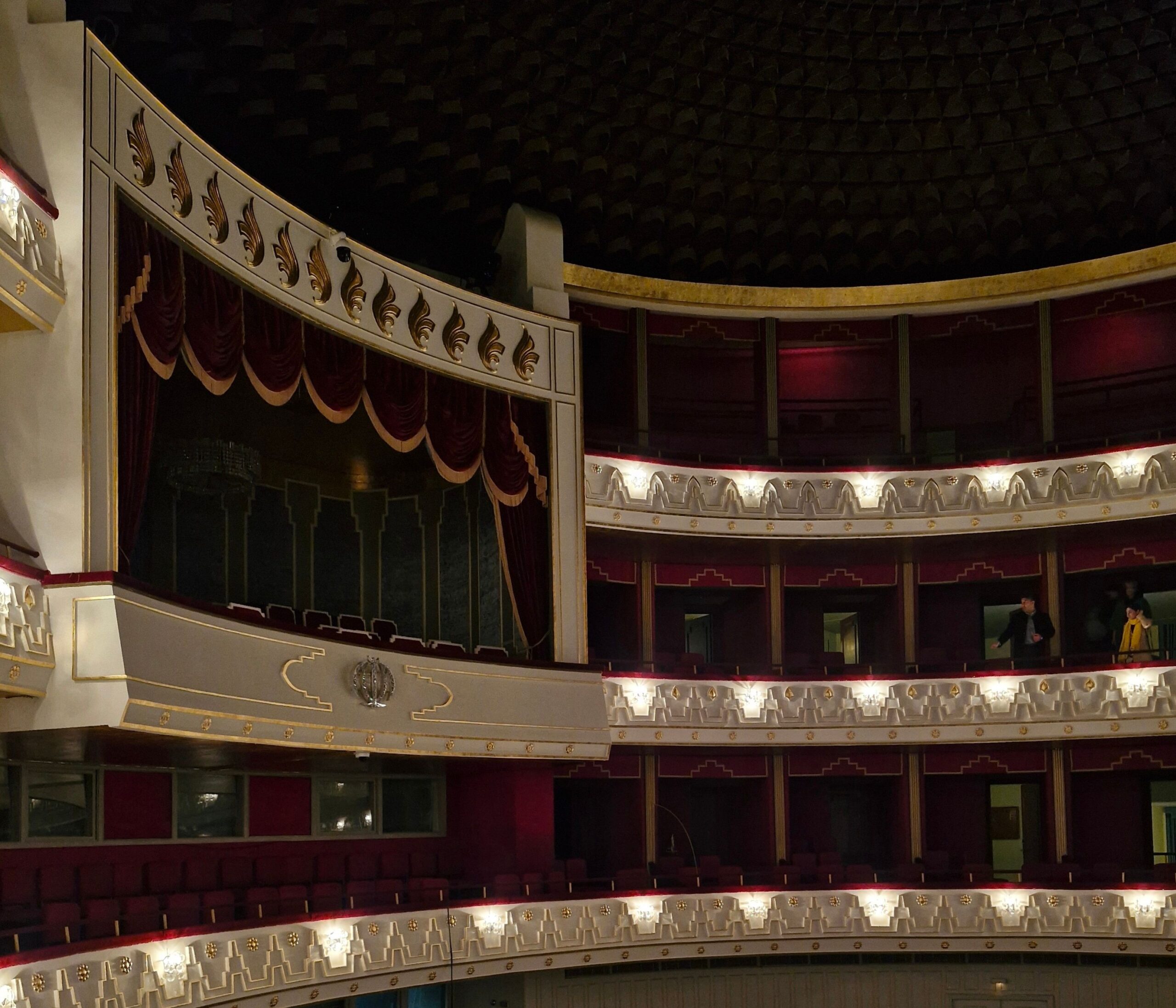
What a twist: Musicals in October

Autumn, they say, is depressing — but not in London. First of all, it is beautiful. And secondly, after a very relative summer lull, theatre life is exceptionally interesting again. There may be rather a lot of musicals here, but they seem to be worth it. And under the spotlights — stars of Stranger Things!
Hay Fever
Wyndham’s Theatre
Charing Cross Rd
London WC2H 0DA
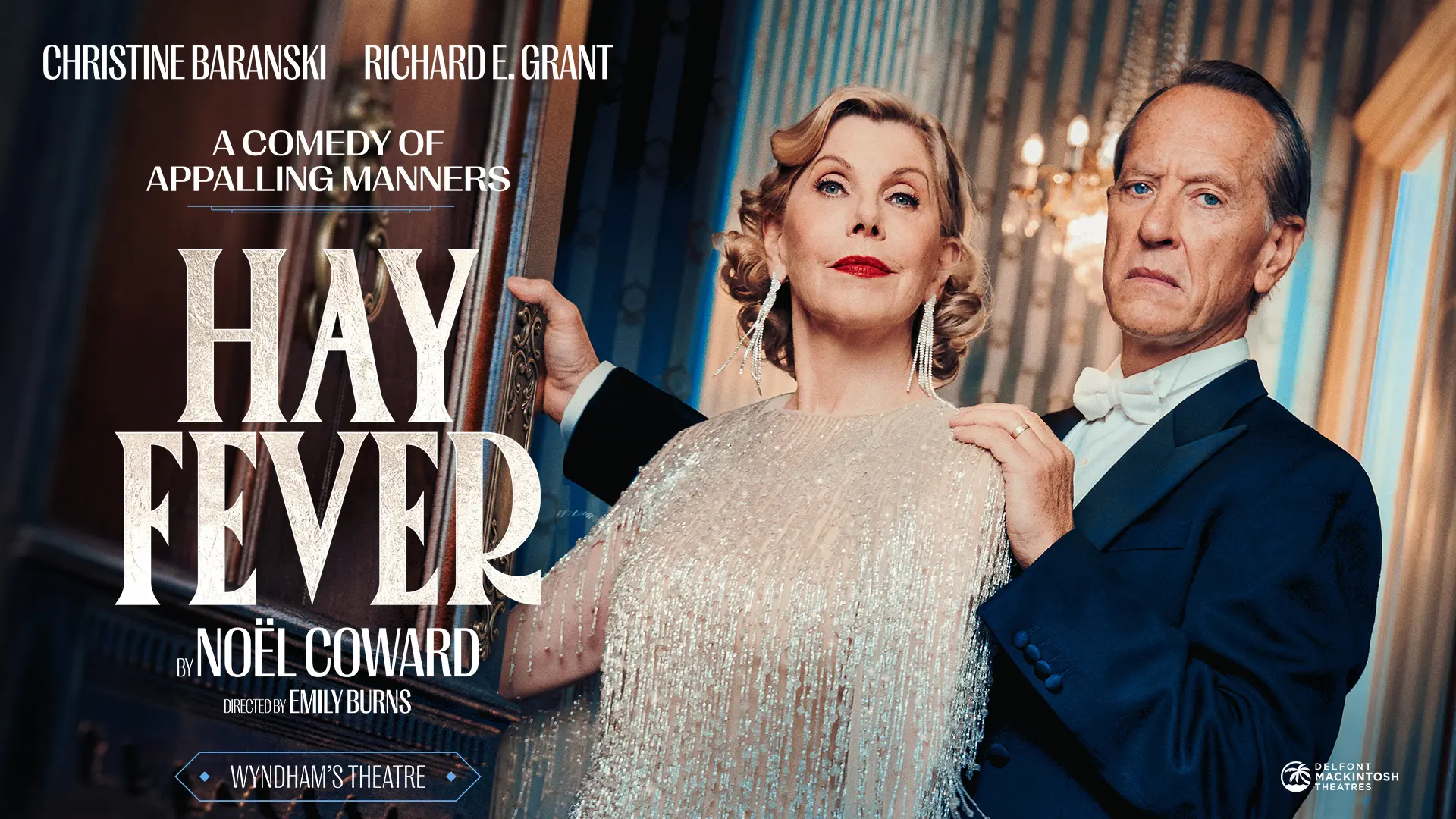
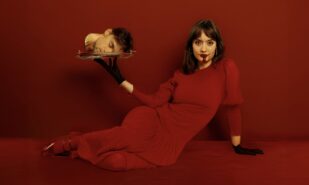
Spending a weekend with an artistic family can be considerably more dangerous than staying at home! Hay Fever is one of Noël Coward’s most biting comedies. He wrote the play at the beginning of his meteoric career, and it was first staged in the West End in 1925. Even then, it had everything that would come to define his signature style: impeccably constructed rhythm, sparkling humour and merciless observations of human flaws. Coward’s characters, charming and dazzlingly sophisticated, are capable of turning bad behaviour into a kind of art. Hay Fever is a comedy about people who are absolutely convinced that everyone around them will be delighted to serve as extras in their show.
Former actress Judith Bliss is played by Christine Baranski, making her West End debut in the role. Her partner is Richard E. Grant, returning to the London stage after a twenty-year break. Together they play a married couple for whom life itself has long since become a performance, while guests exist largely to provide an audience.
The action unfolds in the Blisses’ country house. Judith has recently left the stage and already desperately misses the spotlight and applause, while her husband David is a writer who prefers his own novels to the reality around him. Sorel and Simon, their grown-up children, are every bit as self-absorbed as their parents. And then — oh-oh-oh! — each of the four, without thinking to warn the other three, invites a guest for the weekend. The holiday turns into a nightmare: the hosts flirt, quarrel, make scenes and invent games whose rules only they understand. The Blisses notice neither their guests’ shock nor the chaos — for this family, chaos is simply their natural habitat.
Hay Fever is directed by Emily Burns, known for her recent production of Dear Octopus at the National Theatre and Jack Absolute Flies Again, based on Sheridan’s The Rivals. She treats Coward’s play, so dearly loved by British theatre, with great tenderness. There is no forced modernisation here: the dazzling elegance and theatrical artificiality remain firmly in place. The luxurious country-house interior of the Bliss home was designed by Frankie Bradshaw, who previously worked with Burns on Dear Octopus. The more immaculate the room, it seems, the more obvious the emotional mess of its inhabitants.
Christine Baranski, winner of two Tony Awards and familiar to a wide audience from The Good Wife, The Good Fight and The Gilded Age, plays an actress who has absolutely no intention of ever ceasing to be one. Every pause, grievance or romantic gesture instantly acquires the scale of a second-act finale — which, in the context of ordinary life, is wildly and hilariously funny. Richard E. Grant, as the self-satisfied novelist, matches her perfectly. Take away their ability to live permanently as though under stage lights, and you suspect they might simply disappear.
A strong ensemble surrounds Baranski and Grant. Ophelia Lovibond plays the Blisses’ daughter Sorel, while Will Close plays Simon. The witnesses to — and victims of — the family theatre include Nancy Carroll, Charles Edwards, Ash Hunter and Lucy Karczewski.
Affluenza
Riverside Studios
101 Queen Caroline St
London W6 9BN
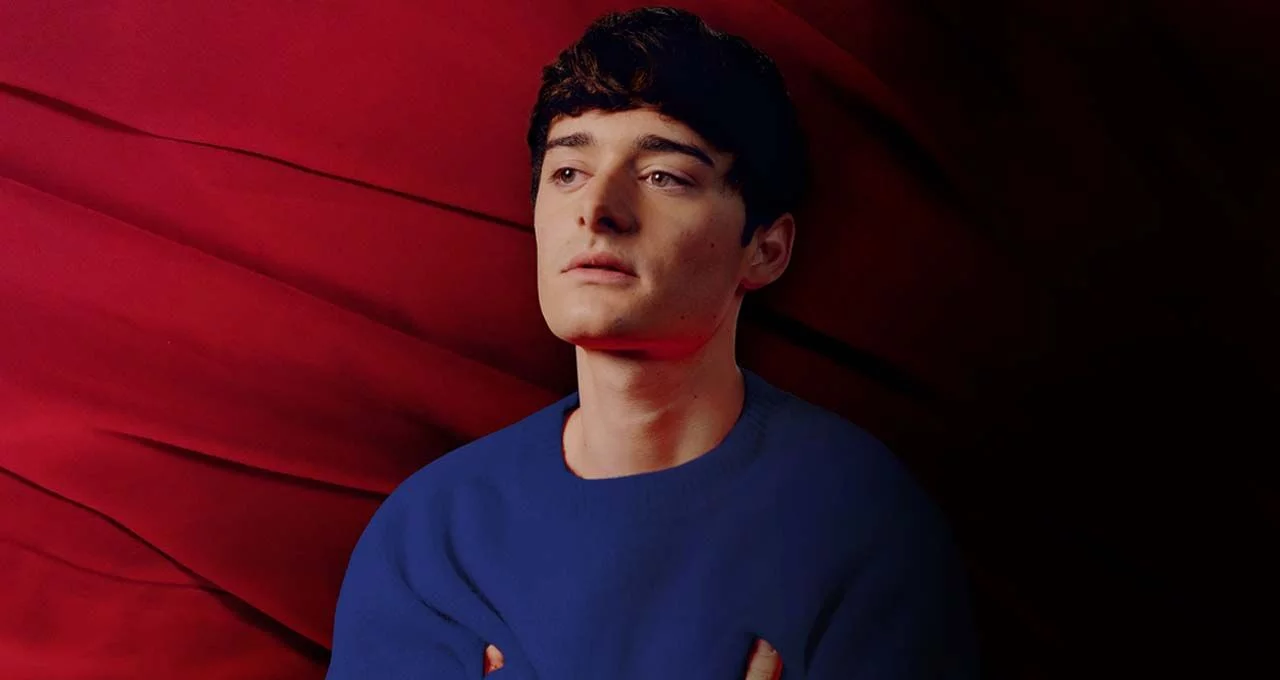
This is the world premiere of a new play by American playwright and director Andy Sandberg. Wealth, privilege and the ability of money to alter the measure of responsibility are difficult themes, but exceptionally timely ones. The play is based on real events from 2013. Sixteen-year-old Texan Ethan Couch, while under the influence of alcohol, caused a crash in which four people were killed.
In court, a psychologist for the defence argued that the teenager had grown up without boundaries or any understanding of consequences because of his parents’ wealth; it was then that the word “affluenza” — a combination of affluence and influenza — reverberated across America, becoming shorthand for this peculiar “disease of wealth”. Although the term is not a medical diagnosis, Couch received ten years of probation rather than a prison sentence, and the case became one of America’s best-known debates about privilege and inequality before the law. Sandberg does not put the Couch case itself on stage, however, but uses it to ask where a child’s guilt ends and the responsibility of parents and the wider system begins. How are people raised in such circumstances supposed to distinguish personal freedom from an absence of consequences? And do they even think about it — or is thinking itself a privilege reserved for poorer people?
Sandberg is interested not in the guilt of one individual, but in the whole system: the parents of the young offender, the lawyers, the victims. What kind of society allows economic advantage to become a form of moral immunity? Writer and director Andy Sandberg has staged Straight, Application Pending, Craving for Travel and the historical drama Operation Epsilon Off-Broadway in the States, and is also known to British audiences for productions of Shida and Operation Epsilon. At 25, incidentally, he became the youngest Tony-winning producer at the time, receiving the award for the Broadway revival of Hair. At Riverside Studios he serves as artistic director of the new Mainstage Season, and Affluenza is his first production there. The play opened the Mainstage 2026/27 season and created such interest that its original run was extended by a week even before the official premiere. In the leading role is Noah Schnapp, star of Stranger Things, appearing on the professional stage for the first time.
Schnapp plays the teenager at the centre of the crash and subsequent proceedings — and also someone else. Before the premiere, Schnapp hinted that this second role becomes an important part of the production and should therefore remain a surprise for the audience.
The parents are played by Juliet Cowan and Donald Sage Mackay. Rupert Young takes the stage as the young lawyer Brad. The structure of the production allows several performers to move between roles, while its mosaic of characters and actors expands the story into a discussion of an entire social system. Affluenza is not simply a sharp social satire about spoiled rich people, but a reflection on the responsibility of the environment that creates them.
RENT
Tom Stoppard Theatre
St Martin’s Ln
London WC2N 4BG

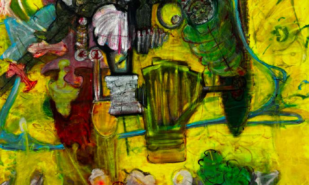
Rent is not only something you pay — it is also the title of Jonathan Larson’s musical. Its characters are poor young artists living in rented New York flats, unable or unwilling to pay for their homes and existing in a state of constant financial instability. Who, then, can afford to live, create, love and occupy space in a city where everything has a price? Thirty years on, RENT is still more than a monument to the AIDS era and New York’s artistic counterculture. It is a musical about people who know that time may be short and who therefore insist on the right to love, make mistakes, create and live without delay.
Jonathan Larson’s musical is about living “on credit”, about people who have little money and, for some of them, little time left to live. In such circumstances, is there any point in postponing life until later? Rent is based on Puccini’s opera La Bohème: Larson moves the story to late-twentieth-century New York. Parisian garrets become the East Village, tuberculosis becomes the HIV/AIDS epidemic, while Puccini’s artists become filmmakers, musicians, dancers and performers trying simultaneously to pay the rent, make art and hold on to one another. “Rent” is also the price one pays for the right to live on one’s own terms. Larson posthumously received the Pulitzer Prize for Drama for RENT — he died just before the musical’s premiere in New York.
And so, thirty years after its premiere, RENT returns to the West End once again — this time in a new production by Luke Sheppard at the Tom Stoppard Theatre. The production has already been extended until 27 March next year.
Sheppard staged RENT at Hope Mill Theatre in Manchester in 2020, during the pandemic. That production managed only a handful of performances before another lockdown, after which the show was streamed online in recorded form, before returning to the stage in 2021. This autumn it has been revived in the West End, finally receiving both a full run and the scale it deserves.
The plot covers a year in the life of a group of friends. Mark, like a true chronicler, films everything that happens around him. His neighbour Roger, an HIV-positive musician, dreams of writing at least one real song before it is too late. Then there is his beloved Mimi, a dancer who is also living with HIV. Their friends add to an endless cycle of attraction, jealousy and quarrels. Hanging over the whole group is Benny — their former friend, now their landlord. Benny embodies precisely the kind of prosperity against which these desperate artists rebel.
Mark is played by Gaten Matarazzo, Dustin from Stranger Things, making his West End debut. It is worth remembering that he is far from a newcomer to the stage: as a child he appeared on Broadway in Les Misérables and Priscilla, and later in Dear Evan Hansen, Sweeney Todd and others.
Some Woman
National Theatre
Southbank
London SE1 9PX

Some Woman is the world premiere of a play by Helen Edmundson. Edmundson was born in Liverpool in 1964 and studied drama at the University of Manchester. She began her career as an actress, and after university worked with the women’s political agit-prop troupe Red Stockings, creating cabaret, songs and sketches on feminist and political themes. It was for Red Stockings, in 1988, that Edmundson wrote her musical comedy Ladies in the Lift, which marked the beginning of her career as a playwright. Some Woman is her new original play — not an adaptation! — after Queen Anne in 2015, and her first work for the National Theatre since the stage version of Small Island. A significant part of Edmundson’s career has been devoted to adaptations, from Jamila Gavin’s Coram Boy to Andrea Levy’s novel Small Island. So the new NT production is also a rare chance to see Edmundson working not from someone else’s literary material, but from a story entirely of her own.
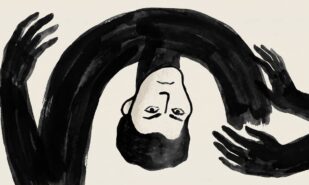
And at the centre of that story is Julie Robson, a woman used to being invisible both at home and at work, until something happens to her in the most ordinary of circumstances. What exactly happens on the railway platform?.. But this is not about the heroic transformation of an ordinary woman into an activist. It is about the price of refusing the familiar role of invisibility. The title Some Woman sounds almost dismissive: “some woman”, one of many, an extra, a pawn, a unit that is easy neither to see nor hear. What happens if such a nobody-woman decides to become visible and active?
Director Blanche McIntyre knows how to work with material in which social conflict hides within the everyday. At the National Theatre she staged a contemporary version of Tartuffe, and at the RSC, All’s Well That Ends Well, approached through themes of romantic fantasy and toxic masculinity.
Anne-Marie Duff takes on the role of Julie after a long succession of screen and stage performances in which she has proved particularly convincing as an actress of inner tension. Audiences know her well from Bad Sisters, but her theatre career began long before her television fame. In the new production, her character is surrounded by a large ensemble including Geoffrey Streatfeild, Hannah Onslow, Toby King Bakare and others.
There is both a police investigation and a family drama here: the story of a single episode rapidly expands into philosophical questions whose answers audiences will have to search for at the premiere. It seems unlikely that the trio of Edmundson, McIntyre and Duff will give us a slogan-driven play about a “strong woman”. What awaits the audience is a far more uncomfortable conversation about how much power an ordinary person needs simply in order finally to be seen.
Martin Guerre
The Old Vic
103 The Cut
London SE1 8NB
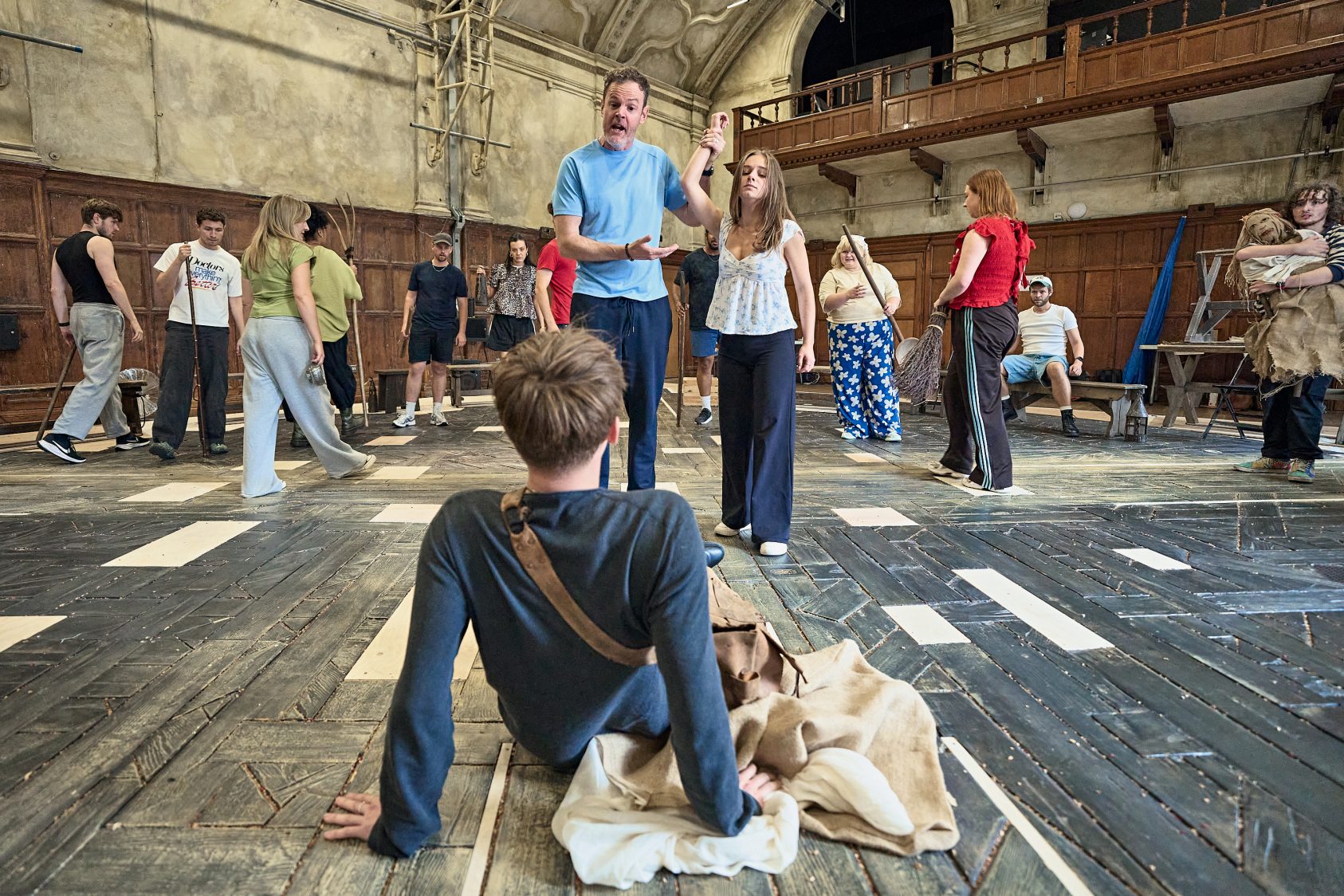
Martin Guerre is one of the most unusual musicals by Alain Boublil and Claude-Michel Schönberg, the creators of Les Misérables. This is not a revival of the 1996 production, but a newly assembled version: new music and lyrics have been added, new orchestrations created, and the action takes place in the middle of the auditorium, with the audience surrounding the stage on all sides. The production is developed and directed by Old Vic artistic director Matthew Warchus, for whom Martin Guerre is one of the final productions before the end of his eleven-year tenure at the theatre.
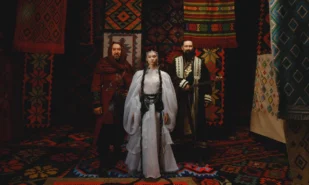
The musical is based not on literary fantasy, but on one of the most famous court cases of the French Renaissance. In the sixteenth century, the peasant Martin Guerre left his village, leaving behind his young wife Bernarda and their small child. Years later, a man returned whom the family and much of the village accepted as Martin. He lived with Bernarda for several years, and they even had more children together, until her husband became the subject of a court case. And — what a twist! — the real Martin Guerre suddenly appeared in court, after which the impostor Arnaud du Tilh confessed to the deception and was sentenced to death. This extraordinary historical case inspired numerous works of art, many of them trying to answer the same question: did Bernarda know that the man living with her was not her husband? In the hands of artists, one of the strangest court cases of the sixteenth century becomes a story of love and resistance.
Boublil and Schönberg first presented a musical based on this extraordinary story in 1996. After the phenomenal success of Les Misérables and Miss Saigon, expectations for Martin Guerre were enormous, but its premiere at the Prince Edward Theatre nearly failed. The creators did not give up: they radically rewrote the musical and reopened it shortly afterwards. And lo and behold — Martin Guerre won the Olivier Award for Best New Musical. But the authors became so absorbed in reworking their creation that they continued revising it. The current production is therefore the result of years of searching, during which Boublil and Schönberg have continued looking for that elusive perfect form.
Today, the musical becomes to a large extent Bernarda’s story — the story of a woman who appears to have very little voice of her own, while others answer every question on her behalf: first her husband, then the family, the church, the village and finally the court. Bernarda is played by Liv Andrusier, Olivier-nominated for Fiddler on the Roof at Regent’s Park Open Air Theatre. Her character has to choose between love and the demands of her religious community, and she even gets a new song, Someday.
Director Matthew Warchus — the man behind the celebrated Matilda the Musical and Groundhog Day — stages the story on The Old Vic’s circular arena stage. For a tale about a small village watching someone else’s marriage and effectively turning Bernarda’s private life into a public trial, the layout works particularly well: part courtroom, part battle arena.
The role of Martin in the new production is shared by Alex James-Hatton, known for Bonnie & Clyde, and Shane O’Riordan. Also appearing in the production are Colin Ryan, Barney Wilkinson and Caroline Sheen. But let us return to the story for one final moment. If Bernarda found with the impostor the life and love her lawful husband had failed to give her, does anyone else really have the right to judge her?