
A Change of Register: London Theatres in June

This theatrical June, classic stories seem to change key, to study themselves, to try out new voices. Of course, here His Majesty the Playwright becomes especially important — what will he bring to the directors? What will he find in a classic, well-known text? Which side of it will he turn towards the audience? These decisions do not simply update familiar texts: they show that power, honesty, desire, fear and loss do not belong to one gender. Theatre lives by changing tone — and thanks to that, old stories begin to sound unexpectedly modern.
Jesus Christ Superstar
London Palladium
8 Argyll Street, London W1F 7TF
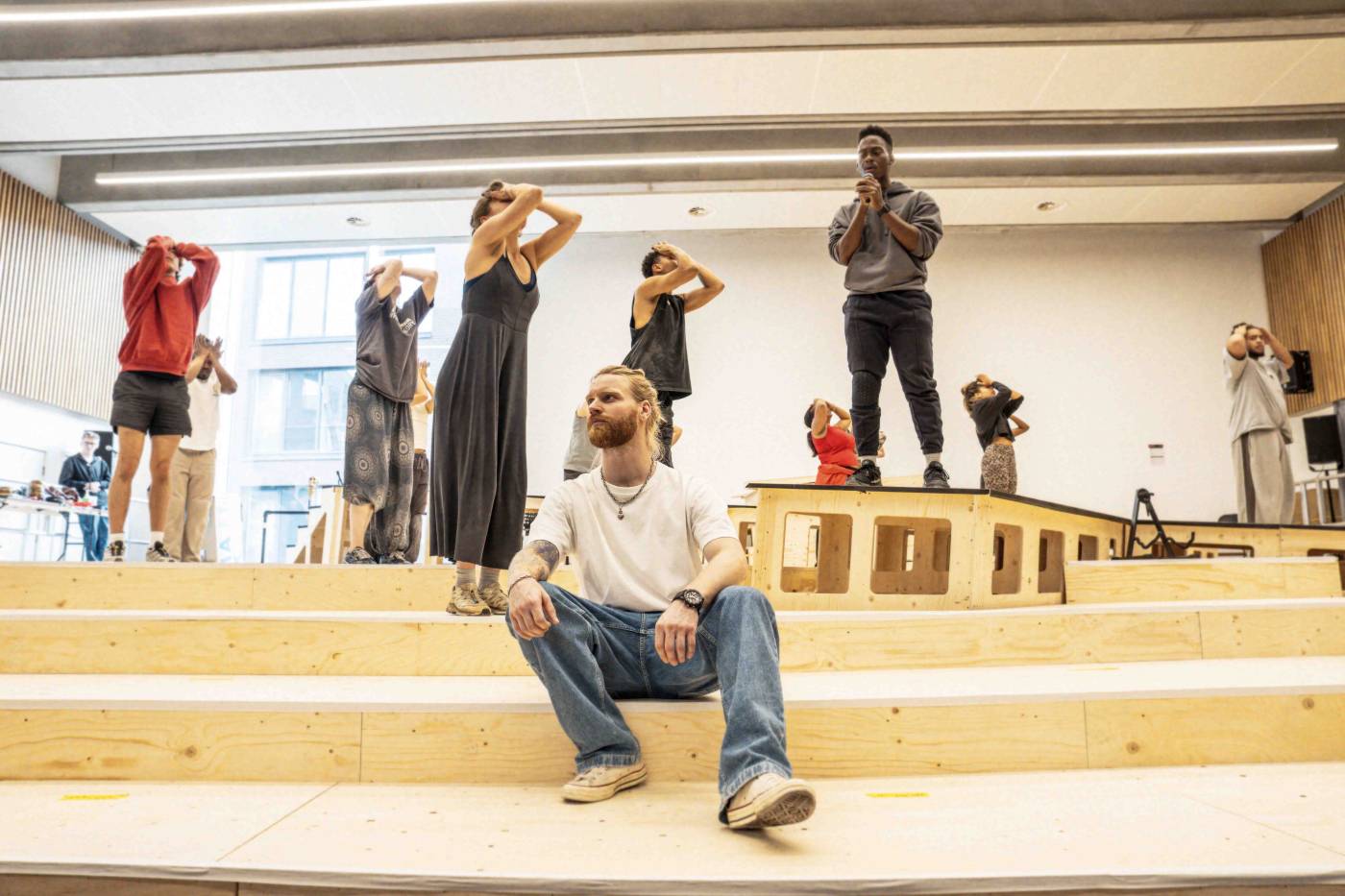
There are musicals that, over time, become repertory classics. And there are those that, no matter how many years have passed since their first premiere, continue to sound fresh, sharp and alive — as though they were written yesterday. Jesus Christ Superstar belongs to that second kind: it is not a museum exhibit from the age of rock operas, not an illustration of the Gospel story, but a nervous conversation, shot through with electric discharges of love and fear, about power, faith, fame, betrayal and human exhaustion. Almost sixty years ago, this music changed the consciousness of young people; for many, it opened a path towards faith — but a faith reimagined, full of love, not axiomatic prohibitions.
Created by Andrew Lloyd Webber and Tim Rice in 1969, the rock opera takes the audience into the final days of Jesus’s life; the second act begins with the Last Supper and the prayer in Gethsemane. At the centre here is not only Christ, but Judas: disciple, witness, accuser, a man who can no longer distinguish love from jealousy, or a mission from a dangerous myth. It is through the prism of his despair, anger, jealousy and darkness that we look at this story. How is a cult born? How does a person become buried beneath the radiance of his own image?
The director of this version is Tim Sheader, a director who creates living musical theatre. He is now Artistic Director of the Donmar Warehouse, where he made Natasha, Pierre & the Great Comet of 1812. Before that, he led Regent’s Park Open Air Theatre, where he staged more than twenty productions — including Jesus Christ Superstar in 2016.
The current production at the Palladium restores to the audience the energy thanks to which Jesus Christ Superstar once exploded all ideas of what musical theatre could be. This is not a tidy retelling of the Passion of Christ, but a concert, a ritual, a political drama and a psychological duel all at once.
A particular intrigue of this version is Sam Ryder in the role of Jesus: the British singer who became a national favourite after Eurovision 2022, where his “Space Man” brought the United Kingdom second place, and brought him enormous public affection. Jesus will be his debut in a leading role — he steps onto the West End stage in a part that demands extraordinary vocal power. Alongside him is Tyrone Huntley as Judas. Their confrontation becomes the heart of the production: not a battle between good and evil, but the tragedy of two people who have come too close to the mystery of power and sacrifice.
Drew McOnie’s choreography and Tom Scutt’s set design turn this story not into a “biblical reconstruction,” but into a space of myth, where antiquity and the present day are superimposed on one another. And so the main question of the production remains not theological, but human: what do we do with those whom we first turn into idols, and then offer up as sacrifices?
Glengarry Glen Ross
The Old Vic
103 The Cut, London SE1 8NB
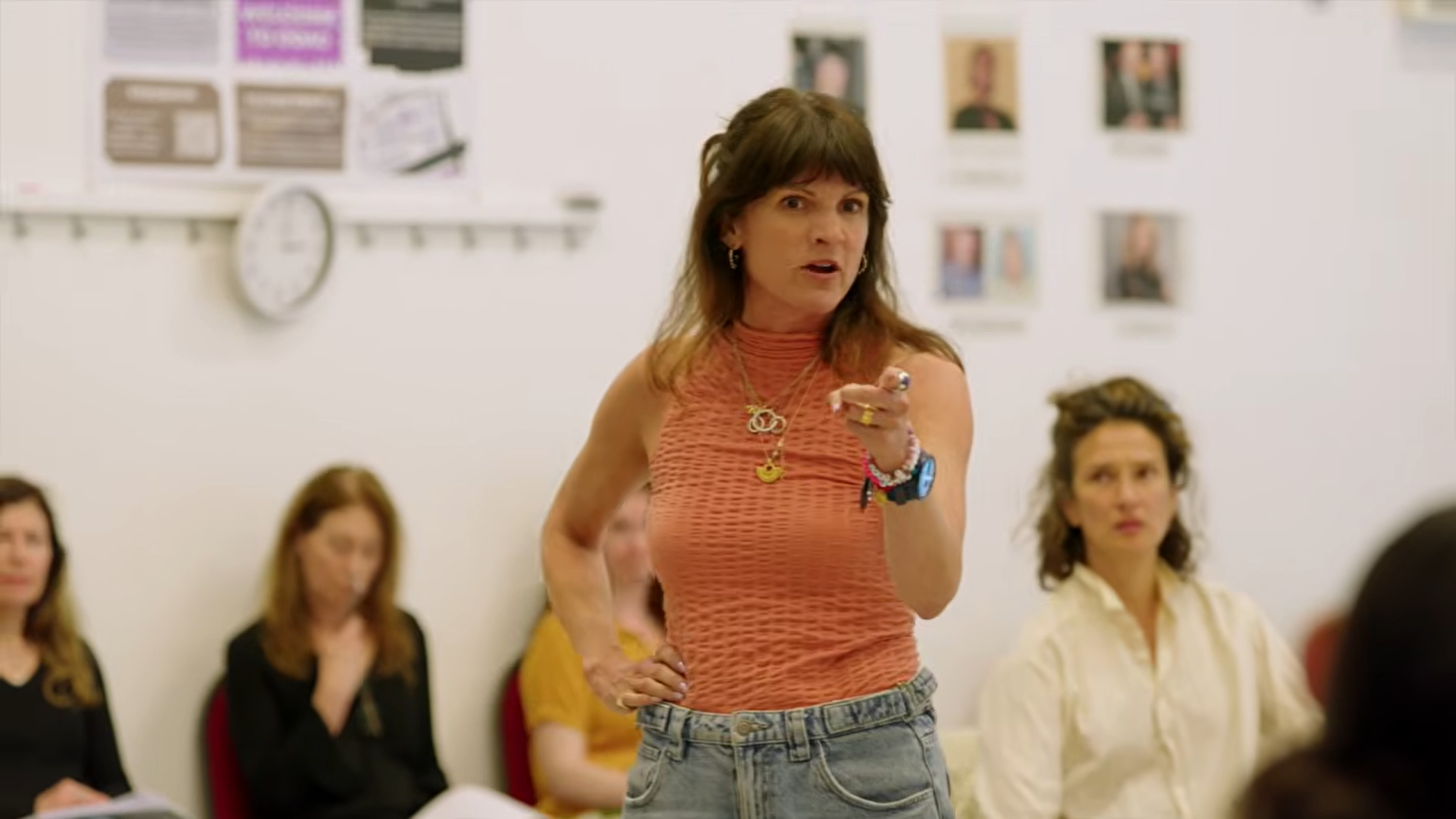
Glengarry Glen Ross, the David Mamet play that won the Pulitzer Prize in 1984, is staged here by the magnificent Patrick Marber. The production has an all-female cast, including Rosa Salazar as Roma and the brilliant Indira Varma as Levene. And the play itself is very, very specific. At first glance, the plot is simple, and almost anecdotally cruel. In a Chicago real estate office, a group of agents are fighting for survival — each for herself, naturally. In this merciless competition there are prizes: for the winner, a Cadillac; for second place, a set of steak knives; for the rest, dismissal. They sell at any cost: they lie, pressure, seduce, humiliate others and humiliate themselves, blackmail, steal. A cabinet of curiosities of vice, in short, where morality is a luxury product made from the carcasses of losers. Here, in this harsh, cynical world, a person is worth exactly as much as she has managed to sell. Not a penny more. There is no room here for weakness, friendship, dignity or, God forbid, compassion: only deals, percentages, client lists, fear of being fired and a verbal meat grinder in which everyone tries to shout over everyone else before she herself ends up under the blade spinning madly. And it is also a play about language that can become a weapon — what are magic spells compared with this! What “Avada Kedavra”! Here every line is an elbow to the eye; here they interrupt, snap, sneer.
Patrick Marber — himself an outstanding playwright, a Tony Award winner and the director of the recent Broadway version of Glengarry Glen Ross — has not returned to Mamet’s play with an all-female cast by accident. This text has long been perceived as the quintessence of male aggression, and suddenly it becomes clear that the point is not biology, but the system — a system that can cultivate cruelty in anyone. A serpentarium, a terrarium: there is not a drop of testosterone here, but there is a cold, unblinking gaze, a constant readiness to strike and deliver a lethal bite. It is hard to say which is more frightening. Indira Varma plays here a queen losing her grip, full of terror and despair; she is just about to miss her mark.
Glengarry Glen Ross is a story about fear — the recognisable fear of competition — and therefore an unpleasant story: neither the actresses, nor Marber, nor Mamet offer the audience a comfortable distance. The language of success, pressure and the eternal race has long been sounding all around us — and sometimes, unfortunately, inside us too.
The Misanthrope
Lyttelton Theatre
National Theatre
Upper Ground
South Bank
London SE1 9PX

Yes, yes, this is Molière — but not in a wig and lace, rather in a new version by Martin Crimp, one of the sharpest contemporary British playwrights. His international reputation was cemented by the 1997 play Attempts on Her Life, one of the key texts of late twentieth-century European theatre. Crimp carefully examines, if you like, the language of lies and justification. He is interested in how people talk about what has happened — and how, through words, violence, seduction and self-deception are born. This view of drama is so precisely suited to Molière: after all, The Misanthrope is also a play about language, about social lying, about the way society survives thanks to beautiful phrases and mutual hypocrisy. An important body of Crimp’s work consists of his adaptations of French classics: Genet, Ionesco, Koltès and, of course, Molière. These are not translations, but precisely reassemblies — what British theatre calls “after”: an attempt to understand where, in an old play, the modern mechanism is hidden. That is how his Cyrano de Bergerac was made, staged by Jamie Lloyd at the Playhouse Theatre in 2019.
In the current production of The Misanthrope, directed by Indhu Rubasingham, Alceste becomes Alice — a woman who, just like Alceste, is unbearable, just as right, just as funny and just as dangerous to society. She is played by Sandra Oh, an actress known to audiences from Killing Eve and Grey’s Anatomy — precise, nervous, vivid. This is not only her debut at the National Theatre, but also her London stage debut altogether.
What is interesting is that, as with Glengarry Glen Ross, the substitution of a male character with a female one reveals a new meaning. What happens to a woman who permits herself the degree of sharpness, principle and contempt for compromise that culture so readily romanticises in men?
Around Sandra Oh, a very interesting acting team has been assembled: Paul Chahidi, a wonderfully subtle comic actor of stage and television; Tom Mison, known to a wide audience from Sleepy Hollow; Jemima Rooper, with a rich background in both television and theatre; and Abigail Cruttenden, whose face is well known to viewers of British series. In short, this Misanthrope is not so much a Sandra Oh star vehicle as a true ensemble piece, a sharp comedy of manners in which every character is an independent source of social tension.
To Kill a Mockingbird
Wyndham’s Theatre
Charing Cross Rd, London WC2H 0DA
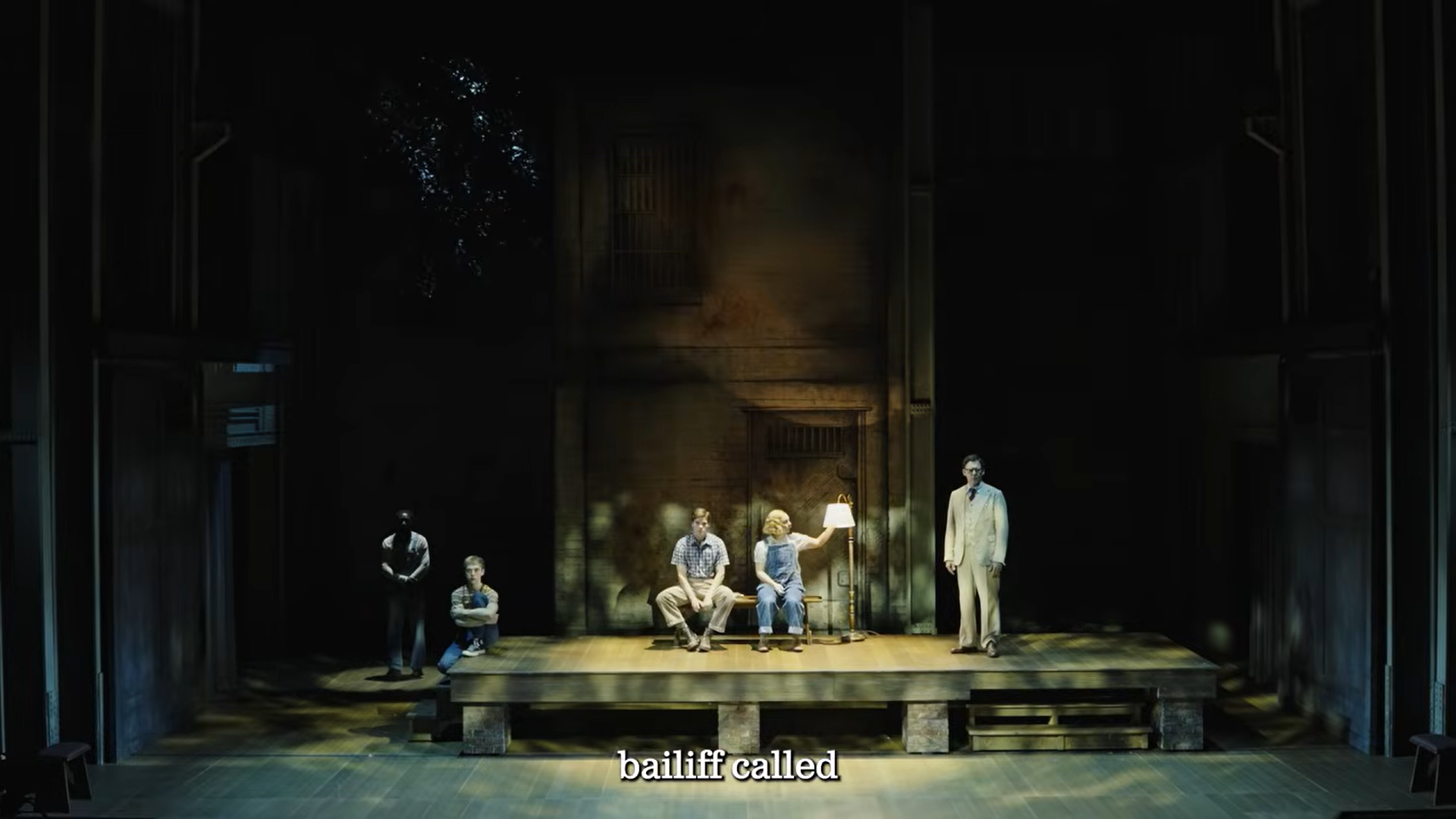
This is not exactly a premiere, but the return of the production to the West End. To Kill a Mockingbird is the stage adaptation of Harper Lee’s famous novel, written by Aaron Sorkin and directed by Bartlett Sher; in the role of Atticus Finch we will once again see Richard Coyle, who already played this part in the same production in 2022.
Sorkin, the author of The West Wing, A Few Good Men and The Social Network, turns the story written by Harper Lee in 1960 — and awarded the Pulitzer Prize the following year — into a tense conversation about what it means to be “a good person” inside a bad system. The stage version preserves the historical period of the novel: Alabama in the 1930s, the Great Depression, racial segregation and a small town where prejudice has long since become part of the everyday order. But it is precisely this historical distance that makes the production so sharp today: it shows not an abstract past, but the mechanism of social injustice.
Bartlett Sher builds the production as memory and trial at the same time. The child’s gaze — a gaze into the past — that of Scout (Anna Munden), Jem (Gabriel Scott) and Dill (Dylan Malyn), does not soften what is happening, but makes it even more painful: we see not only the injustice itself, but also the moment when a child first understands that adults can be cowardly, cruel and convinced of their own rightness. In this sense, To Kill a Mockingbird is not only a courtroom drama, but also a story of the loss of innocence: personal, familial, national. In Sorkin’s stage version, adults, looking back into the past, remember and relive their childhood experience. Richard Coyle’s Atticus is not simply a monument to moral impeccability — otherwise it would be boring. He is painfully trying to understand: is decency alone enough in a place where the law, language and public opinion are already infected with injustice? Obviously not? Or, after all, yes? Coyle is known for his stage work, including The Player Kings and Macbeth, as well as for screen roles, including Fantastic Beasts: The Secrets of Dumbledore.
Sho-sha
Playhouse East
258 Kingsland Rd, London E8 4DG
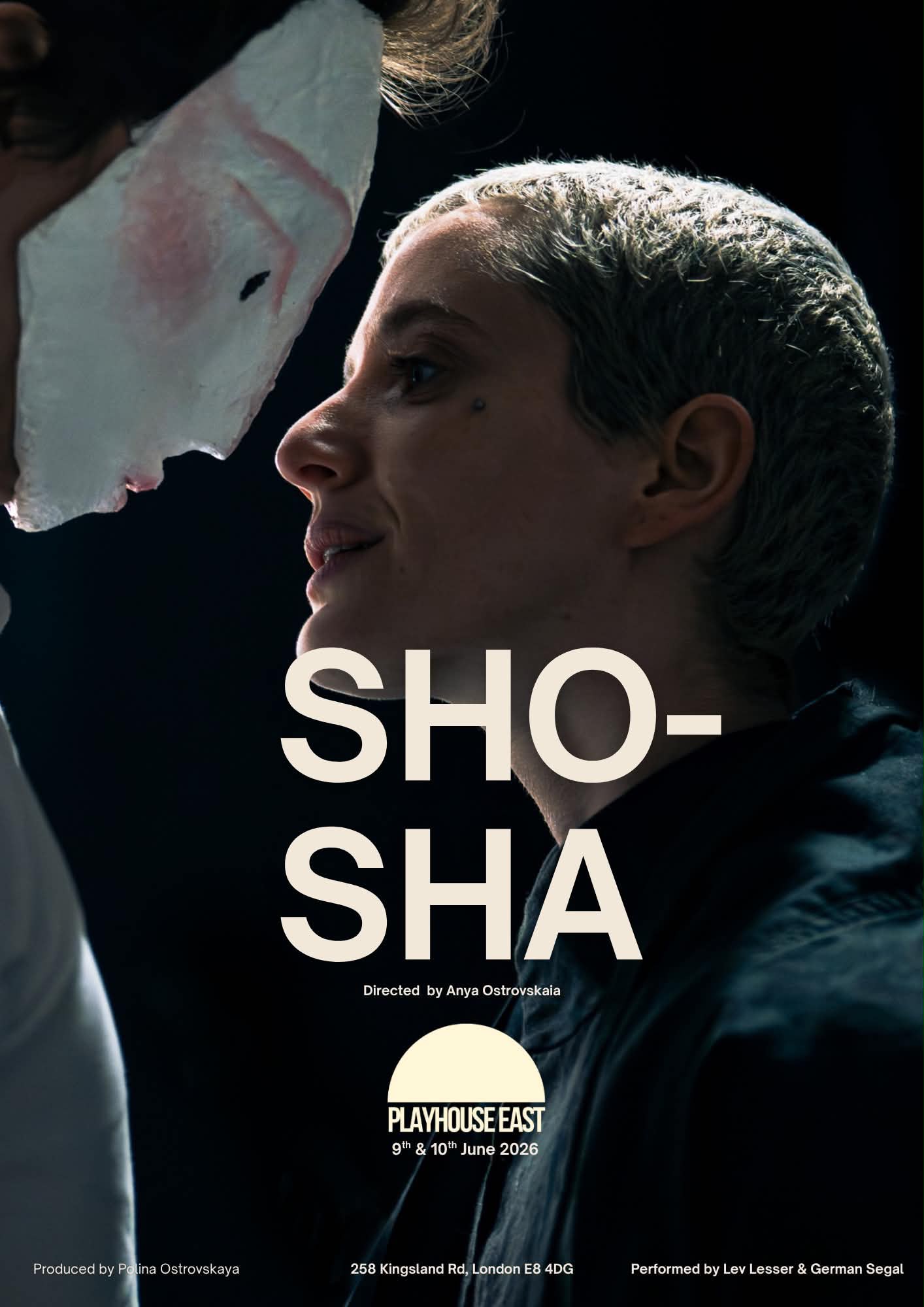
Sometimes love itself becomes the last refuge. It does not protect us from catastrophe, no; it simply keeps a person from disappearing completely. Sho-sha, inspired by the novel by Isaac Bashevis Singer, is exactly such a story: a chamber, unsettling, dreamlike parable about memory, exile and the impossible attempt to find a home in a collapsing world. The new production by director Anya Ostrovskaya, Sho-sha, is presented as part of the June WIP Festival at Playhouse East — a festival programme of new and developing work by independent artists.
Ostrovskaya chooses for Sho-sha not the path of historical reconstruction, but the form of a dreamlike journey: two actors hold an entire disappearing world — Warsaw in the 1930s, the memory of childhood, the biblical image of the ark and the love that the hero is trying to save from beneath the approaching flood of history. Two actors, Lev Lesser and German Segal, play everything here: the writer, Shosha, other people — in short, a whole world, a city, a dream, an ark, the past and the approaching disaster. Such chamber scale is not a limitation here, but the precise form: after all, memory rarely comes to us as a crowd scene.
German Segal here plays both Shosha and other characters, which means that the heroine becomes not a realistic “female role,” but an image of memory, lost love, home, a disappearing world. This is not gender-swap in the direct sense, but a theatrical convention: Shosha as phantom, voice, recollection, figure of dream, elusive beauty.
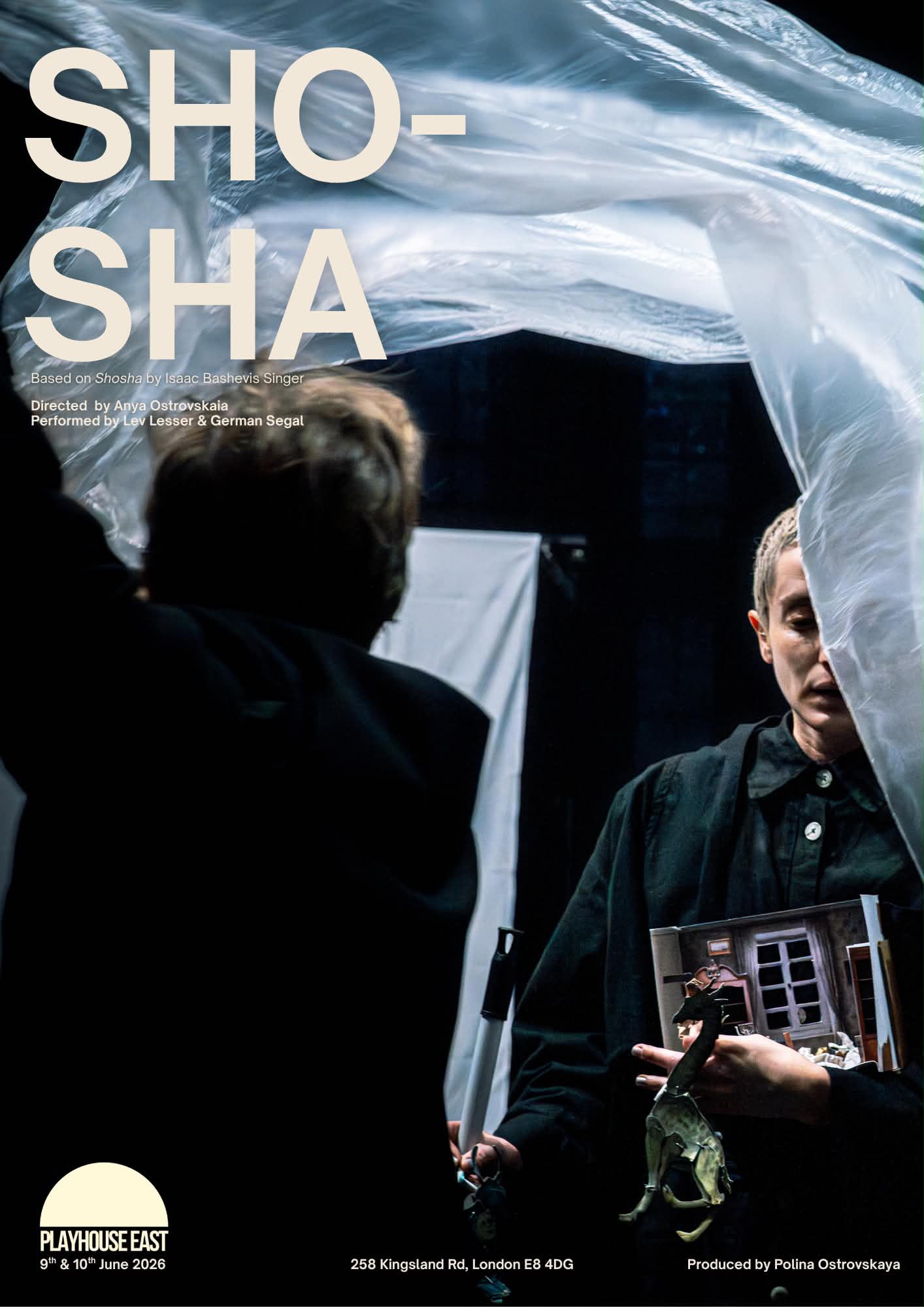
Lev Lesser is Aaron Greidinger, a young Jewish writer in 1930s Warsaw. He lives between languages and eras: the son of an old Jewish world, a man of literature dreaming of finishing his play, and at the same time a witness to a moment in which the very possibility of the future becomes more and more ghostly — and, it seems, impossible: the threat of Nazi occupation thickens, Europe grows darker, familiar life cracks at the seams. The private drama of an artist suddenly turns out to be a very immediate question of survival. To leave or to stay? To write or to save oneself? To believe in pure art, or to admit that history is already stronger than any text?
Warsaw reality intertwines with dream, biblical myth and memory. Aaron becomes Noah, a man standing face to face with the Great Flood. Whom and what can one take with oneself? A private story of exile turns into a mythological trope. The universal flood washes away cities, childhood, entire cultures. And among these waters Aaron searches for Shosha, his lost childhood love, a woman-memory, a woman-enigma, an image of a home that perhaps no longer exists.
It is interesting that two years ago Ostrovskaya staged The World of Yesterday: A Cabaret Evening, based on Stefan Zweig’s memoirs. It was her own adaptation: she wrote the stage version herself, and for the form of the production the director chose a cabaret, dancing and singing in Zweig’s imagination. Several actors then played different periods of his life, different people from his memory. So with Sho-sha, a very clear directorial line emerges for Ostrovskaya: she is interested in Europe before catastrophe, exile, language, the lost home, literature as an ark. First Zweig and his disappearing “world of yesterday”; now Singer and Warsaw in the 1930s.