Alexandra Orlova’s first trilogy of exhibitions explores strategies to exorcise fears

Glasgow-based curator Alexandra Orlova inaugurated the trilogy of group exhibitions The Suspense of Opening Grandma’s Mystery Casserole. This first chapter explored how absurdity and humour can become coping mechanisms for unresolved anxieties – whether they concern the body, family, memory, social life or the ordinary objects around us.
The exhibition ventured into the liminal space between the two meanings of ‘suspense’ – from a state of anxiety in the face of the unknown to the narrative mechanism that generates a development. Faced with uncertainty and fear, we invent stories, rituals, museums, memorials and talismans through which to apprehend and connect with the world. Across the exhibition, the artists considered what happens when reality becomes uncertain, strange or difficult to control, and the different strategies we develop to make it manageable.
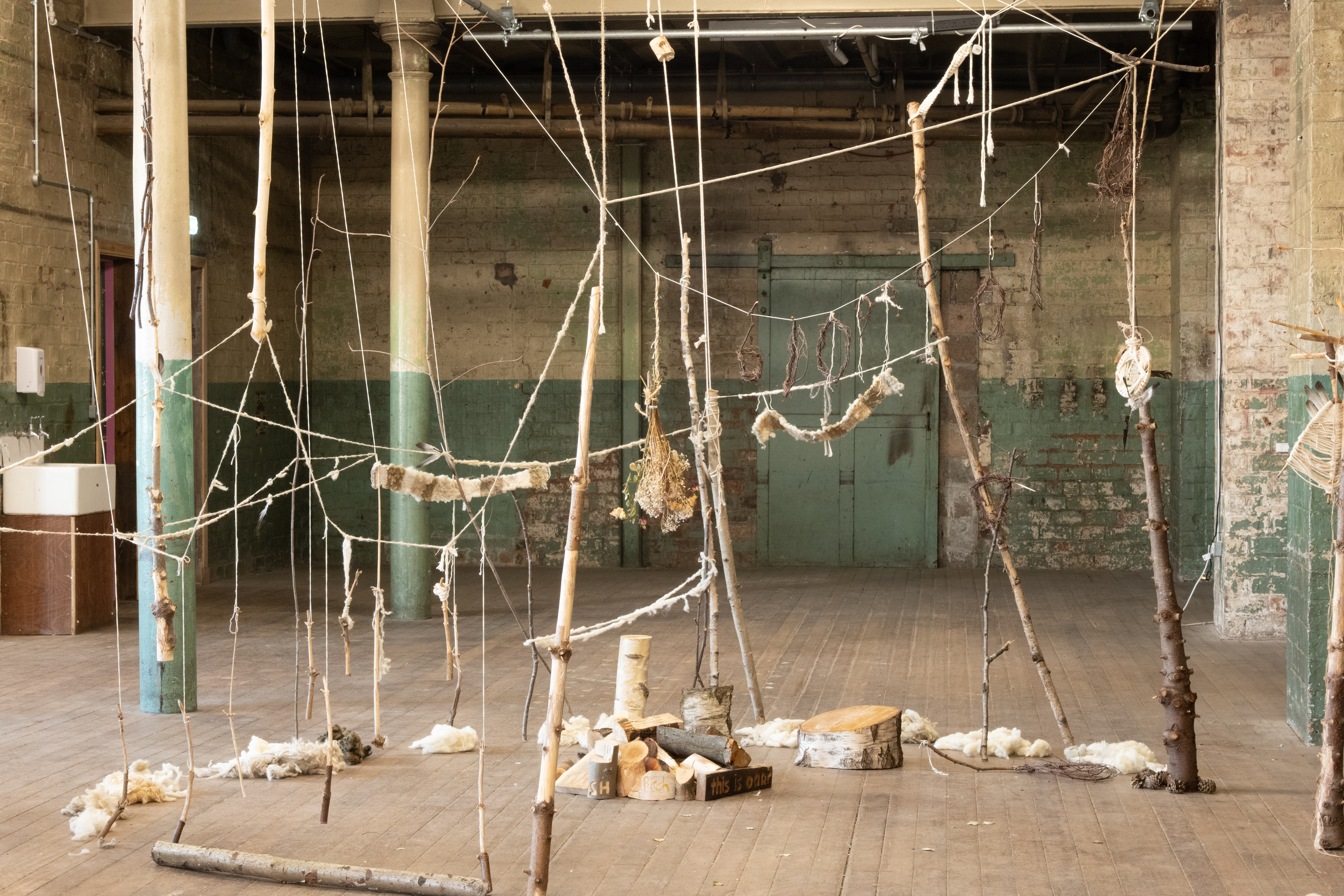
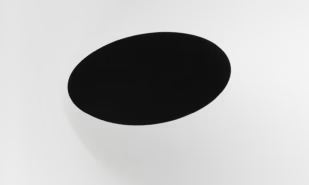
The exhibition took place at Strange Field, a former brick-red weaving factory in Glasgow’s East End. It unfolded around a central work, Luke Cockayne’s installation Tree Museum (2026): a wobbly, circular structure functioning as a ‘museum’ for found, ordinary materials, such as branches, feathers, wool and ropes. Cockayne resorted to humour to provoke the authority of museum institutions in deciding which objects should acquire cultural value. At the same time, the work proposed a more generous possibility: that the dull, overlooked and apparently purposeless might deserve to be looked at, collected and cared for.
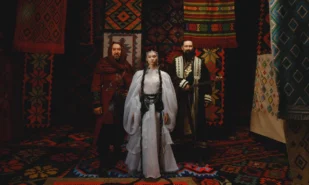
The transformation of the insignificant into something profoundly meaningful was also pursued in Elizabeth Riddell’s Backcourt Liz (2026), in which a local heroine of the Glasgow household was elevated into a civic icon. Riddell’s work operated between affection, nostalgia and absurdity, asking who and what becomes worthy of commemoration. Similarly, in Imogen Cowan’s film Questo Ti Volevo Dire (2025), family stories and superstitious rituals served as mechanisms to delay the anxiety of an inevitable separation within the family.
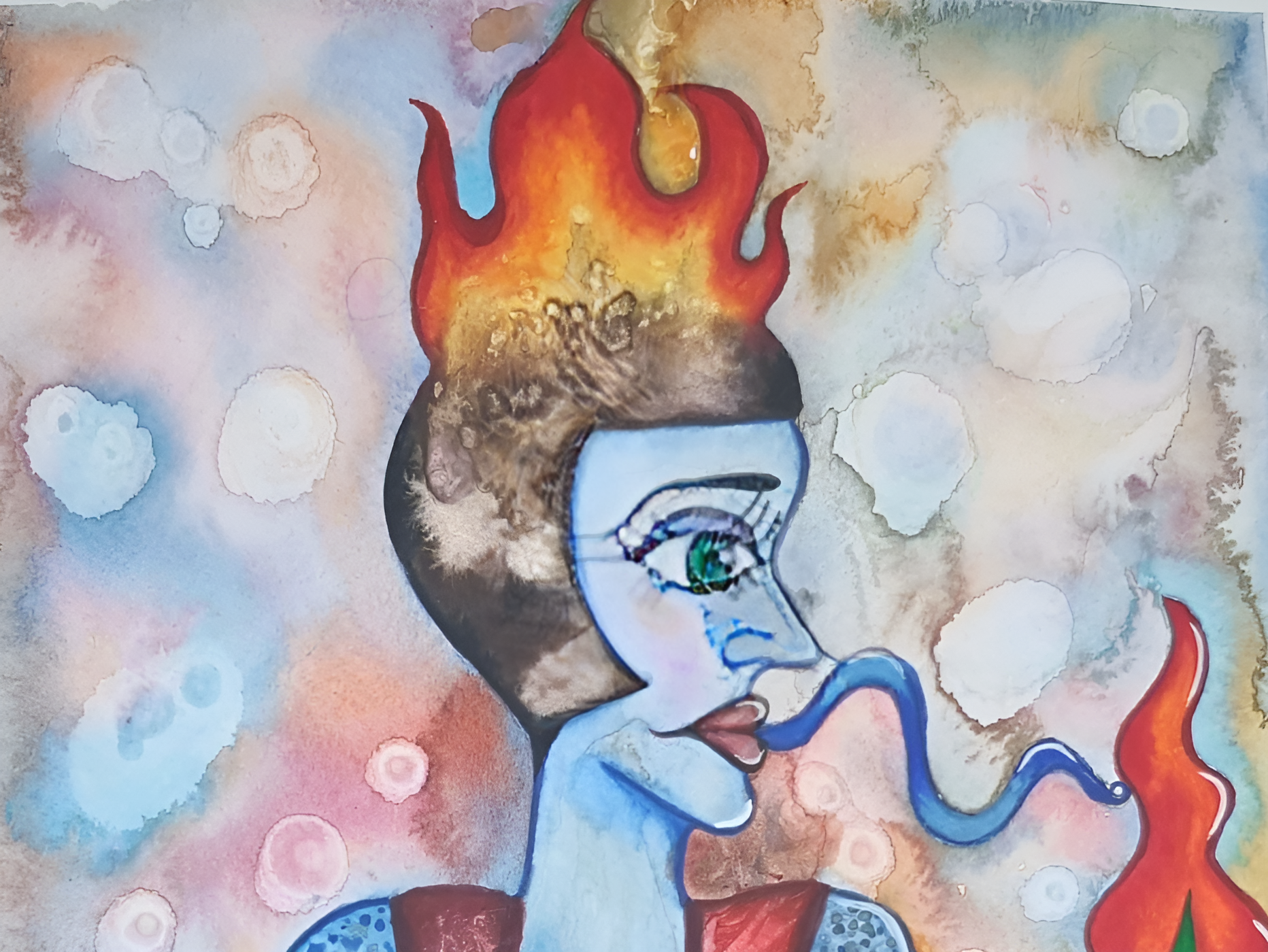
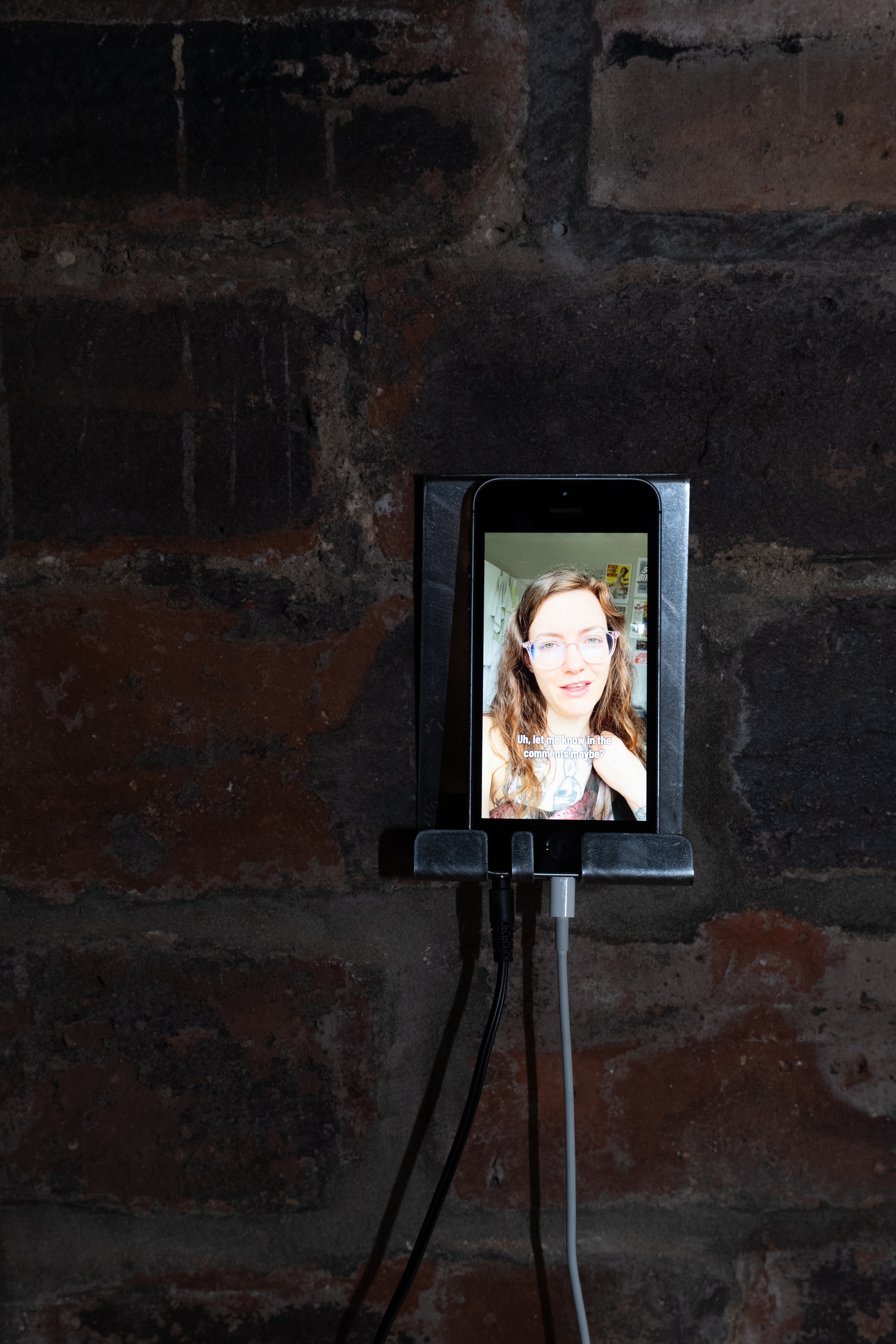
Glenn’s Story Time, Hold for 2x (2026) employed humour to address a traumatic healthcare experience. The artist adopted TikTok’s personal storytelling as a strategy for relief and exorcism of bodily pain. The adopted comic approach also allowed her to address the social taboo of speaking publicly about women’s healthcare and eventually served a wider social function – to operate as an empathetic device for other women who share her same experience.
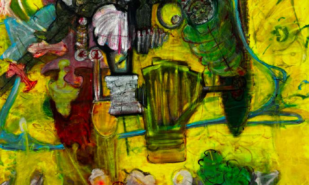
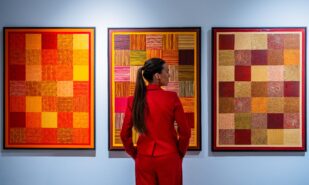
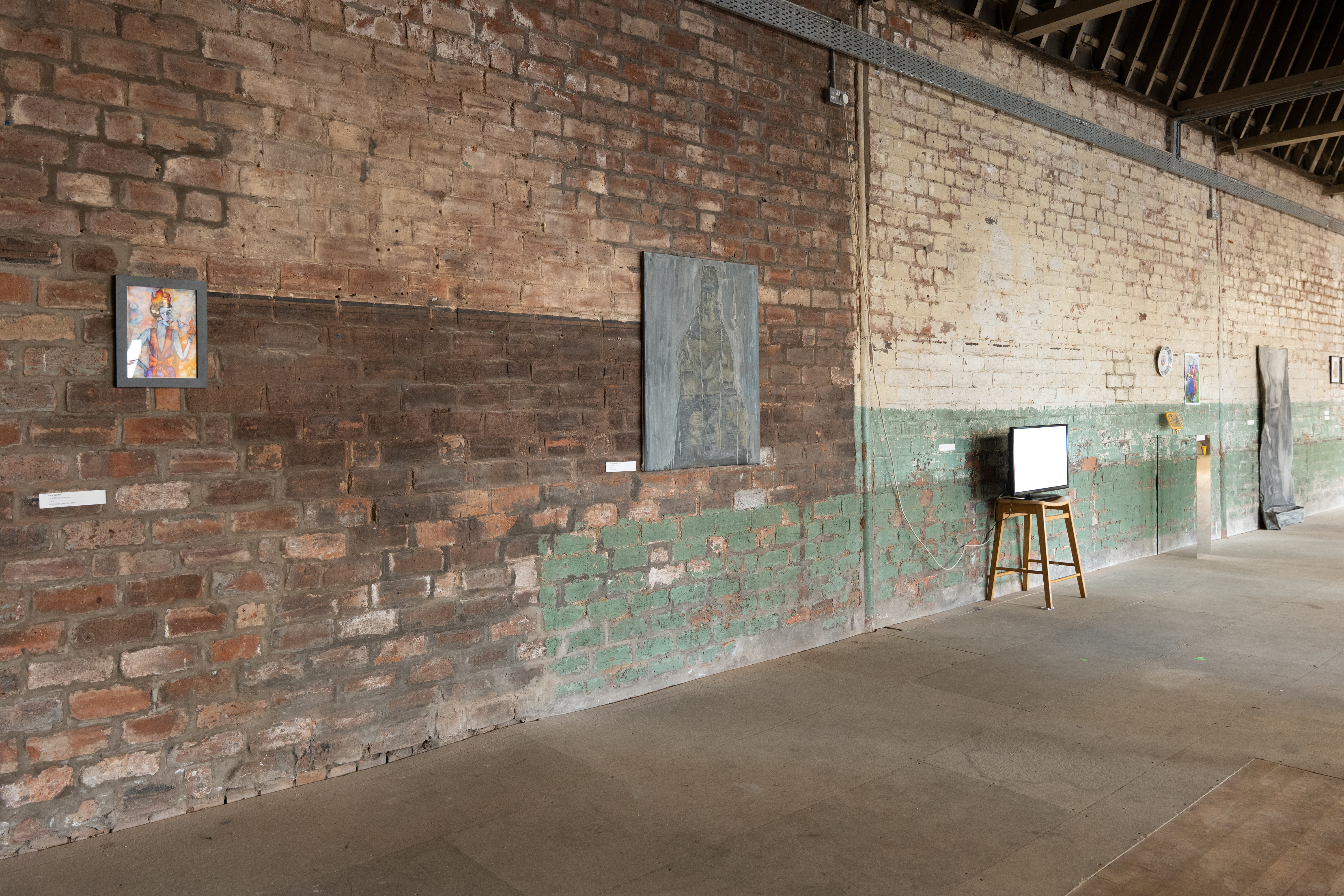
The loss of certainty and control was also at play in Margarita Shuvaeva’s St Peter (2025). The artist, however, did not resort to humour to address anxiety, but embraced contingency as part of the artistic process – the paint, kept deliberately diluted, exceeded the control of the gesture and began to drip. Going beyond representation, Shuvaeva created spaces that captured the structures and tensions of forms, where the vividly perceived gradually dissolved: an unfolding towards the unknown, in which the artist herself became a medium, a carrier through which the work took shape.
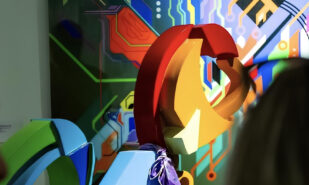
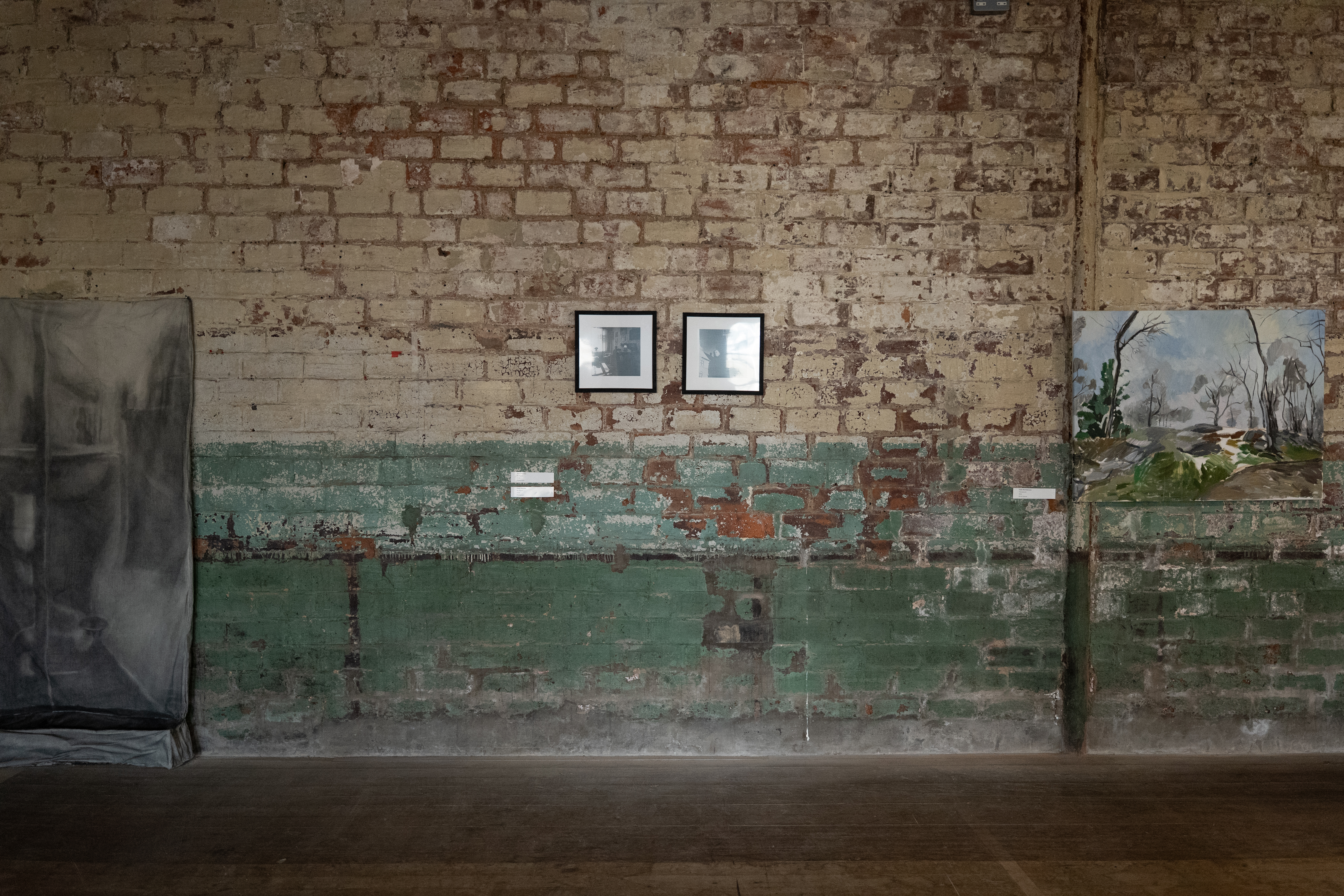
While Anna Solomko recurred to Augmented Reality to unsettle reality and animate a mural, Vlada Markinadova employed painting to explore how we project familiarity into the outside through our stories, memories, or associations. Markinadova deliberately used the artistic medium as a site where perception was re-activated. Spanning painting, drawing and sculpture, her practice develops around a research thread in which viewers are invited to complete the fragmented, the incomplete and the blurred with their own memories. In Transparent, the painted landscape played with the idea of an abstract, generic image as a space the viewer could enter, finding comfort in a scene that became familiar through the act of projecting personal memories.
Taken together, the works in the exhibition offered personal responses to the unknown and the unfamiliar, which they confronted by laughing at them, ritualising or remembering them, or simply allowing them to unfold beyond their control or throughout the viewer’s personal memories. Storytelling became the central element that allowed living with and through anxiety, a way of healing, an escape, a provocation, the activation of a memory. Like the mysterious casserole of the exhibition’s title, the unknown remains impossible to fully apprehend until we open it – but perhaps the unfolding of the narrative lies in the stories it contains.
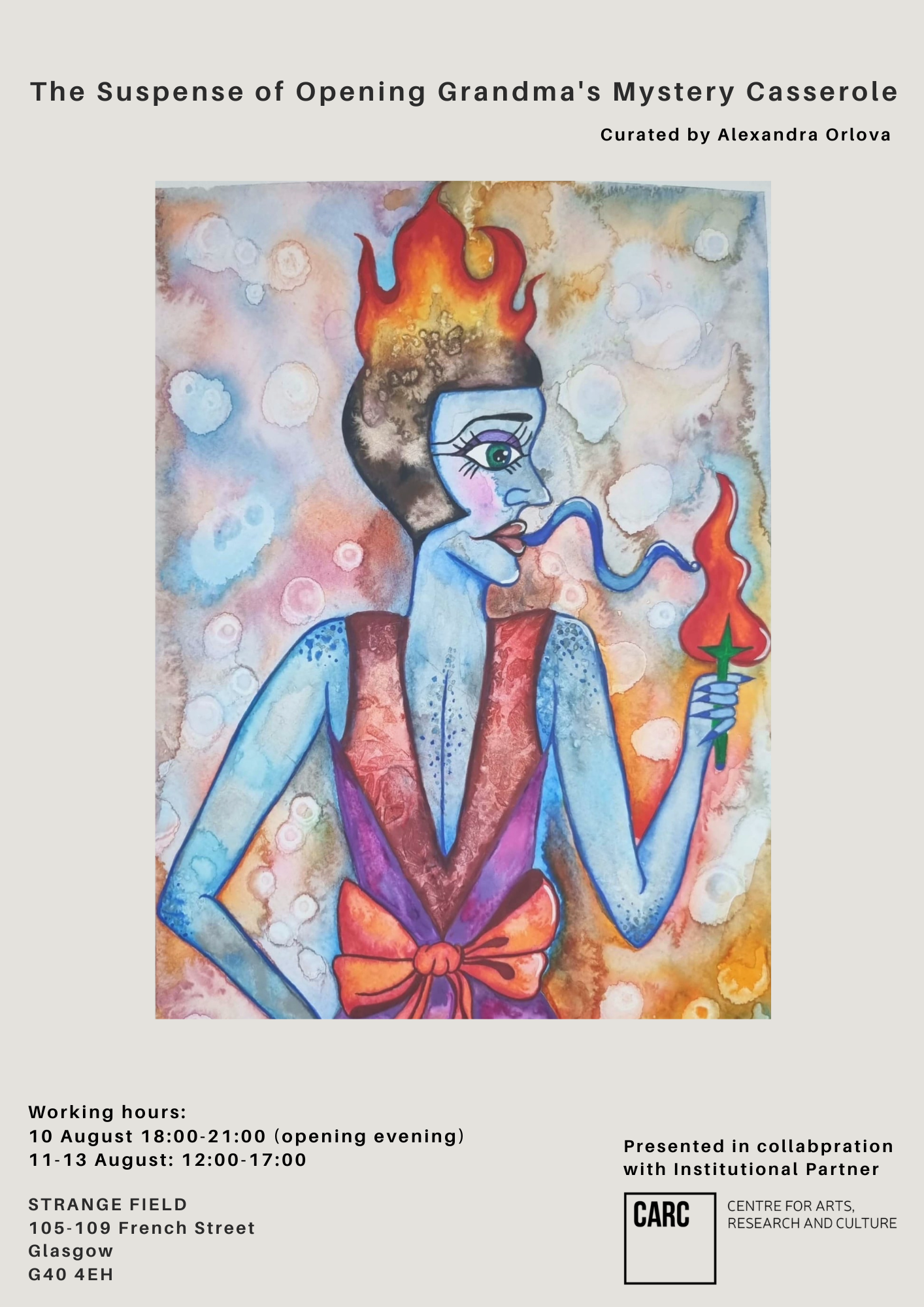
The Suspense of Opening Grandma’s Mystery Casserole | London Cult.
Chapter I: absurdity and humour. Artists: Luke Cockayne, Imogen Cowan, Kate Glenn, Yujin Lee, Vlada Markidanova, Daniil Nevskiy, Elizabeth Riddell, Margarita
About the author:
Francesca Zappia is an Italian art writer, curator and researcher based in Glasgow. She has worked with public and private art collections in France and the UK and was awarded a curatorial research grant by the Centre national des arts plastiques (CNAP). Her writing and research focus on contemporary art, curatorial practice, cultural memory and the circulation and reproduction of artworks. She is the author of Flâneurs. Copies, appropriations, citations from the Centre national des arts plastiques and a PhD candidate at the Glasgow School of Art / University of Glasgow.