Anatoly Weissman: «I’m One of Those People Who Aren’t Very Good at Laughing»

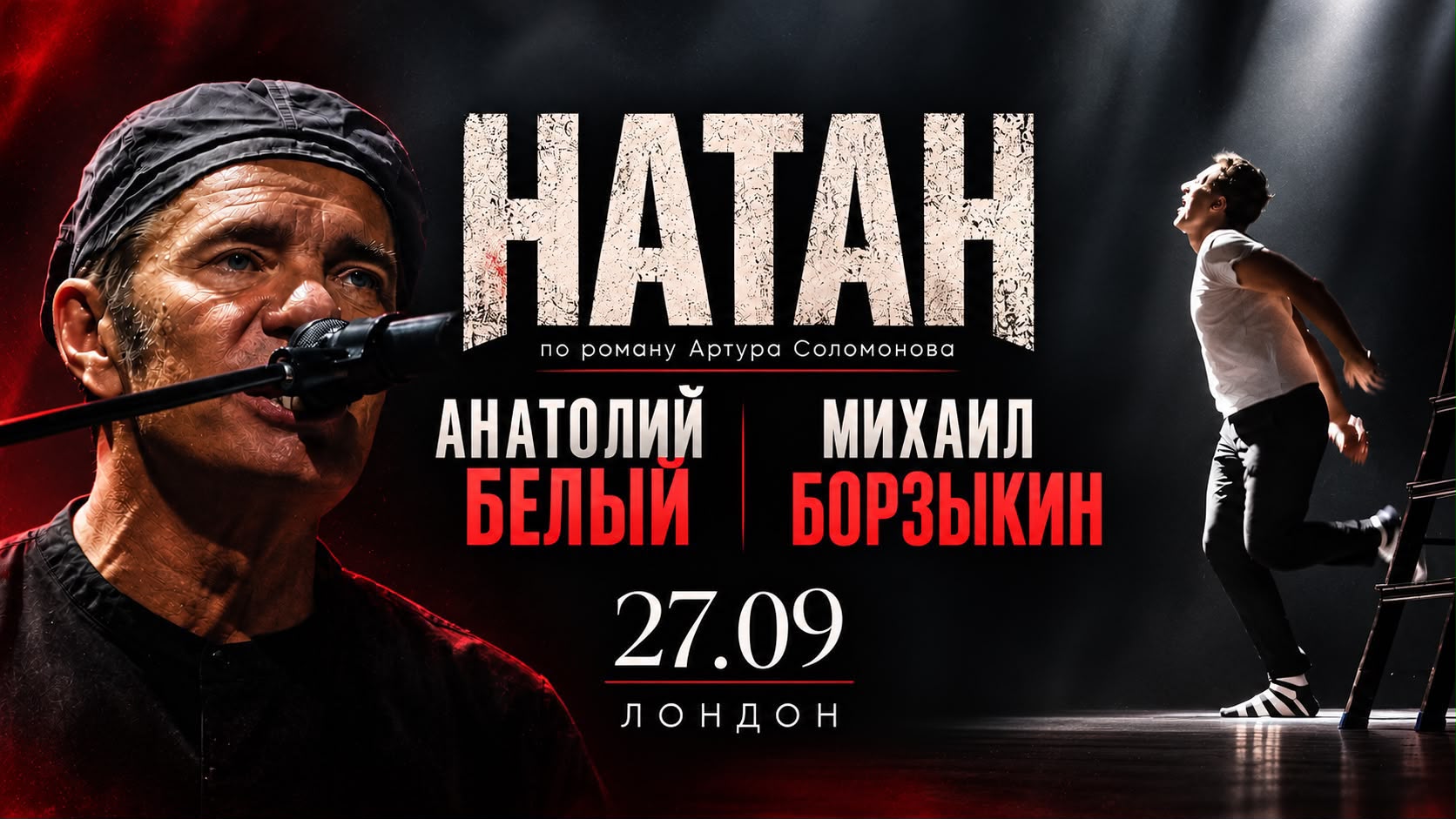
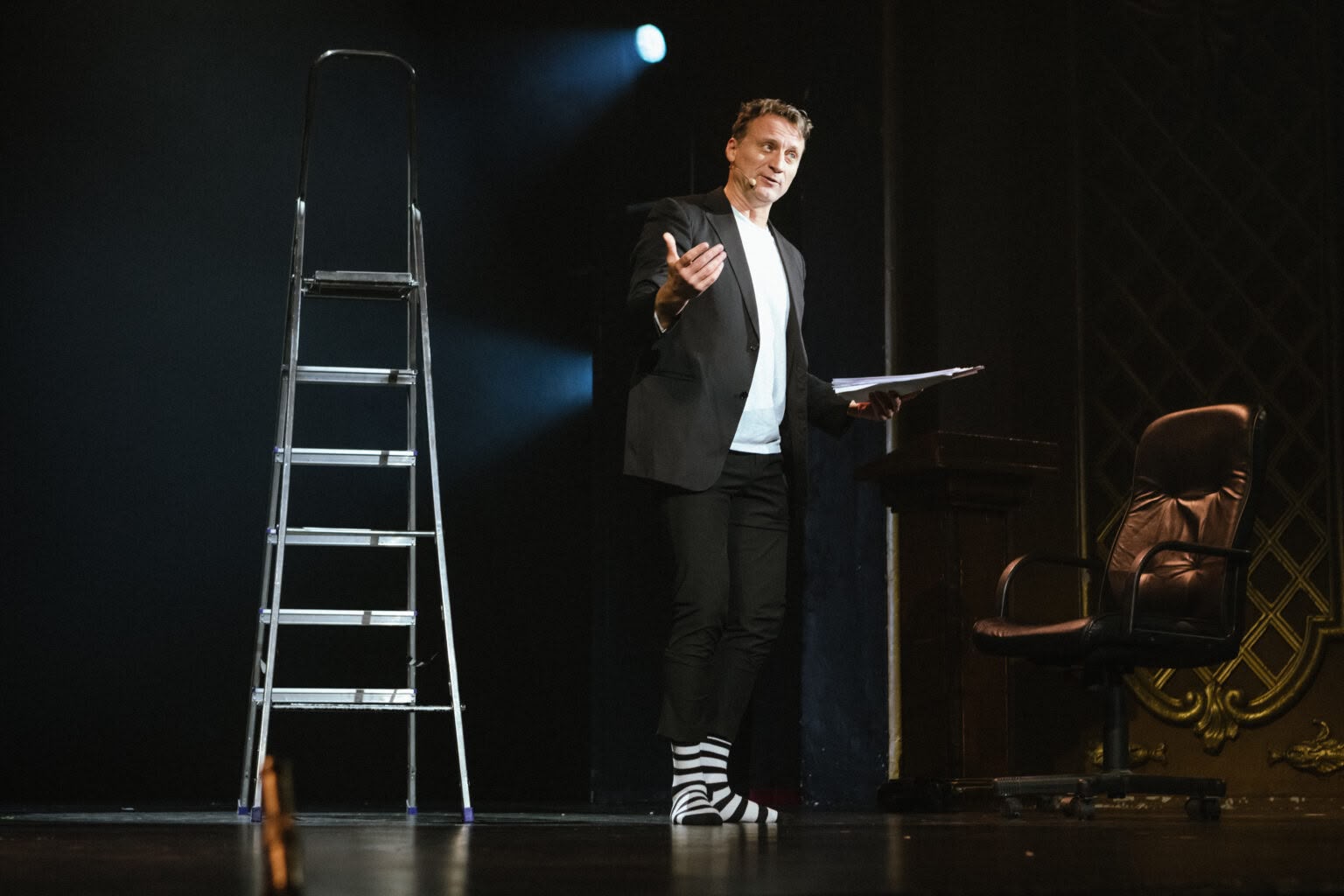
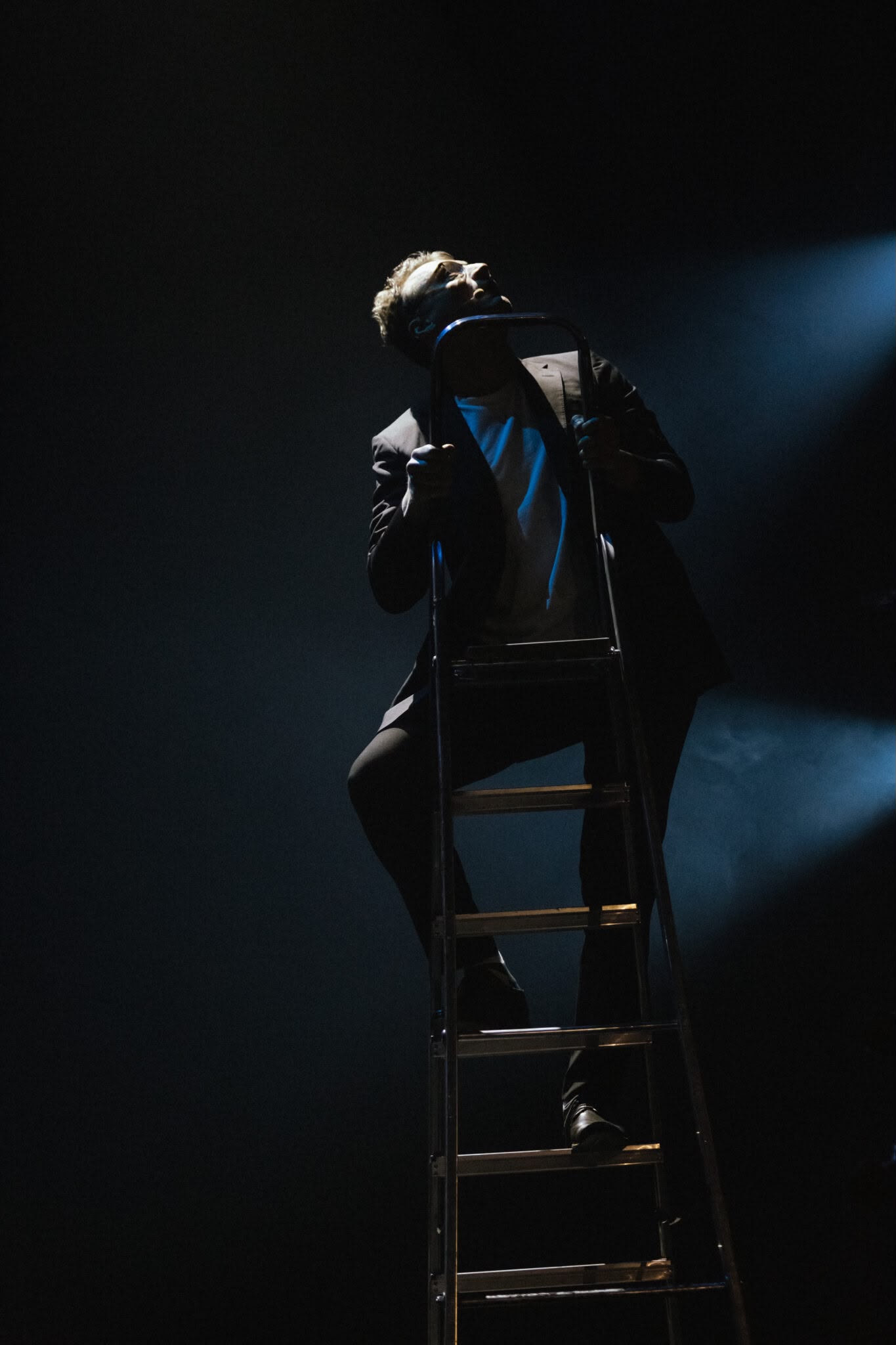
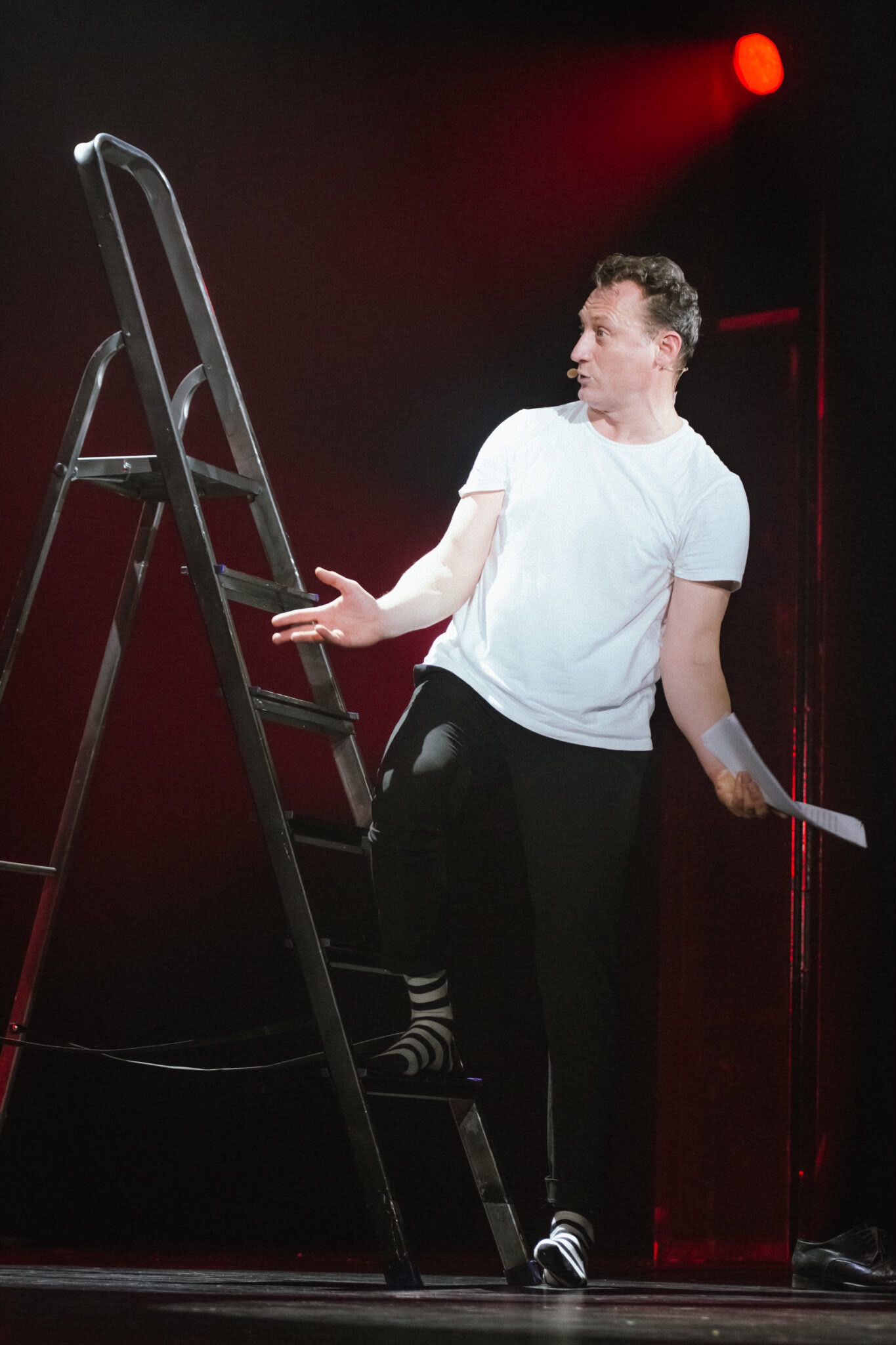
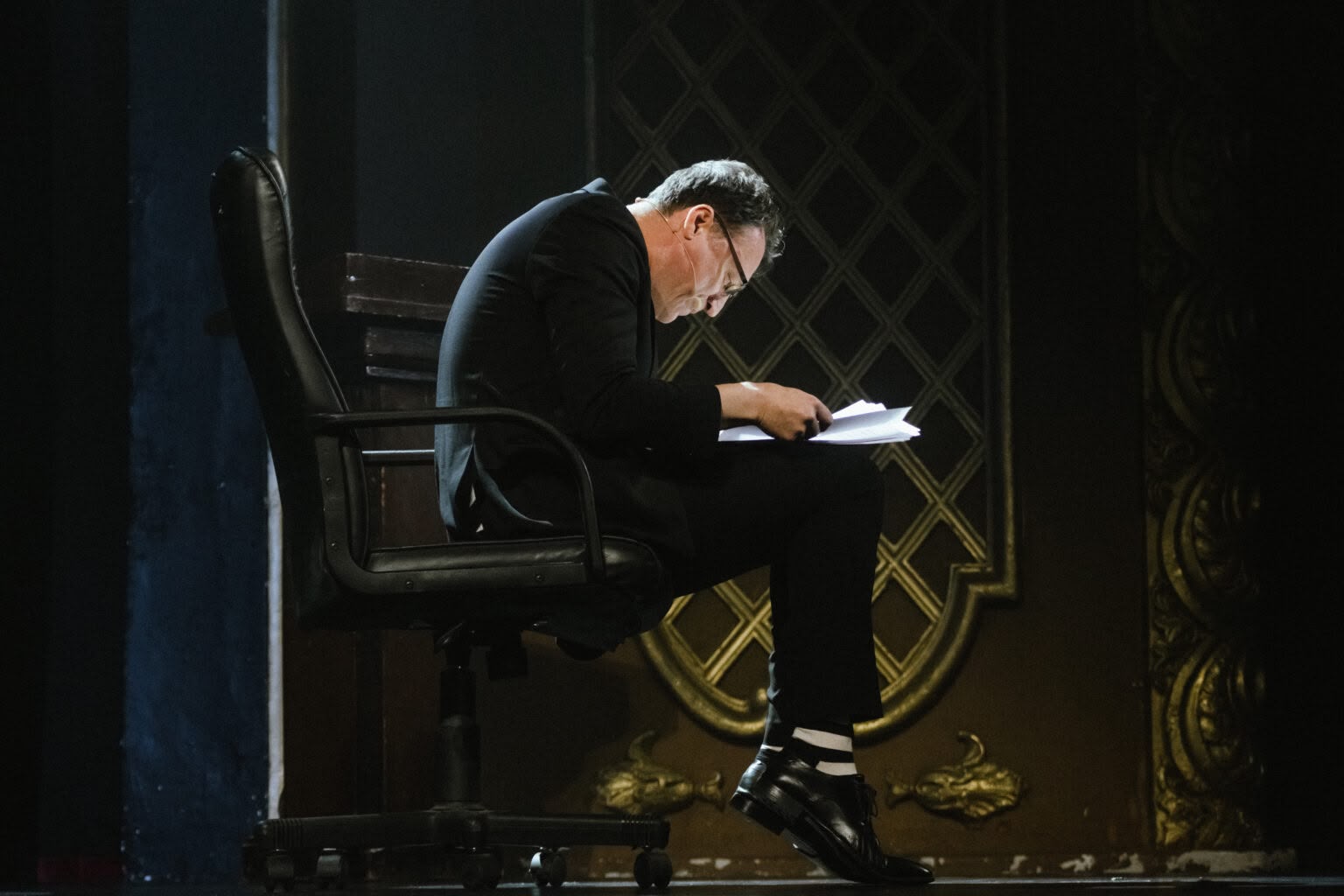
In Nathan, a production based on a text by Artur Solomonov, Anatoly Weissman’s character finds himself inside a world where absurdity has long ceased to be an artistic device and phantasmagoria is no longer merely a genre convention. Together with musician Mikhail Borzykin, he turns the story into a concert-style storytelling performance — funny, bitter and unsettling. We spoke with Anatoly Weissman about why today’s reality is perhaps best described through the language of dystopia; what it is like for an actor to start his professional life all over again after the Chekhov Moscow Art Theatre and a brilliant career in Russia; and how his acting range has changed since his move to Israel.
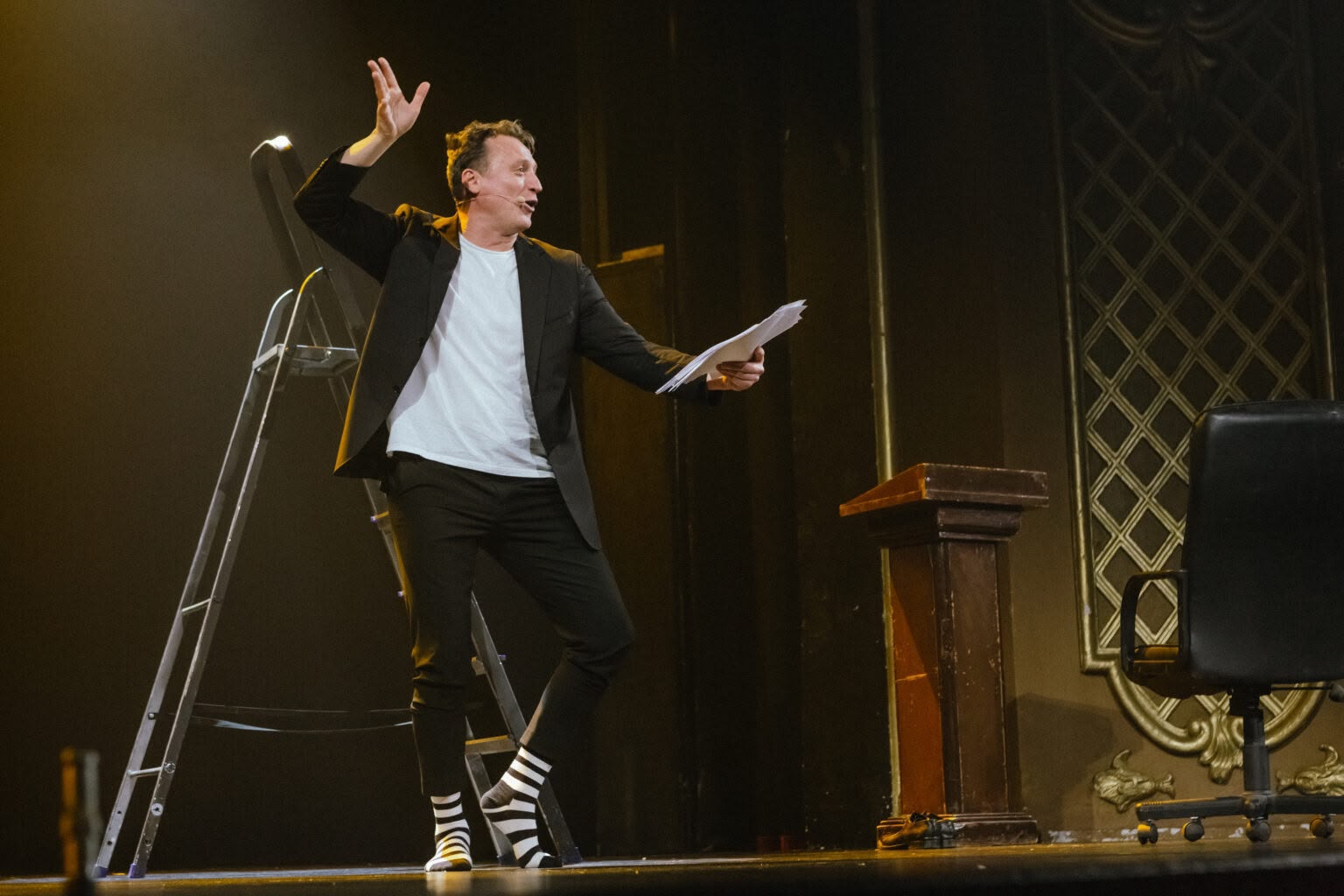
Nathan is a play about a man who finds himself inside an absurd and terrifying reality and somehow has to exist within it. How much is Nathan a character for you today, and how much is he you over the past four years? Is there a point in the production where the distance between you and the character disappears completely?
If you read Artur Solomonov’s novel Nathan: An Investigation in Six Scenes, it becomes clear that Nathan himself is one of the people creating this insane reality. He is one of the creators of this wild reality — absurd, horrific, tragic, phantasmagorical, utterly resistant to any rational description — the reality in which all of us are living now. Before our very eyes, the world is going mad; ageing rulers are going mad and dragging the world down into hell with them. And we are witnessing all of it. Nathan is one of those people who might say, “I’m bored, demon!” That is where he comes from — from that scene in Pushkin. “I’m bored, demon!” Out of boredom, out of this sort of great intelligence and perceptiveness, he decides to perform a somersault, an entrechat — to try to change his reality. But as a rule, dreamers like that end up caught in the millstones of history and of their own fantasies, illusions and utopias. The system mercilessly devours its own children and grinds their bones. That is how I would describe the novel. The stage production is more performative. So come and see it, and decide for yourselves how much Nathan is a character for you today, and how much he is you over the past four years. But Nathan is absolutely not me! Although he is a composite character and, of course, some of my traits do slip through. For example, that utopian thirst for justice, that view of the current Russian reality in which the distorting mirrors have become even more distorted. Nathan sees it, wants to change it, lets it pass through himself, suffers through it. So yes, to some extent that was me four, five, six, seven years ago — but it is definitely not who I am today. The person I am today no longer wants to do anything about Russia. Today I want to close that chapter of my life and, if possible, not think about it. I have no hopes left, and I want to leave that country alone. I want to live my own private, beautiful life without constantly looking back at one-sixth of the world’s landmass.
How did you work on the production?
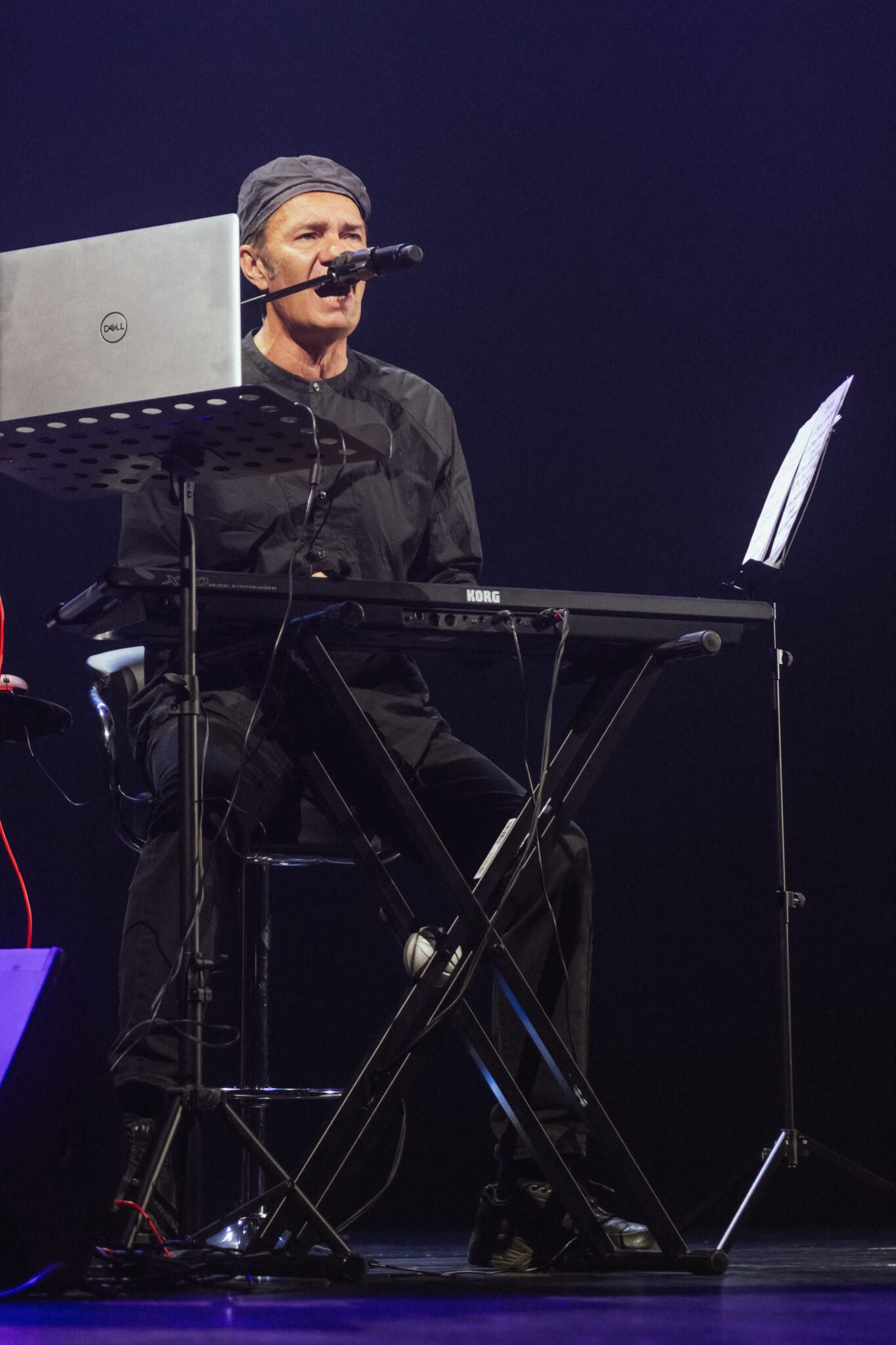
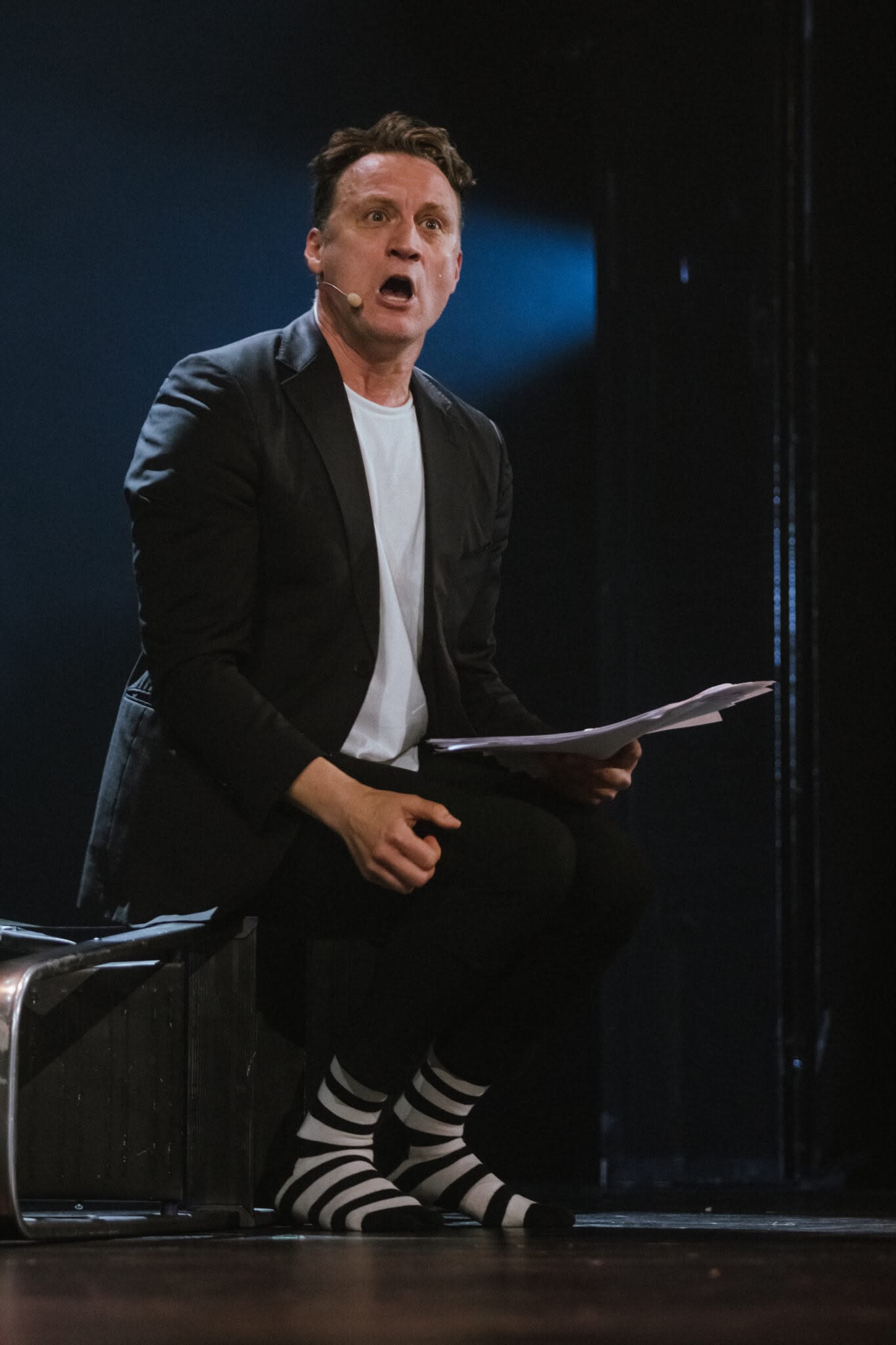
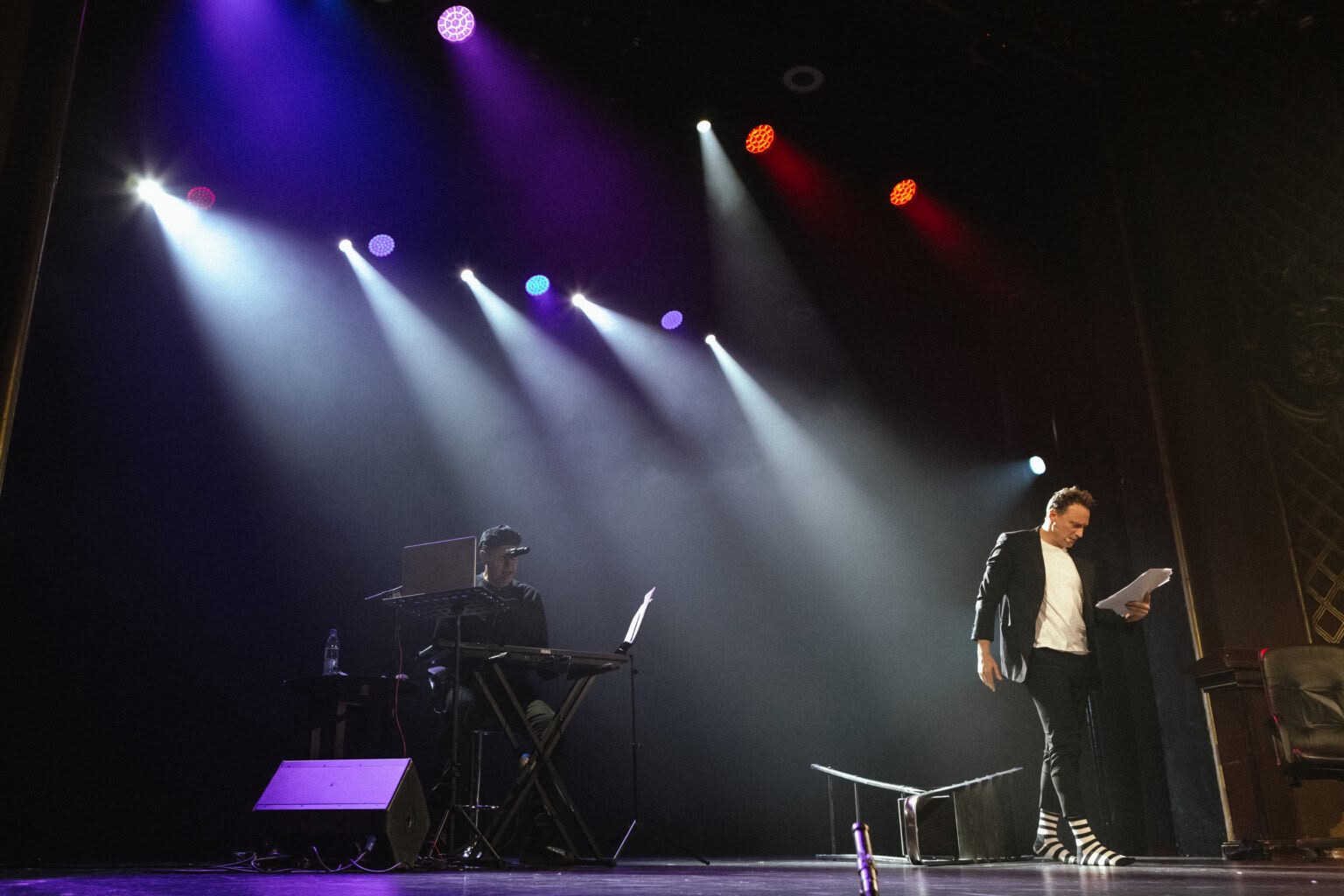
Everything happened very quickly and joyfully. You could say the production shot out of us like a solar prominence. The text, of course, is phenomenally funny, grotesque, precise, truthful and bitter. You simply have to tell it well, to give it a form. And the form of the production is simple: storytelling. On top of that, this absolutely crazy synchronicity emerged between Mikhail Borzykin and me. His songs fit the present day like tracing paper laid directly over it. So there weren’t any agonising rehearsals.
Mikhail Borzykin’s rock music is almost another character in the production. What does music mean to you? Has it ever saved you?
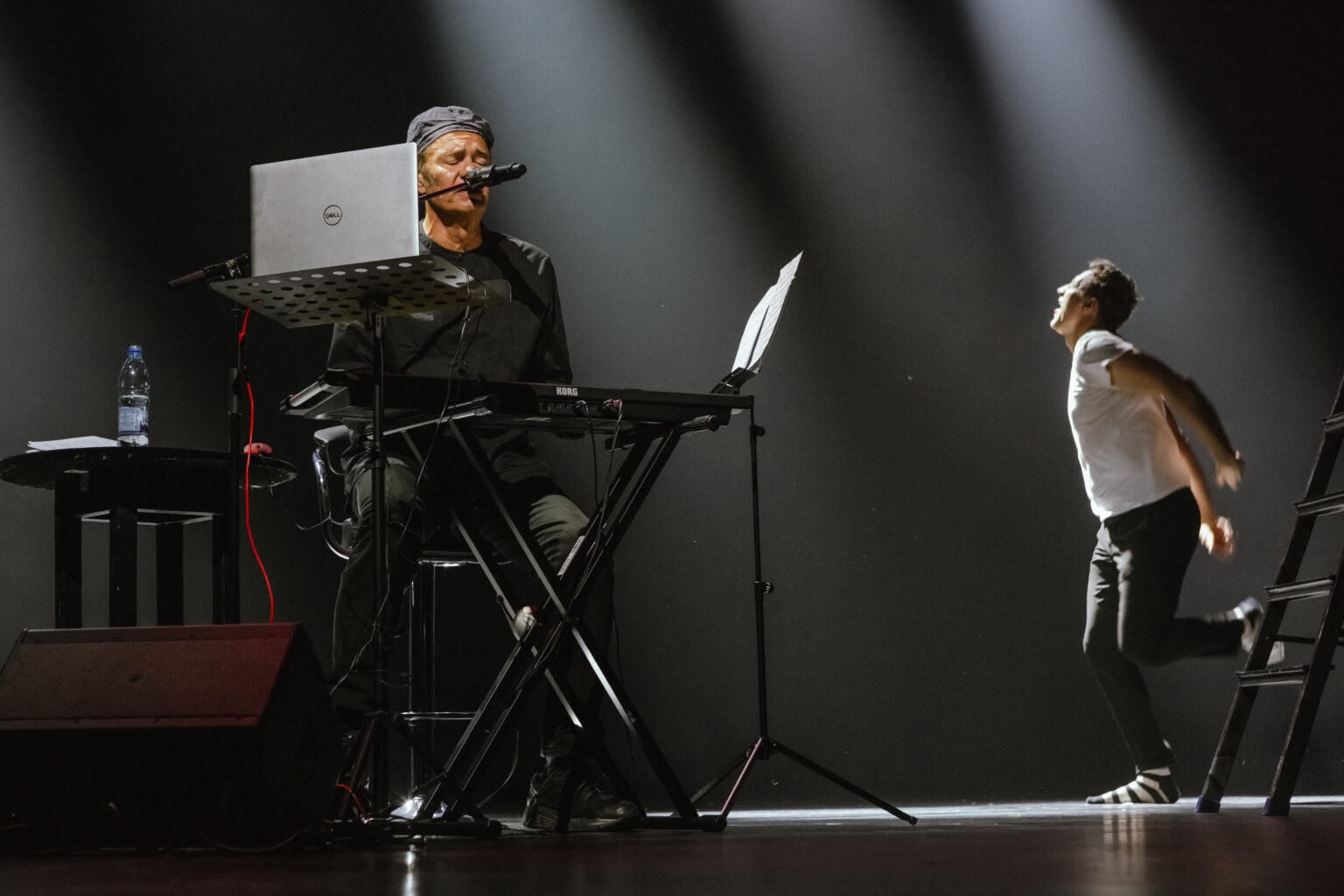
Without question, it has. Music is a powerful, incredibly important ally for me. Ever since I was young, music has been an inseparable part of my life. Tsoi, Shevchuk, Vysotsky, Splean — they pulled me out of depression; they were always there. You could drink heavily to those songs and have a wonderful night with friends. You could lose yourself in them, have fun, feel sad, dream. I listened to Borzykin when I was young. I had just arrived in Moscow. It was 1991, the beginning of my Moscow life, the year I entered the Shchepkin Theatre School. That was when I first heard the band Televizor. It felt like being punched straight in the jaw — there was no dodging an uppercut like that. It is incredibly intense, powerful music, and I listened to it during some of the most emotional moments of my life. Televizor was one of the bands that shaped who I became in the 1990s.
Is the production’s genre — “phantasmagoria” — important to you?
Extremely important. These are the genres of our time: absurdism, dystopia and phantasmagoria. I don’t think it is possible to reveal the present day through any other genres. Otherwise, we would simply lock ourselves inside our own four walls and paint flowers and butterflies. That would have nothing whatsoever to do with art or with the world we live in today.
For many years you were an actor in a major Moscow theatre, while Nathan exists at almost the opposite end of the spectrum — in the territory of personal expression, risk and direct conversation with the audience. What is harder: being free without the enormous machinery of a theatre behind you, or remaining yourself inside that machinery?
Most of my years of service at the Moscow Art Theatre coincided with its flourishing, with a kind of renaissance, when Oleg Pavlovich Tabakov assembled a new core group of actors in their thirties. He wasn’t afraid of combining the seemingly incompatible; he created this eclectic kaleidoscope of actors from completely different schools. There were actors from St Petersburg, actors from the Shchukin School, and I came from the Shchepkin School. Tabakov looked at you as though you were a colour on the palette of his enormous painting — this canvas called the Moscow Art Theatre. He put that kaleidoscope together in such a way that every time you turned it, a new mosaic appeared — sometimes successfully, sometimes not. But those were wonderful years. Remaining yourself is never easy, but when a theatre is flourishing, you are free and you can do whatever you want. I worked with Tadashi Suzuki, János Szász, Stéphane Braunschweig. I worked with Kirill Serebrennikov, with Misha Ugarov. In other words, it was a time when it felt good to remain yourself.But then an entirely different story began. And in order to remain myself, I had to leave those walls and step, as you put it, onto the path of risk and personal responsibility. Well, what can I say? That path isn’t easy, just as any freedom you choose for yourself isn’t easy. But it is fascinating, and it is this daily challenge to yourself. Can you act in another language? Can you learn that language? Can you use it to communicate feelings, to convey all the theatrical experience you have accumulated? Especially when you are fifty. I repatriated to Israel when I was exactly fifty years old! It was interesting. Funny, difficult — but exhilarating. And that sense of challenge remains my driving force to this day. As for the size of a theatre… A theatre can be enormous and dead, or it can be tiny and alive. A theatre that others look to, a theatre that says something new. That was what the famous Centre for Drama and Directing in Moscow was like in the early 2000s: it produced remarkable directors; Kirill Serebrennikov started out there. And we, the young actors, started out there too, on that tiny stage at the Vysotsky Museum on Taganka in Moscow. That was where contemporary Russian theatre was being born — a chapter which, unfortunately, has now come to an end.
In Nathan, the very funny is constantly only a millimetre away from the terrifying. Is it easier for you to talk about catastrophe through laughter?
I’m one of those people who aren’t very good at laughing. Without question, laughter is a weapon against evil, a defence, armour and therapy. But there are things I genuinely cannot laugh about. Time has to pass. But to laugh in the way Roberto Benigni laughed about Auschwitz — I doubt I will ever be capable of that. There are taboos for me.
What did working with Serebrennikov mean to you? From the audience’s perspective, it was a hugely important period, but what was it like from the inside?
A wonderful chapter in my life. It was a very long time ago, and it feels a little strange to talk about it now. It was an encounter that shaped me enormously as an actor, alongside Anatoly Vasiliev’s school of theatre. Serebrennikov had a contemporary approach to theatre and to those layers that had been instilled in me at theatre school. Kirill gave me a sharper sense of how to exist on stage in a contemporary way.
You worked with Serebrennikov at a time when Moscow theatre saw itself as almost the avant-garde of public life. Did theatre overestimate its own ability to influence anything?
I don’t know. It is all very subjective. Speaking subjectively again, I would say theatre had an enormous influence on creative life in Russia, and in Moscow in particular. On the rest of life, on moral foundations, on changing human nature — no. We have all become convinced by now that theatre and art are incapable of changing human nature. I don’t know what is capable of changing it — evolution, perhaps? But at the moment what we are witnessing, it seems to me, is not evolution but profound degradation. Art is incapable of influencing that — except perhaps within the boundaries of the Moscow region, and even there it failed. There is a wonderful line spoken by Professor Serebryakov in Uncle Vanya: “One must get on with one’s work, gentlemen!” And that is exactly it. You have to get on with your work — that’s all.
What are you primarily looking for in new projects: new acting territory, or a new language through which to speak about what has happened to you and to all of us?
Oh, those are such big questions. The search for a new language is probably something you should ask directors about. I’m an actor. I’m looking for new buttons that I can press easily. You know, like the valves on a wind instrument. I need to increase the number of valves I have at my disposal now. To act in Hebrew, to speak it fluently, to continue improving myself in my profession.
After moving away and the rupture with your former life, what new things did you discover about yourself as an actor?
Something rather extraordinary happened here. I observe myself, and I observe the way other people look at me from the outside, and it is a fascinating thing to watch. In Russia I had been placed in the category of heroes or antiheroes. Here I play fathers, sometimes drunk fathers — in short, tragicomic, tragic-farcical roles. That is extremely interesting to me both as an actor and as a person. I realised that this rupture in my life had somehow registered on my face, in my whole appearance, and different roles began coming to me — wonderful roles. I’m indescribably happy about that. Playing heroes is boring; we all know that. It is much more interesting to play different kinds of characters, including vivid, comic and tragicomic ones. One of my recent experiences, for example, was playing Marmeladov in Crime and Punishment at the Gesher Theatre, in a production in the cabaret genre. It was directed by Sasha Molochnikov, a director who worked in Moscow, left, and now lives and works in New York. Imagine someone telling me back in Moscow: “You’re going to play Marmeladov in Hebrew!” Another very recent premiere, also at Gesher and also Dostoevsky, is The Brothers Karamazov, directed by Itay Tiran, in which I play Dmitri Karamazov. But here is the funny thing. In Russia, back in 2008, I appeared in the television series The Brothers Karamazov, directed by Yuri Moroz, playing Ivan Karamazov. So in Russia, apparently, my face wasn’t right for Dmitri Karamazov, this passionate Russian man with an open soul. I didn’t quite measure up there, apparently — whereas here, in Israel, they see me as Dmitri! That is an interesting metamorphosis.
Is there anything you miss from your former life? And is there anything from it that you would like to bring back?
I try not to look backwards. I try to live today and look toward tomorrow. I don’t torment myself with nostalgic memories; I don’t go into that territory. I forbid myself from torturing myself with it. But sometimes, of course, it is very, very painful. I miss my former circle of people enormously — those who worked and wanted to do something good for their country, and who turned out not to be needed by anyone, who were scattered across countries all over the world. Of course, maintaining those connections becomes more difficult; the threads grow thinner. But I am always in touch with my true friends. There are very few of them left, but they are there.
Photo from the Anatoly Vaisman archive