Eternal Spring. Reading with Children

Have you ever noticed that in winter we read our children far more than in spring and summer? Spring reading is something altogether different: when you no longer want to wrap yourself in a blanket but instead, on the contrary, to throw the windows wide open and let in the wind you spent all winter hiding from so carefully and cautiously. You want to read differently, and to talk differently too: more boldly, more directly, more sharply. We read to our children not out of necessity but by making a choice. After all, they are already capable of reading on their own but, thank God, they still want to read with us. This is exactly how the miracle is happening: shared thoughts and shared emotions with someone who is so like us and yet so different.
The Strawberry Window, Ray Bradbury
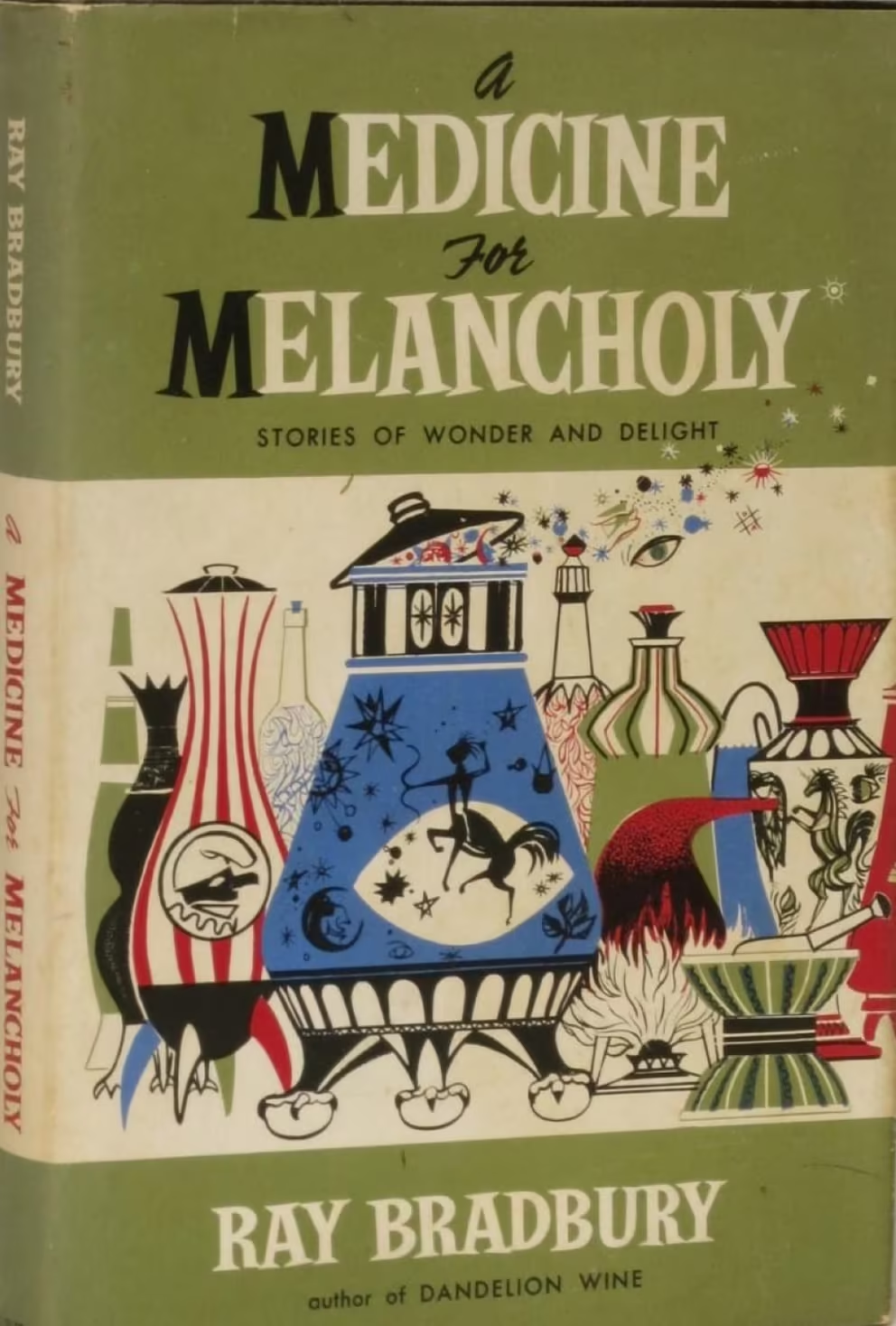
This is one of the most piercing stories about longing for childhood and home in world literature. And one of the most courageous too: when you accept that you are frightened and sad and do something that most of us never manage: you bring your metaphorical “strawberry window” all the way to Mars, so that it might become your home.
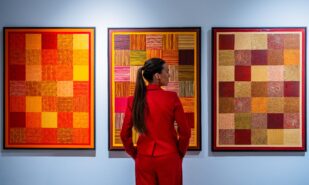
In his dream he was shutting the front door with its strawberry windows and lemon windows and windows like white clouds and windows like clear water in a country stream. Two dozen panes squared round the one big pane, colored of fruit wines and gelatins and cool water ices.
“Look!” And through the green glass the world was emerald, moss, and summer mint.
“Look!” The lilac pane made livid grapes of all the passers-by.
And at last the strawberry glass perpetually bathed the town in roseate warmth, carpeted the world in pink sunrise, and made the cut lawn seem imported from some Persian rug bazaar. The strawberry window, best of all, cured people of their paleness, warmed the cold rain, and set the blowing, shifting February snows afire.
Bradbury was the first to write about how ordinary things bind us to a place and to our memories – things that our memory transforms into artifacts:
“It’s the little things I miss most of all. I don’t know — silly things. Our front-porch swing. The wicker rocking chair, summer nights. Looking at the people walk or ride by those evenings, back in Ohio. Our black upright piano, out of tune. And some crystal we had. And the parlor furniture. Lord, it was awful, big and bulky and old, I know it, I know it. And the Chinese lamp with the crystal prisms that tinkle in the wind. On summer evenings sitting on the porch and passing the time of day with the neighbors. I know it’s all silly and doesn’t matter. But it’s three in the morning and I can’t sleep and I keep thinking…”
In this short, almost childlike story there are a lot of things we can discuss with children, including a fascinating philosophical riddle: The Ship of Theseus paradox. Is an object the same after having all of its original components replaced with others over time.The ship on which Theseus returned from Crete to Athens was kept by the Athenians. Each year, the Athenians would commemorate this by taking the craft on a pilgrimage to Delos to honour Apollo. Over time, various of its timbers rotted and were replaced. If no pieces of the original remained in the current ship, was it still the Ship of Theseus? If it was no longer the same, when had it ceased existing as the original ship?
“Is the Old worth all our money? No! It’s only the things we did with the Old that have any worth. Well, then, is the New worth all our money? Yes! If I can fight this thing that makes us want to go back to Earth, I’d dip my money in kerosene and strike a match!”
Sculptor’s Daughter, Tove Jansson
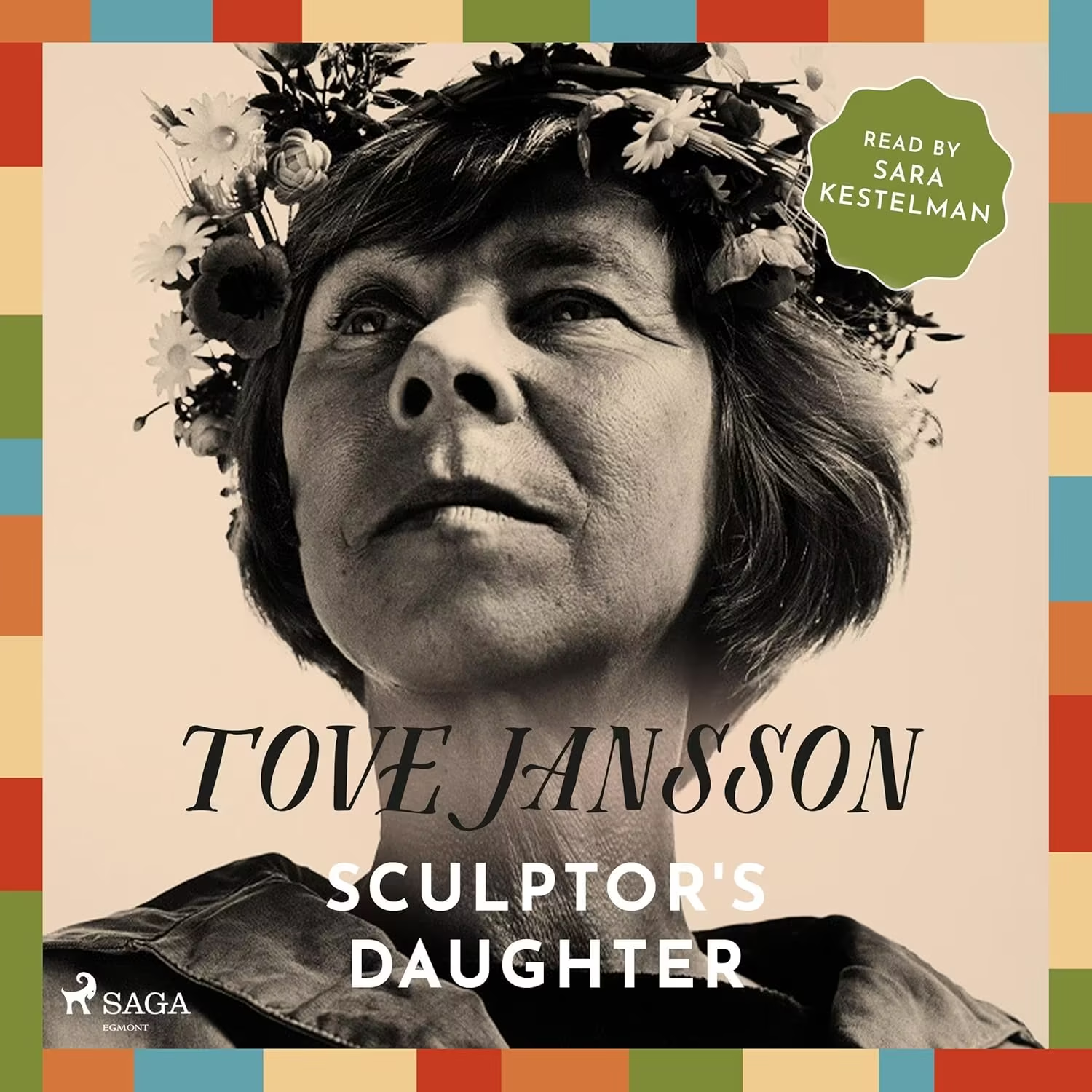
This is a book about a girl named Tove, daughter of sculptor Viktor Jansson and artist Signe Hammarsten-Jansson. It is a book about a child who is starting to see the world around her – not only her parents’ world, but also the world of other adults, not always comprehensible to her and the relationships between grown-ups, which she takes on faith exactly as they are, without asking why. To see the world and art first through the eyes of one’s parents, and then gradually to form one’s own view.
“We lived in a large, dilapidated studio in Helsinki, and I pitied other children who had to live in ordinary flats … nothing like the mysterious jumble of turn-tables, sacks with plaster and cases with clay, pieces of wood and iron constructions where one could hide and build in peace.”
“The plaster pictures were really the most beautiful things I had ever seen, but they weren’t Art. One couldn’t respect them at all. Actually one should really have despised them.”
This girl sees the creative process from the inside, as the two people closest to her the sculptor and the artist – live inside the shell of their work:
“We turn out the lights in the studio and sit in front of the fire and she says: once upon a time.”
The Shoes That Were Danced to Pieces, Jacob and Wilhelm Grimm

When we read to our children – even to those who have long been perfectly capable of reading themselves, we still, at least every now and then, read them fairy tales. Our most cherished, most magical ones. Later, when they are older, we will quote Propp and his morphology of the folktales to them with an ironic smile – but for now… for now we can still read about worn-out dancing shoes:
Once upon a time there was a king who had twelve daughters, each one more beautiful than the others. They slept together in one room, where their beds stood next to each other. At night when they were lying there, the king closed their door and barred it. However, when he opened it the next morning he saw that their shoes had been danced to pieces. No one could determine how it had happened
But we know, of course – the princesses had been dancing until three in the morning, until they had danced right through every last pair of shoes.
Wishing you all cosy moments of reading together with your children, a joyful meeting with spring and shoes worn out from dancing!