Leonid Desyatnikov: ‘I No Longer Feel that This Music Belongs to Me’

Ahead of a rare London concert featuring several of his works, Leonid Desyatnikov discusses what happens when performers take possession of his music, why he refuses to offer advice to young composers, and the piece he fears might provoke an unpredictable reaction at Wigmore Hall.
Interview by Stacy Jarvis
Categorising Leonid Desyatnikov within any single genre proves remarkably difficult. Born in Kharkiv in 1955 and educated at the Leningrad Conservatoire, he has moved throughout his career between concert music, opera, ballet and film, without ever belonging entirely to a single musical movement. His oeuvre encompasses the opera Rosenthal’s Children, the song cycle Dichterliebe und -leben, various chamber and orchestral works, and scores for some of the most celebrated films of the post-Soviet era. One moment his music feels lyrical and instantly recognisable, the next, ironic or deliberately disorientating, drawing freely on styles and musical memories that seem to belong to another era entirely.
Desyatnikov has held prominent positions in Russian musical life, including a tenure as artistic director of the Bolshoi Theatre. Nevertheless, his music is heard far less frequently in the UK. The composer himself is considerably more blunt regarding his recognition on these shores. During our conversation, he describes himself as ‘a complete unknown in London and in the UK as a whole’.
This may well change, if only for one evening. On 18 September, Wigmore Hall hosts a programme featuring several of Desyatnikov’s works, performed by pianists Pavel Kolesnikov and Samson Tsoy, tenor Bogdan Volkov, and cellist Adrian Brendel. Desyatnikov’s music will feature alongside Saint-Saëns, Rachmaninov, Schubert and Ravel, with the repertoire including Dichterliebe und -leben, Variations on Obtaining of a Dwelling, and Du côté de chez Swan. For British audiences rarely afforded the opportunity to hear so much of his work in a single sitting, this offers an unusually concentrated introduction to the composer. Desyatnikov views the evening as ‘a kind of tribute’ to his 70th birthday, albeit a slightly belated one. There is, however, one curious detail: he had virtually nothing to do with it. ‘I had absolutely no part in putting this programme together. None whatsoever,’ he admits.
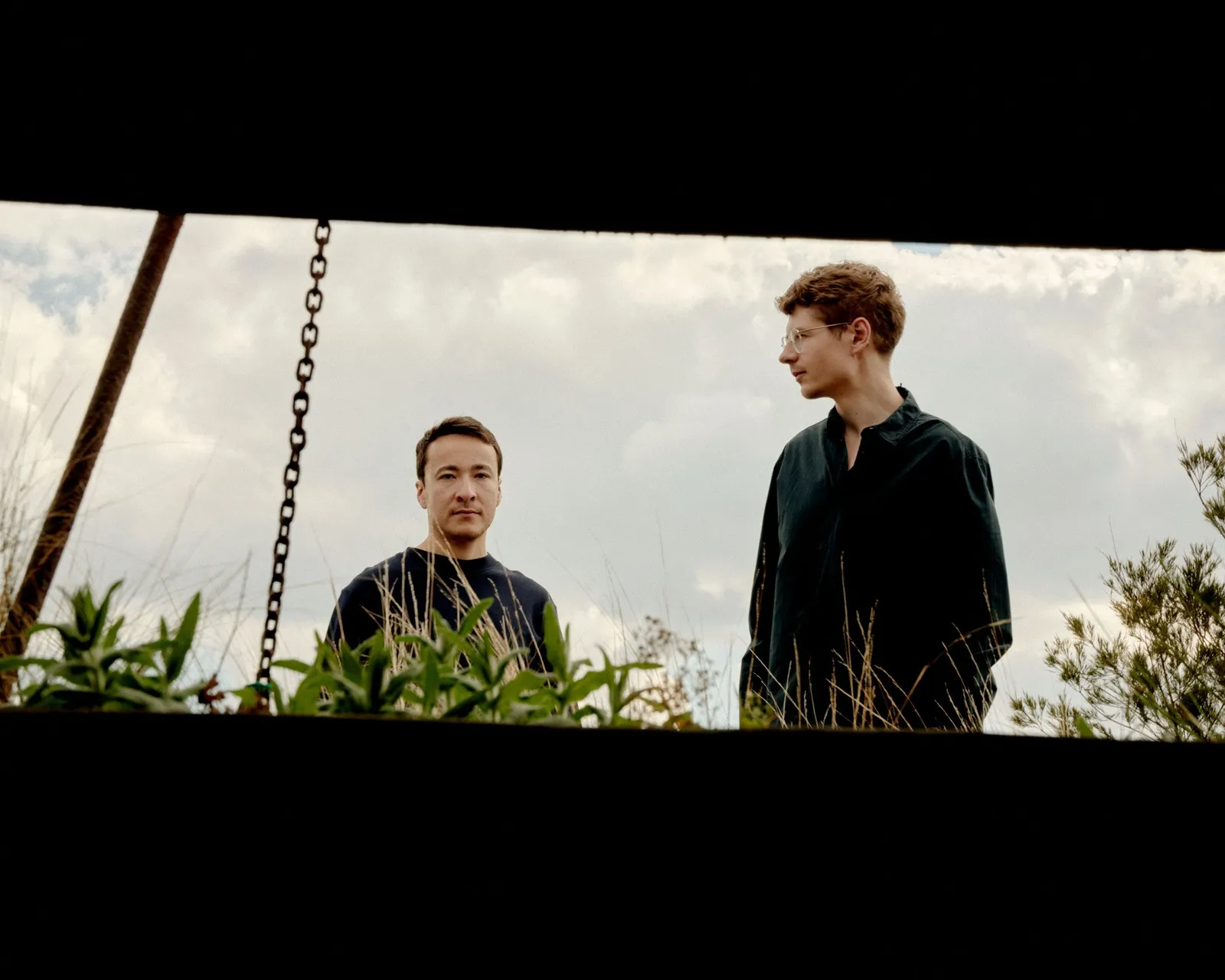
The initiative came directly from Kolesnikov and Tsoy, both regular fixtures at Wigmore Hall over recent seasons, who share a distinct connection with Desyatnikov’s work. It was they who premiered Trompe-l’œil, written specifically for them and to whom it is dedicated. Desyatnikov also recalls hearing them perform an arrangement of Saint-Saëns’s The Swan, a piece retained in the revised Wigmore Hall programme. ‘In my view, they are brilliant musicians,’ he notes. ‘Even if they had taken a radically different approach to my music, I think I’d still have liked it. I am very fond of them both.’
At the time of our conversation, the advertised programme looked rather different. Stravinsky was originally slated to appear alongside Desyatnikov, and when asked whether that pairing surprised him, the composer immediately grasped the logic behind it. ‘I think their motives are perfectly obvious. I’m a complete unknown in London and in the UK as a whole. So, dedicating a programme entirely to an unknown person is simply not strategically viable.’ At the time, he viewed even the inclusion of Stravinsky as evidence of the commercial risk involved in introducing his music to a British audience, a typically unsentimental assessment of his own standing. Yet this willingness to step back from his own reputation turns out to have a musical counterpart. As our conversation turns from the repertoire to the musicians performing it, Desyatnikov reveals something far more profound: over time, he has ceased to perceive his own compositions as something belonging to him.
When asked whether hearing his works performed by specific musicians alters his perception of them, Desyatnikov admits to having heard ‘some horrifying performances’, as well as others that were wonderful and unexpected. Yet unexpected does not equate to wrong. ‘If the performance is convincing, then I accept it completely.’
By the time he encounters many of these performances, his relationship with the piece has already shifted. ‘Usually this happens at the point when I no longer feel that this music belongs to me. I listen to it from the outside, as if it were someone else’s music.’ By then, he says, he no longer feels that the work ‘belongs personally to me and no one else. Absolutely no such feeling whatsoever.’
It is tempting to ask a composer what a specific piece truly means or how it ought to sound, as though every score hides a definitive ‘reference version’ accessible only to its creator. Desyatnikov, however, appears largely uninterested in constraining musicians. A compelling interpretation can depart radically from his original vision and still entirely win him over.
This same reluctance to assert authority becomes apparent when addressing a question established composers are inevitably asked throughout their careers: what advice would he give to someone just starting out? ‘Probably none.’ Desyatnikov pauses, reflecting on the weight of responsibility that even a single piece of counsel carries. ‘Even if you limit yourself to just one piece of advice, you are still taking responsibility for that person’s future.’
He stresses that he has never taught, seeing little sense in being asked how another composer should work. Instead, he recalls an interview with Sofia Gubaidulina, in which the celebrated composer was asked a similar question late in life. ‘What can I teach?’ Desyatnikov recalls her saying. ‘I don’t know how to do anything myself.’ It remains a striking declaration from a composer then in her eighties and, as Desyatnikov puts it, ‘in all the brilliance of her fame’. Desyatnikov understood it completely. ‘And, strange as it may seem, I think I understand what she meant.’
Experience does not necessarily make confronting a new composition any easier. What remains, Desyatnikov explains, is a sense of bewilderment when faced with ‘a blank sheet of paper, or a monitor’. In his words, it is uncomfortable initially and remains so, in a sense, throughout the entire creative process. Should a composer continue to feel this uncertainty, Desyatnikov believes it may well be a healthy sign. The closest he comes to offering guidance sounds almost offhand: ‘You have to doubt what you’re doing.’
For Desyatnikov, experience has clearly not dispelled the inherent uncertainty of composition. At one end of the spectrum sits the blank screen, at the other, a work sufficiently distant for him to hear as though it were written by another. Asked whether the Wigmore Hall programme, spanning pieces written across different epochs of his life, feels like encountering past incarnations of himself, Desyatnikov declines to indulge the notion. ‘I think I’ll just listen to the musicians and nothing more. As I’ve already said, it’s not so important to me that it’s mine.’
He remains far more engaged by the pragmatic realities of programming than by turning the evening into an exercise in autobiography. During our interview, Desyatnikov outlined what he understood to be the practical logic behind the selections: pieces Kolesnikov and Tsoy had previously performed at Wigmore Hall, the availability of Bogdan Volkov and Adrian Brendel, and the pragmatic constraints of budget and ensemble size. The programme itself has since evolved, with Saint-Saëns, Rachmaninov, Schubert and Ravel joining Desyatnikov on the bill. ‘It’s an arrangement that is entirely normal, compact and successful,’ he noted of the line-up at the time. ‘A good concert.’
Towards the very close of our conversation, he raised the one matter genuinely troubling him about the performance. ‘I was thinking about it yesterday when I couldn’t sleep.’ His anxiety centres on Dichterliebe und -leben (The Poet’s Love and Life), specifically how a London audience will receive its text. ‘What, exactly, will the audience understand in the poems by Oleynikov and Kharms? And will an English translation of these texts be provided?’
Desyatnikov notes that several months ago he forwarded his available English translations to Samson Tsoy. At the time of speaking, he remained unsure whether they would be printed in the programme. The question of translation is particularly critical given that one movement sets Nikolai Oleynikov’s Beetle’s Rhapsody. Desyatnikov describes the text as a grotesque caricature of an antisemite, material whose reception in contemporary London he finds exceptionally difficult to forecast. ‘As far as I know from the media, this is an extremely sensitive issue in London,’ he observes, ‘and, incidentally, a sensitive one for me as an Israeli citizen.’
He has witnessed the piece provoke ferocious reactions before, acutely aware of how deeply it moved audiences in Russia. Some listeners, he recounts, walked out, others wept, while some shouted ‘Disgrace!’ ‘For some people, this is a deeply painful story.’
How that same work will land with a London audience, encountering Oleynikov in translation within a vastly different contemporary landscape, remains impossible to tell. ‘What will happen there is a complete unknown,’ he says. ‘Perhaps there will be some sort of surprise.’ Desyatnikov, who merely minutes earlier demurred from offering advice to aspiring composers, finally offers a piece of advice to me. When attending Wigmore Hall, I should come equipped with a motorcycle helmet and popcorn. I assure him I’ll be counting down the days.