From Writers to Financiers: London Theatre in September

Summer has flown by — blink and you missed it. Scorching and relentless, it has finally given way to autumn rain, which means it is time to go back to the theatre. Especially as this September is unusually rich in interesting productions. Choosing just six out of dozens was not easy, but the final list includes both major West End shows and some very intriguing Off-West End work.
The Standard of Living
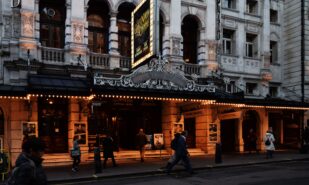
Theatre Royal Haymarket
Haymarket, London SW1Y 4HT
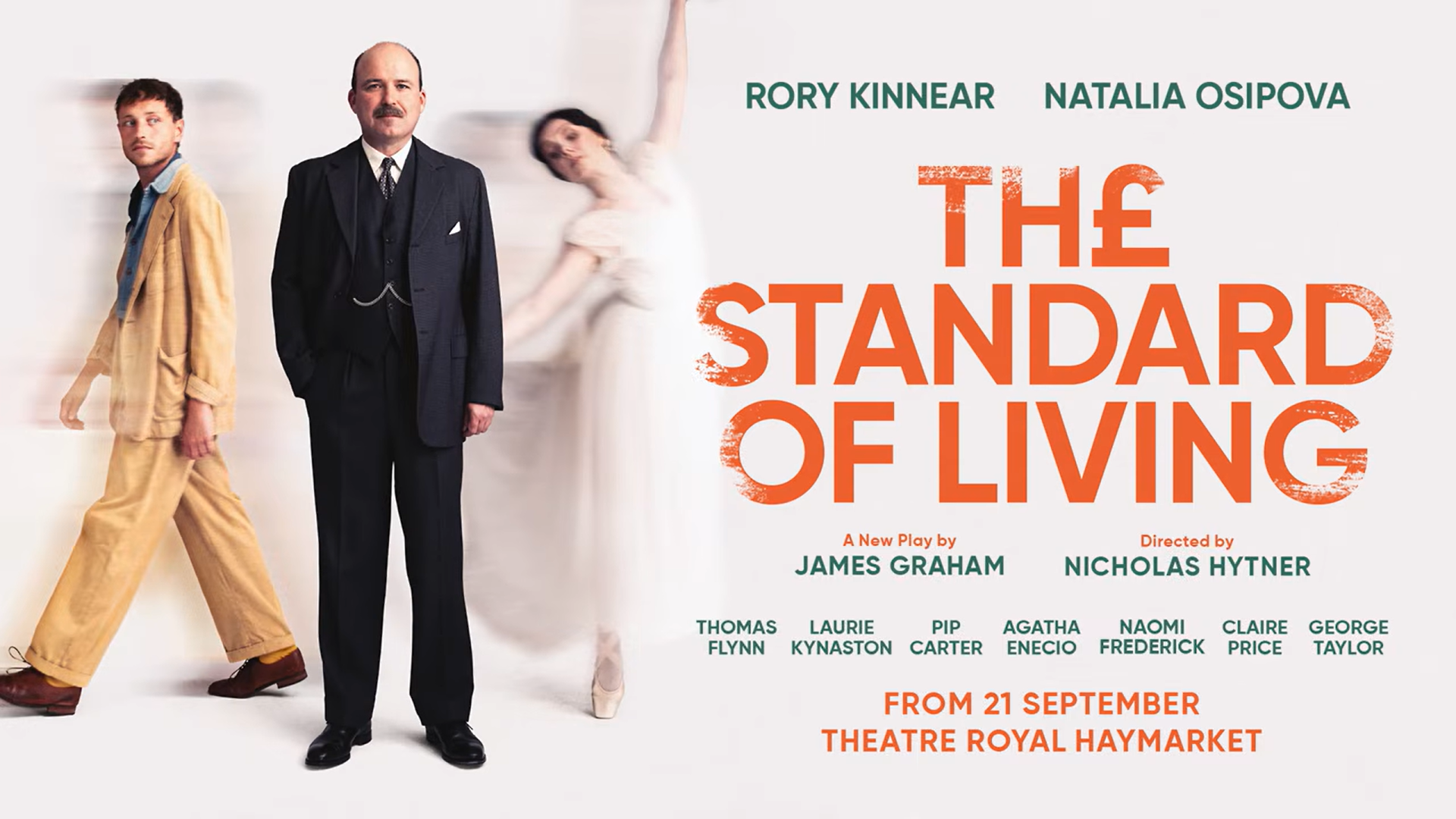
What makes a life happy? Can happiness, beauty, love and freedom be measured in the same way as economic growth? The Standard of Living is the world premiere of a new play by James Graham, one of the most prominent contemporary British playwrights and the author of Dear England, Punch and Ink. This time he turns to John Maynard Keynes — the economist whose ideas transformed the way governments think about money, crises and public welfare. But Graham is interested in Keynes as much more than a financier. Keynes was a member of the Bloomsbury Group, a friend of Virginia Woolf, the lover of the artist Duncan Grant and, later, the husband of Russian ballerina Lydia Lopokova, a star of the Ballets Russes — a marriage that astonished many of his friends. The action moves between two worlds that seem, at first, to have very little in common: the corridors of power and a bohemian circle of people attempting to live more freely and boldly than the society around them.
Keynes is played by Rory Kinnear, known to a wide audience from film and television, from Hamlet to Skyfall and The Diplomat. He is one of those British actors capable of suggesting deep internal contradiction with the smallest of gestures. Keynes is both a brilliant thinker and a man of powerful passions, and he does not always live according to the rational principles with which he tries to explain the workings of society.
Opposite him as Lydia Lopokova is Natalia Osipova, a principal dancer of the Royal Ballet. This is her West End debut as a dramatic actress: a genuine star ballerina playing one of the great ballerinas of the past.
The production is directed by Nicholas Hytner, former Artistic Director of the National Theatre and the director of The History Boys, One Man, Two Guvnors and the recent Giant. His work has a particular gift for combining intellectual material with vivid human drama. For Graham, Hytner is an especially fitting director: neither of them is interested in giving the audience a lecture on economics, but both are fascinated by the collision of grand ideas with real life, real love, ambition and reality itself. The production also features a large ensemble: Thomas Flynn plays Duncan Grant, Naomi Frederick is Virginia Woolf, Laurie Kynaston plays Friedrich Hayek, Pip Carter is Lytton Strachey and Claire Price is Vanessa Bell. The result promises to be something close to a living portrait of intellectual Britain in the first half of the twentieth century.
Tru
Menier Chocolate Factory
4 O’Meara St, London SE1 1TE
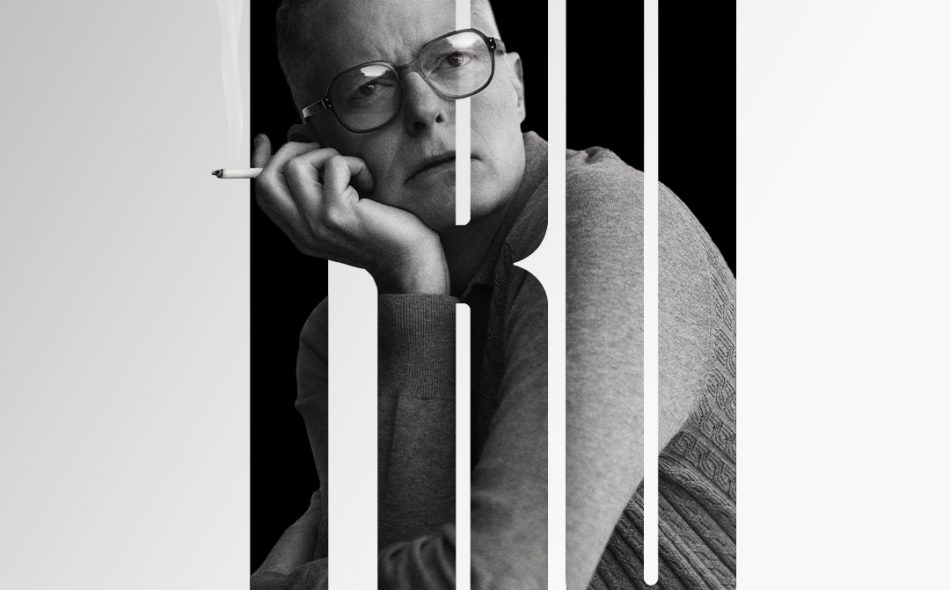
This is an intimate play about Truman Capote at one of the most painful moments of his life. The action takes place at the end of 1975, shortly after Esquire published “La Côte Basque”, a chapter from his never-completed novel Answered Prayers. The scandal was enormous. Members of New York high society had no difficulty recognising themselves — and the secrets they had entrusted to Capote without hesitation over many years. For decades, Capote had been the darling of this world and the close friend of its famous “Swans”, those dazzling women of high society. He never imagined that publication would result in his almost immediate exile.
The play was written by the celebrated American screenwriter Jay Presson Allen, whose credits include Cabaret, Marnie and Prince of the City. Tru is not structured like a conventional biographical drama: Allen assembled the text from Capote’s own writings, interviews and remarks. What happens on stage therefore becomes several things at once — a confession, a dazzlingly witty society monologue and a man’s attempt to explain to himself how he ended up so completely alone. In 1989 the play was a major Broadway success, and its original star Robert Morse won the Tony Award for Best Actor in a Play.
In the London production, Capote is played by Jesse Tyler Ferguson, best known to a wide audience as Mitchell Pritchett in Modern Family. Ferguson, however, is an experienced stage actor and a Tony Award winner himself, and Tru gives him an opportunity to display the full range of his acting.
The director is Rob Ashford, an American director and choreographer with extensive experience both on Broadway and in the West End.
The choice of theatre seems particularly inspired. Menier Chocolate Factory is a small venue where the actor is practically right under the audience’s nose; the distance between Capote and the front row almost disappears. Tru is not a grand official biography of a famous writer. It is the personal, melancholy monologue of a man who has just destroyed his former life with his own hands.
We are left alone with him — traumatised, exhausted, caustic and sad, trying to understand the consequences of what he has done, unaware that the book which ruined his life will remain unfinished forever.
Abigail’s Party
Harold Pinter Theatre
Panton St, London SW1Y 4DN
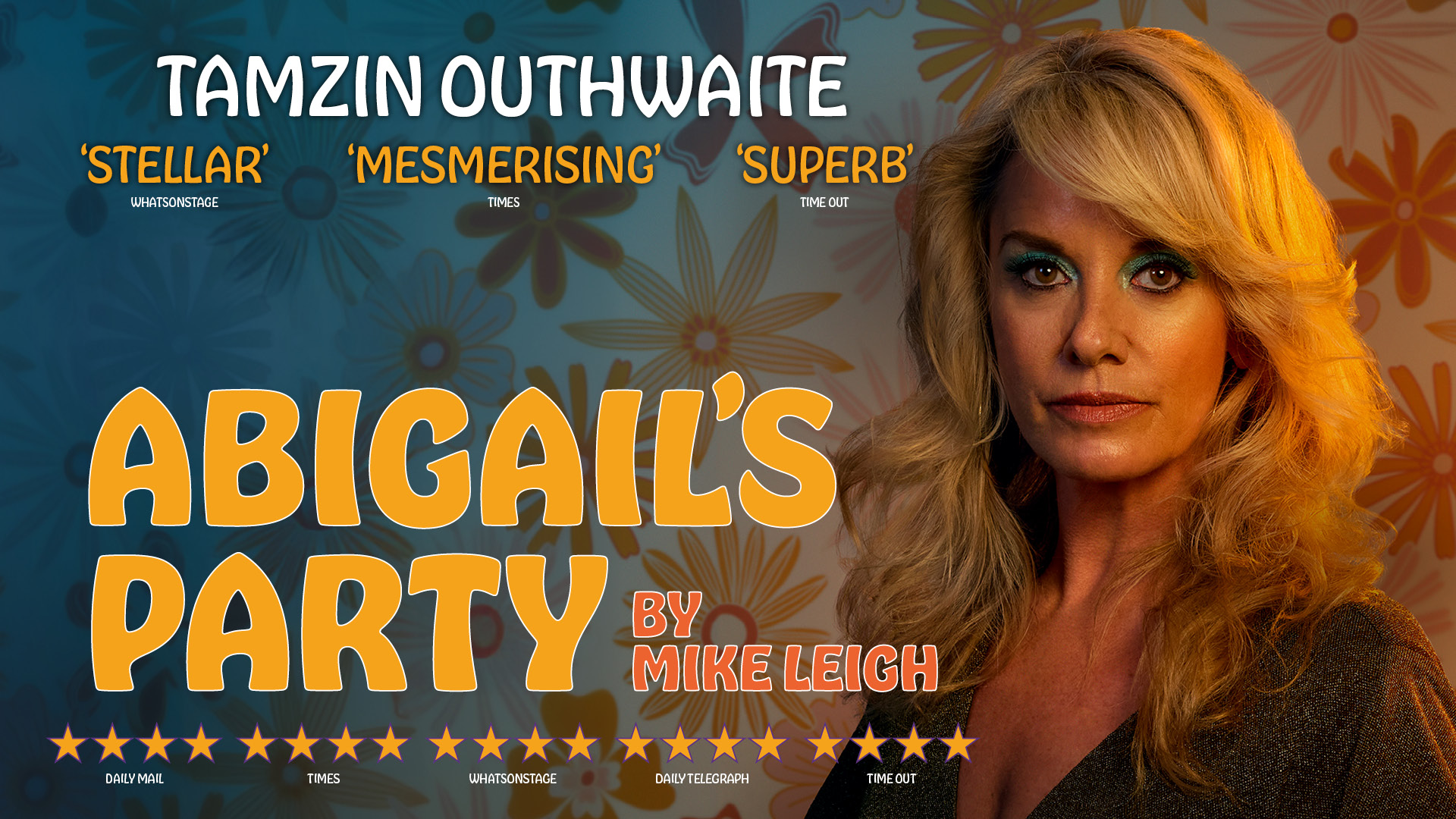
This cult black comedy by Mike Leigh was first staged at Hampstead Theatre in 1977. It did not begin life as a conventional pre-written script: Leigh developed it with the actors through long periods of improvisation, gradually building the characters, their histories and their relationships.
The plot is a perfect domestic catastrophe — ridiculous, painfully funny and increasingly uncomfortable. Essex. Beverly and her husband Laurence invite their new neighbours Angela and Tony over for drinks. Sue also joins them: she is the mother of fifteen-year-old Abigail, who is hosting a teenage party of her own. Abigail never appears on stage — her party is happening somewhere out there, beyond the room we are watching.
Inside Beverly’s living room, however, the temperature keeps rising. There is too much alcohol, awkward conversation, ostentatious displays of taste and status, flirtation and marital sniping. The party moves towards its endgame, and the comedy becomes steadily more unpleasant.
From the outside, it is a perfect time capsule of 1970s Britain: cocktail sticks with cheese and pineapple, glorious interior design. From the inside, it is class anxiety and monstrously polite passive aggression. The original production was so successful that the BBC filmed a television version for its celebrated Play for Today anthology.
In the current London production, Beverly is played by Tamzin Outhwaite, best known for playing Mel Owen in EastEnders, although she also has a substantial West End career. Kevin Bishop plays Laurence, with Pandora Colin, Omar Malik and Lauren Patel completing the cast.
The director is Nadia Fall, Artistic Director of the Young Vic. She spent many years working at the National Theatre, where her productions included The Doctor’s Dilemma, Dara and The Suicide. Her own play Home was created as verbatim theatre and built from the real testimony of young homeless people. She later became Artistic Director of Theatre Royal Stratford East, where she spent seven years.
This Abigail’s Party is a transfer of Fall’s Theatre Royal Stratford East production, which enjoyed a sold-out run in 2024. It plays until 19 September 2026.
The Last Ship
Royal Drury Lane
Catherine St, London WC2B 5JF
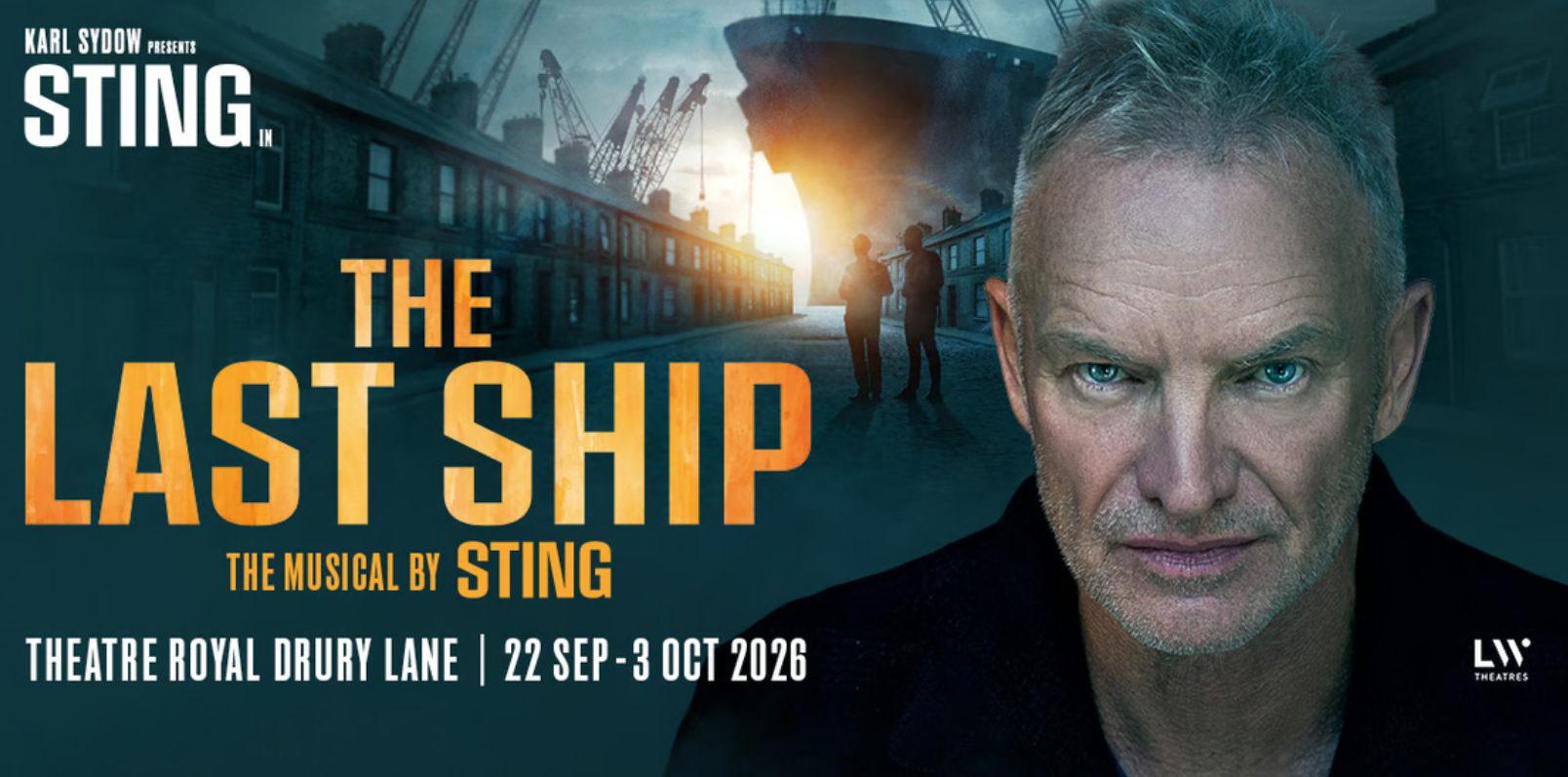
The Last Ship is not Sting’s first encounter with theatre. In 1982 his songs were used in the Broadway musical revue Rock ’N Roll! The First 5,000 Years, and in 1989 he appeared on Broadway himself, playing Macheath in The Threepenny Opera.
But The Last Ship is by far his most personal theatrical project. Sting grew up in Wallsend in north-east England, almost in the shadow of the Swan Hunter shipyards. He has often said that as a child he saw them both as something monumental and as a world he desperately wanted to escape.
Years later, memories of the working-class town, his father and the disappearing shipbuilding industry first surfaced in his 1991 album The Soul Cages, before evolving into the musical The Last Ship. The story of the shipyard here is not so much an industrial drama as an exploration of what happens to an individual — and to an entire community — when the work around which its identity has been built for generations disappears.
The musical has had a complicated life. It opened on Broadway in 2014 and received two Tony nominations, including one for Sting’s score, but it was not a commercial success. Sting himself eventually joined the cast in an attempt to boost ticket sales. But he never abandoned the project. Over the following decade, The Last Ship was repeatedly revised. Sting has said that he sees every previous production as material for the next iteration.
The current version comes with a new book by Barney Norris, newly added songs by Sting and revisions to earlier material. It is directed by Leo Warner. This time Sting is not only the composer and lyricist but also plays Jackie White, the ageing shipyard foreman whose health begins to fail precisely when the workers need a leader most.
It is a significant shift. Sting is now playing a man from the generation of fathers and grandfathers — the very men whose fate the young Gordon Sumner once tried so hard to avoid.
A large company joins him on stage, while the musical language combines Celtic folk, workers’ choruses, ballads and Sting’s unmistakable melodic style. The score includes Island of Souls, All This Time and When We Dance. The London production runs for almost three hours and makes extensive use of video and large-scale stage design, transforming the theatre into an industrial shipyard landscape.
Before reaching London, this version travelled through Amsterdam, Paris, Brisbane and New York’s Metropolitan Opera. Critical reaction has been mixed, ranging from ecstatic five-star reviews to much cooler assessments.
In London, The Last Ship plays at Theatre Royal Drury Lane for only a couple of weeks, with Sting scheduled to appear at every performance. More than anything, the musical feels like his attempt, decades later, to reconcile himself with — or at least understand — the world and the people he left behind.
The Urmetazoan
Hampstead Theatre
Eton Ave, London NW3 3EU

The Urmetazoan begins with an idea on an almost cosmic scale and very quickly turns it into a story about two sisters. Alice, a brilliant scientist and Nobel Prize winner, is preparing to leave on a one-way mission into deep space. There will be no return. To everyone else, it may look like a magnificent leap for humanity into the unknown. For her sister Abigail, it is something much simpler and much more frightening: the person she loves is choosing to disappear from her life forever.
The title The Urmetazoan refers to the hypothetical common ancestor of all animals, the first multicellular creature from which the vast history of animal life supposedly began. Playwright Alex Rugman sets this almost unimaginable scale of time against the most ordinary human questions: what are we having for dinner? When should we buy shoes? What time are we seeing each other tomorrow? What, in the end, is it that actually binds us to one another?
Rugman is a young British playwright and a graduate of Hampstead Theatre’s INSPIRE programme, which makes it particularly fitting that the world premiere of his new play is taking place here, at Hampstead Theatre itself.
The production is directed by Anna Ledwich, who has a long association with Hampstead Theatre and a particular gift for plays in which an intellectual idea gradually reveals itself through intensely personal relationships. Her previous work here includes Dry Powder and Four Minutes Twelve Seconds, both nominated for Olivier Awards.
In The Urmetazoan she is dealing with especially fragile and tender material: deep space, cutting-edge science and the future of humanity are all present, but something much smaller and more important sits at the centre — two sisters trying to say goodbye. There are only three actors on stage. Dorothea Myer-Bennett plays Alice, Meghan Treadway plays Abigail and Ben Allen plays Will.
The intimate space of Hampstead Downstairs seems almost ideal for such a story. It is a small room where there is nowhere to hide behind theatrical distance, scenery or lighting: the audience is practically inside the conversation.
Space may be infinite, but the room on stage remains simply a room. And people remain people rather than grand explorers of the depths of the universe. All of them are trying to say the things to one another that people usually postpone until the very last moment. The Urmetazoan is not science fiction in the conventional sense. It is a play about distance — about how much distance love can survive, and the moment when one person’s journey becomes another person’s loss.
Its central question appears to be directed not towards the stars but towards those who remain on Earth: if someone is offered eternity, discovery and a place in the history of humanity, is that enough reason to leave behind the people who love them? And, on the other hand, is love enough reason to abandon the dream and purpose of a lifetime?
Jane Eyre
Southwark Playhouse Elephant
1 Dante Pl, London SE11 4RX
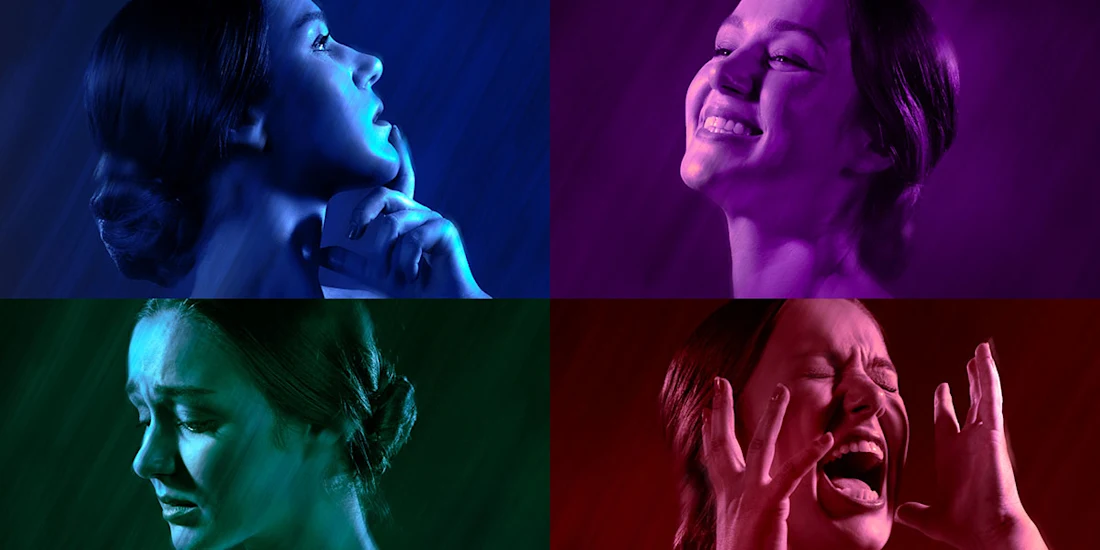
This is the return of a fascinating musical with a history stretching back almost thirty years.
John Caird and Paul Gordon’s Jane Eyre was first staged in Toronto in 1996 and reached Broadway four years later, where it received five Tony nominations. Charlotte Brontë’s enormous Victorian novel is compressed into music and the intimate scale of an Off-West End theatre. Surprisingly, Jane Eyre has never before received a professional UK production, which makes the current staging at Southwark Playhouse Elephant a genuine British premiere. Its official opening is scheduled for 8 September.
The book is by John Caird — the same director who, together with Trevor Nunn, created the original stage version of Les Misérables. The music and most of the lyrics are by Paul Gordon, also known for Daddy Long Legs.
For this new London production, Caird has not simply returned to his old material but has extensively reworked it and co-directed the show with Broadway actress Megan McGinnis, with whom he previously collaborated on Daddy Long Legs. In other words, this is not an attempt to resuscitate an old production, but a new, intimate version of a piece its creators are still revisiting three decades later.
At the centre, of course, is Jane herself: an orphan who grows up surrounded by cruelty and humiliation, becomes a governess at Thornfield Hall and gradually falls in love with its mysterious master — and her employer — Edward Rochester.
The musical places particular emphasis on something that was radical in Brontë’s novel itself: Jane refuses to exist simply as the object of a romantic plot. She insists on her freedom, her dignity and her right to choose her own life, even when the cost of that choice is extremely high. In the new production Charlie Burn plays Jane, while Ashley Gilmour plays Rochester. Burn’s previous credits include Mean Girls and Les Misérables; Gilmour has appeared in The Phantom of the Opera, Miss Saigon and Evita.
Around the central pair of Jane and Rochester is an ensemble in which actors take on several roles each. Claire Greenway, for example, plays Abbot and Grace Poole; Jonathan Andrew Hume plays Brocklehurst and Mason; Hannah Lindsey is Scatcherd and Bertha Mason; Isabelle Methven plays Helen Burns and Bessie.
Rather than attempting to reproduce the enormous Victorian novel literally on stage, the production creates something much more stylised — and much more theatrical — in which the same group of people accompanies Jane through the different stages of her life.
Morgan Large is responsible for the sets and costumes, with choreography by Georgina Lamb.
After the enormous success of the recent Spirited Away, Caird’s return to Jane Eyre hardly feels like a desperate attempt to retrieve a forgotten project from the archives. It looks much more like an opportunity to discover the form in which Jane Eyre can truly work for an audience today, in 2026.