Dance to the Music of Time: In conversation with Artist David Somerville

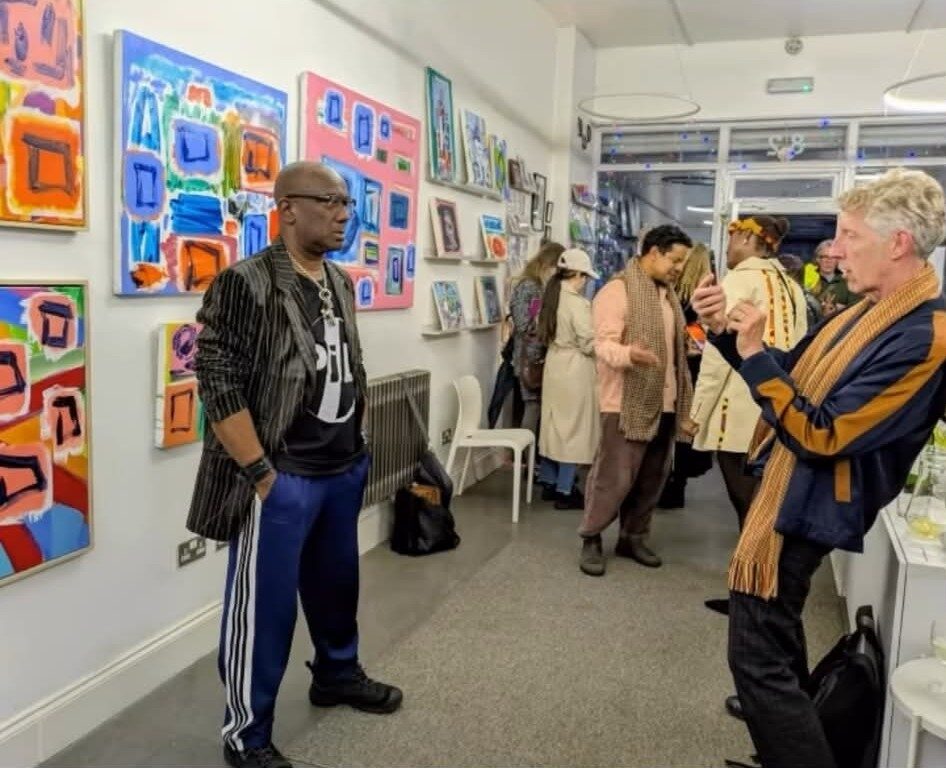
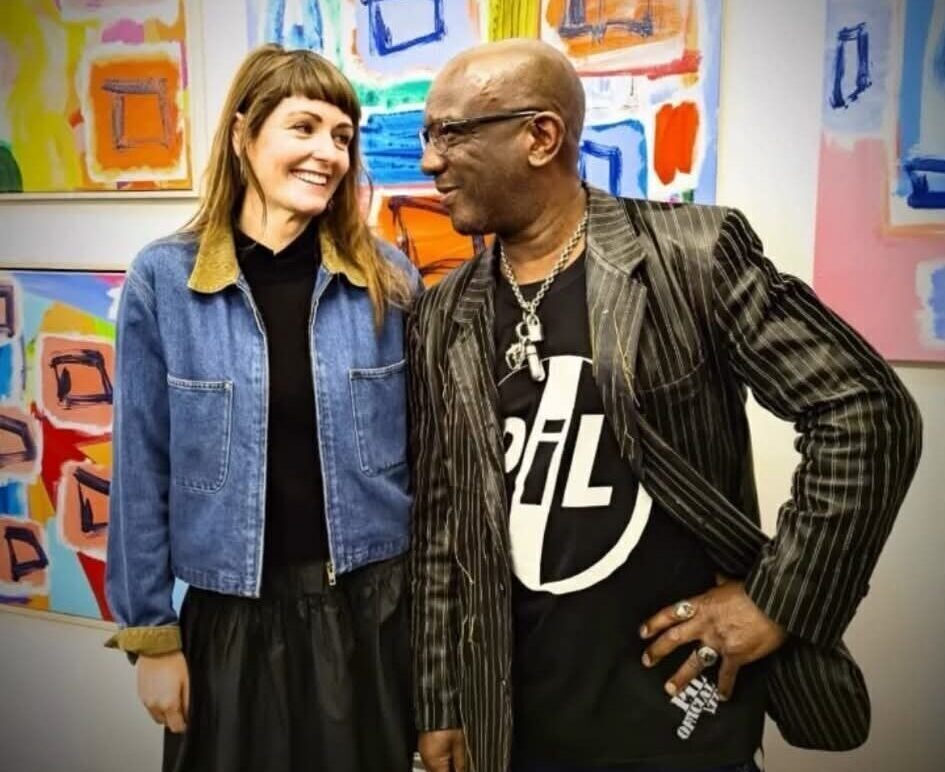
Following the energetic private view of Territories of Memory at the Three Colt Gallery in Limehouse, Alexander James speaks with David Somerville about his process, visual language, artistic progression, and current exhibitions.
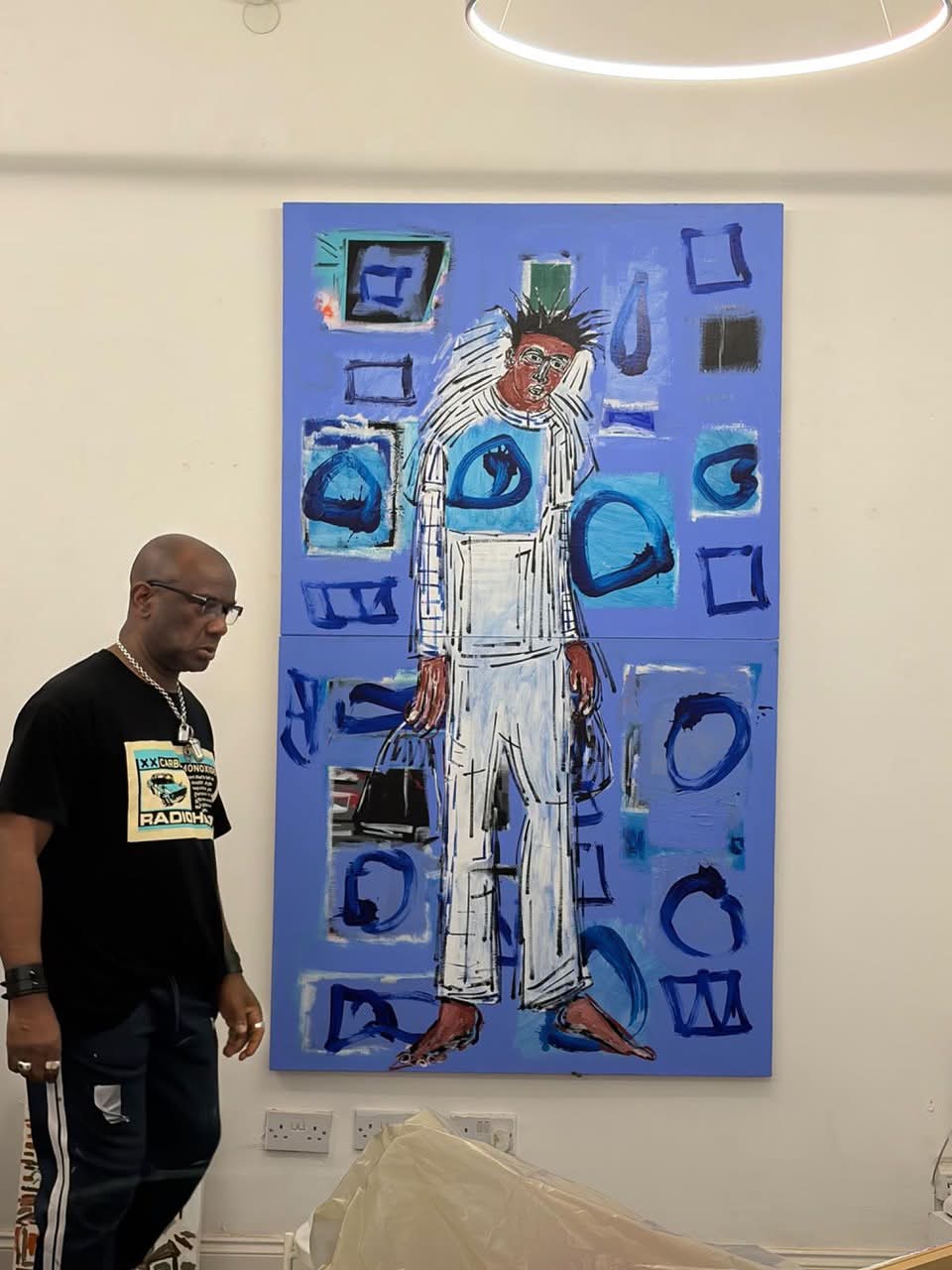
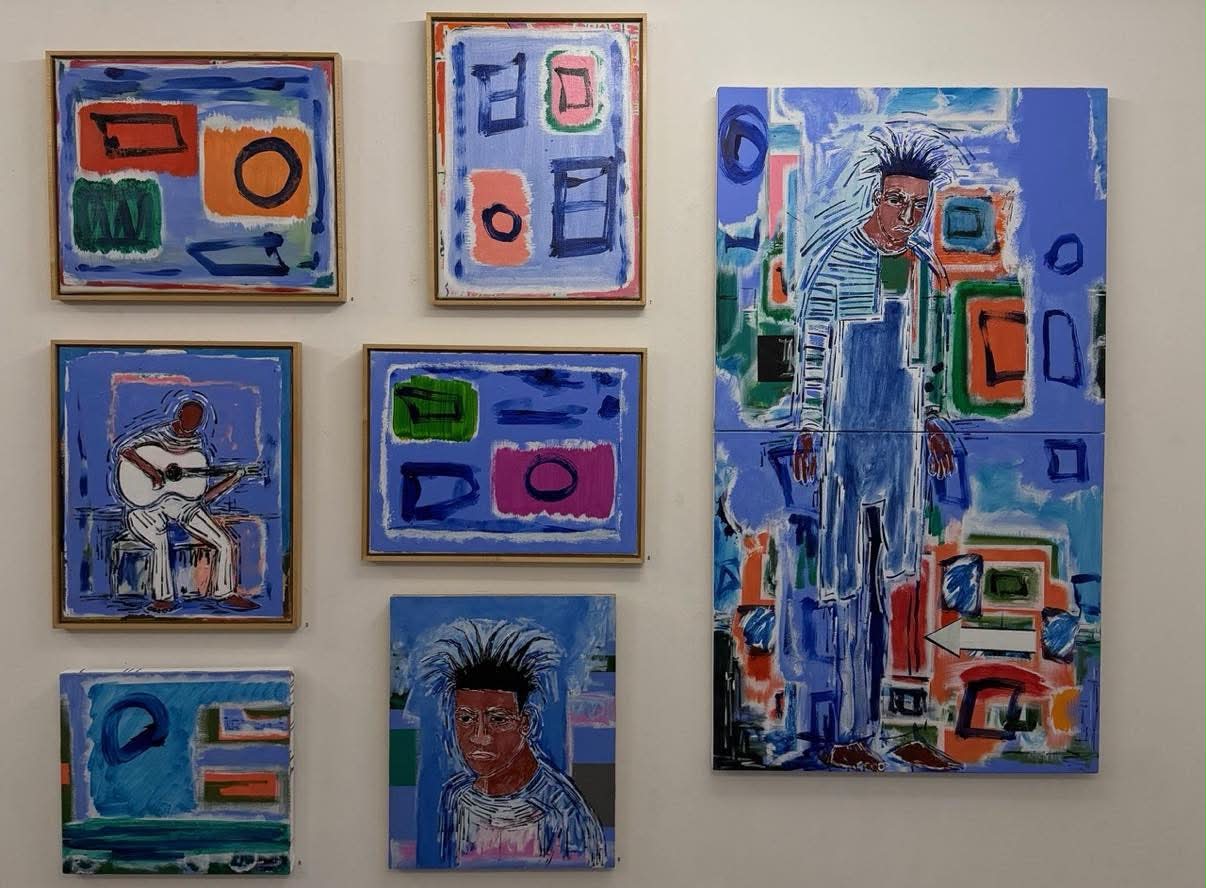
David Somerville has spent years evolving his own deeply personal visual language, structured by colour relationships and defined by what might be described as the interplay between his lived experience and time, richly expressed through radiant, melodious canvases. He progresses his artworks over many sessions, often for months or years, creating what he describes as a palimpsest in which every gesture carries the weight of what came before.
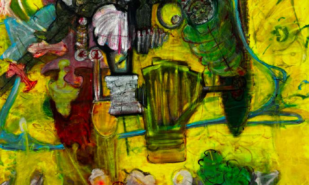
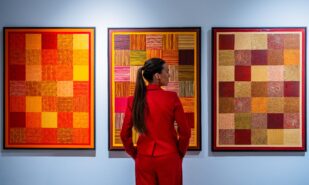
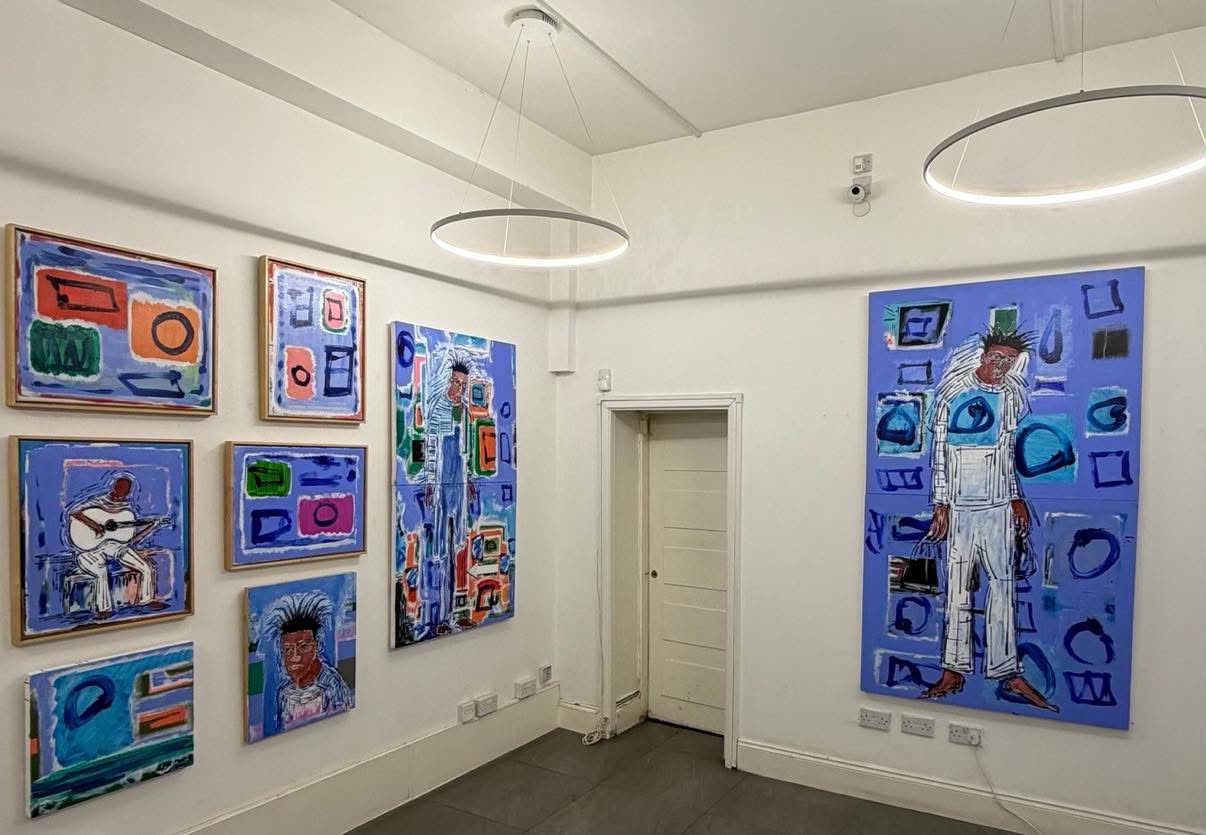
David has a select body of work on display, titled ‘Territories of Memory – Urban and Rural Life’, an exhibition at Three Colt Gallery in Limehouse until 6th June. The paintings explore a broad territory of his practice: landscapes, cityscapes, and figures that walk the line between the abstract and the recognisable, shaped by layering, erasure, and memory.
David is also currently showing an exhibition at St Mary Aldermary Church, ‘Stations of the Cross’, a medieval church in Watling Street in the City of London. While separate spaces, David sees them as parts of a single, connected body of work: an exploration of what it means to live and paint between territories, between rural and urban experience, between figuration and abstraction, and between personal history and collective spiritual tradition.
At St Mary’s, David uses the same visual language to enter into dialogue with the Stations of the Cross, a devotional motif he has been exploring for decades, and a reflection of faith, an anchor in his life.
His art transforms his lived experiences into landscapes of colour and symbolic portraiture that reflect the fragmented nature of life and the complexities of the human condition. David’s work provides a visual and psychic depth that invites the viewer into his imaginative landscapes and figurative studies, while also being layered with deeply personal history, each work rewarding on its own terms. Uniting the exhibitions is David’s time-based process of apprehending and settling on a subject – returning to his works to layer new thinking, seeking a resolution in conversation with memory.
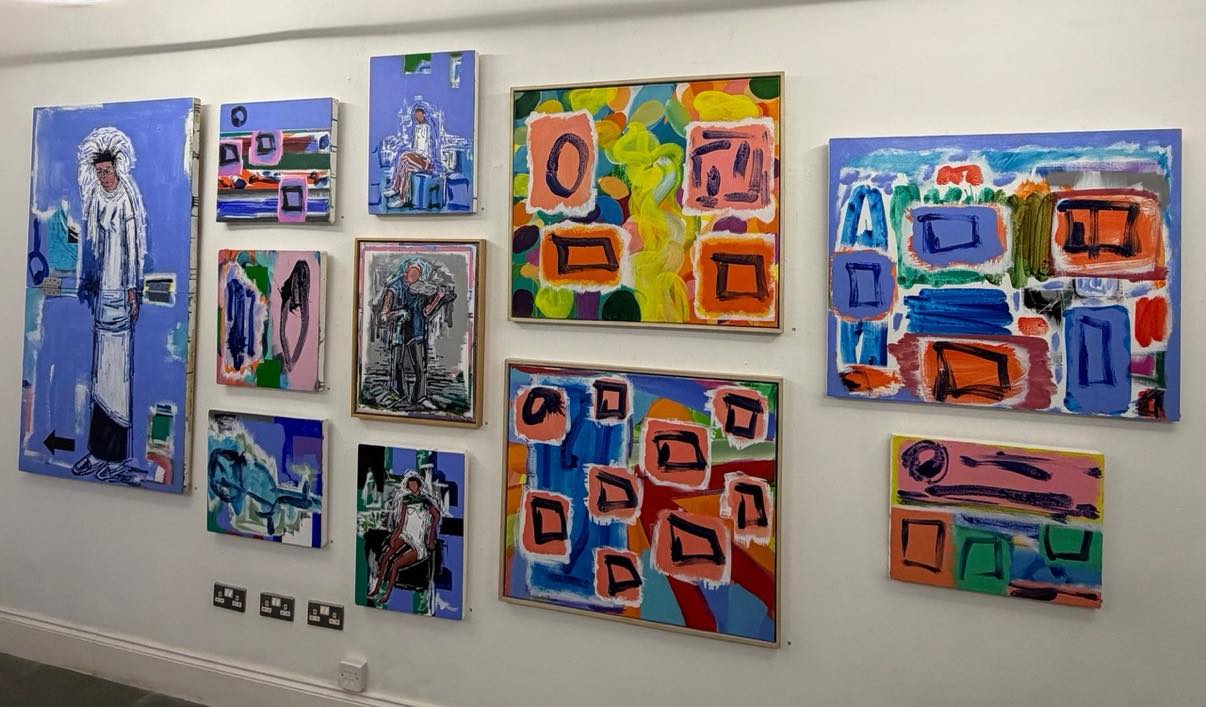
AJ: For Territories of Memory, you selected these 30 works from your large East End studio, and seem to have brought together paintings from different periods. Was there a narrative running through the room or a progression you wanted the viewer to follow?
DS: I wasn’t trying to create a strict chronological progression so much as a conversation across time. The exhibition brings together works from different periods because it reflects the way I actually think about painting and memory: not linear but layered. Certain concerns keep returning: landscape, the city, identity, movement between figuration and abstraction, and the way a painting can hold different moments at once. Rather than a single narrative, I wanted the exhibition to feel like an accumulation of experiences and returns, where older and newer works speak to each other. So, yes, some of these paintings stretch right back to 1996 and 1997, and in some ways, the selection was a way of looking into the past to reflect on where you are today and to find a kind of lineage. So, to take you through the room, you’ll see a lot of circles and energy, the sun, or strange circles appearing in the landscapes and cityscapes. I wanted a strong thread running through the whole show, so these circles act as mirrors of each other from painting to painting, tying things together. They create an illusion of space across the room. They follow each other, each painting, and they have been resolved over the last six or seven months, from about 1997, when they started, up until now. And what I do a lot of the time is put paintings away, then bring them out and rework them, trying to get an honesty in the approach, to find the core of what I’m trying to convey through colour and mark-making.
AJ: What inspired the title of this exhibition, Territories of Memory? Are you referring to inner territories or the landscapes within the paintings?
DS: It refers to both. The title suggests psychological, emotional, and remembered territories, as well as actual landscapes: rural Wiltshire, Somerset, London streets, and the spaces that have shaped my life. I’m interested in how memory maps itself onto place and how places become internalised. So the “territories” are geographical, but they are also emotional and historical. The title also reflects the fact that memory is not singular or stable: it’s made up of overlapping zones, fragments, returns, and tensions. That felt very close to the structure of the paintings themselves.
AJ: I love the idea of your work as fundamentally “time-based.” I understand you write the start and end date of painting for each canvas. What does returning to works over months or years allow you to uncover or reflect? How does this relate to memory and your relationship with the past?
DS: Returning to a painting over months or years allows me to see it more truthfully. When I step away from my work, I can let go of my original intentions and return to what the painting is actually doing. That distance creates a kind of estrangement, which is very important to me. It mirrors the way memory operates: memory isn’t fixed or archival; it’s active, unstable, and continually re-encountered from the present. So when I return to a canvas, I’m not simply continuing where I left off; I’m entering a new relationship with it. The work carries the residue of earlier decisions, and those traces become part of its meaning.
AJ: I like that you record the painting’s journey, noting the start and end date on the back of the canvas. It gives a real sense of progression, and how much each painting means to you. Some people might do a painting in ten minutes, but really it’s not ten minutes, it can take years to get to that point.
DS: Yes. There’s an idea in Chinese and Japanese calligraphy that the calligrapher carries the weight of their history and experience, then puts it down in a matter of minutes in a single gestural mark. That’s where a lot of this comes from: the idea that you can arrive at the final point in a work without being too careful. The calligrapher has the skill to convey a symbol that means something to others in one gesture. That makes me think of the painting Seen and Not Seen, the one on the very back wall of the show. The title comes from a Talking Heads track on Remain in Light, which is one of my all-time favourite records. Another favourite is My Life in the Bush of Ghosts by Brian Eno and David Byrne. I’ll often play those records in the studio because they carry such a range of urban and African rhythms; they get the beat into the room. If I’ve got a canvas on the floor and I want to resolve it but I’m thinking too much, I put the music on and the improvisation comes through that beat. The Talking Heads song is about a character imagining his face changing over time and how he deals with identity.
AJ: What does the returning to works over time allow that painting quickly cannot?
DS: Working for long periods allows a painting to gain experience. A quickly made work can capture energy and immediacy, which I value, but a painting returned to over the years can hold contradiction, revision, and deeper uncertainty. It can contain different versions of seeing. That’s important to me because life itself is not resolved in a single moment. Through repainting, scraping back, painting over, and revisiting, the canvas becomes a record of thought and feeling over time, not just of a single fixed decision.
AJ: How do rural and urban life operate in the exhibition?
DS: They run as parallel currents throughout the work. Rural space offers openness and shifting weather, long horizons and a different sense of time. The city offers compression, movement, artificial light, noise, and constant change. I’m not interested in treating them as simple opposites, but rather in the friction and dialogue between them. Much of the work stems from moving back and forth between those environments over many years. That movement became part of the structure of the paintings, both visually and emotionally.
AJ: So, you’re layering experiences, time, memories, building up a concept of a particular time or moment that you then express on canvas?
DS: Yes. And because I work across different mediums – music, film, even writing – it all links together. When we lived in Somerset, I’d go around the grounds filming parts of the landscape, then take the footage back and start editing, building up an imaginative landscape. Everything begins to merge: the colours merge, the music sits on top and merges in, too, creating a whole new kind of space. Somewhere, people can sit, engage with the work, and find things out through looking at it.
AJ: That makes a lot of sense when you apply it to film.
DS: I’m always altering things. Nothing is really fixed, any more than memory is. Things change, and your experience changes over time You see one thing, then you have a different question about it, and that brings out a different train of thought. But with film and digital technology, I can push things around and shift them much more easily than with old-fashioned editing techniques, so I can build the whole thing up that way. So, for instance, the paintings in the show are really an accumulation of time and a reinvestigation of certain moments. It’s a kind of reflection on the past, and, I suppose, how painting and digital art are able to reflect that.
AJ: What does abstraction mean to you? Would you even describe your work as abstract?
DS: I’m interested in abstraction less as a category and more as a means of opening the image. I don’t see figuration and abstraction as opposing camps. For me, they are both available languages within painting. A work may begin with something observed or remembered – a figure, a tree line, a street, a field – but through the process of painting it can move towards rhythm, structure, colour, and gesture. Equally, something apparently abstract might suddenly suggest a body, a building, or a landscape. So yes, abstraction is part of the work, but I wouldn’t want to describe the paintings as purely abstract. What matters more to me is that they remain open, hovering between recognition and ambiguity.
AJ: What’s striking is how technical your approach is. You don’t just lay down a field of colour; there’s always a real atmosphere beyond that in the works.
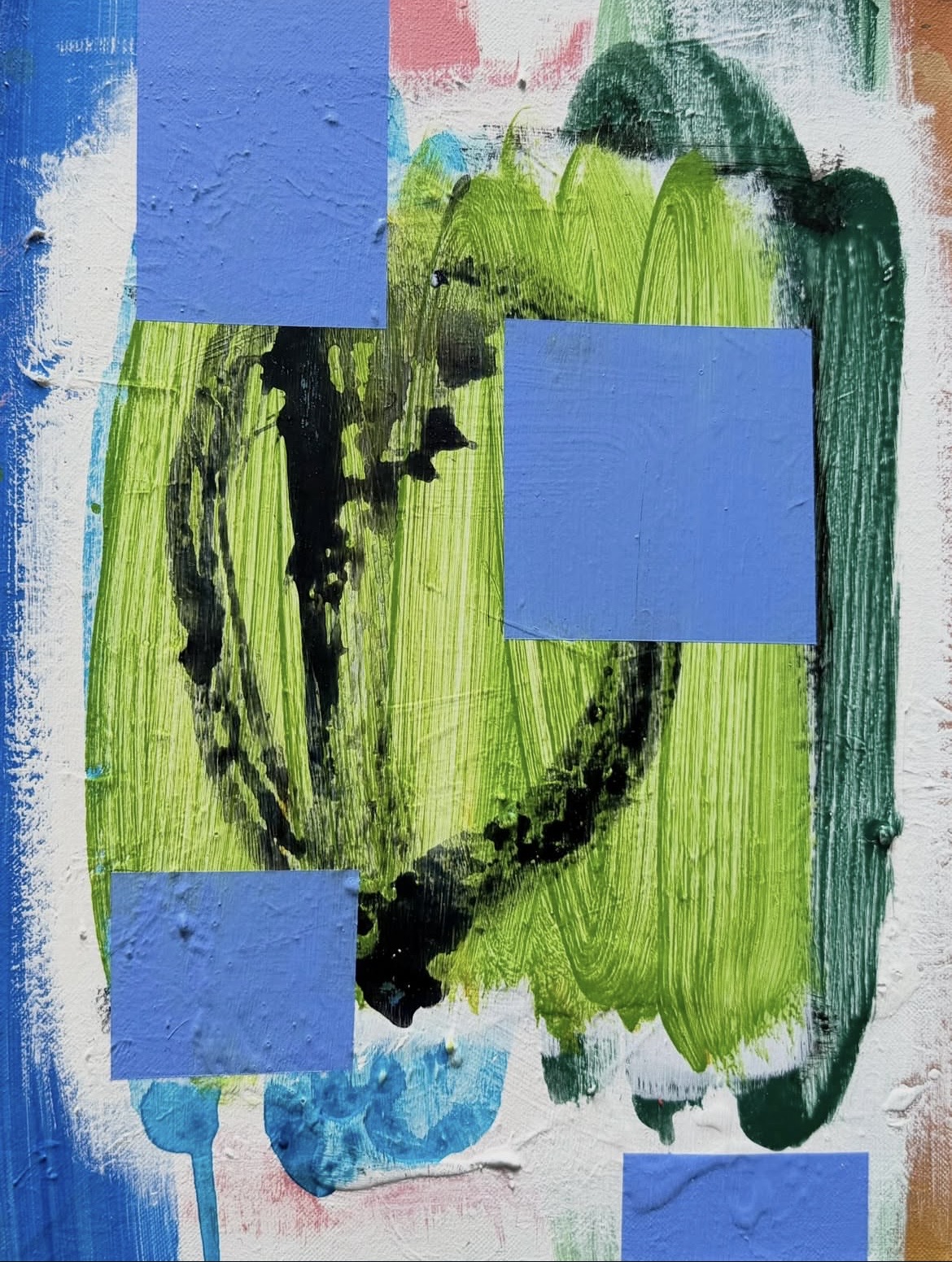
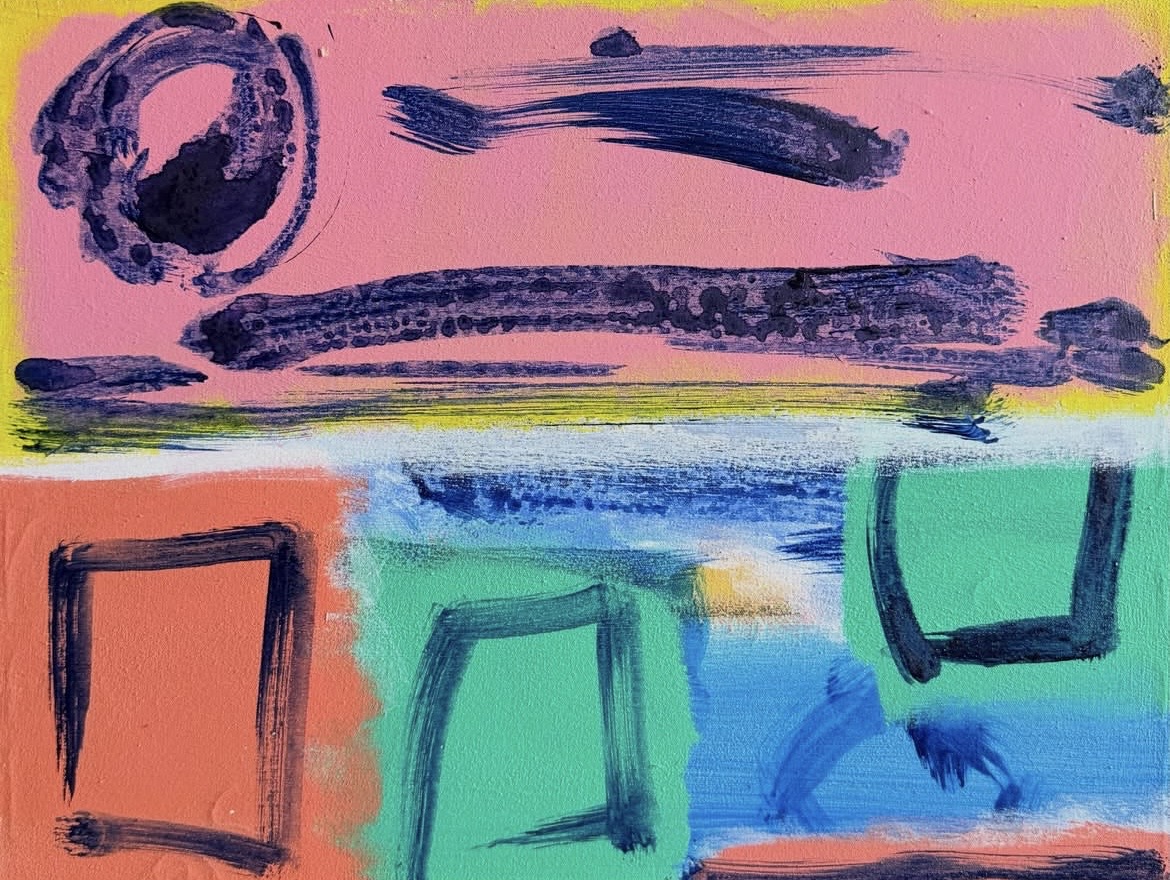
DS: I think it just comes from years of looking, experiencing different painting techniques and different painters. But finding my own language has been the most important part of my journey as an artist – not imitating or replicating other things, but trying to find my own visual language. That’s been important. And colour, colour has always been something I have a natural feel for. I have a natural relationship with it, with being able to put colours together and make them work. For instance, if you’ve got a blue next to another blue, you can push one blue further back in space and bring the other one further to the front, closer to the surface. The layering of colour is really important in my work. That doesn’t necessarily mean I’m using a lot of colour; in fact, the most recent works have been stripped down to just the blues.
AJ: Your art feels very personal, tied to identity, landscape and lived experience, yet still open emotionally to the viewer. Do you tend to paint with an audience in mind, or is the process more individual?
DS: The process begins in a deeply personal, individual way, as the work emerges from lived experience, memory, movement between places, and my relationship to painting. But I’m not interested in making something closed or private. The challenge is to transform personal material into a pictorial language that others can enter. That’s where ambiguity, structure, and openness become important. I want the painting to carry the specificity of my experience, but not be limited by it. Ideally, the viewer brings their own memories, feelings, and associations to the work, so the painting becomes a meeting point rather than a sealed statement.
AJ: You mention Rauschenberg in the accompanying essay for the exhibition. Is Abstract Expressionism the work that most influenced you, or was it more the artists who moved beyond it?
DS: It was the artists who moved beyond Abstract Expressionism, particularly Rauschenberg and Jasper Johns, who mattered most to me. Seeing Rauschenberg at the Tate in the early 1980s was transformative for me because it showed that painting didn’t have to defend the rigid divide between art and life, or between abstraction and figuration. That was incredibly important. His work, and Johns’ as well, opened up a space where everyday experience, vernacular imagery, structure, gesture, and material could coexist. That gave me permission to think of painting as a more fluid and inclusive language. So while Abstract Expressionism is part of the history I’m in dialogue with, it was those artists who complicated and disrupted its certainties that mattered most to me.
AJ: You’re also in the process of painting the Stations of the Cross for Chichester Cathedral. Has the Christian faith been a strong influence on your work and thinking throughout your life?
DS: Yes, absolutely. This is where the two strands of work meet. It stems from my early upbringing and from being brought up by Ada Ellis, which I reference in the text you saw in the exhibition. One of the biggest changes in my life came when I started going to church as a child. My foster mother and I grew up in very difficult circumstances; we didn’t have much money, so she had to clean the church. But she was an amazing person who gave me a strong sense of identity and the belief that I could be an artist and follow my passion, which was always art, even from the age of seven.
I remember doing my first oil painting after she gave me a box of Rowney paints for Christmas when I was about seven. That was what started me off, and I remember painting a portrait of her. She was probably in her mid-sixties then; she had been in her late fifties when I came to her at six weeks old.
While going to church and watching her clean the pews, I would play the church organ. In those days, they let you use the pianos and organs; they didn’t lock everything up, so you could just go in. I would mess around, making sounds. I loved the ambience of the church. That has been a really powerful thing for me. It has always made me feel more at ease, knowing you have something, knowing you have your faith.
AJ: It doesn’t appear directly in this exhibition, though. Why did you keep the religious work as a separate series?
DS: Separate in one sense, but there’s always a spiritual aspect to my work, at least I hope there is. I’ve always used it as a subtle indicator of what I believe. The cross, for instance, appears quite often as a symbol. I might make a mark on the trouser leg of a figure, where the pleats run down towards the knee, and that becomes a cross. It acts partly as a symbol, partly almost as a fashion statement; designers have used the crucifix that way, too. But it isn’t superficial for me. It really does relate to my experience of faith and to being able to overcome a lot of things as a child, trying to fit into society as the only Black child in the area where I grew up – a sort of anchor, I suppose.
Photo by Alexander James
David Somerville: Territories of Memory — Urban and Rural Life
Three Colt Gallery, 82 Three Colt Street. London E14 8AP
Runs until 6 June 2026
Open Tues — Sun 10 am — 6 pm
David Somerville: Stations of the Cross
St Mary Aldermary Church, Watling Street, London EC4M 9BW
Runs until 30 September 2026
Open Mon — Fri 11 am — 2 pm
David Somerville website: www.davidsomervilleart.com
David Somerville Instagram: davidsomervilleart